



Ask does your body need sugar and you will get two confident answers that cannot both be right. One side points at the brain, calls glucose essential, and concludes that sugar must be essential too. The other removes sugar from the diet entirely and reports feeling better.
Both answers come from real observation. Neither settles anything, because the question hides three separate ideas inside one word. There is the sugar in food and drink. There is glucose, the sugar circulating in your blood. And there is digestible carbohydrate, which the gut breaks down into glucose and fructose.
Those three things are related. They are not interchangeable. Yet a body that runs on glucose does not automatically require sugar on the plate. That single distinction changes almost everything that follows.
The stakes here are ordinary rather than academic. Carbohydrate accounts for roughly half of the energy in the world’s diets. So a rule as blunt as “cut sugar” can quietly become a rule about half your food.
Nutrition guidance has been moving in a different direction for some time. Rather than judging single nutrients, it increasingly judges whole dietary patterns. Instead, the food carrying the sugar has become part of the assessment.
Answering does your body need sugar honestly therefore means separating the questions first. What the body does when no food arrives is one question. What the brain will accept as fuel is another. What happens under hard or prolonged exercise is a third. And what belongs in a shopping basket is a fourth.
The answers do not all point the same way. That is precisely why the argument has lasted so long.
What Sugar Means In The Body
Carbohydrate is the parent category, and sugar is only one of its children. Sugars, starches and fibre all sit beneath that single heading. They behave very differently once eaten.
Simple sugars occur naturally in milk and in fruit. They are also refined and added to food during manufacturing. Sucrose and high-fructose corn syrup are the most common, appearing in soft drinks, fruit drinks, sweets and desserts.
Starches are the complex form, and their structure explains most of their behaviour. Chemically, they are long chains of sugars linked together. They appear in whole grains, vegetables, dried beans and peas. Because those chains take longer to break apart, starch releases its sugar more slowly. Starchy whole foods also carry vitamins and minerals that refined sugar does not. Whole grains have been linked to lower rates of cardiovascular disease and type 2 diabetes.
Fibre is the third category, and it is the odd one out. These are plant carbohydrates that human enzymes cannot break down or absorb. Nothing about that makes fibre useless. Eating more fibre promotes fullness and supports bowel health. Higher-fibre diets have also been found to reduce the risk of diabetes, colon cancer and obesity.
Anyone asking does your body need sugar is almost always asking about the added kind. Digestion, however, flattens much of this variety. Carbohydrate is broken down in the gut and absorbed as six-carbon molecules. Glucose and fructose are the main ones, and glucose is by far the most useful.
Glucose then exists in the body in two forms. There is blood glucose, circulating and immediately available. And there is glycogen (stored sugar), held in the liver and in muscle. That distinction matters more than it sounds. Blood glucose is the immediate supply, while glycogen is the reserve behind it.
So whether your body needs sugar depends heavily on which meaning is intended. The words natural and added describe something different again. They point to where a sugar came from and what was done to it. Naturally occurring sugars come packaged in fruit and milk. Added sugars are put in during processing, mainly for flavour and taste. The terms describe the food and the processing, not a different molecule.
Does Your Body Need Sugar For Energy
The honest answer here is narrower than either camp wants it to be. Your body needs usable energy, and it keeps glucose available in the blood. Neither fact requires sugar in your food.
Energy production is less fussy than the argument suggests. The macronutrients you eat are broken down into glucose, fatty acids and amino acids. Cells then use these to form adenosine triphosphate (ATP), the molecule that powers them. Three routes, therefore, lead to the same currency.
Fat is the obvious alternative, and the body treats it as a genuine store. Absorbed fat is held in the liver and in adipose tissue (body fat). It is released later to provide energy, both at rest and during exercise. Protein contributes as well, although it is not built for the job. Its main work is tissue growth and repair, plus hormones and receptors. Even so, proteins can be broken into amino acids and metabolised for energy.
The more revealing question is what happens when no food arrives at all. Normal fasting blood glucose sits between 70 and 100 mg/dL. Below 70, hypoglycaemia (low blood sugar) begins, bringing drowsiness, irritability and fatigue. The body doesn’t wait for you to fix it. It breaks down liver glycogen and releases the glucose into the blood. At the same time, signals from the brain stimulate hunger.
Hormones run the response. Once the last meal is digested, the body enters the post-absorptive state. Glucagon (a hormone that raises blood sugar) and epinephrine (adrenaline) then break down glycogen. They also drive the formation of new glucose for circulation.
That process has a name: gluconeogenesis, or making glucose from non-sugar sources. One documented source of raw material comes from the gut. Short-chain fatty acids produced by gut bacteria play a central role in energy metabolism. Propionate, one of them, can be converted into glucose. That is one substrate, not a complete inventory.
Falling glucose does more than trigger a food search. It triggers a release of fat. During fasting, the hypothalamus senses the drop and activates the sympathetic nervous system. That breaks down stored triacylglycerols (body fat) and pushes fatty acids into the circulation.
The numbers show a system defending a set point. After an overnight fast, blood glucose is held at around 5 millimoles per litre. Fatty acids, by contrast, rise to between 300 and 700 micromoles per litre. Eat carbohydrate and the pattern reverses, with glucose rising and fatty acids falling. During aerobic exercise, glucose again holds near 5 millimoles per litre. Fatty acids climb steadily instead.
This is the heart of the matter. Glucose is defended, not delivered. The question, does your body need sugar, therefore answers itself in ordinary daily life. The evidence confirms that glucose availability is required. It does not confirm that the glucose must arrive as sugar you have eaten.
None of this makes added sugar harmful on its own. Equally, nothing here turns does your body need sugar into a yes. The interesting exceptions appear when the brain is short of carbohydrate, or when demand rises sharply.
Does Your Body Need Sugar For The Brain
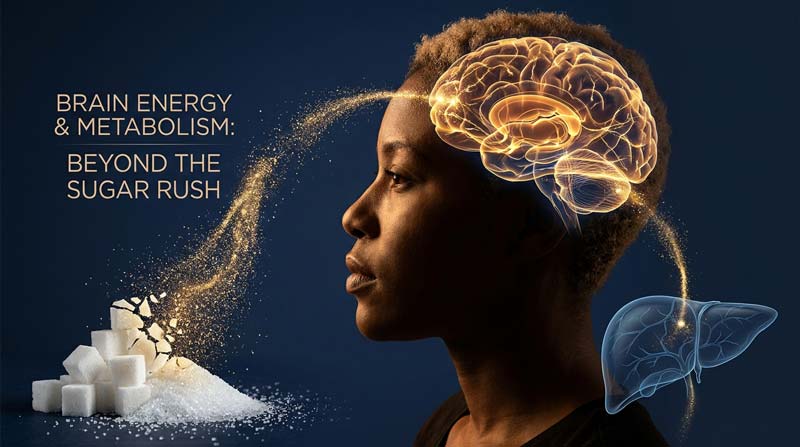
This is where the sugar-is-essential argument is at its strongest. Almost every cell in the body can burn carbohydrate, fat or protein. The brain and nervous tissue are different, depending almost exclusively on glucose.
The scale of that demand is easy to underestimate. At rest, the brain consumes roughly 20% of the energy derived from glucose. It also has almost no capacity to store fuel. Unlike muscle, it cannot hold a reserve, so it requires a continuous supply. Demand shifts moment to moment as neurons signal.
That looks conclusive, and for a long time it was treated that way. Then the picture changed. When carbohydrate falls to roughly 20 to 50 grams a day, the body shifts. Glycogen stores empty, and fat is mobilised out of adipose tissue. The result is ketone bodies, an alternative fuel that many tissues can use. Among those tissues is the brain.
Ketones (fuel made from fat) come in three forms; they are:
- Acetoacetate
- Acetone
- Beta-hydroxybutyrate, measurable in blood or urine.
So the question of whether your body needs sugar has a sharper answer here. Under normal conditions, the brain relies heavily on glucose. It can also adapt when glucose becomes scarce.
Two limits matter, and both are routinely ignored. The first concerns what adaptation actually proves. It demonstrates metabolic flexibility, which is genuinely impressive. It does not demonstrate that a ketogenic diet is superior, universally safe or necessary.
The second concerns how complete the adaptation is. Under limited carbohydrate, the brain can maintain its basic functions on ketones. Yet that may not fully match the cognitive performance seen with adequate glucose. The gap appears most under metabolic stress.
Nothing in this evidence shows ketones replacing glucose entirely. Anyone answering Does your body need sugar with a flat no should sit with that. The brain’s flexibility is real. Its preference is equally real, and the adaptation evidence does not erase it.

Does Your Body Need Sugar During Exercise
Exercise is where the answer genuinely changes. It is also where most of the confusion is manufactured. Carbohydrate is a predominant fuel during exercise, and its oxidation rises as intensity rises. Oxidation here simply means burning a fuel to release energy.
Something else happens as muscles contract. They take up glucose through insulin-independent and insulin-dependent routes. In plain terms, working muscle can pull glucose from the blood without waiting for insulin. Regular training also produces lasting improvements in insulin sensitivity and glucose disposal.
Three different things get called carbohydrate during exercise, and separating them helps.
- Muscle glycogen, the fuel stored inside the working muscle itself.
- Liver glucose output, which tops up the blood as the session continues.
- Carbohydrate eaten or drunk during the activity, arriving from outside the body.
Glucose regulation during exercise draws on all three. It also depends on liver blood flow, stress hormones and muscle uptake. Type, duration and intensity then shift the balance again.
The classic evidence is blunt. When glycogen in contracting muscle runs down, exercise intensity falls or stops altogether. That finding is regularly stretched into a claim it cannot support. It describes prolonged or hard exercise. Ask: does your body need sugar for a thirty-minute walk? The same evidence says nothing useful.
Duration is the variable that matters most. During long efforts, muscle glycogen depletes, and the body leans harder on liver-supplied glucose. When liver glycogen runs low as well, blood glucose can fall. That brings anxiety, nervousness and tremor, and affects the central nervous system. In exercise lasting beyond 60 minutes, taking in glucose slows glycogen depletion. It also maintains blood glucose, delays fatigue and improves endurance performance.
Two findings mark the boundary, and both run counter to gym folklore. For casual and recreational exercisers, a snack before exercise makes little difference to performance. That holds whether the snack is high in carbohydrate, protein or fat. A protein-rich meal may produce a slight improvement in motor performance.
The second finding is more surprising. Some 74.5% of surveyed gym-goers believe carbohydrate acutely improves resistance training performance. The research is considerably less conclusive than that belief assumes.
Where carbohydrate does matter, the amounts depend on training load. Active individuals are commonly advised to take 3 to 5 grams per kilogram of body mass daily. That applies to light activity. Intense training pushes the figure to 8 to 12 grams per kilogram. Those numbers track body mass, workout type, intensity and training phase. They are not a template for a general diet. Recommended sources are fruit, vegetables, whole grains, sweet potatoes, rice, pasta and legumes, rather than processed sugars.
Recovery has its own rules, and they are narrower than the marketing suggests. Carbohydrate intake is the primary factor influencing muscle glycogen resynthesis and repeated exercise capacity. Protein alongside it helps further when carbohydrate alone falls short. Timing is where the claim is usually overstated.
Traditional advice targets a window of roughly 30 minutes to two hours after exercise. That matters most for elite athletes training more than once a day. Recent work suggests strict adherence may be unnecessary when daily needs are met. So the honest answer to whether your body needs sugar after training depends on when you train next.
Adaptation complicates the picture further. Chronic high-fat diets increase fat stores in skeletal muscle and improve the ability to burn fat. Two to four weeks of high-fat eating can precede one to three days of high carbohydrate. In prolonged endurance events, that combination raises fat oxidation and reduces muscle glycogen use. It applies to marathons, triathlons and ultra-endurance efforts lasting beyond four hours. This is a specific endurance strategy, not proof that carbohydrate is irrelevant.
One group needs individual planning rather than general rules. For people using insulin, exercise, carbohydrate and medication interact directly. Where pre-exercise insulin has not been reduced for the activity, carbohydrate can help. Around 15 to 30 grams before activity, and the same every 30 to 60 minutes, may maintain blood glucose. The right amount depends on carbohydrate availability from the preceding meal. Carbohydrate timing and medication adjustment interact, which makes this a genuine exception.
Why Carbohydrate Quality Matters
Here the evidence does something unexpected. Studied as a single nutrient, sugar shows almost nothing on inflammation.
The largest controlled-feeding evidence base on this covers 64 trials of at least seven days. Together they provide 91 comparisons across 4,094 predominantly healthy adults. The study included people with and without overweight and obesity. The trials tested 12 food sources of fructose-containing sugars. Doses ran from roughly 8% to 19% of total energy, over a median of five to 30 weeks.
The headline result is close to nothing. Total fructose-containing sugars produced only a trivial reduction in C-reactive protein. C-reactive protein is a blood marker of inflammation. That small reduction appeared only when the sugars were added as excess energy. Substituted for other macronutrients under energy-matched conditions, they showed no effect. Tumour necrosis factor alpha and interleukin-6, two further inflammatory markers, did not move at all.
Break the same data down by food, however, and the picture separates sharply. In energy-matched trials, a sweetened soy beverage lowered C-reactive protein by 0.96 mg/L. The same was true of 100% fruit juice, which lowered it by 1.09 mg/L. Mixed sources containing sugar-sweetened beverages raised it by 0.64 mg/L.
Where sugars were added as excess energy, fruit lowered both C-reactive protein and tumour necrosis factor alpha. Dark chocolate, at 1.1% of energy, lowered interleukin-6. So the answer to does your body need sugar shifts once you ask what is carrying it.
The separation is not mysterious. Fibre and glycaemic index divide the foods that behave well from those that do not. An apple contains about 4 grams of fibre and has a glycaemic index of 38. Berries offer 4 grams per cup at a glycaemic index of 28. Soy beverages, orange juice and dark chocolate also sit low on that scale. Sugar-sweetened beverages and added nutritive sweeteners sit at the opposite end. They are lower in fibre and higher in glycaemic index.
Fructose attracts particular attention, and for a defensible reason. It is thought to act as an unregulated substrate for de novo lipogenesis, or the production of new fat. That bypasses the feedback control which applies to glucose. Yet harmful cardiometabolic effects appear only when those sugars are consumed as excess energy. Energy context, in other words, does much of the work usually blamed on the molecule.
Glycaemic index needs defining before it is trusted. It ranks carbohydrate-containing foods by their effect on blood glucose after eating. High-glycaemic-index foods produce a larger rise of shorter duration. Low-glycaemic-index foods produce a smaller, more sustained one.
Glycaemic load extends the idea by accounting for how much is eaten. Neither travels well into real life. Meals are arbitrary combinations, eaten in varying amounts, at different times of day. Their proximity to exercise and to other meals changes the response again. Studies of low-glycaemic-index diets have produced mixed results on diabetes risk and weight loss.
Composition explains part of the problem. In standardised meals, each additional gram of fat, fibre and protein reduced the two-hour glucose response. That held after adjusting for the meal’s carbohydrate content. So the carbohydrate figure on a label is a poor predictor of the outcome.
Then there is the person eating it. Blood glucose rises with meal carbohydrate for nearly everyone. The strength of that relationship, however, varies enormously between individuals. Some people’s responses track closely with how much carbohydrate they eat. Others show equally high responses with little relationship to the amount. On this evidence, carbohydrate sensitivity is person-specific.
The limits of all this deserve to be stated plainly. The sugar-source findings concern inflammatory markers, not every health outcome. Dose behaved non-linearly, with threshold relationships around 5% and 10% of total energy. None of that settles the question of whether your body needs sugar for long-term health. Certainty across the findings is mixed rather than resolved. It was rated moderate for fruit, dark chocolate, and mixed sources containing sugar-sweetened beverages. It was low for sweetened soy beverage and 100% fruit juice. Downgrades were applied for imprecision and indirectness. And no trial has run beyond a single year.

How To Reduce Added Sugar Without Cutting Carbohydrates
The practical version of this problem is smaller than the argument suggests. Added sugar is the target. Carbohydrate, as a category, is not.
Start where the sugar is concentrated and obvious. Sweets, non-diet soft drinks, and fruit drinks carry the most for the least. Those are the easy ones. The harder ones hide in ingredient lists under names that don’t read as sugar.
Added sugars appear as brown sugar, corn sweetener, corn syrup, dextrose and high-fructose corn syrup. They also appear as glucose, honey, lactose, maltose, malt syrup, molasses and sucrose. Position matters as much as presence. Ingredients are listed in order of weight, so anything near the top is present in large quantities. Labelling conventions differ between countries, so the exact wording will vary.
Guidance here sets a ceiling rather than a goal. Added sugar intake is advised to stay below 10% of total energy. Sugars from minimally processed foods, such as fruit, are preferred to sweetened beverages. That figure is a limit. It is not a target, and it is not a claim that lower is always better. Anyone answering, “Does your body need sugar with zero?” has gone past what the guidance says.
Removing the whole category is the common mistake, and it costs more than it saves. Plant-based carbohydrate foods carry the fibre the body needs. They are also the body’s first choice of fuel during many physical activities. Cutting them too far can limit the ability to exercise well.
Swapping refined for whole is the more proportionate move. Whole grains turn up in cereals, pasta and brown rice. They are usually signalled by the word whole before the grain type. Around three servings a day is a common target. Fruit, vegetables and pulses achieve the same thing from a different direction.
Targeted sports carbohydrate belongs in a category of its own. A gel taken during a long race and a sweetened drink at a desk differ completely. One is fuelling a specific, measurable demand. The other is habitual intake with no demand attached.
For people with diabetes, the calculation is genuinely individual. Many count grams of carbohydrate to manage blood glucose levels. Others choose foods by glycaemic index instead. The right amount varies with activity, medication and overall insulin action.
Starches and sugars are typically counted towards the daily total. Fibre and non-starchy vegetables usually are not. Salad greens, peppers, tomatoes, carrots, cauliflower and onions sit in that second group. Where insulin or other glucose-lowering medication is involved, does your body need sugar becomes clinical. It needs individual advice rather than a general rule.
None of this requires strict adherence to a named diet. Limiting added sugar and refined carbohydrates is the first meaningful step in food quality. Done consistently, it tends to land intake at a moderate carbohydrate level without tracking.
That leaves a cleaner answer than either camp offers. Your body needs glucose, and it will make its own when required. What it has never needed is the concentrated, added kind. Almost the entire argument lives in the gap between those two sentences.
Sources
- Alghannam A, Gonzalez J, Betts J. Restoration of Muscle Glycogen and Functional Capacity: Role of Post-Exercise Carbohydrate and Protein Co-Ingestion. Nutrients. 2018;10:253.
- Atkinson FS, Brand-Miller JC, Foster-Powell K, Buyken AE, Goletzke J. International tables of glycemic index and glycemic load values 2021: A systematic review. Am J Clin Nutr. 2021;114:1625-1632.
- Bergstrom J, Hermansen L, Hultman E, Saltin B. Diet, muscle glycogen and physical performance. Acta Physiol Scand. 1967;71:140-50.
- Berry SE, Valdes AM, Drew DA, et al. Human postprandial responses to food and potential for precision nutrition. Nat Med. 2020;26(6):964-973.
- Brand-Miller J, McMillan-Price J, Steinbeck K, Caterson I. Dietary glycemic index: health implications. J Am Coll Nutr. 2009;28 suppl:446s-449s.
- Da Poian AT, El-Bacha T, Luz MRMP. Nutrient Utilization in Humans: Metabolism Pathways. Nature Education. 2010;3(9):11.
- Frayn KN, Arner P, Yki-Jarvinen H. Fatty acid metabolism in adipose tissue, muscle and liver in health and disease. Essays Biochem. 2006;42:89-103.
- Gropper SS, Smith JL, Groff JL. Advanced Nutrition and Human Metabolism. 5th ed. Belmont (CA): Thompson Brooks/Cole; 2009.
- Harris JJ, Jolivet R, Attwell D. Synaptic energy use and supply. Neuron. 2012;75(5):762-77.
- Hawley JA, Lessard SJ. Exercise training-induced improvements in insulin action. Acta Physiol (Oxf). 2008;192:127-135.
- Henselmans M, Bjørnsen T, Hedderman R, Vårvik FT. The effect of carbohydrate intake on strength and resistance training performance: A systematic review. Nutrients. 2022;14:856.
- Hu J, Lin S, Zheng B, Cheung PCK. Short-chain fatty acids in control of energy metabolism. Crit Rev Food Sci Nutr. 2018;58:1243-9.
- Jones JM, Anderson JW. Grain foods and health: a primer for clinicians. Phys Sportsmed. 2008;36(1):18-33.
- Mann J, Truswell S, Hodson L. Essentials of Human Nutrition. 6th ed. UK: Oxford University Press; 2023.
- Paoli A, Rubini A, Volek JS, Grimaldi KA. Beyond weight loss: a review of the therapeutic uses of very-low-carbohydrate (ketogenic) diets. Eur J Clin Nutr. 2013 Aug;67(8):789-96.
- Pereira MA, Kottke TE, Jordan C, O’Connor PJ, Pronk NP, Carreón R. Preventing and managing cardiometabolic risk: the logic for intervention. Int J Environ Res Public Health. 2009;6(10):2568-2584.
- Sievenpiper JL, Dworatzek PD. Food and dietary pattern-based recommendations: An emerging approach to clinical practice guidelines for nutrition therapy in diabetes. Can J Diabetes. 2013;37:51-57.
- Sievenpiper JL, de Souza RJ, Mirrahimi A, Yu ME, Carleton AJ, Beyene J, Chiavaroli L, Di Buono M, Jenkins AL, Leiter LA, et al. Effect of fructose on body weight in controlled feeding trials: A systematic review and meta-analysis. Ann Intern Med. 2012;156:291-304.
- S. Department of Health and Human Services. How to Understand and Use the Nutrition Facts Label. Atlanta (GA): USDHHS.
- World Health Organization. Sugars intake for adults and children. Geneva, Switzerland: WHO; 2015.
- Zeevi D, Korem T, Zmora N, et al. Personalized Nutrition by Prediction of Glycemic Responses. Cell. 2015;163(5):1079-1094.
- Zhang S, Lachance BB, Mattson MP, Jia X. Glucose Metabolic Crosstalk and Regulation in Brain Function and Diseases. Prog Neurobiol. 2021;204:102089.