


By BeSund Editorial Team 11/07/2023 Modified Date: 31/07/2026
Sit-and-Reach
Check your hamstring and lower back flexibility levels
Sit-and-Reach Test

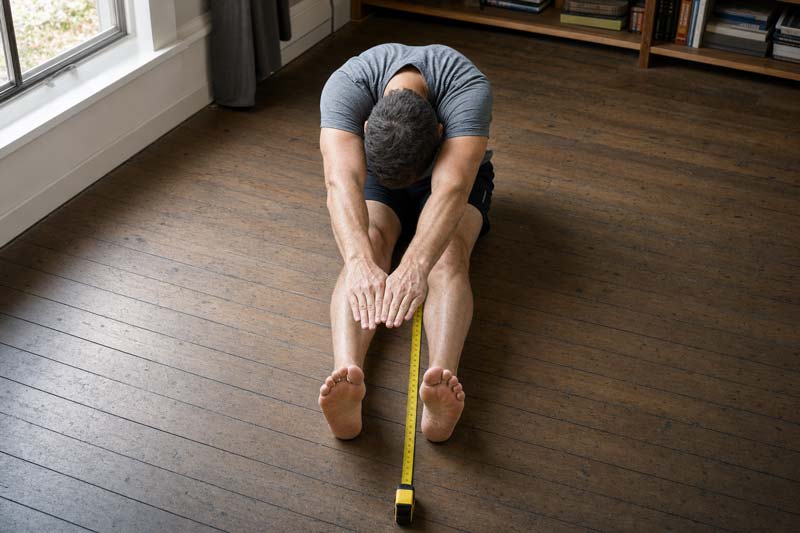
Understanding the Sit-and-Reach Test
The sit-and-reach test was published in 1952 as a test of back and leg flexibility. It required a ruler, a floor and nothing else. Seventy years later, it still appears in most health-related fitness batteries in use. Few measurements in exercise science have proved so durable, and none is more widely used to assess flexibility.
That durability is worth examining, because the reasons behind it are not purely scientific. The test sits in those batteries because of a belief about what flexibility protects against. Maintaining hamstring and low back flexibility, the argument runs, may prevent acute and chronic musculoskeletal injuries. It may also reduce low back problems, postural deviations, gait limitations and the risk of falling. Those are substantial claims for a single number produced by leaning forward.
The validity claimed for the test has a particular character. It is an assumed validity, drawn from a logical analysis of what the test asks a person to do. It does not come from direct measurement of the structures involved. Someone reaches towards their toes. The hamstrings and lower back must lengthen for that to happen. The distance reached is therefore taken to describe them.
Formally, the test is a field measure of hamstring and low back flexibility. Its appeal is practical rather than theoretical. Almost anyone can perform it, almost anywhere, in under a minute. That accessibility is why the sit-and-reach test reaches people who will never see the inside of a laboratory.
Two findings sit awkwardly together in the research. The test returns almost exactly the same number each time a person takes it. It is also a considerably weaker estimate of flexibility than that consistency implies. Holding both ideas at once is what turns a score into information rather than a verdict.
What the Test Actually Measures, and What It Misses
Flexibility is usually defined as the maximum range of motion available at a joint, or at a series of joints. The reach test measures something adjacent to that, though not the same thing. It records a distance in a straight line, from the fingertips to a point level with the feet. No joint angle is measured at any stage.
That distance is produced by a combined movement. Hip flexion and lumbar flexion happen together, and the score cannot separate them. Multiple regression analysis shows that variation in scores comes from flexibility in both regions, rather than either acting alone. The number is a composite, and composites conceal their parts.
That concealment matters more than it sounds. In a composite test, hypermobile hip extensors can compensate for hypomobile trunk extensors, and the reverse holds too. Two people can therefore produce an identical score through entirely different distributions of movement.
Modelling work has quantified the split. Most fingertip displacement comes from rotation at the hip joints. Bending of the spine contributes a smaller share. That share can reasonably be treated as well under one third of the total. For a maximum displacement of 43.2 cm, one third would be 14.4 cm.
A further complication is that the reach is not passive. Unlike a straight leg raise, performance depends on more than relaxed hamstring resistance. It also depends on hip flexor strength, in the psoas and quadriceps. Those are the muscles at the front of the hip and thigh. The person must contract them while simultaneously relaxing the hamstrings.
Because the whole body moves, other factors intrude. Anthropometric variables also shift the result, meaning body measurements such as limb length. So does joint flexibility in the shoulders, spine and limbs. The score is consequently an estimate of hamstring extensibility rather than a measurement of it. Where the lower back is concerned, the estimate is weaker still.
The two targets the sit-and-reach test is asked to describe are not equally well served.
| What the Score Estimates | How Well It Does So | What Measures It Directly |
|---|---|---|
| Hamstring flexibility | Moderately. This is the target the reach score reflects best. | The straight leg raise, or the knee extension test with the hip flexed to 90 degrees. |
| Lower back flexibility | Poorly. Accuracy is low across every version of the test examined. | The Macrae and Wright method, or single and double inclinometer methods. |
A comparison of what the sit-and-reach test estimates well and what it estimates poorly. The score reflects hamstring flexibility moderately, but reflects lower back flexibility only weakly. The final column lists the direct measurements used in research to judge each one. They are more accurate, but need equipment and training that most people cannot access.
Those direct methods are the reference points against which reaching tests are judged. Where lumbar movement itself needs assessing, they are the established options. A single sit-and-reach test score should not be read as a statement about the lumbar spine.
What Tight Hamstrings Do to the Rest of the Body
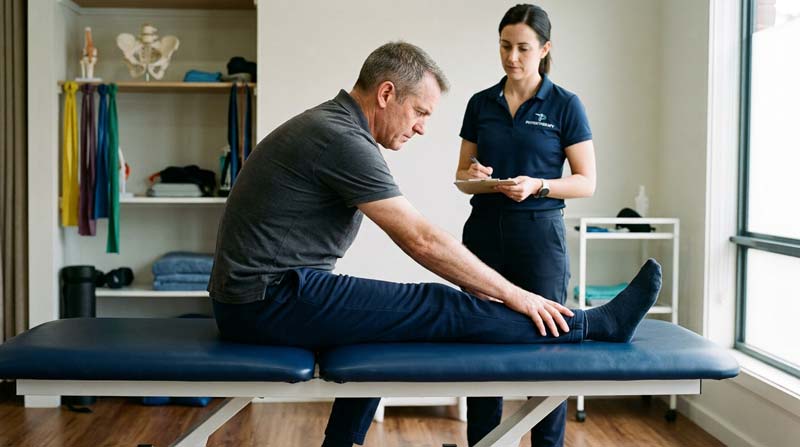
Short hamstrings do not stay a local problem. A lack of hamstring extensibility reduces pelvic mobility. Once the pelvis moves less freely, pressure through the spine is distributed differently, and spinal disorders follow. The chain runs from a muscle at the back of the thigh to the structure of the back itself.
In the research, that chain appears as a set of associations rather than one clean mechanism. Poor hamstring extensibility has been linked with several distinct conditions.
- Thoracic hyperkyphosis: an exaggerated forward curve of the upper spine, has been documented alongside poor hamstring extensibility.
- Spondylolysis: a stress fracture in one of the small bones of the lower spine. It appears in the same body of work.
- Disc herniation: occurs when the soft centre of a spinal disc pushes through its outer wall. It too has been associated with restricted hamstrings.
- Altered lumbopelvic rhythm: means a change in how the lower back and pelvis share the work of bending forward. It has been observed in the same context.
Beyond the spine, shortened hamstrings show up in how people move. Individuals with shortened hamstrings present gait limitations, greater susceptibility to musculoskeletal injury and an increased risk of falls. In older adults, the mechanism becomes specific. Tight hamstrings can reduce stride length and walking speed, which in turn creates problems with dynamic balance.
All of which appears to justify the sit-and-reach test, and the original 1952 rationale rested on exactly this reasoning. Tightness in the lower back and hamstring region was implicated in lumbar lordosis, forward pelvic tilt and lower back pain.
The last of those has not held up. The relationship between sit-and-reach test scores and the incidence of low back pain is limited. One analysis of adults found no relationship between the test and reported lower back pain. That held in both a cross-sectional and a prospective sample. Evidence connecting hamstring or lower back flexibility to lower back health remains undocumented. Further work is needed to establish whether it exists at all.
Preparing for Your Sit-and-Reach Test
A flexibility score only means something in comparison. That comparison is either against published categories or against an earlier attempt. Both collapse if the conditions change in between. Most of the variation between published protocols comes down to one decision. It is the value assigned to the level of the feet.
Everything else in the preparation of a sit-and-reach test is a matter of removing avoidable noise.
What You Need
A tape measure or metre ruler, a strip of adhesive tape, and something to write on. A purpose-built box, typically 30.5 cm high with a sliding ruler on top, does the same job. It is convenient rather than necessary. A yardstick taped to the floor produces a usable measurement for a fraction of the cost. Remove shoes and socks before testing.
Where Zero Sits
Different manuals place the zero at different points. One set of guidelines specifies 23 cm at the level of the feet. The Eurofit manual suggests 15 cm instead. Other distances have also been used. The categories used on this page assume a zero point set at the 26 cm mark.
The practical consequence is direct. Lay the tape flat, then set the 26 cm mark level with the backs of the heels. In inches, that mark is 10.25. Reaching exactly to the toes then scores 26 cm, so no negative numbers arise. The categories are only four to five centimetres wide. A mismatched zero can therefore move a result by an entire band.
Warming Up First
A short warm-up with some stretching should precede any sit-and-reach test. Three minutes of light movement and static stretching of the lower body is enough. The reasoning is threefold. The test itself demands a large hamstring tension stimulus. The routine also reduces the muscle lengthening produced by repeated attempts. Finally, it limits the effect of differing muscle temperature, which increases both variability and measurement error.
Conditions That Shift the Result
Several things alter a reach score without altering flexibility. Head position during the movement affects the distance achieved. So does the position of the ankle, partly through the contribution of the gastrocnemius, the large calf muscle. Human body length varies by one to two centimetres across a day and night. That is reason enough to test at the same hour.
Recent stretching leaves a longer trace than most people expect. After 120 to 150 seconds of static stretching, the viscoelastic properties of muscle stay deformed for at least twenty minutes. For women, muscle-tendon stiffness falls significantly around ovulation, compared with the menstrual and follicular phases.
Where to Stop
Exhale while bending forward, avoid bouncing or any rapid forceful movement, and never stretch into pain. If a knee starts to bend, sit back slowly until it straightens. Holding the knee down is not the correction. The degree of stretch should be set by the person reaching, not by anyone assisting.
How to Perform the Sit-and-Reach Test
The procedure takes under a minute, which is part of the reason it has survived. Order matters more in a sit-and-reach test than speed does. Most of the error in a reach score comes from setup and technique rather than from the reaching itself.
Two things are watched continuously throughout. The heel must stay at the marked reference point, and the knees must stay fully extended. Everything else follows a fixed sequence.
Performing the Sit-and-Reach Test
Seven stages, from setting up to recording your score. Use the buttons below to work through the sequence.
A stage-by-stage walk through of the sit-and-reach test as performed at home. Each stage shows the body position, equipment placement and measurement technique needed for a consistent reading. Fixing the 26 cm mark at the heels anchors the scale, so a score can be compared directly against the published age and sex categories.
The sequence below matches the stages shown above.
- Remove shoes and socks, then complete the warm-up described earlier.
- Lay the tape on the floor and secure it. The 26 cm mark sits level with the backs of the heels.
- Sit with the legs fully extended and the knees straight. Keep the inner edges of the feet about 15 cm apart.
- Place one hand directly on top of the other, palms down, with the tips of the middle fingers level.
- Breathe out and slide both hands slowly forward along the tape. Let the head drop between the arms.
- Hold the furthest position for roughly two seconds, without bouncing.
- Read the point reached by the fingertips while the position is still held. Record to the nearest half centimetre.
- Sit back, rest briefly, then repeat twice more. Averaging repeated trials is the accepted way to derive the score.
Four errors account for most poor sit-and-reach test readings. Leading with one hand rather than keeping them level inflates the distance. Bouncing produces a number that cannot be reproduced. Bending a knee turns the test into a different movement entirely. Holding the breath is common and unhelpful, so breathing should stay normal throughout.
Making Sense of Your Score
A field test result is an estimation rather than a direct measure. Interpreting one properly means knowing how good the estimate is. Categories give a reader somewhere to stand. They do not convert an estimate into a measurement.
The categories used with the sit-and-reach test here are age-banded and sex-specific, covering twenty to sixty-nine years. They assume the 26 cm zero point described earlier. Some boxes place the heels at 23 cm instead. Three centimetres must then be subtracted from every value in the table.
SIT-AND-REACH TEST CALCULATOR
Personal Details
Fitness categories for the sit-and-reach test differ by age and sex. Enter both for an accurate classification.
Enter number from 20 to 69
Your Three Readings
Enter the point reached on each of your three attempts. The 26 cm (10.25 in) mark should have been level with the backs of your heels.
One oddity in the published evaluation scales deserves mentioning. The widths of the flexibility levels fluctuate considerably along the scale, and the variation grows as scores fall. No convincing explanation for those fluctuations has been offered. The practical effect is uneven. How many centimetres are needed to climb one category depends on where a person already sits.
Guideline values also exist for a simpler question: whether hamstrings are short or normal. Published cut-off scores allow a straightforward positive or negative classification. Those values only transfer between set-ups when the zero point matches, which is the same constraint as before. Cut-off scores established for one reaching protocol cannot be carried across to another.
For most people, the more useful question is whether a change is real. Measurement error sets that boundary. A threshold of roughly 1.5 to 2.0 times the typical error marks genuine change rather than noise. For the sit-and-reach test, typical error sits at 8.74%. A conservative marker is therefore a change greater than 17.48% from the previous score.
Deciding what counts as acceptable error is ultimately a judgement about purpose. The variability has to be small enough to reveal the changes a person is trying to produce. Below that threshold, a difference between two attempts describes the measurement rather than the person.
How to Move Your Score, and How Long It Takes
Stretching works, though not quickly, and the research is unusually specific about the dose. Nothing in a sit-and-reach test score shifts within a fortnight. A minimum of four weeks is necessary to improve joint range of motion. Within those weeks, a moderate frequency of three days per week is required. The daily dose sits between 150 and 180 seconds.
Both static stretching and dynamic range-of-motion training have been examined for their effect on the hamstrings. The proposed mechanism is not that muscle simply becomes longer. Sustained static stretching deforms the viscoelastic properties of muscle, meaning the way tissue resists being lengthened and then recovers.
What that produces is measurable. Recreationally active young adults completing four weeks of flexibility training have shown hamstring gains of between 9.3% and 24.4%. Set against the change threshold described earlier, even the lower end of that range clears it comfortably. A sit-and-reach test score can therefore register real improvement, provided it has been earned over weeks rather than days.
Who the Sit-and-Reach Test Works For
The validity evidence comes almost entirely from apparently healthy people. None had an injury or a physical or mental disability. That is the population the sit-and-reach test describes best. Outside it, the picture changes by group, and sometimes changes the sensible choice of protocol.
- Healthy adults: Appropriate for anyone without musculoskeletal limitation or low back pain that would restrict performance. The procedure is simple, the instructions easy to follow, and the score easy to explain. Large numbers can be tested in a short period, which is why the sit-and-reach test dominates population-level fitness work.
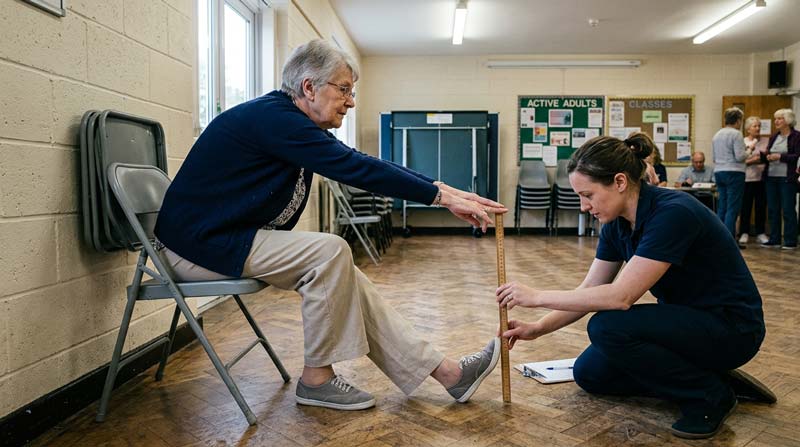
- Older adults: The floor is the obstacle, not the reaching. In one study, eight of eighty volunteers were excluded, around ten per cent. They could not or would not get down onto the floor. None were excluded from the chair version. During floor testing of that same group, one woman fell backwards. She struck her head on the gymnasium floor, despite an emphasis on spotting. The chair version is performed seated, with one leg extended. It proved reliable in this age group, with coefficients between 0.92 and 0.96.
- People who cannot sit with the legs extended: Weak abdominal muscles or shortened hamstrings can make that position impossible to hold without falling backwards. The floor test is then inappropriate. The back-saver version reaches one leg at a time. The argument is that stretching one hamstring rather than both reduces stress on the lower back and spine. Both the traditional and back-saver versions carry inherent limitations for adults with low back problems.
- Children and adolescents: Validity is lower here than in adults. The test has been examined directly in children and adolescents aged 6 to 17. Pooled coefficients for estimating hamstring extensibility in children run from 0.32 to 0.67, against 0.49 to 0.68 in adults. The categories used in the calculator above cover ages twenty to sixty-nine, so they do not apply to younger people.
- Unusually flexible groups: Recreational swimmers carry a large flexion range in both the thoracic and lumbar spine, associated with high thoracic kyphosis. Reaching tests may not suit them. More generally, findings from recreationally active young adults should not be extended to trained athletes, whose responses may differ.
The chair version raises one interpretive trap worth knowing about. Its scores tend to be higher than those from either floor protocol, because the measurement reference point is different. A larger number from a chair does not mean greater flexibility than a floor test would have shown.
How Much the Sit-and-Reach Test Can Be Trusted
Consistency and accuracy are different properties, and this measure has far more of the former than the latter. Reliability estimates for the standard version fall between 0.96 and 0.99 across studies. The back-saver version has been reported at 0.99. Test-retest work across sessions four weeks apart returned a typical error of 8.74%, with a coefficient of 0.92.
Those figures carry a practical consequence. Given a warm-up and a practice attempt beforehand, a single measurement appears sufficient for accuracy. The sit-and-reach test does what it does with remarkable repeatability.
Accuracy is another matter. Criterion-related validity is expressed as the correlation between the reach score and a direct measure of extensibility. Pooled across eight versions of the test, the corrected mean correlation for hamstring extensibility falls between 0.46 and 0.67. That is moderate. For lumbar extensibility, the equivalent range is 0.16 to 0.35, which is low. For two of those versions, the confidence interval around the mean included zero.
The scale of the evidence behind those figures is worth stating, because this is not a thin literature. Ninety-nine correlation values across eight protocols contribute to the hamstring figure. Accumulated sample sizes per protocol range from 182 to 3,481 people. Individual coefficients range from 0.19 to 0.93. The lumbar figure draws on 51 values, with samples from 158 to 1,762 and coefficients from 0.00 to 0.60. By convention, a coefficient below 0.30 is treated as small.
One regression analysis put it differently. Only 63% of the variability in a reach score was explained by the criterion measure. Prediction intervals tell the same story from another angle. Estimating a straight leg raise angle from a reach score produces a 95% interval spanning 63.13 to 111.95 degrees.
The most instructive episode in this literature concerns an attempt to fix a known flaw. Critics pointed out that the classic protocol ignores differences in limb length between people. Someone with long legs relative to their arms is penalised by geometry rather than by tight muscle. Adolescents in that position have been found to perform more poorly for exactly that reason. A modified version was therefore built to correct it, incorporating a finger-to-box distance so proportions were accounted for.
The correction did not work. Across the versions that incorporate a finger-to-box distance, something unexpected emerged. Average validity coefficients for hamstring extensibility were higher for the uncorrected version. In most primary studies examining both approaches in the same sample, coefficients were slightly greater for the traditional protocols. The classic version still shows the greatest average validity of any protocol here.
Validity also depends on who is being measured. Split by the participants’ own flexibility, coefficients ran from 0.35 to 0.63 in less flexible people. In more flexible people, they ran from 0.58 to 0.86. The mean was greater in the more flexible group for every protocol examined. So the sit-and-reach test estimates least well in exactly the people most likely to score poorly.
One protocol shows how population-dependent all of this becomes. The chair version is reliable in older adults. In 102 female university students, the same protocol returned coefficients of 0.23 and 0.16 for the left and right legs. It was not related to hamstring flexibility in that sample at all, with correlations of 0.22 and 0.21.
Several caveats sit over the pooled figures. The number of correlation values retrieved for most protocols is small. Almost all the confidence intervals around the mean coefficients overlap one another. Validity within each subgroup remains statistically heterogeneous, even after correction for artefacts and predefined moderators. Published studies differ in samples, design and administration in ways that exceed sampling error.
There is also a methodological objection to how reliability itself is usually reported. The intraclass correlation coefficient is affected by how varied the sample is. It does not reveal systematic bias, and the value presented cannot be clinically interpreted on its own.
Strengths and Limitations Side by Side
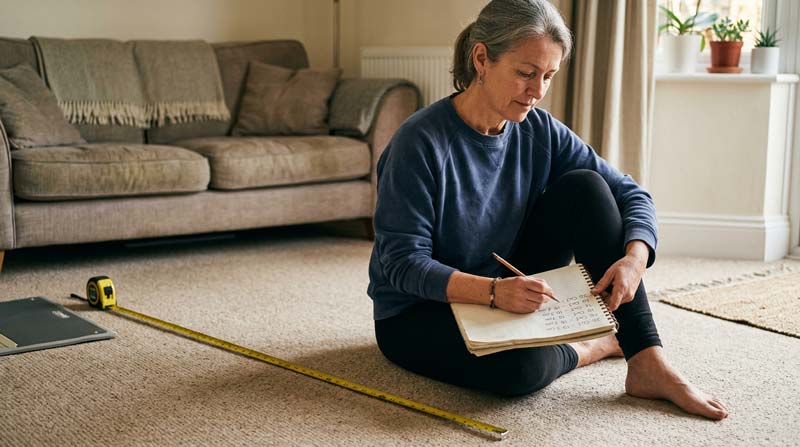
Judging a measurement means asking what the realistic alternative is. For most people, the alternative is not a better test. It is no test at all.
Where It Earns Its Place
Lineal tests like this one have a simple procedure and are easy to administer. They require minimal skills training and very affordable equipment. An evaluation can be completed quickly with almost no instruments. That makes it workable wherever the criterion angular tests cannot be used.
Those criterion tests are the comparison that matters. Angular measurement of joint range requires sophisticated instruments, qualified technicians and time. Its use in schools and large studies is therefore limited. Radiography is arguably the best criterion measurement for assessing flexibility, yet cost, equipment and time restrict it severely. A passive straight leg raise needs two administrators, one fixing the pelvis while the other moves the leg.
The training burden is genuinely low. In one study, a mixed team of graduate students and older adult volunteers administered three reaching protocols competently. One group session with supervised practice was enough. Clinicians tend to want the greatest reliability and validity for the least equipment and preparation time. That calculation is what keeps the sit-and-reach test in service.
Where It Falls Short
The movement involves the whole body. It has therefore been argued that the fingertip position gives no valid information about hamstring extensibility. That is the strong form of the objection. The weaker and better-supported form runs differently. All protocols yield moderate validity for hamstring flexibility and poor validity for lower back flexibility.
The single-joint problem compounds this. The test measures flexibility at one joint and one movement, hip flexion. It cannot describe overall flexibility, because no other joint is assessed. Many fitness batteries nonetheless use the sit-and-reach test alone to represent flexibility. Results are then not uncommonly interpreted as overall flexibility, when only one measurement was ever taken.
Two further limits are practical. A score expressed as fingertip displacement cannot separate the hip angle from the spine angle. The single number reveals nothing about the contribution of each. Any protocol that shifts the measurement reference point produces scores that cannot be read against another’s. The same reach becomes a different number.
None of that makes the number worthless. It makes it a specific kind of information. It is a moderately accurate estimate of how far the backs of the legs allow a person to fold forward. A tape measure on a floor produced it. Read as that, it is genuinely useful. Read as a verdict on the spine, or on flexibility in general, it fails. That question was never one it could answer.
Sources
- Guidelines for exercise testing and prescription. 6th ed. Baltimore: Lippincott, Williams & Wilkins, 2000:85-8.
- American College of Sports Medicine Position Stand. (1998). The recommended quantity and quality of exercise for developing and maintaining cardiorespiratory and muscular fitness, and flexibility in healthy adults. Medicine & Science in Sports & Exercise, 30, 975-991.
- American College of Sports Medicine. (2013). ACSM’s Guidelines for Exercise Testing and Prescription, 9th ed. Philadelphia: Lippincott Williams and Wilkins.
- Atkinson, G., & Nevill, A. M. (1998). Statistical methods for assessing measurement error (reliability) in variables relevant to sports medicine. Sports Medicine, 26, 217-238.
- Ayala F., Sainz de Baranda P., De Ste Croix M., Santonja F. (2011) Criterion-related validity of four clinical tests used to measure hamstring flexibility in professional futsal players. Physical Therapy in Sport 12, 175-181.
- Bandy WD, Irion JM, Briggler M. The effect of static stretch and dynamic range of motion training on the flexibility of the hamstring muscles. J Orthop Sports Phys Ther 1998;27:295-300.
- Baumgartner TA, Jackson AS. Measurement for evaluation in physical education and exercise science. Dubuque, IA: Brown & Benchmark, 1987.
- Bayles MP, Swank AM. ACSM’s Exercise Testing and Prescription, 1e. Lippincott Williams & Wilkins, a Wolters Kluwer business; 2018. Fitness categories reproduced there courtesy of the Canadian Society for Exercise Physiology.
- Brown, M. (1993). The well elderly. In A. Guccione (Ed.), Geriatric physical therapy (pp. 391-401). St. Louis, MO: Mosby.
- Castro-Pinero, J., Chillon, P., Ortega, F. B., Montesinos, J. L., Sjostrom, M., & Ruiz, J. R. (2009). Criterion-related validity of sit-and-reach and modified sit-and-reach test for estimating hamstring flexibility in children and adolescents aged 6-17 years. International Journal of Sports Medicine, 30, 658-662.
- Cohen J.A. (1992) Power primer. Psychological Bulletin 112, 155-159.
- Da Silva Diaz R., Gomez-Conesa A. (2008) Shortened hamstring syndrome. Fisioterapia 30, 186-193.
- Davis, D. S., Ashby, P. E., McCale, K. L., McQuain, J. A., & Wine, J. M. (2005). The effectiveness of 3 stretching techniques on hamstring flexibility using consistent stretching parameters. Journal of Strength and Conditioning Research, 19(1), 27-32.
- Dixon, J., & Keating, J. L. (2000). Variability in straight leg raise measurements. Physiotherapy, 86(7), 361-370.
- Eds P. Oja & B. Tuxworth. (1995). Eurofit for Adults: Assessment of Health-Related Fitness. Finland: Council of Europe Publishing.
- Eiling, E., Bryant, A. L., Petersen, W., Murphy, A., & Hohmann, E. (2007). Effects of menstrual-cycle hormone fluctuations on musculotendinous stiffness and knee joint laxity. Knee Surgery Sports Traumatology Arthroscopy, 15, 126-132.
- Erkula G., Demirkan F., Kilic B.A., Kiter E. (2002) Hamstring shortening in healthy adults. Journal of Back and Musculoskeletal Rehabilitation 16, 77-81.
- Fisk J.W., Baigent M.L., Hill P.D. (1984) Scheuermann’s disease. Clinical and radiological survey of 17 and 18 year olds. American Journal of Physical Medicine 63, 18-30.
- Ford, P., & McChesney, J. (2007). Duration of maintained hamstring ROM following termination of three stretching protocols. Journal of Sports Rehabilitation, 16, 18-27.
- Gajdosik R.L., Bohannon R.W. (1987) Clinical measurement of range of motion: Review of goniometry emphasizing reliability and validity. Physical Therapy 67, 1867-1872.
- Harvey J., Tanner S. (1991) Low back pain in young athletes: A practical approach. Sports Medicine 12, 394-406.
- Hoeger W.W., Hopkins D.R., Button S., Palmer T.A. (1990) Comparing the sit and reach with the modified sit and reach in measuring flexibility in adolescents. Pediatric Exercise Science 2, 156-162.
- Holt, L. E., Pelham, T. W., & Burke, D. G. (1999). Modifications to the standard sit-and-reach flexibility protocol. Journal of Athletic Training, 34(l), 43-47.
- Hopkins, W. G. (2000). Measures of reliability in sports medicine and science. Sports Medicine, 30(1), 1-15.
- Hui, S. S., & Yuen, P. Y. (2000). Validity of the modified back-saver sit-and-reach test: A comparison with other protocols. Medicine & Science in Sports & Exercise 32, 1655-1659.
- Jackson AW, Baker AA. The relationship of the sit and reach test to criterion measures of hamstring and back flexibility in young females. Res Q Exerc Sport 1986;57:183-6.
- Jackson A, Langford NJ. The criterion-related validity of the sit and reach test: replication and extension of previous findings. Res Q Exerc Sport 1989;60:384-7.
- Jackson AW, Morrow JR, Brill PA, et al. Relations of sit-up and sit-and-reach tests to low back pain in adults. J Orthop Sports Phys Ther 1998;27:22-8.
- Jones C. J., Rikli R. E., Max J., Noffal G. (1998) The reliability and validity of a chair sit-and-reach test as a measure of hamstring flexibility in older adult. Research Quarterly for Exercise and Sport 69, 338-343.
- Kawano M.M., Ambar G., Oliveira B.I.R., Boer M.C., Cardoso A.P. R.G., Cardoso J.R. (2010) Influence of the gastrocnemios muscle on the sit-and-reach test assessed by angular kinematic analysis. Revista Brasilena de Fisioterapia 14, 10-15.
- Kendall F.P., McCreary E.K., Provance P.G., Rodgers M.M., Romani W.A. (2005) Muscles: Testing and function with posture and pain. 5th edition Lippincott, Williams, & Wilkins, Baltimore.
- Krishan, K., & Vij, K. (2007). Diurnal variation of stature in three adults and one child. Anthropologist, 9, 113-117.
- Lemmink K.A.P.M., Kemper H.C.G., de Greef M.H.G., Rispens P., Stevens M. (2003) The validity of the sit-and-reach test and the modified sit-and-reach test in middle-aged to older men and women. Research Quarterly for Exercise and Sport 74, 331-336.
- Liemohn WP, Sharpe GL, Wasserman JF. Lumbosacral movement in the sit-and-reach and in Cailliet’s protective-hamstring stretch. Spine (Phila Pa 1976). 1994;19(18):2127-30.
- Lopez-Minarro, P.A., Andujar, P.S., & Rodriguez-Garcia, P.L. (2009). A comparison of the sit-and-reach test and the back-saver sit-and-reach test in university students. Journal of Sports Science and Medicine, 8, 116-122.
- Macrae I.F., Wright V. (1969) Measurement of back movement. Annals of Rheumatic Disease 28, 584-589.
- Mayorga-Vega D, Merino-Marban R, Viciana J. Criterion-Related Validity of Sit-and-Reach Tests for Estimating Hamstring and Lumbar Extensibility: a Meta-Analysis. J Sports Sci Med. 2014 Jan 20;13(1):1-14.
- McHugh M.P., Kremenic I.J., Fox M. B., Gleim G.W. (1998) The role of mechanical and neural restraints to joint range of motion during passive stretch. Medicine and Science in Sports and Exercise 30, 928-932.
- Patterson P, Wiksten DL, Ray L, et al. The validity and reliability of the back saver sit-and-reach test in middle school girls and boys. Res Q Exerc Sport 1996;67:448-51.
- Sainz de Baranda, P., & Ayala, F. (2010). Chronic flexibility improvement after 12 week stretching program utilizing the ACSM recommendations: hamstring flexibility. International Journal of Sports Medicine, 31, 1-8.
- Smith J.F., Miller C.V. (1985) The effect of head position on sit-and-reach performance. Research Quarterly for Exercise and Sport 56, 84-85.
- Standaert C. J., Herring S. A. (2000) Spondylolysis: A critical review. British Journal of Sports Medicine 34, 415-422.
- Wells, K. F., & Dillon, E. K. (1952). The sit-and-reach. A test of back and leg flexibility. Research Quarterly, 23, 115-118.
- Youdas, J. W., Krause, D. A., & Hollman, J. H. (2008). Validity of hamstring muscle length assessment during the sit-and-reach test using an inclinometer to measure hip joint angle. Journal of Strength and Conditioning Research, 22(1), 303-309.
CONNECT WITH BESUND
LATEST ARTICLES
- Your Ad Here -