


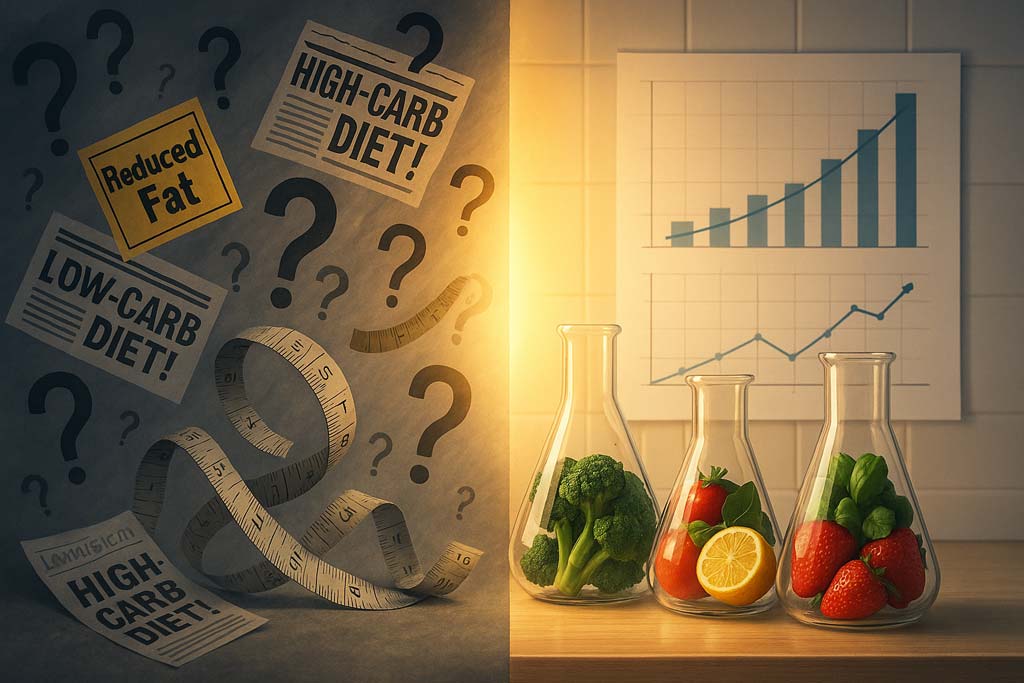
Nutrition myths spread faster than wildfire, leaving millions confused about what to eat and when to eat it. You’ve probably heard contradictory advice from friends, social media, and even health professionals. One day, carbs are evil; the next, they’re essential. Some people swear by eating six small meals, while others advocate for intermittent fasting.
This confusion isn’t accidental. The nutrition industry thrives on complexity, creating problems that don’t exist and selling solutions you don’t need. Meanwhile, simple truths get buried under marketing campaigns and misinterpreted studies.
Research consistently shows that most people hold fundamental misconceptions about basic nutrition principles. These beliefs directly influence food choices, meal timing, and the purchase of supplements. More concerning, they often lead people away from sustainable, evidence-based approaches that actually work.
The cost of believing nutrition myths extends far beyond wasted money on unnecessary supplements or restrictive diets. These misconceptions create anxiety around food, disrupt natural eating patterns, and prevent people from developing healthy relationships with nutrition. Some myths even promote behaviours that can harm long-term health.
What follows isn’t another list of do’s and don’ts. Instead, I’ll address the questions I hear most often, backed by actual research rather than marketing claims. Each myth we examine reveals how simple nutrition can be when you strip away the noise and focus on evidence.
Do I really need to eat six small meals a day to boost my metabolism?
This is one of those nutrition myths that sound scientific but lacks solid evidence to support it. Your metabolism doesn’t speed up because you eat more frequently throughout the day.
Studies on intermittent fasting and time-restricted eating actually show the opposite. Research demonstrates that eating patterns with fewer meals can achieve equal or better metabolic outcomes compared to eating more frequently throughout the day. The key lies in achieving a total calorie balance and maintaining high-quality food rather than focusing on meal frequency.
Real-world data reveals people typically consume an average of 4.4 eating occasions per day within an 11.5-hour window. This natural pattern suggests our bodies function well without rigid meal scheduling.
Will skipping breakfast ruin my metabolism?
Your metabolism won’t collapse if you skip breakfast. This myth stems from observational studies that confused correlation with causation.
Time-restricted eating and intermittent fasting protocols often involve skipping breakfast entirely. Multiple studies have shown that these approaches can improve metabolic markers without any adverse effects on metabolic rate. Individual preferences and lifestyle factors matter more than arbitrary meal timing rules.
The body has sophisticated mechanisms to maintain energy balance regardless of when your first meal occurs. What matters is the overall quality of your daily nutrition and total energy intake.
MYTH: Six Small Meals Boost Metabolism
Reality Check:
EVIDENCE: What Actually Works
Is eating after 8 pm automatically going to make me fat?
The clock on your wall doesn’t determine whether food becomes fat. Total daily calorie balance drives weight changes, not meal timing.
Cultural eating patterns worldwide don’t restrict evening meals. Mediterranean populations, known for longevity and health, regularly eat later in the evening without adverse effects.
However, late-night eating may negatively impact sleep quality and disrupt circadian rhythms in some individuals. This indirect effect on recovery and hormone regulation could influence weight management over time.
Does late-night eating always cause weight gain?
Weight gain occurs when you consistently consume more calories than you burn, regardless of timing. However, research on Night Eating Syndrome reveals some interesting patterns.
Studies show that people who regularly eat 25% or more of their daily calories after their evening meal tend to consume more total calories overall. These individuals often consume 690 calories between 11 pm and 5 am, representing about 15% of their daily intake.
The issue isn’t the timing itself, it’s that nighttime eating often involves extra calories on top of regular daily intake. If you’re eating within your daily calorie needs, the timing becomes less relevant.
⚠️ WHEN IT BECOMES PROBLEMATIC
✅ THE ACTUAL MECHANISM
Are carbohydrates evil for me, and should I avoid them?
Like many nutrition myths, the idea that carbohydrates are harmful ignores their essential functions. Carbohydrates serve as your brain’s preferred fuel source, providing 20-25% of your daily energy needs despite the brain representing only 2% of body weight.
Your body stores carbohydrates as glycogen in muscles and liver for immediate energy access during physical activity. Without adequate carbohydrates, high-intensity exercise performance suffers significantly. Research consistently shows carbohydrates are the predominant fuel source during exercise, with progressive increases in carbohydrate oxidation as intensity increases.
Quality matters more than avoidance. Whole grains, fruits, and vegetables provide complex carbohydrates alongside essential vitamins, minerals, and fibre. These foods consistently show protective effects against cardiovascular disease and type 2 diabetes in large-scale studies.
The 45-65% carbohydrate recommendation exists because this range supports optimal brain function whilst providing flexibility for different dietary approaches.
Are low-carb diets superior to everything else?
Low-carb approaches can be practical for short-term weight loss, but their long-term benefits often prove to be temporary. Multiple systematic reviews show that any advantages typically disappear after 12 months.
A comprehensive Cochrane review (an independent network of researchers) found no significant difference in long-term blood sugar control between low-carb and balanced-carb diets in people with diabetes. More importantly, higher-fibre, higher-carb diets actually reduced HbA1c (long-term blood sugar marker) by 0.50% compared to lower-carb approaches.
Individual responses vary significantly based on genetics, activity levels, and personal preferences. The “best” diet is one you can maintain long-term whilst meeting your nutritional needs.
Do all fats make me unhealthy?
Fat performs essential functions your body cannot replicate. Omega-3 fatty acids support brain function and reduce inflammation. Monounsaturated fats (healthy fats found in olive oil and nuts) improve nutrient absorption and cardiovascular health.
Mediterranean dietary patterns, rich in olive oil, nuts, and fish, consistently show superior health outcomes compared to low-fat approaches. These populations have lower rates of heart disease and better longevity markers.
The type of fat matters more than the total amount of fat. Trans fats (artificially created fats) and excessive saturated fats from processed foods pose health risks. Natural fats from whole food sources provide essential nutrients your body requires for optimal function.

Will eating a high-protein diet damage my kidneys?
This nutrition myth causes unnecessary fear about protein consumption. Multiple studies confirm that healthy kidneys handle high protein intake without problems. Research examining protein intakes up to 3.2g per kilogram of body weight showed no adverse effects on kidney function markers in healthy individuals.
Long-term studies in athletes consuming 1.6-2.4g per kilogram daily found no changes in kidney function over several years. The concern only applies to people with existing kidney disease who require medical supervision for protein intake.
Your kidneys have a remarkable capacity to process protein efficiently when functioning normally. The myth likely stems from confusion between correlation and causation in observational studies.
Are natural sugars completely different from processed sugars?
Your body processes fructose similarly, whether it comes from an apple or table sugar. The molecular structure remains identical regardless of the source.
However, whole fruits provide context that matters. Fibre slows sugar absorption, preventing rapid blood glucose spikes. Fruits also deliver vitamins, minerals, and antioxidants alongside their natural sugars.
The total amount of sugar in your diet matters more than whether it’s “natural” or “added.” A balanced approach focuses on whole foods whilst being mindful of total sugar intake from all sources.
Are all processed foods equally bad for my health?
Processing exists on a spectrum, ranging from minimal interventions, such as freezing vegetables, to ultra-processed products with multiple additives. Not all processing harms nutritional value.
Some processing actually improves nutrient availability. Cooking breaks down cell walls, making nutrients more accessible. Fermentation creates beneficial compounds and preserves food safely.
The degree and type of processing determines health impact. Focus on minimally processed whole foods while recognising that some processed options, such as canned beans or frozen vegetables, can also support healthy eating patterns.
Do I need supplements because whole foods aren’t enough?
Mediterranean populations thrive on whole-food diets without the need for widespread supplementation. These dietary patterns provide all essential nutrients through a varied and balanced diet.
Nutrient interactions in whole foods create synergistic effects that isolated supplements cannot replicate. The complex matrix of vitamins, minerals, and phytonutrients works together in ways science is still discovering.
Most people meet their nutritional needs through a diverse and well-planned diet. Specific populations may require targeted supplementation, but this should be based on individual assessment rather than blanket assumptions.
Do I need to eat immediately after exercise to achieve results?
The rigid 30-minute “anabolic window” concept oversimplifies post-exercise nutrition. Recent research shows this window extends much longer than previously thought.
If you’re meeting your daily protein and carbohydrate requirements, precise timing becomes less critical for most people. Total daily intake has a greater influence on muscle recovery and adaptation than the specific timing of meals.
Athletes with multiple training sessions per day may benefit from strategically timed nutrition to optimise their performance. For most people pursuing general fitness, focusing on overall diet quality throughout the day proves more practical and effective.

Do I really need to drink 8 glasses of water every day?
Your body evolved sophisticated thirst mechanisms over millions of years. These systems accurately guide fluid intake based on individual needs, activity levels, and environmental conditions.
Hydration requirements vary dramatically between individuals. A sedentary person in cool weather needs far less fluid than someone exercising in hot conditions. Food also provides 20-30% of daily fluid intake through fruits, vegetables, and other water-rich sources.
Trust your thirst while being aware that certain medications, medical conditions, or extreme environments may affect normal thirst responses.
Can I actually “boost” my immune system with specific foods?
Your immune system functions as a complex network that doesn’t require “boosting” when it is working correctly. In healthy individuals, an overactive immune response can actually cause harm through excessive inflammation.
Balanced nutrition supports normal immune function, but no single food dramatically enhances immunity. Marketing claims about “superfoods” or special supplements often exaggerate modest effects found in laboratory studies.
A varied diet rich in fruits, vegetables, and whole foods provides the nutrients your immune system requires for optimal function. Adequate sleep, regular physical activity, and stress management contribute more to immune health than any specific food.
Do detox diets really cleanse my body of toxins?
This nutrition myth exploits fears about environmental toxins whilst offering expensive solutions to problems that don’t exist. Your liver and kidneys naturally detoxify your body 24 hours a day with remarkable efficiency. These organs evolved specifically to process and eliminate waste products and toxins.
No evidence shows that special diets, juices, or supplements improve your body’s natural detoxification processes. These marketing claims exploit misconceptions about how the human body actually functions.
The most effective way to support your body’s detoxification systems is to maintain overall health through balanced nutrition, adequate hydration, regular physical activity, and sufficient sleep.

The Science-First Approach to Nutrition Beliefs
These nutrition myths persist because they offer simple answers to complex questions. They promise shortcuts and quick fixes in a world where sustainable health requires patience and consistency.
Evidence-based nutrition focuses on patterns rather than perfection. It emphasises whole foods, appropriate portions, and flexibility over rigid rules and restrictions. This approach acknowledges individual differences whilst maintaining core principles supported by research.
Critical thinking serves as your best tool for evaluating nutrition claims. Ask for evidence, consider the source, and be wary of dramatic promises. The most effective nutrition strategies often appear dull because they work quietly over time rather than delivering instant results.
Your relationship with food should enhance your life, not create anxiety or confusion. By focusing on evidence over marketing and consistency over perfection, you can develop sustainable habits that support long-term health and well-being.
Sources
- Adafer R., Messaadi W., Meddahi M., Patey A., Haderbache A., Bayen S., Messaadi N. Food Timing, Circadian Rhythm and Chrononutrition: A Systematic Review of Time-Restricted Eating’s Effects on Human Health. Nutrients. 2020;12:3770.
- Antonio, J, Ellerbroek, A, Silver, T, et al. A high protein diet has no harmful effects: a one-year crossover study in resistance-trained males. J Nutr Metab. 2016;2016:1–5.
- Avnee, Sood S., Chaudhary D.R., Jhorar P., Rana R.S. Biofortification: An approach to eradicate micronutrient deficiency. Front. Nutr. 2023;10:1233070.
- Burke LM, Hawley JA, Wong SH, et al. Carbohydrates for training and competition. Food, Nutr Sports Perform III. 2013;29:17–27.
- Cienfuegos S., Gabel K., Kalam F., Ezpeleta M., Wiseman E., Pavlou V., Lin S., Oliveira M.L., Varady K.A. Effects of 4- and 6-h Time-Restricted Feeding on Weight and Cardiometabolic Health: A Randomized Controlled Trial in Adults with Obesity. Cell Metab. 2020;32:366–378.e3.
- Gluck ME, Venti CA, Salbe AD, Krakoff J. Nighttime eating: commonly observed and related to weight gain in an inpatient food intake study. Am J Clin Nutr. 2008 Oct;88(4):900-5.
- Gutiérrez S., Svahn S.L., Johansson M.E. Effects of Omega-3 Fatty Acids on Immune Cells. Int. J. Mol. Sci. 2019;20:5028.
- Jebb, S.A., Lovegrove, J.A., Griffin, B.A., Frost, G.S., Moore, C.S., Chatfield, M.D. et al. Effect of changing the amount and type of fat and carbohydrate on insulin sensitivity and cardiovascular risk: the RISCK trial. The American Journal of Clinical Nutrition, 92(4), 748–758.
- Kant, A.K. ∙ Graubard, B.I. 40-year trends in meal and snack eating behaviors of American adults. J Acad Nutr Diet. 2015; 115:50-63
- Kerksick CM, Arent S, Schoenfeld BJ, et al. International society of sports nutrition position stand: nutrient timing. J Int Soc Sports Nutr. 2017;14(1):33.
- Lieberman, D.E. Human locomotion and heat loss: an evolutionary perspective. Comp. Physiol., 5 (2015), pp. 99-117.
- Liu H., Wang J., He T., Becker S., Zhang G., Li D., Ma X. Butyrate: A Double-Edged Sword for Health? Nutr. 2018;9:21–29.
- James DL, Mun CJ, Larkey LK, Ofori E, Hawley NA, Alperin K, Vance DE, Sears DD. Health impacts of a remotely delivered prolonged nightly fasting intervention in stressed adults with memory decline and obesity: A nationwide randomised controlled pilot trial. J Clin Transl Sci. 2024 Nov 11;8(1):e215.
- Martínez-González M.A., García-Arellano A., Toledo E., Salas-Salvadó J., Buil-Cosiales P., Corella D., Covas M.I., Schröder H., Aros F., Gomez-Gracia E., et al. A 14-item Mediterranean diet assessment tool and obesity indexes among high-risk subjects: The PREDIMED trial. PLoS ONE. 2012;7:e43134.
- Mullins A.P., Arjmandi B.H. Health benefits of plant-based nutrition: Focus on beans in cardiometabolic diseases. Nutrients. 2021;13:519.
- Naude CE, Brand A, Schoonees A, Nguyen KA, Chaplin M, Volmink J. Low‐carbohydrate versus balanced‐carbohydrate diets for reducing weight and cardiovascular risk. Cochrane Database Syst Rev. 2022;2022(1).
- Pizzorno J. Glutathione! Integr. Med. 2014;13:8–12.
- Poles J., Karhu E., McGill M., McDaniel H.R., Lewis J.E. The effects of twenty-four nutrients and phytonutrients on immune system function and inflammation: A narrative review. J. Clin. Transl. Res. 2021;7:333–376
- Poortmans J.R., Francaux M. Long-term oral creatine supplementation does not impair renal function in healthy athletes. Med. Sci. Sports Exerc. 1999;31:1108–1110.
- Queiroz J.d.N., Macedo R.C.O., dos Santos G.C., Munhoz S.V., Machado C.L.F., de Menezes R.L., Menzem E.N., Moritz C.E.J., Pinto R.S., Tinsley G.M., et al. Cardiometabolic Effects of Early v. Delayed Time-Restricted Eating plus Energetic Restriction in Adults with Overweight and Obesity: An Exploratory Randomised Clinical Trial. Br. J. Nutr. 2023;129:637–649.
- Sawka, M.N., Burke, L.M., Eichner, E.R., Maughan, R.J., Montain, S.J., Stachenfeld, N.S. American College of Sports Medicine position stand. Exercise and fluid replacement. Med. Sci. Sports Exerc., 39 (2007), pp. 377-390.
- Singh M.P., Soni K., Bhamra R., Mittal R.K. Superfood: Value and need. Curr. Nutr. Food Sci. 2022;18:65–68.
- Snorgaard O, Poulsen GM, Andersen HK, Astrup A. Systematic review and meta‐analysis of dietary carbohydrate restriction in patients with type 2 diabetes. BMJ Open Diab Res Amp; Care. 2017;5(1):e000354.
- Stunkard AJ, Grace WJ, Wolff HG. The night-eating syndrome; a pattern of food intake among certain obese patients. Am J Med 1955;19:78–86.
- Vigh-Larsen J.F., Ørtenblad N., Nielsen J., Andersen O.E., Overgaard K., Mohr M. The Role of Muscle Glycogen Content and Localization in High-Intensity Exercise Performance: A Placebo-Controlled Trial. Med. Sci. Sports Exerc. 2022;54:2073–2086.
- Wang Y., Haskell-Ramsay C., Lara Gallegos J., Lodge J.K. Effects of chronic consumption of specific fruit (berries, cherries and citrus) on cognitive health: A systematic review and meta-analysis of randomised controlled trials. Eur. J. Clin. Nutr. 2023;77:7–22.
- Weeratunga P, Jayasinghe S, Perera Y, et al. Per capita sugar consumption and prevalence of diabetes mellitus – global and regional associations. BMC Public Health. 2014;14(1):186.
- Wirth J., Hillesheim E., Brennan L. The Role of Protein Intake and Its Timing on Body Composition and Muscle Function in Healthy Adults: A Systematic Review and Meta-Analysis of Randomized Controlled Trials. J. Nutr. 2020;150:1443–1460.