



The protein macronutrient is an essential building block for nearly every structure and function in the human body. From muscle repair and growth to immune function and hormone production, proteins perform crucial roles that support overall health and physical performance.
Unlike carbohydrates and fats, proteins contain nitrogen. They are composed of amino acid chains (the individual building blocks of protein) that determine their specific functions within the body. These amino acids are the foundation for countless physiological processes, including tissue repair, enzyme production, and nutrient transport.
Protein quality varies significantly between food sources, with factors such as amino acid profile, digestibility, and bioavailability (how effectively nutrients are absorbed and used by the body) determining how effectively your body can utilise protein macronutrient for various functions.
While animal-derived proteins typically offer complete amino acid profiles, plant-based options often require strategic combinations to ensure adequate intake of all essential amino acids, which the body cannot produce independently.
Daily protein requirements shift based on several factors, including age, activity level, and specific health goals. Research indicates that active individuals and older adults may benefit from higher protein intakes than those recommended for the general population. This tailored approach to protein consumption helps support muscle maintenance, recovery from exercise, and overall health across different life stages.
In the following sections, we’ll explore the fundamental aspects of the protein macronutrient, from its structural composition and digestive processes to practical guidance on optimal intake and health considerations. We’ll also introduce a comprehensive food guide that details protein content, quality metrics, and useful applications for various dietary needs.
Understanding the Protein Macronutrient: Structure and Function
Proteins serve as the primary structural components in the human body, forming the basis for muscles, organs, skin, and virtually all tissues. These vital compounds consist of amino acid chains linked through peptide bonds (chemical connections between amino acids), creating unique structures that determine their specific functions.
The human body requires 20 amino acids, nine essential because they must come from dietary sources; the body cannot synthesise them independently.
The protein macronutrient differs fundamentally from carbohydrates and fats in its nitrogen content. This unique element enables proteins to perform specific roles that other nutrients cannot replicate, particularly in tissue growth and repair functions. While carbohydrates and fats primarily provide energy, proteins serve multiple additional roles.
The table below illustrates the essential roles of proteins compared to their structural composition in the body:
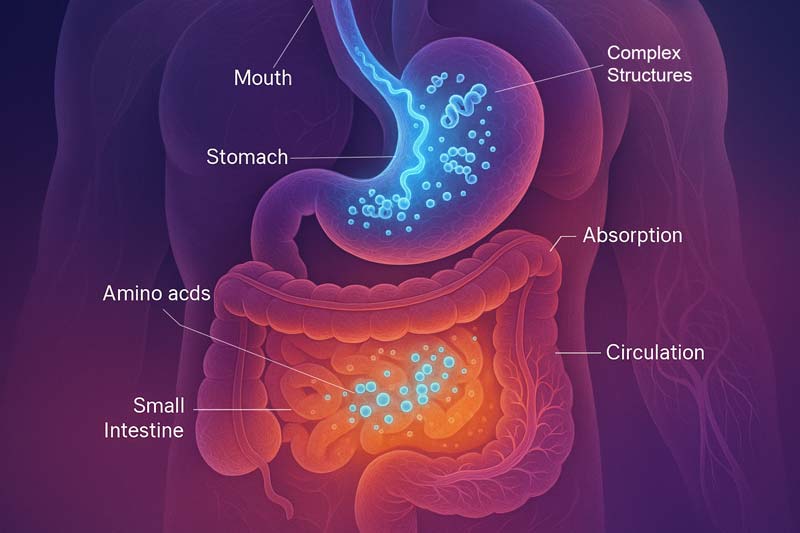
When consumed, dietary proteins undergo a complex breakdown process before the body can utilise their amino acids. This digestion begins in the stomach with hydrochloric acid (stomach acid) and pepsin (a digestive enzyme), which break larger protein molecules into smaller polypeptides. Further breakdown continues in the small intestine through pancreatic and brush border enzymes, yielding individual amino acids for absorption.
The protein macronutrient provides the essential amino acids needed for muscle protein synthesis, the process through which muscles repair and grow. Protein intake is crucial during growth, after exercise, and throughout ageing to minimise muscle loss.
Leucine, an essential amino acid abundant in animal proteins and some plant sources, is particularly important in stimulating muscle protein synthesis by activating the mTOR pathway (a key regulator of cell growth).
In addition to structural functions, proteins also support:
- Immune function: Antibodies that fight infections are protein-based
- Transport: Haemoglobin, a protein that carries oxygen in the blood
- Fluid balance: Albumin helps maintain proper fluid distribution
- Communication: Many hormones are proteins that regulate bodily functions
- Enzyme activity: Nearly all metabolic reactions require protein-based enzymes
The quality of dietary protein varies based on several factors. Complete proteins contain all nine essential amino acids in sufficient quantities. Animal-derived proteins, including meat, dairy, eggs, and fish, typically provide highly digestible complete proteins. Plant-based proteins often lack one or more essential amino acids in optimal amounts, requiring strategic combinations to ensure complete amino acid profiles.
Protein turnover, the continual process of breakdown and synthesis, occurs constantly in the body, with muscle tissue particularly active in this process. Daily protein intake supports this turnover, ensuring adequate amino acids are available for ongoing maintenance and repair functions throughout the body’s tissues.
The Science Behind Protein Digestion and Absorption
Protein digestion follows a methodical process that transforms complex food proteins into usable amino acids. This multi-stage journey enables the body to extract and utilise these vital building blocks for countless physiological functions.
Each stage plays a crucial role in maximising the nutritional value of dietary protein macronutrient. The diagram below shows the step-by-step process of protein digestion and absorption:
THE PROTEIN JOURNEY: FROM FOOD TO FUNCTION
MOUTH PHASE
Physical breakdown begins with chewing, which increases the surface area of protein-containing foods. Though minimal chemical digestion occurs here, this mechanical process prepares proteins for the more intensive breakdown stages to come.
STOMACH PHASE
Chemical digestion intensifies as hydrochloric acid denatures protein structures. The enzyme pepsin, activated by stomach acid, breaks peptide bonds between amino acids, converting proteins into shorter chains called polypeptides. This acidic environment optimises protein breakdown by exposing more surface area for enzymatic action.
SMALL INTESTINE PHASE
The most significant protein digestion occurs here through several enzymatic actions:
- Pancreatic enzymes continue breaking down polypeptides
- Brush border enzymes complete the breakdown into amino acids
- Bicarbonate neutralises stomach acid for optimal enzyme function
ABSORPTION MECHANISM
Amino acids and small peptides cross the intestinal wall through dedicated transport systems:
- Amino acids use specific transporters that recognise their structure
- Di- and tripeptides enter intestinal cells through PEPT1 transporters
- Most peptides are further broken down before entering bloodstream
CIRCULATION PHASE
Absorbed amino acids enter the portal vein and travel to the liver, which regulates their distribution throughout the body based on metabolic needs. The liver can direct amino acids to:
- Protein synthesis for growth and repair
- Energy production when needed
- Conversion to glucose (gluconeogenesis)
- Storage as fat when in excess
The body’s ability to utilise dietary protein macronutrient depends on several factors influencing digestion and absorption efficiency. Research has identified key elements that determine how effectively proteins are processed, as shown in the following table:
| PROTEIN QUALITY FACTORS | IMPACT ON DIGESTION AND ABSORPTION |
|---|---|
| Source (animal vs. plant) | Animal proteins typically achieve higher digestibility rates (90-99%) compared to plant proteins (70-90%) |
| Processing methods | Cooking can increase digestibility by denaturing proteins, but excessive heat may reduce nutritional value |
| Amino acid composition | Complete proteins containing all essential amino acids support more efficient utilisation |
| Individual digestive health | Enzyme production, gut microbiome, and intestinal health influence absorption capacity |
| Age-related factors | Digestive efficiency may decline with age, affecting protein macronutrient utilisation |
The rate of protein digestion varies between food sources. Whey protein rapidly releases amino acids into the bloodstream, while casein (another milk protein) provides a slower, sustained release. This difference creates distinct metabolic effects—whey stimulates muscle protein synthesis quickly but briefly. At the same time, casein suppresses protein breakdown over longer periods.
Protein absorption faces several potential obstacles that can limit utilisation. Anti-nutritional factors in some plant foods (phytates, tannins, and protease inhibitors) can bind to proteins or inhibit digestive enzymes, reducing absorption. Proper food preparation methods such as soaking, sprouting, or fermenting legumes and grains can mitigate these effects by neutralising anti-nutritional compounds.
When protein intake exceeds immediate bodily needs, the surplus amino acids cannot be stored as protein reserves. Instead, the liver deaminates its nitrogen-containing amino groups, converting the remaining molecules to glucose or fatty acids. This process highlights the importance of distributing protein throughout the day rather than consuming large amounts in a single meal.
Comprehensive Protein Macronutrient Food Guide
The protein macronutrient content varies considerably across food sources, with each offering unique nutritional profiles that affect how your body utilises them. Knowledge of these differences allows for more informed dietary choices based on specific health and fitness goals. The table below comprehensively analyses familiar protein sources and their nutritional characteristics.
Protein Macronutrient Food Guide
g = gramme | oz = ounce | mL = millilitre | µg = microgram | Tbsp = tablespoon | DIAAS = Digestible Indispensable Amino Acid Score | PDCAAS = Protein Digestibility Corrected Amino Acid Score | EAA = Essential Amino Acid | BCAA = Branched-Chain Amino Acid | ~ = Approximate value | – = Data not available
Detailed analysis of 40 common foods across 10 key metrics, including protein content, quality scores, and digestibility factors. This comprehensive protein macronutrient reference identifies complete protein sources and demonstrates their essential roles in bodily function and tissue repair.
Understanding The Metrics
Protein Content Per Serving
- What it means: The amount of protein in a standard food serving.
- Why it matters: This straightforward measurement helps you calculate your daily protein intake from various food sources, enabling more precise meal planning to meet your nutritional targets.
Pdcaas/Diaas (Protein Quality Scores)
- What it means: These standardised measurements evaluate protein quality based on digestibility and amino acid content. PDCAAS (Protein Digestibility Corrected Amino Acid Score) and DIAAS (Digestible Indispensable Amino Acid Score) provide numerical ratings where higher values indicate better protein quality.
- Why it matters: These scores help identify which protein sources most efficiently meet your body’s amino acid requirements. A score of 100 or above indicates an excellent protein source that provides all essential amino acids in proportions that match human requirements.
Complete Protein Status
- What it means: Complete proteins contain all nine essential amino acids (those your body cannot produce) in sufficient quantities and proportions for human needs. Incomplete proteins lack adequate amounts of one or more essential amino acids.
- Why it matters: Consuming complete proteins or strategic combinations of incomplete proteins ensures your body receives all the essential amino acids needed for optimal physiological function.
Key Amino Acids
- What it means: These are the prominent or nutritionally significant amino acids found in the protein source, with particular attention to essential amino acids like leucine that trigger muscle protein synthesis.
- Why it matters: Different amino acids serve specific functions; leucine stimulates muscle growth, lysine supports immune function and collagen formation, while other amino acids contribute to various metabolic processes.
Digestibility
- What it means: This metric indicates how efficiently your digestive system can break down and absorb the protein from the food source. High digestibility means more of the protein becomes available for bodily functions.
- Why it matters: Even protein-rich foods provide limited nutritional value if your body cannot efficiently extract and absorb their amino acids. Processing methods (cooking, fermenting) can affect digestibility.
Bioavailability
- What it means: Bioavailability measures how effectively your body can utilise the absorbed protein for physiological functions beyond digestion and absorption.
- Why it matters: This factor accounts for how well your body can use the protein macronutrient after absorption, which depends on the protein’s structure, processing methods, and individual metabolic factors.
The table demonstrates the nutritional diversity across protein sources. Animal-derived proteins generally offer:
- Complete amino acid profiles
- Higher digestibility rates (90-99%)
- Greater leucine content, which is essential for muscle protein synthesis
Plant-based protein sources typically provide the following:
- Varied amino acid profiles (often limiting in lysine or methionine)
- Moderate digestibility (70-90%)
- Additional nutritional benefits from fibre, antioxidants, and phytonutrients
Optimal Uses by Food Category
Dairy Proteins
- Casein (cottage cheese): Ideal for before bedtime due to slow digestion rate, providing sustained amino acid release during overnight recovery
- Whey (Greek yoghurt, milk): Perfect for post-workout consumption due to rapid digestion and high leucine content
- Cheese varieties: Excellent protein-rich additions to meals throughout the day
Animal Proteins
- Lean meats: Provide complete proteins with high digestibility, ideal for main meals
- Eggs: Versatile protein source with nearly perfect amino acid composition, suitable for any meal
- Fish: Combines high-quality protein with beneficial omega-3 fatty acids, supporting both muscle recovery and heart health
Plant Proteins
- Legumes: Rich in lysine but often limiting in methionine; pair with grains for complementary amino acids
- Grains: Contain methionine but limited lysine; combine with legumes for improved amino acid balance
- Nuts and seeds: Provide protein along with healthy fats; excellent for snacking or meal additions
The table highlights how protein quality varies substantially between sources. For example, egg proteins achieve DIAAS scores above 100, indicating they provide essential amino acids that exceed minimum requirements. Meanwhile, many plant proteins score lower but contribute valuable nutrition when strategically combined with complementary protein sources.
Optimal Daily Protein Requirements for Different Populations
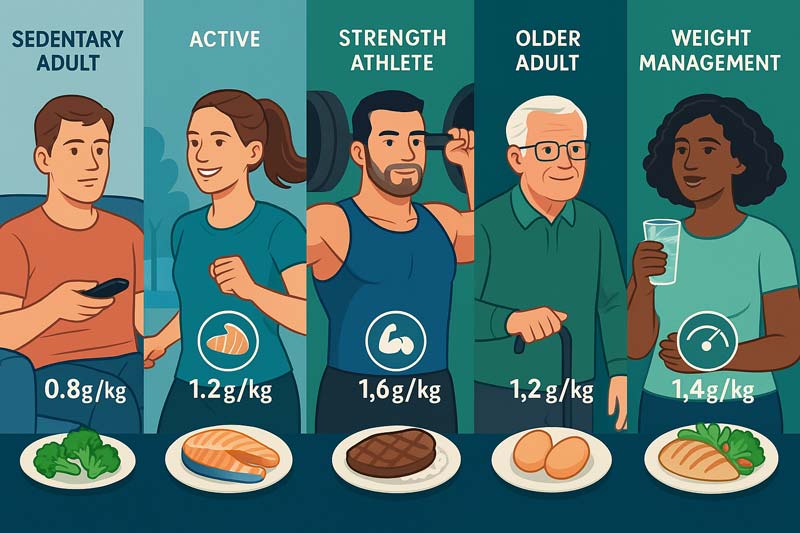
Daily protein needs vary significantly based on individual factors such as age, activity level, health status, and specific goals. While general recommendations provide a starting point, tailoring protein intake to your unique circumstances yields better health and physical performance outcomes.
Population-Specific Requirements
The following chart shows the recommended protein macronutrient intake levels for different population groups based on research findings. These guidelines provide a framework for personalising protein consumption based on your specific needs:
The protein macronutrient requirements listed above represent general ranges based on current research. Individual needs may vary based on factors such as:
- Training intensity and frequency
- Overall energy intake
- Age and gender
- Body composition goals
- Pre-existing health conditions
- Protein source quality and digestibility
Research demonstrates that distributing protein macronutrient intake evenly throughout the day maximises muscle protein synthesis more effectively than consuming the same amount in fewer, larger meals. For most adults, consuming 20-40g of high-quality protein (approximately 0.25-0.40g per kg of body weight) per meal provides optimal muscle protein synthesis stimulation.
Age Considerations
Younger adults process dietary protein efficiently, making standard intake recommendations adequate for most needs. However, older adults experience “anabolic resistance”—a reduced ability to stimulate muscle protein synthesis from dietary protein. This age-related change necessitates higher protein intake and strategic timing to maintain muscle mass.
The age-related decline in protein utilisation efficiency occurs due to:
- Decreased digestive enzyme production
- Reduced anabolic hormone levels
- Changes in muscle cell signalling pathways
- Altered nutrient transport mechanisms
Adolescents in growth phases require additional protein to support development, with research suggesting intakes of 1.5-2.0g per kg of body weight daily. During this critical developmental stage, adequate protein intake supports:
- Linear growth and bone development
- Hormonal changes and sexual maturation
- Neural development and cognitive function
- Tissue expansion and increased blood volume
Special Considerations
Pregnancy and lactation increase protein requirements to support:
- Foetal tissue development
- Maternal tissue expansion
- Milk production after birth
- Recovery from childbirth
Current recommendations suggest an additional 25g of protein daily during pregnancy and 19g during lactation, in addition to standard requirements.
For weight management, higher protein intakes offer several advantages:
- Increased satiety and reduced hunger
- Greater thermic effect (energy expended during digestion)
- Preservation of lean mass during caloric restriction
- Better long-term weight maintenance outcomes
When aiming to build muscle mass, protein timing becomes particularly important. Strategic intake around exercise, especially within the post-workout period, helps maximise muscle protein synthesis. While the “anabolic window” may be wider than previously thought, consuming protein within 1-2 hours after training provides optimal support for recovery and adaptation.

Protein Macronutrient Balance: Benefits and Health Considerations
Achieving the right protein macronutrient balance offers numerous health benefits, requiring awareness of potential considerations. This balanced approach supports overall health, physical performance, and longevity when tailored to individual needs and health status.
Benefits Of Adequate Protein Intake
MUSCLE PRESERVATION AND DEVELOPMENT: Adequate protein intake supports muscle maintenance throughout life, which is particularly important during ageing when muscle loss accelerates. Research shows that higher protein consumption correlates with better preservation of lean mass in older adults. For those engaged in resistance training, sufficient protein maximises muscle development and strength gains regardless of age, with research showing protein supplementation enhances resistance training adaptations.
METABOLIC ADVANTAGES: The protein macronutrient provides several metabolic benefits that support weight management and overall health. Protein consumption increases the thermic effect of food, meaning your body burns more calories digesting protein than fats or carbohydrates. Additionally, protein helps regulate blood glucose levels by promoting insulin sensitivity and providing amino acids for gluconeogenesis (glucose production) when needed.
BONE HEALTH SUPPORT: Despite outdated beliefs that protein might harm bone health, current evidence indicates that adequate protein intake supports bone density and strength. Research demonstrates that higher protein consumption correlates with reduced fracture risk and better maintenance of bone mineral density, particularly when combined with adequate calcium and vitamin D.
SATIETY AND APPETITE REGULATION: Protein proves more satiating (makes you feel full and stops hunger) than carbohydrates or fats, helping control hunger and food intake. This increased satiety stems from protein’s effects on appetite-regulating hormones and slower gastric emptying, which keeps you feeling fuller for longer periods. This satiating effect makes protein particularly valuable for weight management strategies.
RECOVERY ENHANCEMENT: protein provides the building blocks for tissue repair after exercise or injury. The amino acids from dietary protein support healing by synthesising new cells and tissues. This accelerates recovery from both exercise-induced muscle damage and various injuries throughout the body.
Considerations For Protein Intake
KIDNEY FUNCTION IMPLICATIONS: For individuals with normal kidney function, research indicates that higher protein intakes within recommended ranges pose no harm to kidney health. However, those with existing kidney disease may need to moderate protein intake based on their condition and stage. The relationship between protein intake and kidney function requires individualised assessment for those with pre-existing kidney conditions.
PROTEIN QUALITY AND SOURCE DIVERSITY: Not all proteins offer equal nutritional value. Animal-derived proteins typically provide complete amino acid profiles with high digestibility. In contrast, plant proteins may lack sufficient quantities of certain essential amino acids. Consuming varied protein sources ensures a comprehensive amino acid intake, which is particularly important for those following plant-based diets.
TIMING AND DISTRIBUTION STRATEGIES: How you distribute protein throughout the day affects its utilisation. Research suggests that spreading protein intake across meals (20-40g per meal for most adults) optimises muscle protein synthesis more effectively than consuming the same total amount in fewer, larger servings. This even distribution maintains a steady supply of amino acids for bodily functions throughout the day.
BALANCING WITH OTHER NUTRIENTS: Protein-rich diets should maintain balance with other essential macronutrients and micronutrients. If not carefully planned, high protein intakes may displace other essential nutrients. Creating meals that combine quality proteins with fruits, vegetables, whole grains, and healthy fats ensures nutritional completeness.
INDIVIDUAL VARIABILITY FACTORS: Genetic factors, gut microbiome composition, and existing health conditions can influence individual protein requirements and utilisation. These factors may affect how efficiently your body processes various protein sources and utilises their amino acids for physiological functions.
As research advances, our understanding of optimal protein macronutrient intake continues to evolve. Current evidence supports higher protein intakes than previously recommended, particularly for active individuals and older adults. This updated approach recognises protein’s role in preventing deficiency and optimising health, performance, and quality of life across the lifespan.
Sources
- Bauer J., Biolo G., Cederholm T., Cesari M., Cruz-Jentoft A.J., Morley J.E., Phillips S., Sieber C., Stehle P., Teta D., et al. Evidence-Based Recommendations for Optimal Dietary Protein Intake in Older People: A Position Paper from the PROT-AGE Study Group. J. Am. Med. Dir. Assoc. 2013;14:542–559.
- Bytomski JR. Fueling for performance. Sports Health. 2018;10(1):47–53.
- Castanho R.d.S. Major Nutrological Approaches to Macronutrients in the Performance and Body Composition of Highly Trained Athletes: A Systematic Review. Int. J. Nutrol. 2023;16:1–10.
- Chang Y.B., Kim H., Lee S.K., Kim H.J., Jeong A.H., Suh H.J., Ahn Y. Characteristics and Absorption Rate of Whey Protein Hydrolysates Prepared Using Flavourzyme after Treatment with Alcalase and Protamex. Molecules. 2023;28:7969.
- Deutz N.E.P., Bauer J.M., Barazzoni R., Biolo G., Boirie Y., Bosy-Westphal A., Cederholm T., Cruz-Jentoft A., Krznariç Z., Nair K.S., et al. Protein Intake and Exercise for Optimal Muscle Function with Aging: Recommendations from the ESPEN Expert Group. Clin. Nutr. 2014;33:929–936.
- Dreyer H., Drummond M., Pennings B., Fujita S., Glynn E., Chinkes D., Dhanani S., Volpi E., Rasmussen B. Leucine-Enriched Essential Amino Acid and Carbohydrate Ingestion Following Resistance Exercise Enhances mTOR Signaling and Protein Synthesis in Human Muscle. Am. J. Physiol. Endocrinol. Metab. 2008;294–E400.
- Gannon M.C., Nuttall F.Q., Saeed A., Jordan K., Hoover H. An Increase in Dietary Protein Improves the Blood Glucose Response in Persons with Type 2 Diabetes. Am. J. Clin. Nutr. 2003;78:734–741.
- Hartman J.W., Tang J.E., Wilkinson S.B., Tarnopolsky M.A., Lawrence R.L., Fullerton A.V., Phillips S.M. Consumption of Fat-Free Fluid Milk after Resistance Exercise Promotes Greater Lean Mass Accretion than Does Consumption of Soy or Carbohydrate in Young, Novice, Male Weightlifters. Am. J. Clin. Nutr. 2007;86:373–381.
- Houston D.K., Nicklas B.J., Ding J., Harris T.B., Tylavsky F.A., Newman A.B., Lee J.S., Sahyoun N.R., Visser M., Kritchevsky S.B. Dietary protein intake is associated with lean mass change in older, community-dwelling adults: The Health, Aging, and Body Composition (Health ABC) Study. Am. J. Clin. Nutr. 2008;87:150–155.
- Lane M., Herda T., Fry A., Cooper M., Andre M., Gallagher P. Endocrine Responses and Acute mTOR Pathway Phosphorylation to Resistance Exercise with Leucine and Whey. Biol. Sport. 2017;34:197–203.
- Longland TM, Oikawa SY, Mitchell CJ, et al. Higher compared with lower dietary protein during an energy deficit combined with intense exercise promotes greater lean mass gain and fat mass loss: A randomised trial. Am J Clin Nutr. 2016;103(3):738–746.
- Lu Z., Hunter T. Metabolic Kinases Moonlighting as Protein Kinases. Trends Biochem. Sci. 2018;43:301–310.
- Martin WF, Armstrong LE, Rodriguez NR. Dietary protein intake and renal function. Nutr Metab (Lond). 2005 Sep 20;2:25.
- McGlory C., Devries M., Phillips S. Skeletal Muscle and Resistance Exercise Training: The Role of Protein Synthesis in Recovery and Remodeling. J. Appl. Physiol. 2017;122:541–548.
- Moore DR, Churchward-Venne TA, Witard O, Breen L, Burd NA, Tipton KD, et al. Protein ingestion to stimulate Myofibrillar protein synthesis requires greater relative protein intakes in healthy older versus younger men. J Gerontol Ser A Biol Sci Med Sci. 2015;70:57–62.
- Moore, DR, Robinson, MJ, Fry, JL, et al. Ingested protein dose response of muscle and albumin protein synthesis after resistance exercise in young men. Am J Clin Nutr. 2009;89(1):161–168.
- Morton RW, Murphy KT, McKellar SR, Schoenfeld BJ, Henselmans M, Helms E, Aragon AA, Devries MC, Banfield L, Krieger JW, Phillips SM. A systematic review, meta-analysis and meta-regression of the effect of protein supplementation on resistance training-induced gains in muscle mass and strength in healthy adults. Br J Sports Med. 2018 Mar;52(6):376-384.
- Moro T., Brightwell C.R., Velarde B., Fry C.S., Nakayama K., Sanbongi C., Volpi E., Rasmussen B.B. Whey Protein Hydrolysate Increases Amino Acid Uptake, mTORC1 Signaling, and Protein Synthesis in Skeletal Muscle of Healthy Young Men in a Randomized Crossover Trial. J. Nutr. 2019;149:1149–1158.
- Munger R.G., Cerhan J.R., Chiu B.C. Prospective Study of Dietary Protein Intake and Risk of Hip Fracture in Postmenopausal Women. Am. J. Clin. Nutr. 1999;69:147–152.
- Phillips SM, Van Loon LJ. Dietary protein for athletes: from requirements to optimum adaptation. J Sports Sci. 2011;29Suppl 1)–38.
- Phillips SM, Chevalier S, Leidy HJ. Protein “requirements” beyond the RDA: implications for optimising health. Appl Physiol Nutr Metab. 2016;41:565–572.
- Rennie M.J., Wackerhage H., Spangenburg E.E., Booth F.W. Control of the Size of the Human Muscle Mass. Annu. Rev. Physiol. 2004;66:799–828.
- Skov A., Toubro S., Rønn B., Holm L., Astrup A. Randomized Trial on Protein vs Carbohydrate in Ad Libitum Fat Reduced Diet for the Treatment of Obesity. Int. J. Obes. 1999;23:528–536.
- Snijders T., Res P., Smeets J., Vliet S., Kranenburg J., Maase K., Kies A., Verdijk L., Loon L. Protein Ingestion before Sleep Increases Muscle Mass and Strength Gains during Prolonged Resistance-Type Exercise Training in Healthy Young Men. J. Nutr. 2015;145:1178–1184.
- Thomas DT, Erdman KA, Burke LM. American College of Sports Medicine Joint Position Statement. Nutrition and Athletic Performance. Med Sci Sports Exerc. 2016 Mar;48(3):543-68.
- Thomas DT, Erdman KA, Burke LM. Position of the academy of nutrition and dietetics, dietitians of canada, and the American College of Sports Medicine: nutrition and athletic performance. J Acad Nutr Diet. 2016;116(3):501–528.
- Westerterp-Plantenga M.S., Nieuwenhuizen A., Tomé D., Soenen S., Westerterp K.R. Dietary Protein, Weight Loss, and Weight Maintenance. Annu. Rev. Nutr. 2009;29:21–41.
- Wilkinson DJ, Hossain T, Hill DS, et al. Effects of leucine and its metabolite β-hydroxy-β-methylbutyrate on human skeletal muscle protein metabolism. J Physiol. 2013;591(Pt 11):2911–2923.