



Micronutrients are essential vitamins and minerals the human body requires in small amounts for proper functioning, growth, and development. Unlike macronutrients, they don’t provide energy directly but enable countless physiological processes, from metabolism (the chemical processes that occur within living organisms) to immunity, cognition, and tissue repair.
Approximately thirty micronutrients are vital for general health and normal physiological function, with requirements varying throughout life.
Despite their importance, suboptimal micronutrient intakes below recommended dietary allowances are surprisingly common, even in industrialised countries. This affects everyday energy levels, cognitive performance, and general well-being.
Most of the global population fails to meet the estimated average requirement for essential micronutrients, with more than 2 billion worldwide suffering from one or more micronutrient deficiencies.
The consequences of inadequate micronutrient intake can be subtle yet significant. Even mild deficiencies in otherwise ‘healthy’ adults may decrease enzymatic (relating to enzymes that catalyse biochemical reactions) activity and impair energy production, resulting in a lack of energy and general fatigue. These effects can persist without obvious clinical symptoms, creating a hidden impact on daily functioning and quality of life.
Throughout this post, we’ll examine micronutrients, how they function within your body, where to find them in food, and why they remain crucial throughout different life stages.
We’ll also explore how these tiny nutrients work alongside macronutrients to optimise health and physical performance. We also provide guidance on meeting micronutrient needs through varied, nutrient-dense food choices.
What Are Micronutrients and Why Do They Matter?
Micronutrients, also called trace elements, are minerals essential to the body in tiny amounts, typically less than 100 mg daily. Despite these minimal requirements, they influence numerous biological processes, including metabolism, enzyme function, hormonal regulation, and other vital physiological activities. These micronutrients play fundamental roles in maintaining health at the cellular level.
The two main categories of micronutrients are vitamins and minerals. Vitamins are organic compounds needed in small amounts that the human body cannot synthesise sufficiently. Besides a few exceptions like vitamins D, K, B3, and biotin, most vitamins must be obtained through diet or supplementation. Minerals, meanwhile, are inorganic elements required for various bodily functions, ranging from structural roles to regulatory activities.
What makes micronutrients particularly important is their role as cofactors or coenzymes (non-protein compounds that bind to enzymes and help them function) in energy metabolism.
They’re critically involved in glucose metabolism through endocrine (hormone-related), biochemical (chemical processes in living organisms), and microbial (involving microorganisms) pathways. Without adequate micronutrients, the body’s energy production becomes compromised, affecting everything from daily activities to cognitive function.
Current estimates indicate that micronutrient deficiencies affect more than half of all children under five globally, with most experiencing deficiencies in multiple critical micronutrients. Even in industrialised nations, suboptimal micronutrient intake is every day. In Europe, reported deficiencies vary by age but include vitamins A, D, E, folate, iron, zinc, and selenium across all age groups.
The consequences of these deficiencies can be widespread. Research shows that seemingly healthy children often have subclinical micronutrient deficiencies. In one study, 88% of participants were deficient in riboflavin and 17% in vitamin B-12 at baseline. These hidden deficiencies can impair everyday functioning without showing obvious clinical symptoms.
Micronutrient balance affects both short-term performance and long-term health. Though micronutrients don’t directly provide energy, they’re essential for the body to use energy efficiently, supporting everything from physical endurance to mental clarity. Their invisible yet vital role makes them fundamental building blocks for optimal health.
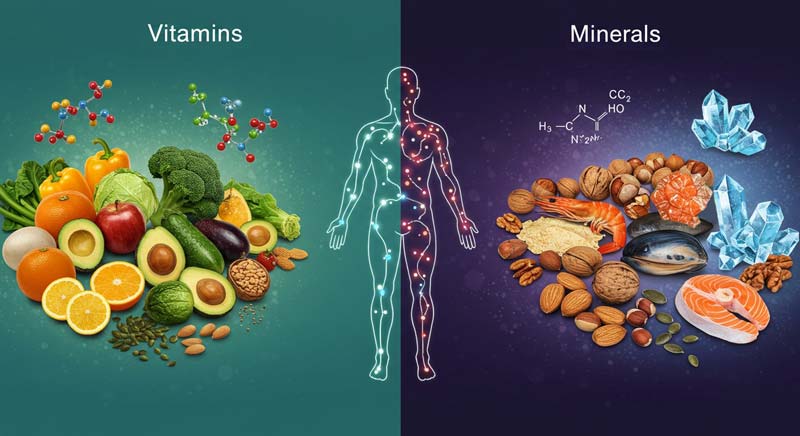
The Two Primary Micronutrient Categories: Function and Importance
Micronutrients can be divided into two main categories:
- Vitamins
- Minerals
Each group serves unique functions within the body, working together to maintain health and physiological balance. These essential micronutrients act through various mechanisms to support bodily functions.
Vitamins
Vitamins are organic compounds essential for the body’s proper functioning. They are divided into two types based on their solubility. Water-soluble vitamins include the B-complex vitamins and vitamin C. These don’t store in the body for long periods and require regular replenishment.
B vitamins play vital roles in energy metabolism, DNA/RNA synthesis (creation of genetic material), and the production of neurochemicals (chemical substances that transmit nerve impulses) and signalling molecules. They’re essential for converting food into usable energy by participating in energy-yielding pathways.
Fat-soluble vitamins (A, D, E, and K) dissolve in fat and can be stored in the body’s fatty tissues. Vitamin A contributes to vision, immune function, and skin health. Vitamin D regulates calcium absorption, supports bone health, and influences immune function. Vitamin E acts as an antioxidant (a substance that prevents or slows damage to cells), protecting cell membranes. In contrast, vitamin K is essential for blood clotting and bone metabolism.
Minerals
Minerals are inorganic (not containing carbon) elements needed for various bodily functions. They’re further classified as macro minerals (required in more significant amounts) and trace minerals (needed in smaller quantities). Calcium, magnesium, and potassium are macro minerals essential for bone formation, muscle contraction, and proper heart rhythm. Trace minerals include zinc, iron, and selenium, which support immune function, oxygen transport, and antioxidant activities.
The balance between different micronutrients is critically essential. For instance, zinc and copper maintain a delicate relationship; high zinc intake can prevent copper absorption. Similarly, B12 and folate work together in various metabolic processes, with deficiencies in one affecting the function of the other.
Iron helps transport oxygen through the blood and impacts endurance exercise performance. It’s also crucial for managing oxidative stress (imbalance between free radicals and antioxidants) and maintaining immune function. Calcium and magnesium work together for bone formation and proper muscle contraction, directly impacting physical performance and long-term skeletal health.
Each micronutrient plays a specific role in maintaining optimal health, often coordinating with others. This interconnected system highlights why a diverse diet that provides all essential micronutrients is fundamental for overall well-being.
Micronutrient Balance and Energy Utilisation
The human body requires energy stored as adenosine triphosphate (ATP, the energy currency of cells) for all cellular activities. Energy metabolism during cellular respiration depends on micronutrients that act as essential components, coenzymes, or precursors at every stage. An adequate supply of multiple micronutrients is vital for efficient energy production.
B vitamins play a vital role in energy metabolism. They function as coenzymes in numerous metabolic reactions and directly convert food into usable energy. When B vitamin levels are suboptimal, the body struggles to meet its metabolic demands, potentially leading to fatigue, poor mood, irritability, decreased concentration, and reduced cognitive function.
Iron, magnesium, and zinc are equally crucial for energy production. Iron facilitates oxygen transport through the blood, directly affecting endurance and exercise performance. Magnesium is a cofactor in ATP synthesis, while zinc participates in various enzymatic reactions essential for metabolism.
Coenzyme Q10 (CoQ10) also plays a central role in energy production. As a driver of ATP formation, CoQ10 helps regulate reactive oxygen species and reduces oxidative stress. Studies show that CoQ10 supplementation can increase energy expenditure during exercise and improve physical recovery.
Even mild micronutrient deficiencies can significantly impact energy levels. Research demonstrates that when micronutrients are insufficient, enzymatic activity decreases, energy metabolism becomes impaired, and the body develops an inability to meet metabolic demands. This ultimately leads to tiredness and fatigue, even in seemingly healthy adults.
Several clinical trials have shown that multiple micronutrient supplementation can improve energy levels and reduce physical and mental fatigue. In one study, supplementation for 28 days increased energy expenditure during cognitive tasks and exercise, with greater effects observed in males. Female participants reported reduced mental and physical tiredness during exercise and lower stress ratings after cognitive tasks.
These findings highlight the essential role micronutrients play in maintaining optimal energy levels. While they don’t provide energy directly, they enable the efficient conversion of macronutrients into usable energy, supporting everything from daily activities to intensive physical performance.

Dietary Nutrients: The Synergy Between Micro and Macro
The relationship between micronutrients and macronutrients (proteins, carbohydrates, and fats) represents a crucial aspect of nutrition that affects overall health and physical performance. These nutrients don’t function in isolation but work together in a coordinated manner.
B vitamins illustrate this synergy perfectly. They’re essential for metabolising macronutrients, with vitamin B2 playing a key role in fat oxidation. Without adequate B vitamins, the body cannot efficiently convert carbohydrates, proteins, and fats into energy, regardless of how much of these macronutrients you consume.
Protein utilisation in the body requires several micronutrients. Research shows that combining protein with specific micronutrients enhances muscle protein synthesis. For example, a clinical study found that subjects receiving a protein-fortified milk-based beverage and a micronutrient beverage experienced significant increases in muscle mass during resistance exercise.
Fat intake is necessary to absorb fat-soluble vitamins (A, D, E, and K). Without sufficient dietary fat, these vitamins cannot be adequately absorbed or transported in the body, potentially leading to deficiencies despite adequate vitamin intake. This highlights why extremely low-fat diets can sometimes lead to micronutrient inadequacies.
Carbohydrate metabolism also depends on micronutrient availability. Research on micronutrient-deficient subjects found altered gut microbiome function regarding carbohydrate metabolism, decreased capacity to utilise more complex carbohydrates and increased preference for simple sugars. This suggests that micronutrient status affects how efficiently the body processes different types of carbohydrates.
Nutrient timing and diversity in meals can optimise the synergistic relationship between micro and macronutrients. Like traditional Japanese cuisine, a balanced meal structure provides complex carbohydrates, proteins, healthy fats, and micronutrients necessary for optimal physiological function.
A varied intake of nutrient-dense foods is essential for long-term health. Foods like walnuts provide cardioprotective effects through their content of phenolic compounds (plant substances with antioxidant properties), phytosterols (plant-derived sterols that resemble cholesterol), γ-tocopherol (a form of vitamin E), dietary fibre, protein, and α-linolenic fatty acid (an essential omega-3 fatty acid). These foods contribute to wellness beyond immediate body composition goals.
Nutrition Needs Across Different Activities and Life Stages
Micronutrient requirements vary considerably throughout life and during different levels of physical activity. Certain life stages and conditions create higher demands for specific nutrients, making personalised nutrition approaches essential. These micronutrients play crucial roles in all stages of life, from infancy to old age.
Growth periods, particularly childhood and adolescence, require increased micronutrient intake. These early-life windows are characterised by intense growth, development, and metabolic programming of various organ systems, including the brain and bone, which demand substantial nutritional input. Deficiencies during these critical periods can have both immediate and lifelong consequences.
Pregnancy represents another stage with heightened micronutrient needs. Multiple micronutrient supplementation during pregnancy has been studied extensively, showing varied results. While supplementation has improved micronutrient status in some cases, it hasn’t always delivered the expected outcomes in growth and development, highlighting the need for comprehensive nutritional approaches.
As we age, micronutrients need to change again. The Women’s Health and Aging Study found that frail women had significantly lower serum (blood plasma without clotting factors) concentrations of vitamins D, E, B6, and carotenoids (pigments in plants with antioxidant effects) compared to non-frail peers. Women in the lowest quartile of serum concentrations of vitamins B6, B12, and selenium faced a higher risk of developing disability in daily activities during follow-up.
Active individuals have increased micronutrient requirements compared to the general population. High training loads lead to greater micronutrient needs. B vitamins are essential for sports like football, which require enormous energy. Although micronutrients are unlikely to function as ergogenic aids (substances that enhance physical performance) when no deficiency exists, they’re crucial for maintaining overall health during intensive training.
People following restrictive diets may be particularly vulnerable to deficiencies. Those who eliminate whole food groups risk missing key nutrients unless careful planning is implemented. Similarly, individuals recovering from illness often need additional micronutrients to support healing and restore depleted reserves.
Children, women, older adults, and ill individuals represent populations most vulnerable to micronutrient deficiencies. Identifying and addressing these deficiencies is essential to prevent long-term impacts on health, development, and quality of life.

Your Complete Guide to Essential Nutrients
The foundations of nutrition provide a framework for informed choices that benefit health and well-being. The macronutrients and micronutrients covered in this guide form the basis of a balanced diet that supports energy production, tissue building, and overall health maintenance.
To expand your knowledge about specific nutrients, these dedicated articles offer detailed insights:
Macronutrients Explained: Carbohydrates, proteins, and fats are your body’s energy providers and building blocks. They supply different amounts of energy per gram and serve distinct yet complementary roles in supporting bodily functions, from providing immediate fuel to building tissues and regulating hormones. Explore how these major nutrients affect your daily energy levels and long-term health. Learn more about Macronutrients →.
Carbohydrates Macronutrient Fundamentals: Carbohydrates are your body’s primary energy source, especially during high-intensity activities. They provide approximately 4 calories per gram and exist in simple and complex forms, each offering distinct energy production and health benefits. Learn how carbohydrates fuel your brain, muscles, and daily activities while supporting optimal physical performance. Learn more about Carbohydrates as macronutrient →.
Protein Macronutrient Fundamentals: Proteins, delivering 4 calories per gram, provide the building blocks your body needs for tissue growth, enzyme production, and hormone synthesis. Discover how these amino acid chains support muscle development, immune function, and metabolic processes, and learn about optimal intake strategies for different fitness goals and life stages. Learn more about Protein as macronutrient →.
Fats Macronutrient Fundamentals: At 9 calories per gram, fats represent your most energy-dense macronutrient. Beyond energy provision, they enable vitamin absorption, hormone production, and cell membrane formation. Explore the different types of dietary fats, their health effects, and strategies for incorporating healthy fats into your diet for optimal well-being. Learn more about Fats as macronutrient →.
Fibre Macronutrient Fundamentals: Fibre is often considered a subset of carbohydrates, so fibre deserves special attention for its unique health benefits. Unlike other nutrients, fibre passes through your digestive system largely undigested, supporting gut health, blood sugar regulation, and cholesterol management. Learn how different fibre types function in your body and how to incorporate them into your diet. Learn more about Fibre as macronutrient →.
Vitamins Micronutrient Fundamentals: These organic compounds enable countless biochemical reactions that allow your body to use macronutrients effectively. From energy metabolism to immune function and tissue repair, vitamins play essential roles in nearly every physiological process. Discover how these critical nutrients support overall health and how to ensure adequate intake. Learn more about Vitamins as micronutrient →.
Minerals Micronutrient Fundamentals: Inorganic elements are required for structural support, fluid balance, nerve signalling, and enzyme function, and minerals work alongside vitamins to properly utilise macronutrients. Learn about primary and trace minerals, their specific roles in human health, and strategies for maintaining optimal mineral status through diet. Learn more about Minerals as micronutrient →.
These dedicated resources offer information about each nutrient category and their contributions to overall health and well-being. This knowledge provides the basis for making informed dietary choices that support your unique health goals and lifestyle needs.
Sources
- Berger M.M., Shenkin A., Schweinlin A., Amrein K., Augsburger M., Biesalski H.K., Bischoff S.C., Casaer M.P., Gundogan K., Lepp H.L., et al. ESPEN micronutrient guideline. Clin. Nutr. 2022;41:1357–1424.
- Biesalski Hans K, Jana T. Micronutrients in the life cycle: requirements and sufficient supply. NFS J. (2018) 11:1–11.
- Carneiro G, Laferrère B, Zanella MT. Vitamin and mineral deficiency and glucose metabolism – a review. e-SPEN J. (2013) 8–9.
- Dodd FL, Kennedy DO, Stevenson EJ, Veasey RC, Walker K, Reed S, et al. Acute and chronic effects of multivitamin/mineral supplementation on objective and subjective energy measures. Nutr Metab (Lond) 2020;17(1):16.
- Eskici G. The importance of vitamins for soccer players. Int J Vitam Nutr Res. 2015. Dec;85(5–6):225–244.
- Ghazzawi H.A., Hussain M.A., Raziq K.M., Alsendi K.K., Alaamer R.O., Jaradat M., Alobaidi S., Al Aqili R., Trabelsi K., Jahrami H. Exploring the Relationship between Micronutrients and Athletic Performance: A Comprehensive Scientific Systematic Review of the Literature in Sports Medicine. Sports. 2023;11:109.
- Haider BA, Bhutta ZA. Multiple-micronutrient supplementation for women during pregnancy. Cochrane Database Syst Rev. (2017) 4.
- Huskisson E, Maggini S, Ruf M. The role of vitamins and minerals in energy metabolism and well-being. J Int Med Res 2007;35:277-89.
- Jääskeläinen P, Magnussen CG, Pahkala K, Mikkilä V, Kähönen M, Sabin MA, et al. Childhood nutrition in predicting metabolic syndrome in adults: the cardiovascular risk in young Finns study. Diabetes Care. (2012) 35:1937–43.
- Kennedy D. B vitamins and the brain: Mechanisms, dose and efficacy—a review. Nutrients 2016;8(2):68.
- Landi F., Calvani R., Tosato M., Martone A.M., Ortolani E., Savera G., Sisto A., Marzetti E. Anorexia of aging: Risk factors, consequences, and potential treatments. Nutrients. 2016;8:69.
- Linus Pauling Institute. Vitamins: Linus Pauling Institute. Corvallis: Linus Pauling Institute.
- Maggini S, Pierre A, Calder PC. Immune function and micronutrient requirements change over the life course. Nutrients 2018;10(10):1531.
- Maughan RJ, Burke LM, Dvorak J, et al. Ioc consensus statement: dietary supplements and the high-performance athlete. Int J Sport Nutr Exerc Metab. 2018;28(2):104–125.
- Ozawa M, Ninomiya T, Ohara T et al. Dietary patterns and risk of dementia in an elderly Japanese population: the Hisayama study. Am J Clin Nutr 2013; 97: 1076–1082.
- Rockett HR, Berkey CS, Colditz GA. Comparison of a short food frequency questionnaire with the youth/adolescent questionnaire in the growing up today study. Int J Pediatr Obes. 2007;2(1):31–39.
- Ros E., Izquierdo-Pulido M., Sala-Vila A. Beneficial effects of walnut consumption on human health: Role of micronutrients. Curr. Opin. Clin. Nutr. Metab. Care. 2018;21:498–504.
- Seino S, Sumi K, Narita M, Yokoyama Y, Ashida K, Kitamura A, Shinkai S. Effects of Low-Dose Dairy Protein Plus Micronutrient Supplementation during Resistance Exercise on Muscle Mass and Physical Performance in Older Adults: A Randomised, Controlled Trial. J Nutr Health Aging. 2018;22(1):59-67.
- Semba RD, Bartali B, Zhou J, Blaum C, Ko CW, Fried LP. Low serum micronutrient concentrations predict frailty among older women living in the community. J Gerontol A Biol Sci Med Sci. 2006;61:594–599
- Sivakumar B, Nair KM, Sreeramulu D, Suryanarayana P, Ravinder P, Shatrugna V, Kumar PA, Raghunath M, Rao VV, Balakrishna N, et al. Effect of micronutrient supplement on health and nutritional status of schoolchildren: biochemical status. Nutrition., 22 (2006), pp. S15-S25
- Slimani M, Znazen H, Bragazzi NL, Zguira MS, Tod D. The Effect of Mental Fatigue on Cognitive and Aerobic Performance in Adolescent Active Endurance Athletes: Insights from a Randomized Counterbalanced, Cross-Over Trial. J Clin Med 2018;7(12):510.
- Steffl M., Bohannon R.W., Sontakova L., Tufano J.J., Shiells K., Holmerova I. Relationship between sarcopenia and physical activity in older people: A systematic review and meta-analysis. Clin. Interv. Aging. 2017;12:835–845.
- Stevens GA, Bennett JE, Hennocq Q, Lu Y, De-Regil LM, Rogers L, et al. Trends and mortality effects of vitamin a deficiency in children in 138 low-income and middle-income countries between 1991 and 2013: a pooled analysis of population-based surveys. Lancet Global Health. (2015) 3–36.
- Wishart K. Increased micronutrient requirements during physiologically demanding situations: Review of the current evidence. Vitamin Miner 2017;6(3):1-16.
- Williams MH. Dietary supplements and sports performance: minerals. J Int Soc Sports Nutr., 2 (2005), pp. 43-49