


Introduction
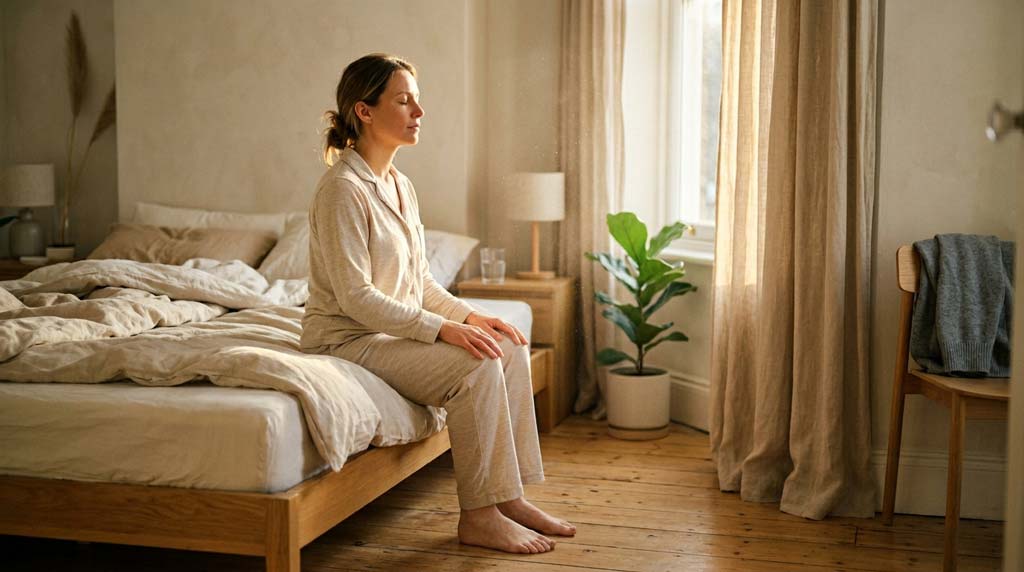
Somewhere between the alarm going off and the third cup of tea, most of us have already reacted to a dozen things without noticing. A tight jaw. A skipped breath. A thought about tomorrow that arrived uninvited and settled in.
Vipassana meditation is a 2,500-year-old technique built around one deceptively ordinary idea: pay close attention to what is actually happening in your body and mind, right now, and practise not reacting to any of it.
That sounds simple. It is not. But the growing body of published research suggests that this kind of sustained, non-reactive self-observation produces measurable changes in how the human body handles stress, processes pain, regulates mood, and even organises sleep, not through belief or philosophy, but through the repeated act of watching your own internal experience without interfering with it.
The technique translates literally as “seeing things as they really are”. Practitioners sit with their eyes closed, scan their bodies for sensation, and observe whatever they find, pleasant or unpleasant, without pushing anything away or holding anything close. Over time, this trains a different relationship with discomfort, distraction, and the automatic habits of the mind.
Researchers now classify this approach as open monitoring, a style of meditation that broadens attention rather than narrows it and that activates distinctly different brain networks compared to concentration-based practices.
This post draws entirely on published research. There are findings here on cortisol (a key stress hormone) and blood pressure. On working memory and the ability to stay focused under pressure. On what happens to anxiety scores after ten days of silence, and how long-term practitioners sleep differently at a structural level.
There are also honest limitations, people who should approach the practice with genuine caution, and areas where the evidence has gaps that still need to be filled.
The aim is straightforward. If you have heard of Vipassana meditation and wondered whether the claims hold up, or if you have never heard of it and stumbled here by accident, this post will leave you with a clear, grounded picture of what this ancient practice can and cannot do for everyday health.
What Is Vipassana Meditation and How Open Monitoring Works
Most people picture meditation as trying very hard to think about nothing. Vipassana meditation works the other way round. Instead of emptying the mind, you fill it with attention.
You become sharply aware of what is already there, the breath at the nostrils, a dull ache in the knee, the first flicker of irritation before it becomes a full thought. You watch it all without taking sides.
The word itself comes from Pali, an ancient Indian language. “Vi” points to three qualities that practitioners learn to recognise in their direct experience: impermanence, the presence of suffering, and the absence of a fixed self. “Passana” means clear seeing. Together, they describe a technique rooted in observation rather than study. You are not reading about how the mind works. You are watching it work, from the inside, in real time.
At its core, the practice trains a particular quality of awareness that scholars and teachers describe as “uninvolved, detached receptivity“. The purpose of this awareness is not to fix anything or push anything away. It is to make things conscious.
Like a spectator at a play, you observe without interfering. This matters because the moment you react, whether by clinging to something pleasant or resisting something unpleasant, you lose the vantage point. The clear observation disappears, and habitual patterns take over.
The Practice Itself
A typical Vipassana meditation session moves through three stages
- The first is anchoring. You direct attention to the sensation of air entering and leaving the nostrils, a focused exercise designed to settle the mind before the main work begins.
- The second stage, which takes up most of the session, widens that narrow focus. You scan the body region by region, noticing whatever arises: warmth, tingling, heaviness, pain, and you sit with it. The instruction is consistent across traditions: observe, and do not react.
- The third stage is brief. You direct goodwill and compassion outward toward others. This closing phase shifts attention entirely beyond the self. The progression matters. Attention starts narrow, broadens across the whole body, and then reaches out.
Practitioners typically begin with breath awareness and progress to the body scan as their concentration stabilises. The body scan is the defining feature of Vipassana. It is what separates the technique from breath-only practices and from styles that use mantras (repeated words or phrases) or visualisation. You are training yourself to feel what is actually present in the body, not what you expect or want to feel.
Open Monitoring Versus Focused Attention
Focused attention meditation trains you to hold onto one object, usually the breath, and keep it there. When the mind wanders, you catch it and bring it back. The cognitive demand is like gripping something tightly. Vipassana meditation does the opposite. Once attention stabilises during the anchoring phase, you release that grip.
Awareness opens to include whatever shows up, sensation, emotion, thought, sound, without selecting any of it as more important than anything else. Researchers describe this as holding awareness itself as the primary object.
Brain imaging confirms these are genuinely different states. Vipassana practitioners show occipital gamma activation (high-frequency brain activity in the visual processing area linked to broad, internalised attention) that is specific to open monitoring and absent during focused concentration.
The two approaches also produce different cognitive outcomes. Focused attention tends to support convergent thinking, leading to a single correct answer. Open monitoring supports divergent thinking, generating multiple possibilities from a starting point. They complement each other. They are not interchangeable.
How People Actually Practise
The technique traces back to the teachings of the Buddha in ancient India. It survived within monastic traditions in Myanmar and Sri Lanka for centuries before Burmese teachers adapted it for everyday people in the nineteenth and twentieth centuries.
The figure most responsible for its global reach is S.N. Goenka, who encountered Vipassana during his own health struggles and later established over 200 centres worldwide, positioning it as entirely non-sectarian. No religious beliefs are required. In a study with a predominantly Christian population in West Texas, 95% of participants reported no conflict between the technique and their faith.
Research examines Vipassana meditation across two broad formats. Intensive retreats, typically lasting ten days, involve silence, removal of phones, and a structured daily schedule with extended practice hours. These retreats produce the strongest and most lasting effects in the published literature. However, shorter protocols have also been studied.
Even eleven hours of total training has produced measurable cognitive changes. Many practitioners build a daily home practice of thirty to sixty minutes, and the evidence suggests that regularity matters as much as total hours. Those who meditated at a consistent time each day averaged more than double the lifetime practice hours of those who did not.

How Vipassana Meditation Affects Your Body Under Stress
Stress is not just a feeling. It is a chain of physical events. Your brain detects a threat, real or imagined, and your body responds. Heart rate climbs. Blood vessels tighten. Cortisol (the primary stress hormone) floods your system.
These reactions evolved to keep you alive in genuine emergencies. The trouble is that the same machinery fires when you are stuck in traffic, arguing over text messages, or lying awake at 2 a.m. thinking about a meeting that has not happened yet.
What the research on Vipassana meditation consistently shows is that the practice changes how this stress machinery operates, not by switching it off, but by helping the body recover faster and react less intensely in the first place.
Participants who completed a ten-day retreat showed significant reductions in both systolic and diastolic blood pressure: from 121.50 to 115.59 mmHg and from 79.33 to 74.70 mmHg, respectively. Pulse rate dropped from 84.60 to 80.89 beats per minute in the same period. These are not trivial shifts. They reflect a measurable change in the cardiovascular system’s behaviour at rest.
Heart rate variability (HRV), which measures how flexibly your heart responds to changing demands, improved alongside neural markers of attention in Vipassana practitioners. Higher HRV is a reliable sign of better autonomic balance (the interplay between your “fight or flight” and “rest and recover” nervous systems). It is consistently linked to greater stress resilience.
Cortisol, the hormone your adrenal glands release under stress, was reduced in practitioners of mindfulness-based approaches. At the same time, inflammatory cytokines (small proteins that drive inflammation throughout the body) also decreased, while HRV improved, a triple shift suggesting coordinated physiological recovery.
Long-term practitioners showed elevated DHEA (dehydroepiandrosterone) levels, a hormone that counterbalances cortisol and supports brain health. DHEA acts as a buffer against the damaging effects of prolonged stress. Its elevation in meditators suggests that the practice upregulates an internal stress-protection mechanism at the adrenal gland level.
Subjective stress scores dropped substantially after retreat practice. A community-based evaluation recorded a post-course effect size of d = 0.79, with benefits sustained at six-month follow-up, indicating the effects lasted well beyond the retreat itself.
Even brief open monitoring training altered the interaction between the central and autonomic nervous systems, producing functional shifts in the body’s balance between the sympathetic (stress) and parasympathetic (recovery) branches. You do not need years of practice to see initial physiological changes.
One of the more striking findings concerns automatic reactivity. Vipassana meditation trains you to observe a stressor without immediately engaging with it. This translates physiologically. Practitioners showed greater perceptual clarity and fewer automated responses to stimuli, meaning the body no longer launches a full stress response to every minor trigger.
The acceptance dimension of mindfulness, the ability to notice thoughts and sensations without judging them, rose from a mean of 30.70 before a ten-day retreat to 39.99 afterwards. That shift in acceptance is the psychological mechanism most directly linked to reduced stress reactivity. You stop fighting what you feel, and the body stops bracing for a fight that is not coming.
Intensive retreats of 10 days or more consistently produced stronger outcomes than shorter formats, with subgroup analyses confirming that retreat intensity was a significant factor in the size of the effect. Yet the early stages of practice also deliver returns. A meta-analysis of meditation for healthy people confirmed significant reductions in perceived stress, with top-down attentional control, the brain’s capacity to regulate its own emotional responses, strengthened through practice.
Focus, Memory and Thinking More Clearly
There is a particular kind of tiredness that has nothing to do with sleep. It comes from a mind that cannot stop switching between tasks, picking up the same worry for the fifteenth time, or losing its place mid-sentence. Scattered attention is exhausting. And it is one of the areas where the evidence on Vipassana meditation is most consistent.
The practice trains attention in a very specific way. Rather than forcing the mind to concentrate on one thing, it builds the capacity to hold awareness open across a wider field without being captured by any single part. This turns out to have measurable consequences for how the brain allocates its resources.
Three months of intensive practice produced a smaller attentional blink (a brief period after spotting one target where the brain typically misses a second one that follows quickly). Trained practitioners distributed their attention more evenly across time, using less neural resource on the first target and leaving more available for what came next. The neurophysiological marker for this was a reduced P3b brainwave (a signal reflecting the amount of attention the brain commits to a single event) to the first target.
Working memory capacity, the ability to hold and manipulate information in your head while doing something else, improved in both military personnel and adolescents following mindfulness training. Gains were also recorded on the Graduate Record Examination, a standardised test of higher-order reasoning, alongside reduced mind wandering, a major reason people lose their train of thought.
Long-term Vipassana meditation enhanced executive function in adult meditators, with improvements in cognitive flexibility (the ability to shift between tasks or perspectives smoothly) that were more pronounced in experienced practitioners than in beginners. These gains were significant at long-term follow-up, suggesting lasting structural change rather than a temporary boost.
Practitioners achieved comparable or superior performance on demanding cognitive tasks while using less brain activity in attention and motor control regions. This pattern of doing more with less, enhanced performance at reduced neural cost, is a hallmark of expert-level processing in any domain.
Short-term practice improved the executive control network, the brain system responsible for resolving conflicting impulses and overriding automatic reactions. When tested using an attentional network task, practitioners showed better conflict-resolution scores without changes in alerting or orienting, indicating targeted improvement in self-regulation under pressure.
The structural basis for these changes is visible on brain scans. Regular practitioners show increased grey matter density in the prefrontal cortex (the area behind your forehead responsible for planning and decision-making) and altered functional connectivity in the hippocampus (a structure central to learning and memory), with meditators showing a significantly higher degree of hippocampal connectivity during rest compared to non-meditators.
Perhaps the most practical finding is that these benefits begin early. Brief daily practice enhanced attention, memory, mood, and emotional regulation even in people with no prior meditation experience. You do not need to be an expert to begin sharpening how your mind handles information. Returns start accumulating from the first sessions and continue to build consistently.

Mood, Anxiety and Steadying Your Emotions
Anxiety is a peculiar thief. It does not take anything visible. It takes the space between your thoughts, fills it with static, and leaves you reacting to things that have not happened and may never happen. Depression works differently. It pulls the colour out of things that used to matter. Both conditions share a common engine: a mind that dwells on the past or projects into the future rather than staying with what is actually in front of it.
Vipassana meditation targets that engine directly. The practice trains you to anchor attention in present-moment bodily experience, which by definition leaves less room for rumination (replaying the past) or anticipatory worry (rehearsing the future). The research suggests this is not a metaphor. It produces measurable shifts in mood and emotional functioning.
Anxiety and depression scores dropped sharply after a ten-day retreat. Average anxiety scores on the Hospital Anxiety and Depression Scale fell from 10 to 3.29, moving participants from the borderline clinical range into the normal range. Depression scores fell from 6 to 3.14 over the same period. The control group showed no equivalent change.
Emotional reactivity, the tendency to be knocked sideways by feelings before you have time to think, reduced across multiple measures. Practitioners achieved greater perceptual clarity and showed reduced automatic responses to emotional triggers. The brain’s tendency to launch a full emotional reaction at every stimulus was dampened. This is not about suppressing emotion. It is about creating a small gap between the feeling that arises and the response that follows, enough space to choose rather than simply react.
Positive affect increased significantly in experienced meditators following a one-month retreat, with non-attachment identified as the mediating mechanism. Non-attachment, in this context, means the capacity to experience emotions fully without being controlled by them. It is the difference between noticing you feel anxious and being consumed by anxiety. The practice cultivates the former.
Structural changes in the brain accompanied these psychological shifts. Regular Vipassana meditation was associated with increased grey matter density in the insula (a region involved in emotional awareness and empathy) and the anterior cingulate cortex (a region central to self-regulation and the management of conflicting impulses). Mindfulness training also altered how the brain processes sadness, shifting activation away from self-referential rumination networks and toward present-moment body awareness. This neural rewiring is directly linked to reduced depressive vulnerability.
Relapse prevention is one of the strongest clinical findings. Mindfulness-based cognitive therapy, which draws heavily on the same non-reactive awareness that Vipassana cultivates, significantly reduced the risk of relapse in recurrent depression across two independent clinical trials. The mechanism is straightforward. Rumination feeds depression. Present-moment awareness starves it.
The emotional benefits were not limited to those with clinical conditions. A community evaluation found post-course effect sizes of d = 0.75 for well-being and d = 0.68 for mindfulness, with improvements in self-kindness sustained at six-month follow-up.
Brief daily practice enhanced mood even in people who had never meditated before. And in prison populations, characterised by elevated rates of emotional dysregulation and hostility, participants showed lower aggression and improved behavioural functioning.
How Vipassana Meditation Changes the Way You Sleep
Sleep is where the body does its repair work. Memories consolidate. Hormones rebalance. Tissues heal. When sleep is shallow or broken, everything downstream suffers: mood, concentration, pain tolerance, and immune function. What the research reveals about Vipassana meditation and sleep is not just that practitioners report sleeping better. It is that their sleep looks structurally different when measured in a laboratory.
What Changes Inside Sleep
Long-term practitioners, those with over seven years of daily practice, show more N3 sleep (the deepest, most physically restorative stage), less N2 sleep (a lighter stage), and fewer awakenings through the night compared to both novice meditators and non-meditating controls. They also showed no age-related decline in slow-wave sleep or REM sleep. This is remarkable because the gradual loss of deep sleep with age is considered one of the most reliable features of normal ageing. Sustained practice appears to protect against that decline.
Polysomnographic assessment (overnight sleep measurement using sensors) confirmed significantly higher sleep efficiency in meditators (93.98%) than in controls (91.85%), along with a shift toward deeper sleep stages. Vipassana meditation practitioners also show longer REM sleep periods, the phase most associated with emotional memory processing and learning consolidation.
The microarchitecture of sleep also differs. Practitioners displayed lower occipital sleep spindle density (brief bursts of brain activity during lighter sleep) compared to controls. Researchers interpreted this as a trait-like signature of increased alertness and environmental awareness, even during sleep, consistent with the open, non-reactive monitoring cultivated during waking practice.
Importantly, this reduced spindle density did not carry the negative consequences typically associated with sleep fragmentation. The practice appears to change the character of sleep vigilance without disrupting its restorative quality.
Fatigue, Alertness and the Transition Period
There is an honest complication here. Meditators in early stages of practice report more fatigue and sleepiness, while experienced practitioners report greater alertness. The relationship between Vipassana meditation and daytime energy is experience-dependent.
Fatigue appears to be a transitional phase, not a lasting side effect. One plausible explanation is that daytime meditation is sleep-like and may partially fulfil some of the brain’s restorative needs, thereby reducing overall sleep pressure and altering subsequent sleep architecture.
Among participants attending a ten-day retreat, one person reported difficulty sleeping during the first four nights. Another experienced a single panic attack on the second night following a bad dream and was moved to a shared room, with no further episodes. These transient disruptions resolved as the retreat progressed, suggesting adjustment rather than lasting harm.
The Hormonal Picture
Long-term practitioners show elevated morning cortisol alongside elevated melatonin (the hormone that signals your body to sleep) compared to non-meditating controls. This combination might sound contradictory, but it reflects a well-regulated system.
Higher morning cortisol indicates a sharp, healthy awakening response from the HPA axis (hypothalamic-pituitary-adrenal axis, the body’s central stress command system). Higher melatonin indicates a stronger circadian drive toward sleep at night. Together, they point to a body clock that runs with greater precision and sharper transitions between wakefulness and rest.
DHEA (dehydroepiandrosterone), the stress-buffering hormone discussed in the stress section, also showed a significant positive correlation with time spent in N3 deep sleep. Since N3 is when the most intensive physical repair happens, immune function is restored. Hormones rebalance; this connection identifies a plausible mechanism through which sustained practice enhances not just sleep duration but sleep quality at a restorative level.
Pain, Body Awareness and Coping with Physical Discomfort
Pain has two layers:
- There is the raw physical signal, the nerve firing, the heat, the pressure.
- And then there is everything the mind does with that signal: the fear, the frustration, the story about what the pain means and how long it will last.
Research consistently shows that this second layer, the mental reaction, is responsible for a significant portion of total suffering. Vipassana meditation was built, from its earliest origins, to separate these two layers.
The practice teaches you to observe physical pain for exactly what it is, a sensation, without allowing the mind to amplify it with fear or resistance. An accomplished practitioner can experience the physical aspect of an unpleasant feeling without generating additional mental reactions. This is not about pretending pain does not exist. It is about stopping the cascade where one uncomfortable sensation triggers panic, tension, and a spiral of worsening discomfort.
A meta-analysis of 11 controlled trials involving 315 patients found that mindfulness meditation produced significant improvements in headache pain intensity compared with control groups. An eight-week format showed the strongest and most consistent effect. Headache frequency also decreased across five studies, indicating fewer attacks overall, not just less pain per attack.
Chronic low back pain patients in a randomised controlled trial showed mindfulness-based stress reduction to be as effective as cognitive behavioural therapy (CBT), the established first-line psychological treatment, for both pain and functional limitation. This positions the practice as a genuine clinical equivalent, not merely a complementary add-on.
An eight-week programme produced significant improvement in sensory, affective (emotional), and cognitive measures of chronic pain, with gains sustained at one-year follow-up. The simultaneous shift across all three dimensions confirms that Vipassana meditation targets multiple layers of the pain experience, not just the physical signal.
Pain catastrophising (the tendency to magnify pain, ruminate about it, and feel helpless in its presence) decreased in clinical populations practising Vipassana-aligned approaches. Acceptance and self-efficacy (the belief in your own capacity to manage a situation) were identified as the central mechanisms driving this change.
A four-year follow-up of 225 people who completed a mindfulness-based chronic pain programme showed sustained improvement across multiple health indices, with high levels of continued meditation practice maintained throughout the observation period. This is among the longest follow-up periods in the published literature and suggests the benefits are durable when the practice is maintained.
The body awareness dimension is equally important. Vipassana meditation practitioners score significantly higher on validated measures of body awareness than non-meditating controls, with a large effect size (d = 0.81). That heightened awareness is not just a subjective feeling. It translated into superior performance on a physical balance task, where body awareness scores positively correlated with the ability to stay balanced, a relationship absent in non-meditators.
The neural basis is visible. Regular practitioners show increased grey matter in the insula, the brain’s primary region for integrating bodily signals into conscious awareness.
Meditation training also predicted greater insula activation during interoceptive attention (the process of tuning into signals from inside the body), confirming that the practice systematically sharpens the brain’s capacity to detect and process what is happening inside you.
Cravings, Habits and the Pull of Addiction
A craving does not ask permission. It arrives fully formed, urgent, convincing, and it tells you that the only way to feel better is to give in. Whether the pull is toward alcohol, cigarettes, food, or a phone screen, the underlying mechanism is remarkably similar. A trigger fires. A sensation rises. And before there is time to think, the hand has already moved.
Vipassana meditation was designed, at its roots, to interrupt exactly this sequence. The earliest teachings describe sensual desire as a self-reinforcing loop. Every time a craving is gratified, the next craving arrives stronger. The practice offers a way out, not through suppression, but through sustained observation of the craving itself, watching it rise, watching it peak, and watching it pass, all without acting on it.
This has been tested in some of the hardest settings imaginable:
- A ten-day Vipassana meditation course delivered in a minimum-security jail in Seattle produced significant decreases in substance use at three months following release, compared to a treatment-as-usual control group. The key finding was not that participants had fewer thoughts about using substances. Those thoughts persisted. What changed was how they handled them. Specifically, the reduction in avoidance of unwanted thoughts partially mediated the decrease in post-release alcohol use.
- This distinction matters enormously. Thought suppression, the attempt to push cravings out of your mind, reliably backfires. Research in addictive behaviours has shown that trying to suppress thoughts about substance use produces a paradoxical rebound, where those thoughts return with greater intensity. Vipassana trains the opposite response. You let the thought be there. You observe it. You do not act on it.
- Decentering (the ability to view your own thoughts and cravings as passing mental events rather than as commands to be obeyed) has been identified as a central mechanism. Smokers who applied a decentering and acceptance approach to images of cigarettes showed reduced craving at both a subjective level and in the brain areas that drive addictive urges. Among active meditators, stronger food-specific decentering was associated with fewer daily food cravings, regardless of how long they had been practising.
- Mindfulness has been successfully integrated into programmes for quitting smoking, reducing alcohol consumption, and treating drug use, with promising results across multiple trials. Mindfulness-based relapse prevention was developed specifically for substance use disorders, positioning non-reactive observation as an active therapeutic mechanism for changing how people respond to cravings rather than trying to eliminate the cravings themselves.
- Use of pain medications decreased significantly in chronic pain patients who completed a mindfulness programme, with reductions maintained at fifteen-month follow-up. This reduction in chemical reliance, achieved without pharmacological intervention, suggests the practice builds internal resources that reduce automatic reaching for external relief.
The pattern across this evidence is consistent. Vipassana meditation does not promise to remove cravings. It trains a different relationship with them. The urge still arrives. But between the urge and the action, there is now a space, and in that space, the practitioner has a choice that was not available before.

Safety, Suitability and Who Should Be Cautious with Vipassana Meditation
It would be dishonest to present the benefits without discussing the downsides. Vipassana meditation is not a risk-free activity for everyone, and the published literature, while broadly supportive, carries honest gaps in how adverse effects have been tracked and reported.
Across eleven studies included in a systematic review, no adverse events were formally reported. That sounds reassuring, but it also has its limitations. Adverse event monitoring was not a systematic component of most study designs. The absence of reported harm is not equivalent to evidence of safety.
Small sample sizes (median of 40 participants), lack of randomisation in the majority of studies, and reliance on self-reported outcomes mean that safety conclusions remain preliminary.
What has been observed, either in studies or in practitioner reports, falls into several areas:
- Intensive practice has been associated with a higher likelihood of negative or unpleasant experiences. Silent retreats, extended meditation hours, and the psychological intensity of sustained self-observation can surface difficult material. Documented experiences include transient anxiety, dissociative episodes (feeling disconnected from yourself or your surroundings), and one reported case where a participant became distressed following the emergence of old memories during breath-focused practice and subsequently left the programme.
- Sleep disruption shows an experience-dependent pattern. Beginners report more fatigue and sleepiness. Experienced practitioners report the opposite, greater alertness. Long-term practitioners showed lower total sleep time and more awakenings than controls, alongside higher gamma brain activity during sleep. In experienced meditators, this may represent adaptive reorganisation. In novices or people with existing sleep difficulties, the same pattern could be disruptive.
- Exclusion criteria used in controlled trials identify populations for which particular caution is warranted. These include people with schizophrenia, bipolar affective disorder, active psychosis risk, seizure disorders, significant cognitive impairment, and current substance abuse. Individuals with trauma histories may also require additional screening, given the single reported case of distressing memory re-emergence.
- Dropout from intensive programmes, while low, is real. Out of 156 first-time participants in one study, four (2.6%) discontinued after three to four days. Attrition in longer-term research reached 22% in at least one trial. Not everyone completes, and not completing does not necessarily indicate harm. Still, it indicates that the format is not suitable for everyone.
The retreat environment itself is a confounding factor. Ten days without phones, news, conversation, or occupational demands is a significant intervention in its own right. Separating the effects of meditation from the effects of withdrawal from modern stimulation is a methodological challenge the field has not fully resolved.
Pre-retreat preparation matters. In one study, participants’ concerns about food, family separation, and missing social media were addressed through pre-course counselling, with the majority reporting resolution following that support. These points point to practical steps that improve safety: expectation management, graduated exposure for those new to intensive formats, access to experienced teachers, and clear stop rules for anyone who becomes distressed.
The trainer’s competencies carry weight. An intervention labelled as mindfulness-based does not automatically mean it is delivered with the depth of grounding in both the informal spirit and the formal practices of Vipassana meditation required to produce reliable outcomes. Quality of instruction matters as much as quantity of practice.
Where the evidence currently stands: for the majority of people, particularly those without the specific contraindications listed above, structured Vipassana meditation practice carries a favourable benefit-to-risk profile. It is low-cost, non-pharmacological (no medication involved), validated across cultures and demographics, and its secular nature means it requires no change in personal beliefs.
What it does require is honesty about its limits, further research with larger samples and systematic adverse event tracking, and respect for the fact that a practice powerful enough to change the brain is also powerful enough to warrant care in how it is approached.
Vipassana meditation is not a shortcut or a cure-all. Still, the evidence is strong enough to take it seriously as a practical training method for the nervous system and the mind. When it is approached with patience, good instruction, and respect for individual limits, the pattern is consistent: less automatic stress reactivity, steadier mood, clearer attention, better coping with discomfort, and a more organised relationship with sleep and craving.
If you are curious, start small, practice regularly, and treat the skill as simple in concept but demanding in execution. The real value is not in having a calm thought, but in seeing thoughts, sensations, and urges clearly enough that they no longer run the day.
Sources
- Anālayo, Bhikkhu. Satipaṭṭhāna: The Direct Path to Realization. Cambridge: Windhorse Publications; 2003.
- Basso JC, McHale A, Ende V, Oberlin DJ, Suzuki WA. Brief, daily meditation enhances attention, memory, mood, and emotional regulation in non-experienced meditators. Behav Brain Res. 2019;356:208–220.
- Bowen S, Witkiewitz K, Dillworth TM, Chawla N, Simpson TL, Ostafin BD, et al. Mindfulness meditation and substance use in an incarcerated population. Psychology of Addictive Behaviors. 2006;20(3):343–347.
- Braun E. The Birth of Insight: Meditation, Modern Buddhism, and the Burmese Monk Ledi Sayadaw. Chicago, IL: University of Chicago Press; 2013.
- Britton WB, Lindahl JR, Cooper DJ, Canby NK, Palitsky R. Defining and measuring meditation-related adverse effects in mindfulness-based programs. Clin Psychol Sci. 2021;9:1185–1204.
- Britton WB, Lindahl JR, Cahn BR, Davis JH, Goldman RE. Awakening is not a metaphor: the effects of Buddhist meditation practices on basic wakefulness. Ann NY Acad Sci. 2014;1307:64–81.
- Bowen S, Witkiewitz K, Dillworth TM, et al. Mindfulness meditation and substance use in an incarcerated population. Psychol Addict Behav. 2006;20:343–347.
- Cahn BR, Delorme A, Polich J. Occipital gamma activation during Vipassana meditation. Cogn Process. 2010;11:39–56.
- Cahn BR, Delorme A, Polich J. Event-related delta, theta, alpha and gamma correlates to auditory oddball processing during Vipassana meditation. Soc Cogn Affect Neurosci. 2013;8:100–111.
- Cahn BR, Polich J. Meditation (Vipassana) and the P3a event-related brain potential. Int J Psychophysiol. 2009;72:51–60.
- Chavan DV. Vipassana: the Buddha’s tool to probe mind and body. Prog Brain Res. 2008;168:247–253.
- Cherkin DC, Sherman KJ, Balderson BH, Cook AJ, Anderson ML, Hawkes RJ, et al. Effect of mindfulness-based stress reduction vs. cognitive behavioral therapy or usual care on back pain and functional limitations in adults with chronic low back pain: a randomised clinical trial. JAMA. 2016;315:1240–9.
- Chiesa A, Brambilla P, Serretti A. Neuro-imaging of mindfulness meditations: implications for clinical practice. Epidemiol Psychiatr Sci. 2011;20:205–210.
- Chiesa A, Serretti A. Mindfulness-based stress reduction for stress management in healthy people: a review and meta-analysis. J Altern Complement Med. 2009;15:593–600.
- Colzato LS, Ozturk A, Hommel B. Meditate to create: the impact of focused-attention and open-monitoring training on convergent and divergent thinking. Front Psychol. 2012;3:116.
- Delgado-Pastor LC, Perakakis P, Subramanya P, Telles S, Vila J. Mindfulness (Vipassana) meditation: effects on P3b event-related potential and heart rate variability. Int J Psychophysiol. 2013;90:207–214.
- Farb NA, Anderson AK, Mayberg H, Bean J, McKeon D, Segal ZV. Minding one’s emotions: mindfulness training alters the neural expression of sadness. Emotion. 2010;10:25–33.
- Farb NA, Segal ZV, Anderson AK. Mindfulness meditation training alters cortical representations of interoceptive attention. Soc Cogn Affect Neurosci. 2013;8:15–26.
- Ferrarelli F, Smith R, Dentico D, Riedner BA, Zennig C, Benca RM, et al. Experienced mindfulness meditators exhibit higher parietal-occipital EEG gamma activity during NREM sleep. PLoS One. 2013;8:e73417.
- Fox KC, Dixon ML, Nijeboer S, et al. Functional neuroanatomy of meditation: a review and meta-analysis of 78 functional neuroimaging investigations. Neurosci Biobehav Rev. 2016;65:208–228.
- Gardi C, Fazia T, Stringa B, Giommi F. A short mindfulness retreat can improve biological markers of stress and inflammation. Psychoneuroendocrinology. 2022;135:105579.
- Goenka SN. Meditation Now: Inner Peace Through Inner Wisdom. Vol. 8. Onalaska, WA: Pariyatti Publishing; 2012.
- Goyal M, Haythornthwaite JA, Jain S, et al. Intensive mindfulness meditation reduces frequency and burden of migraine: an unblinded single-arm trial. Mindfulness (N Y). 2023;14:406–417.
- Gu Q, Hou JC, Fang XM. Mindfulness meditation for primary headache pain: a meta-analysis. Chin Med J (Engl). 2018;131(7):829–838.
- Hart W. The Art of Living: Vipassana Meditation as Taught by SN Goenka. Vol. 11. Onalaska, WA: Pariyatti Publishing; 2011.
- Higgins JP, Altman DG, Gøtzsche PC, et al. The Cochrane Collaboration’s tool for assessing risk of bias in randomised trials. BMJ. 2011;343.
- Kabat-Zinn J. Commentary on Majumdar et al: Mindfulness Meditation in Health. Journal of Alternative and Complementary Medicine. 2002;8:731–735.
- Kabat-Zinn J, Lipworth L, Burnley R, et al. Four year follow-up of mindfulness-based program for the self-regulation of chronic pain: treatment outcomes and compliance. The Clin J Pain. 1986;2:159–173.
- Kabat-Zinn J, Lipworth L, Burney R. The clinical use of mindfulness meditation for the self-regulation of chronic pain. J Behavioural Medicine. 1985;8:163–190.
- Kahn M. Vipassana meditation and the psychobiology of Reich, Wilhelm. J Humanist Psychol. 1985;25:117–128.
- Kozasa EH, Sato JR, Lacerda SS, Barreiros MA, Radvany J, Russel TA, et al. Meditation training increases brain efficiency in an attention task. Neuroimage. 2012;59:745–749.
- Lardone A, Liparoti M, Sorrentino P, et al. Mindfulness meditation is related to long-lasting changes in hippocampal functional topology during resting state: a magnetoencephalography study. Neural Plast. 2018;2018:5340717.
- Lukseng T, Siripornpanich V, Chutabhakdikul N. Long-term Vipassana meditation enhances executive function in adult meditators. Siriraj Med J. 2020;72:343–351.
- Lutz A, Slagter HA, Dunne JD, Davidson RJ. Attention regulation and monitoring in meditation. Trends Cogn Sci. 2008;12:163–169.
- Maruthai N, Nagendra RP, Sasidharan A, Srikumar S, Datta K, Uchida S, et al. Senior Vipassana meditation practitioners exhibit distinct REM sleep organisation from that of novice meditators and healthy controls. Int Rev Psychiatry. 2016;28:279–287.
- Montero-Marin J, Puebla-Guedea M, Herrera-Mercadal P, Cebolla A, Soler J, Demarzo M, et al. Psychological effects of a 1-month meditation retreat on experienced meditators: the role of non-attachment. Front Psychol. 2016;7:1935.
- Mrazek MD, Franklin MS, Phillips DT, Baird B, Schooler JW. Mindfulness training improves working memory capacity and GRE performance while reducing mind wandering. Psychol Sci. 2013;24:776–781.
- Nagendra RP, Sathyaprabha TN, Kutty BM. Enhanced dehydroepiandrosterone levels are positively correlated with N3 sleep stage in long-term mindfulness meditation practitioners. Sleep Sci. 2022 Apr-Jun;15(2):179–187.
- Papies EK, van Winckel M, Keesman M. Food-specific decentering experiences are associated with reduced food cravings in meditators: a preliminary investigation. Mindfulness (N Y). 2016;7(5):1123–1131.
- Parsons CE, Crane C, Parsons LJ, Fjorback LO, Kuyken W. Home practice in mindfulness-based cognitive therapy and mindfulness-based stress reduction: a systematic review and meta-analysis of participants’ mindfulness practice and its association with outcomes. Behav Res Ther. 2017;95:29–41.
- Pattanashetty R, Sathiamma S, Talakkad S, Nityananda P, Trichur R, Kutty BM. Practitioners of vipassana meditation exhibit enhanced slow wave sleep and REM sleep states across different age groups. Sleep Biol Rhythms. 2009;8:34–41.
- Price CJ, Thompson EA. Measuring dimensions of body connection: body awareness and bodily dissociation. J Altern Complement Med. 2007;13:945–953.
- Slagter HA, Lutz A, Greischar LL, Francis AD, Nieuwenhuis S, Davis J, et al. Mental training affects distribution of limited brain resources. PLoS Biol. 2007;5:e138.
- Solomonova E, Dubé S, Blanchette-Carrière C, Sandra DA, Samson-Richer A, Carr M, Paquette T, Nielsen T. Different patterns of sleep-dependent procedural memory consolidation in Vipassana meditation practitioners and non-meditating controls. Front Psychol. 2020;10:3014.
- Sulekha S, Thennarasu K, Vedamurthachar A, Raju TR, Kutty BM. Evaluation of sleep architecture in practitioners of Sudarshan Kriya yoga and Vipassana meditation. Sleep Biol Rhythms. 2006;4:207–214.
- Szekeres RA, Wertheim EH. Evaluation of Vipassana meditation course effects on subjective stress, well-being, self-kindness and mindfulness in a community sample: Post-course and 6-month outcomes. Stress Health. 2015;31:373–381.
- Tang YY, Ma Y, Fan Y, Feng H, Wang J, Feng S, et al. Central and autonomic nervous system interaction is altered by short-term meditation. Proc Natl Acad Sci USA. 2009;106:8865–8870.
- Tang YY, Ma Y, Wang J, Fan Y, Feng S, Lu Q, et al. Short-term meditation training improves attention and self-regulation. Proc Natl Acad Sci USA. 2007;104:17152–17156.
- Teasdale JD, Segal ZV, Williams JMG, Ridgeway VA, Soulsby JM, Lau MA. Prevention of relapse/recurrence in major depression by mindfulness-based cognitive therapy. J Consult Clin Psychol. 2000;68:615–623.
- Verma AK. Buddhism and vipassana meditation: a scientific method for mental and social growth in the modern age. Millah J Relig Stud. 2023;30:583–610.
- Wegner DM. When the antidote is the poison: Ironic mental control processes. Psychological Science. 1997;8:148–150.
- Westbrook C, Creswell JD, Tabibnia G, Julson E, Kober H, Tindle HA. Mindful attention reduces neural and self-reported cue-induced craving in smokers. Social Cognitive and Affective Neuroscience. 2013;8(1):73–84.
- Witkiewitz K, Marlatt GA, Walker DD. Mindfulness-based relapse prevention for alcohol and substance use disorders. Journal of Cognitive Psychotherapy. 2005;19:221–228.
- Wolf EM, Hamel KE, Acree M, et al. Randomised, controlled trial of breath therapy for patients with chronic low back pain. Alternative Therapies. 2005;11:44–52.
- Zeidan F, Vago DR. Mindfulness meditation-based pain relief: a mechanistic account. Ann N Y Acad Sci. 2016;1373:114–127.
- Zeng X, Oei TP, Ye Y, Liu X. A critical analysis of the concepts and measurement of awareness and equanimity in Goenka’s Vipassana meditation. J Relig Health. 2015;54:399–412.
- Zigmond AS, Snaith RP. The hospital anxiety and depression scale. Acta Psychiatr Scand. 1983;67:361–70.