


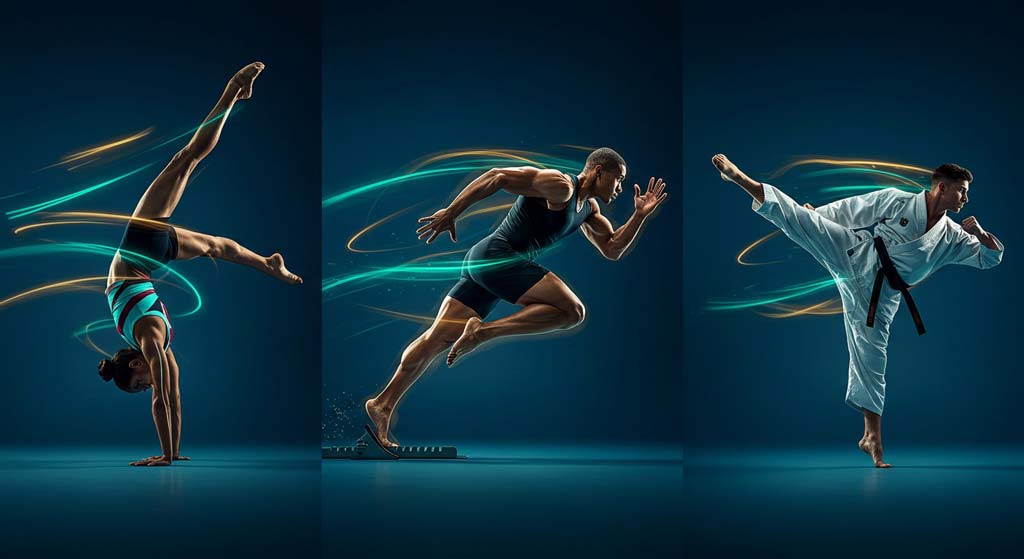
Skill-related components of fitness form the building blocks of movement quality and athletic ability. These six essential elements – agility, balance, coordination, power, reaction time, and speed – work together to enhance physical performance in sports and daily life.
For those who have mastered the fundamental aspects of physical wellness, these abilities take movement capabilities to new levels. Each component serves a unique purpose, from maintaining stability to generating explosive force.
The chart below outlines these key components and their definitions. Each component serves a distinct purpose: agility helps you manoeuvre around obstacles, while coordination ensures smooth movement patterns. Balance maintains stability during tasks, and power adds force to movements.
Skill-Related Components of Fitness:
Research shows these abilities enhance both athletic performance and everyday activities. Whether playing sports or climbing stairs with shopping bags, these components work as a unified system. The interaction between components creates fluid, efficient movements that adapt to various situations.
In the sections that follow, we’ll examine each component in detail. You’ll discover how agility influences quick movements, balance affects stability, coordination shapes movement patterns, power drives athletic performance, reaction time speeds responses, and speed influences movement quality.
Agility
Agility demands precise control of body movements in response to changing situations. This quality proves essential in sports like football, where players must swiftly change direction while maintaining control.
Research shows agility significantly influences movement with a ball, particularly in football dribbling and handball performance. Players with superior agility often demonstrate better ball control and movement precision during matches.
The impact of sedentary behaviour on agility deserves attention. Studies reveal that prolonged sitting leads to decreased physical function. Consequently, regular movement breaks help maintain agility and overall movement quality.
Training incorporating ladder drills and cone exercises enhances overall movement efficiency. Moreover, integrative neuromuscular training (skill-related components of fitness) shows improved motor competence and reduced movement awkwardness.
Evidence suggests that proper nutrition is vital in supporting reactive agility performance. Furthermore, the skill-related components of fitness benefit from specific training guidelines established by sports science research.
Professional recommendations suggest neuromotor exercises targeting agility should occur 2-3 times weekly. Each session should last 20-30 minutes, at least 60 minutes weekly, for optimal results.
Balance
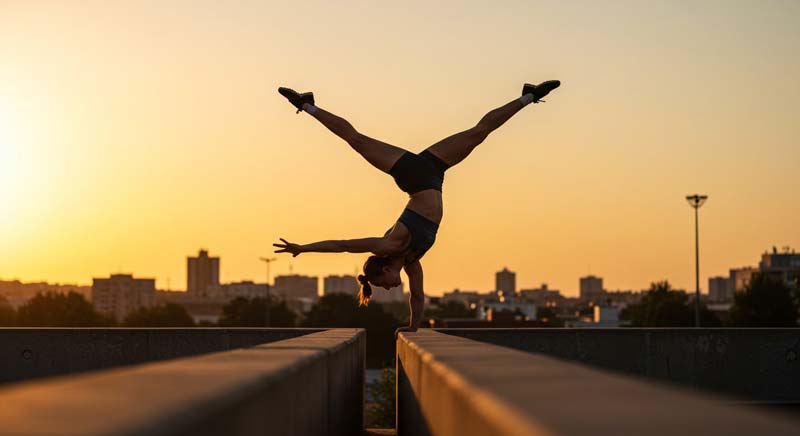
Balance represents our ability to maintain equilibrium, whether standing still or moving. Like a tightrope walker adjusting their position, our body constantly makes tiny adjustments to stay upright.
This capability operates under two distinct conditions: static (remaining motionless) and dynamic (reacting while moving). Think of static balance as standing on one leg, while dynamic balance helps you navigate an icy pavement.
Research demonstrates that individuals carrying extra weight typically show reduced stability. Their centre of pressure shifts forward as the body makes compensatory movements to counteract weight distribution.
The skill-related components of fitness improve significantly through targeted balance training. Exercises like mini hurdle jumping and single-leg stand to enhance both static and dynamic stability measures.
Proper nutrition enhances dynamic balance by improving muscle strength and blood flow mechanisms. Additionally, the skill-related components of fitness benefit from activities like yoga and tai chi.
Balance serves as a foundation for learning complex motor skills. From childhood development to sports performance, good balance enables successful movement patterns in daily activities.
Research examining sedentary behaviour found important links to reduced physical function. Regular movement breaks throughout the day help maintain balance capabilities and overall stability.
Coordination
Coordination measures one’s ability to integrate sensory inputs with body movements. Like a skilled pianist synchronising both hands on the keyboard, coordination enables smooth, accurate movement patterns.
Research in volleyball and handball reveals fascinating insights about coordination abilities. Players demonstrating superior coordination perform better in technical skills like ball handling and precise movements.
The skill-related components of fitness shine exceptionally bright in team sports. Elite handball players exhibit advanced coordination patterns that influence match performance and technical execution.
Global movement patterns form the foundation of coordination training. These patterns help develop fundamental movement skills that transfer across various sports and daily activities.
Prolonged sitting significantly affects coordination abilities. Studies show reduced performance in vital tasks like transitioning from sitting to standing, reaching for objects, and maintaining fluid movements.
Integrative neuromuscular training enhances motor competence while reducing awkward movements. This training approach targets specific movement patterns to improve overall coordination efficiency.
The training focused on movement mechanics shows remarkable improvements in coordination. The skill-related components of fitness benefit particularly from exercises that challenge multiple movement patterns simultaneously.
Professional athletes commonly use coordination drills to enhance their sports performance. These drills often combine hand-eye coordination, foot movements, and overall body control in increasingly complex patterns.
Power
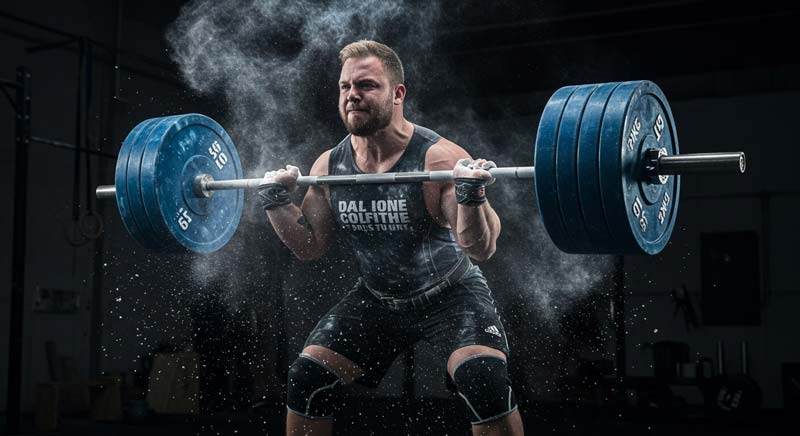
Power represents the rate at which work can be performed, merging strength with speed. Imagine a basketball player leaping for a rebound – their explosive movement demonstrates power in action.
Athletes require explosive strength for setting, spiking, and blocking movements, showcasing how the skill-related components of fitness work in harmony.
Neural adaptations from training enhance motor unit recruitment (activation of muscle fibres). These adaptations improve intermuscular coordination and power development during explosive movements.
High-intensity circuit training significantly boosts muscular power output. Research shows aerobic and anaerobic performance improvements through carefully structured power training programmes.
The skill-related components of fitness respond rapidly to changes in activity levels. Even short periods of reduced training can lead to decreased metabolic function and power production.
Extended inactivity affects multiple body systems. Decreased bone mineral density, metabolic dysfunction, and neuromuscular complications can result from prolonged periods without power training.
Professional guidelines recommend specific approaches to power development. Training should combine speed and strength, including plyometric drills and Olympic-style lifting movements.
Regular power training helps maintain crucial aspects of physical function. From preventing bone density loss to enhancing neuromuscular connections, power training offers wide-ranging benefits.
Reaction Time
Reaction time measures the interval between stimulation and response initiation. Picture a tennis player anticipating a serve – their success depends on this lightning-fast neural process.
Athletes across various sports rely heavily on quick reaction times. Studies with elite performers show strong relationships between reaction speed and successful performance in competitive situations.
The skill-related components of fitness significantly influence response capabilities. Quick reactions require efficient neural pathways developed through consistent training and practice.
Research examining psychophysiological properties reveals fascinating insights. Elements like visual processing speed and neural transmission efficiency directly affect reaction performance.
Total response time combines both reaction speed and movement completion. The skill-related components of fitness work together to create efficient responses to environmental demands.
Genetic factors play a considerable role in baseline reaction capabilities. However, targeted training can enhance response speed within individual genetic limitations.
Professional athletes undergo specific reaction training programmes. These programmes often incorporate visual, auditory, and tactile stimuli to develop comprehensive response abilities.
Speed
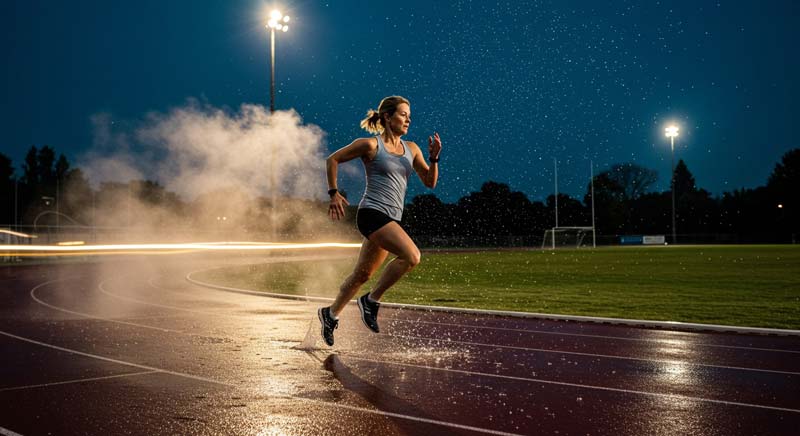
Speed capabilities shape athletic performance across numerous sports disciplines. From track athletes to football players, the ability to execute rapid movements often determines competitive success.
Research demonstrates transparent relationships between sprint performance and technical skills. The skill-related components of fitness directly influence an athlete’s capacity to perform quick, precise movements.
Speed encompasses various forms, including running, swimming, and limb movement speed. Each type requires specific training approaches to develop optimal performance capabilities.
The multicomponent nature of speed training enhances muscular performance. High-intensity, intermittent exercises show particular effectiveness in developing speed capabilities.
Training adaptations promote neural plasticity (the brain’s ability to form new connections). These changes lead to improved movement patterns and enhanced skill-related components of fitness.
Sprint mechanics benefit from targeted movement training. Research shows proper technical instruction can significantly improve running efficiency and speed output.
Speed development requires careful attention to recovery periods. Optimal rest intervals between training sessions ensure proper adaptation and prevent performance plateaus.
Physical adaptations occur rapidly with consistent speed training. However, these gains can diminish quickly without regular maintenance through structured training sessions.
The multipart interaction between movement efficiency and speed forms the foundation of athletic performance. These components work seamlessly with balance, coordination, power, and reaction time to create fluid, effective motion. Regular engagement in varied physical activities helps maintain and enhance these essential movement capabilities, contributing to lifelong physical competence.
Sources
- American College of Sports Medicine. ACSM’s Guidelines for Exercise Testing and Prescription. 10th ed. Philadelphia (PA): Wolters Kluwer; 2018. 480 p.
- Arefirad T, Seif E, Sepidarkish M, et al. Effect of exercise training on nitric oxide and nitrate/nitrite (NOx) production: a systematic review and meta-analysis. Front Physiol. 2022;13:953912.
- Bailey SJ, Winyard P, Vanhatalo A, et al. Dietary nitrate supplementation reduces the O2 cost of low-intensity exercise and enhances tolerance to high-intensity exercise in humans. J Appl Physiol. 2009;107(4):1144-1155.
- Batrakoulis A, Jamurtas AZ, Tsimeas P, Poulios A, Perivoliotis K, Syrou N, et al. Hybrid-type, multicomponent interval training upregulates musculoskeletal fitness of adults with overweight and obesity in a volume-dependent manner: a 1-year dose-response randomised controlled trial. Eur J Sport Sci. 2022;1-12.
- Bojić I, Pavlović L. Correlation between coordination and situational-motor abilities of young female handball players. Res Phys Educ, Sport and Health. 2015;4(1):105-110.
- Capodaglio P, Cimolin V, Tacchini E, Parisio C, Galli M. Balance control and balance recovery in obesity. Curr Obes Rep. 2012;1:166-73.
- Garcia-Gil M, Torres-Unda J, Esain I, Dunabeitia I, Gil SM, Gil J, et al. Anthropometric parameters, age, and agility as performance predictors in elite female basketball players. J Strength Cond Res. 2018;32(6):1723-1730.
- Fort-Vanmeerhaeghe A, Romero-Rodriguez D, Lloyd RS, Kushner A, Myer GD. Integrative neuromuscular training in youth athletes. Part II: strategies to prevent injuries and improve performance. Strength Cond J. 2016;38:9–27.
- Fort-Vanmeerhaeghe A, Montalvo A, Latinjak A, Unnithan V. Physical characteristics of elite adolescent female basketball players and their relationship to match performance. J Hum Kinet. 2016;53:167-178.
- Garcia-Gil M, Torres-Unda J, Esain I, Dunabeitia I, Gil SM, Gil J, et al. Anthropometric parameters, age, and agility as performance predictors in elite female basketball players. J Strength Cond Res. 2018;32(6):1723-1730.
- Grosset JF, Piscione J, Lambertz D, Pérot C. Paired changes in electromechanical delay and musculo-tendinous stiffness after endurance or plyometric training. Eur J Appl Physiol. 2009;105:131-9.
- Guzmán-Muñoz E, Sazo-Rodriguez S, Concha-Cisternas Y, Valdés-Badilla P, Lira-Cea C, Silva-Moya G, et al. Four weeks of neuromuscular training improve static and dynamic postural control in overweight and obese children: a randomised controlled trial. J Mot Behav. 2020;52:761-9.
- Katić R, Grgantov Z, Jurko D. Motor structures in female volleyball players aged 14-17 according to technique quality and performance. Coll Antropol. 2006;30(1):103-112.
- Kleim JA, Jones TA. Principles of experience-dependent neural plasticity: implications for rehabilitation after brain damage. J Speech Lang Hear Res. 2008;51:S225-39.
- Knight JA. Physical inactivity: associated diseases and disorders. Ann Clin Lab Sci. 2012;42(3):320-37.
- Kutlu M, Yapici H, Yilmaz A. Reliability and validity of a new test of agility and skill for female amateur soccer players. J Hum Kinet. 2017;56:219–227.
- Lee I-M, Shiroma EJ, Lobelo F, Puska P, Blair SN, Katzmarzyk PT. Effect of physical inactivity on major non-communicable diseases worldwide: an analysis of burden of disease and life expectancy. Lancet. 2012;380(9838):219-29.
- Lloyd RS, Faigenbaum AD, Stone MH, Oliver JL, Jeffreys I, Moody JA, et al. Position statement on youth resistance training: the 2014 International Consensus. British Journal of Sports Medicine, 48, 498-505.
- Melo RS, Tavares-Netto AR, Delgado A, Wiesiolek CC, Ferraz KM, Belian RB. Does the practice of sports or recreational activities improve the balance and gait of children and adolescents with sensorineural hearing loss? A systematic review. Gait Posture. 2020; 77: 144-55.
- Mickle KJ, Munro BJ, Steele JR. Gender and age affect balance performance in primary school-aged children. J Sci Med Sport. 2011; 14(3): 243-8.
- Mujika I, Santisteban J, Impellizzeri FM, Castagna C. Fitness determinants of success in men’s and women’s football. J Sports Sci. 2009;27(2):107-114.
- Myer GD, Faigenbaum AD, Ford KR, Best TM, Bergeron MF, Hewett TE. When to initiate integrative neuromuscular training to reduce sports-related injuries and enhance health in youth? Current Sports Medicine Reports, 10, 155-66.
- Ouerghi N, Fradj MKB, Bezrati I, Khammassi M, Feki M, Kaabachi N, et al. Effects of high-intensity interval training on body composition, aerobic and anaerobic performance and plasma lipids in overweight/obese and normal-weight young men. Biol Sport. 2017;34:385-92.
- Paillard T. Plasticity of the postural function to sport and/or motor experience. Neurosci Biobehav Rev. 2017; 72: 129-52.
- Rogers RR, Davis AM, Rice AE, et al. Effects of acute beetroot juice ingestion on reactive agility performance. Oxygen. 2022;2(4):570–577.
- Santos DA, Silva AM, Baptista F, et al. Sedentary behavior and physical activity are independently related to functional fitness in older adults. Exp Gerontol. 2012;47(12):908-12.
- Sardinha LB, Santos DA, Silva AM, Baptista F, Owen N. Breaking-up sedentary time is associated with physical function in older adults. J Gerontol A Biol Sci Med Sci. 2015;70(1):119–24.
- Sheppard JM, Young WB. Agility literature review: classifications, training and testing. J Sports Sci. 2006;24(9):919–932.
- Stamm R, Stamm M, Thomson K. Role of adolescent female volleyball players’ psychophysiological properties and body build in performance of different elements of the game. Percept Mot Skills. 2005;101(1):108-120.
- Stamm R, Veldre G, Stamm M, Thomson K, Kaarma H, Loko J, et al. Dependence of young female volleyballers’ performance on their body build, physical abilities, and psychophysiological properties. J Sports Med Phys Fitness. 2003;43(3):291-299.
- Surgeon General’s Report on Physical Activity and Health, USDHHS, 1996 as adapted from Corbin and Lindsey, 1994. Journal of Sports Sciences, 24(9), 919-932.
- Tompsett C, Burkett B, McKean MR. Comparing performances of fundamental movement skills and basic human movements: a pilot study. Journal of Fitness Research, 4, 13-25.
- Valadés D, Palao JM, Aúnsolo Á, Ureña A. Correlation between ball speed of the spike and the strength condition of a professional women’s volleyball team during the season. Kinesiology. 2016;48(1):87-94.
- Vukovich MD, Arciero PJ, Kohrt WM, Racette SB, Hansen PA, Holloszy JO. Changes in insulin action and GLUT-4 with 6 days of inactivity in endurance runners. J Appl Physiol (1985). 1996;80(1):240-4.


Muy buenas noches.
Soy estudiante de la UABC, actualmente cursando la licenciatura en LAFD. Antes que nada, muchas gracias por este artículo; me pareció muy interesante y enriquecedor, ya que me permitió comprender de una manera más clara los diferentes componentes de la condición física relacionados con las destrezas.
A partir de la lectura, pude entender mejor cada uno de estos componentes y su importancia. Sin embargo, me surgió una duda, ya que también estuve investigando sobre los componentes de la condición física relacionados con la salud.
Mi pregunta es la siguiente: ¿es posible trabajar todos los componentes de la condición física en conjunto, o los componentes relacionados con las destrezas y los relacionados con la salud se desarrollan de manera paralela y complementaria?
Agradecería mucho su respuesta, ya que sería de gran ayuda para fortalecer mi comprensión sobre el tema.
De antemano, muchas gracias.
———————————— TRADUCED
Good evening,
My name is Erick Huape, and I am a student at UABC, currently enrolled in the Bachelor’s degree program in Physical Activity and Sport (LAFD). First of all, I would like to thank you for this article. I found it very interesting and helpful, as it allowed me to better understand the different components of physical fitness related to skills.
Through this reading, I was able to gain a clearer understanding of each of these components and their importance. However, I had a question after also researching the components of physical fitness related to health.
My question is the following: Is it possible to train all components of physical fitness together, or are the components related to skills and those related to health developed in parallel and in a complementary way?
I would greatly appreciate your response, as it would be very helpful in strengthening my understanding of this topic.
Thank you very much in advance.
Hola Erick,
Muchas gracias por leer el artículo y por tomarte el tiempo de escribir un mensaje tan reflexivo. De verdad lo aprecio, y me alegra saber que el post te ayudó a entender mejor los componentes de la condición física relacionados con las destrezas.
Por contexto, a lo largo de los años he trabajado tanto con deportistas de nivel nacional e internacional como con personas del público general. Y en ambos casos he visto el mismo patrón.
Sobre tu pregunta, sí, es posible entrenar todos los componentes en conjunto. En la vida real se desarrollan en paralelo y se complementan entre sí. Los componentes relacionados con la salud suelen ser la base para la mayoría de personas, porque sostienen tu capacidad de entrenar, recuperarte y ser constante. Los componentes relacionados con las destrezas son cómo esa base se expresa en la calidad del movimiento y el rendimiento, sobre todo en el deporte y también en tareas cotidianas que requieren control, ritmo y cambios rápidos.
También funciona al revés. Cuando añades pequeñas dosis de trabajo de destrezas, muchas veces mejoras la eficiencia del movimiento, la confianza y el disfrute. Eso hace que la gente se mueva más, y ese aumento de actividad apoya la salud. Por eso no lo veo como dos caminos separados. Lo veo como un mismo sistema.
Un ejemplo práctico sencillo sería una sesión que incluya un calentamiento con tareas de equilibrio y coordinación, un bloque de fuerza para construir la base, luego un bloque corto de potencia o velocidad con buena técnica, y al final un poco de trabajo aeróbico ligero y movilidad. No estás entrenando todo al máximo en una sola sesión, pero sí estás tocando varios componentes de forma inteligente, sobre todo cuando el tiempo es limitado.
La clave es la prioridad. No intentes llevar todos los componentes al máximo nivel de intensidad en la misma sesión. Elige uno o dos enfoques principales, mantén el trabajo de destrezas corto y de alta calidad, y deja que la base de salud se construya de forma constante por debajo. Ese enfoque suele funcionar para salud general, deporte recreativo y también para contextos de rendimiento, solo que con distintos énfasis.
Gracias de nuevo, Erick. Espero que tus estudios vayan muy bien, y te deseo lo mejor para el resto del año. Espero que mi respuesta te ayude, y si quieres, dime qué deporte practicas o cuál es tu objetivo y lo hago todavía más específico.
English translation
Hi Erick,
Thank you very much for reading the article and for taking the time to write such a thoughtful message. I really appreciate it, and I am glad the post helped you make sense of the skill related components.
For context, over the years I have worked with both national and international level athletes, as well as members of the general public. In both settings I keep seeing the same pattern.
On your question, yes, you can train all components together. In real life they develop in parallel and they complement each other. The health related components are the base for most people because they support your capacity to train, recover, and stay consistent. The skill related components are how that base shows up in movement quality and performance, especially in sport and in daily tasks that demand control, timing, and quick changes.
It also works the other way around. When you add small doses of skill work, you often improve movement efficiency, confidence, and enjoyment. That can make people more active, and that supports health. So I do not see them as two separate tracks. I see them as one system.
A simple practical example is one session that includes a warm up with balance and coordination tasks, a strength block to build the base, then a short block of power or speed work done with good technique, and a finish with light aerobic work and mobility. You are not training everything at maximum intensity in one session, but you are touching multiple components in a way that makes sense, especially when time is limited.
The key is priority. Do not try to push every component at maximum intensity in the same session. Pick one or two main focuses, keep the skill work short and high quality, and let the health base build steadily underneath it. That approach tends to work for general fitness, recreational sport, and performance contexts, just with different emphasis.
Thank you again, Erick. I hope your studies are going well, and I wish you all the best for the rest of the year. I hope my answer helps, and if you want, tell me what sport you do or what your main goal is and I can make the example more specific.
Paul