


Your body needs resistance to survive, and space travel proves this in the most dramatic way possible. Stephen Hawking’s A Brief History of Time first ignited my fascination with the cosmos decades ago. Since then, I’ve watched hundreds of SpaceX launches, mesmerised by humanity’s relentless push towards the stars.
What captivates me isn’t the thunder of rockets or the poetry of orbital mechanics. It’s what happens to human bodies when they escape Earth’s gravitational embrace. Early Apollo missions showed returning astronauts being carried from their capsules, unable to walk after just weeks in space. Modern crews fare better thanks to intensive exercise protocols, but the fundamental challenge persists.
Microgravity (weightlessness) environments strip away the invisible force that has shaped every aspect of human evolution. Within hours, astronauts begin experiencing changes that would take sedentary individuals months or years to develop. The cardiovascular system starts adapting. Bones begin releasing calcium. Muscles start wasting away.
These changes reveal something profound about terrestrial life (life on Earth). Gravity isn’t just what keeps our feet on the ground. It’s the constant resistance that maintains our physiology. Remove it, and the human body begins dismantling itself with shocking efficiency.
Space medicine offers a unique laboratory for understanding why your body needs resistance in all its forms. The lessons apply to astronaut training, everyday health decisions, and sedentary lifestyle choices. What happens in the weightless environment of space mirrors what occurs in the gravity-rich environment of sedentary living, just compressed into weeks instead of decades.
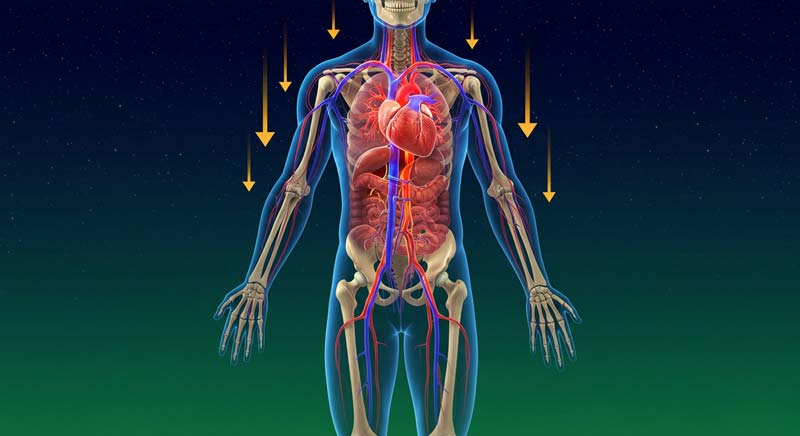
Why Your Body Needs Resistance to Function Properly
NASA’s five hazards of human spaceflight read like a medical textbook’s nightmare scenario. Microgravity tops the list, followed by radiation, isolation, hostile environments, and distance from Earth. Yet it’s the absence of gravitational resistance that creates the most immediate physiological chaos.
Primary Effects:
- Fluid redistribution begins within hours as blood and lymphatic (body fluid transport system) fluid migrate from legs to head, creating the characteristic puffy face and stuffy nose that astronauts experience throughout their missions
- Plasma volume drops by 10-15% as the cardiovascular system responds to baroreceptor (pressure sensor) stimulation, triggering a cascade that reduces total blood volume
- Cardiac muscle atrophy starts immediately as the heart no longer pumps against gravitational resistance, leading to reduced stroke volume and compromised cardiac output
Secondary Considerations:
- Central venous pressure plummets within the first 24 hours, indicating that the heart’s filling pressure has decreased dramatically
- Blood vessel adaptation occurs as lower body vessels no longer need to counteract gravity’s pull, fundamentally altering circulation patterns throughout the body.
The human cardiovascular system evolved under constant gravitational stress. For millions of years, every heartbeat has worked against this downward force. Remove that resistance, and the system begins optimising for an environment that doesn’t exist on Earth. Your body needs resistance from gravity to maintain the delicate balance of pressures and flows that keep organs functioning properly.
Modern astronauts spend up to 2.5 hours a day exercising in space, yet they still experience these changes. This intensive exercise programme demonstrates how challenging it is to replace gravity’s constant resistance. Modern space programmes understand that your body needs resistance to maintain function, even when that resistance must be artificially created.
The Complete Health Breakdown Astronauts Experience in Space
Extended microgravity exposure reveals the interconnectedness of human body systems. What appears as separate physiological processes on Earth becomes a symphony of cascading failures in space. Each system’s decline accelerates the deterioration of others.
Cardiovascular Collapse
The heart experiences a paradox that defies intuition. Long-duration spaceflight can increase cardiac output by up to 35% while simultaneously causing cardiac muscle to atrophy. This contradiction arises because the heart works harder to pump blood through a system no longer assisted by gravity, yet lacks the resistance training that helps maintain muscle mass.
Arrhythmias become common, though generally non-fatal. Russian and American space missions both document irregular heart rhythms, with long-duration flights particularly prone to QT interval prolongation (extended heart rhythm patterns that can affect heart function). The heart’s electrical system struggles to coordinate in an environment it never evolved to handle.
Upon return, orthostatic intolerance (the inability to maintain blood pressure when standing) affects 83% of long-duration astronauts, compared to just 20% of short-duration crews. They literally cannot stand without fainting as their cardiovascular system has forgotten how to work against gravity.
Musculoskeletal Devastation
Bone mineral loss occurs at 2% per month in weight-bearing bones during spaceflight. To put this in perspective, postmenopausal women typically lose bone at 1% per year. Astronauts experience twelve times the rate of bone loss as the most rapid natural decline on Earth.
Muscle atrophy and bone loss don’t occur independently. They represent interconnected processes where muscle weakness reduces the mechanical loading that bones require for maintenance. This creates a vicious cycle in which each system’s decline accelerates the deterioration of the other.
The human skeleton evolved as a dynamic structure that adapts to mechanical stress. Frost’s mechanostat theory explains how bones continuously remodel in response to the forces applied to them. Remove those forces, and the bones begin to dissolve.
Metabolic Disruption
Protein synthesis (the process of building new proteins from amino acids) shifts from regular cellular maintenance to emergency mitochondrial protection. This represents the body’s attempt to preserve essential cellular functions under unprecedented stress. Resources commonly used for growth and repair get redirected to basic survival.
Immune system dysfunction increases susceptibility to infection both during and after spaceflight. The stress of microgravity fundamentally alters the function of white blood cells, creating vulnerabilities that persist long after returning to Earth.
Neurological Adaptation
Brain grey matter changes occur in regions responsible for movement and spatial processing. These structural modifications can persist for months after return, suggesting that the nervous system struggles to readapt to gravitational environments.
The brain rewires itself for a weightless environment, then must rewire again upon return to Earth. This neuroplasticity (the brain’s ability to reorganise and form new neural connections) demonstrates how your body needs resistance not just for physical structures, but for proper nervous system function.
How Ground Based Exercise Prevents the Space Effect
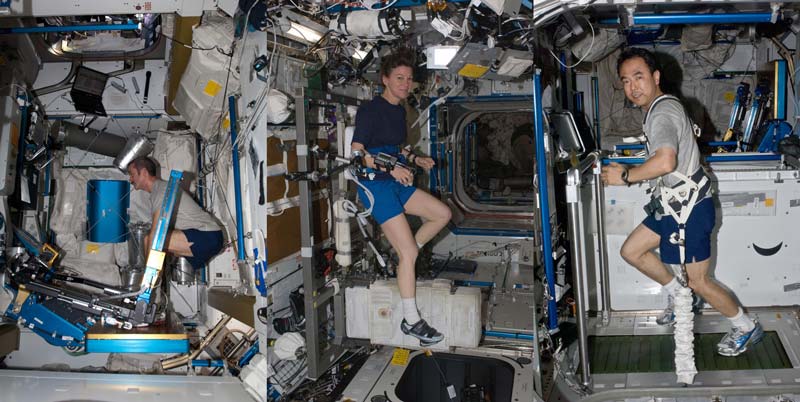
Watching astronauts exercise in space is akin to observing someone fight an invisible enemy. They strap themselves to treadmills, bungee themselves to resistance devices, and perform carefully choreographed movements that look bizarre compared to Earth-based training. Yet this elaborate routine represents humanity’s attempt to replace the most fundamental force in biology.
- The treadmill sessions appear almost comical to terrestrial eyes. Astronauts bounce and glide rather than run, held down by harnesses and bungee cords. This intensive exercise programme requires 2.5 hours daily, six days a week, yet still cannot entirely prevent the physiological changes associated with weightlessness.
- Resistance devices in space operate on principles entirely different from Earth-based weight training. Instead of fighting gravity, astronauts use vacuum cylinders and flywheel systems that create artificial resistance. Combined aerobic and resistance training shows positive effects on cardiovascular risk factors; however, the artificial nature of space exercise cannot replicate the comprehensive influence of gravity.
- The cardiovascular system responds differently to voluntary exercise than to constant gravitational resistance. Physical fitness correlations with bone mineral density remain strong across age groups; however, this relationship requires consistent mechanical loading, which voluntary exercise cannot fully provide.
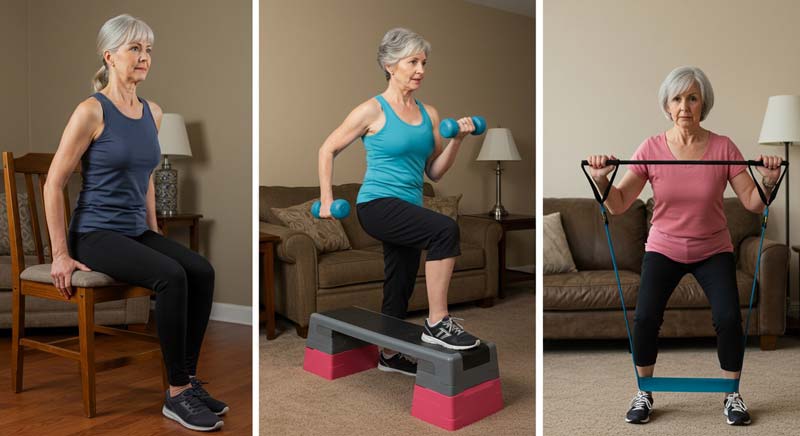
The space exercise programmes illuminate why your body needs resistance training on Earth. Ground-based exercise doesn’t just improve fitness; it maintains the physiological systems that gravity naturally supports. Without this resistance, these systems begin the same deterioration process that occurs in microgravity, just over longer time frames.
Progressive overload principles work because they mimic and enhance the natural resistance that gravity provides. Each training session creates mechanical stress that triggers adaptive responses throughout multiple body systems simultaneously. Understanding that your body needs resistance helps explain why consistent exercise yields such comprehensive health benefits.
WHY YOUR BODY NEEDS RESISTANCE: EXERCISE VS SEDENTARY OUTCOMES
SEDENTARY LIFESTYLE
RESISTANCE TRAINING
What This Means for Your Daily Movement When Your Body Needs Resistance
The astronaut experience transforms our perspective on sedentary behaviour on Earth. When I watch SpaceX crews return from the International Space Station, walking unsteadily despite months of intensive exercise, I see a preview of what happens to earthbound bodies that avoid resistance.
Prolonged immobility studies demonstrate that bed rest reproduces many of the effects observed during spaceflight. Increased calcium excretion, negative calcium balance, and rapid bone loss occur within days. The critical insight: simply bearing weight without muscle activity provides minimal protection. Standing still doesn’t create the dynamic loading that maintains physiological function.
Your daily activities naturally provide the resistance your body requires, but modern life systematically removes these challenges. Elevators replace stairs. Cars replace walking. Chairs replace floor sitting. Each convenience strips away opportunities for your body to work against resistance.
The space medicine perspective reveals that your body needs resistance not as an optional enhancement, but as a biological requirement. Muscle ageing research indicates that a decline in muscle capacity becomes a significant factor in bone loss, leading to the same interdependent decline observed in astronauts.
Consider the implications: Hip fractures represent devastating consequences because they indicate system-wide failure similar to what occurs in space. The 20% mortality rate within one year of hip fracture reflects how removing resistance challenges can cascade into life-threatening complications.
Exercise benefits work by restoring the natural resistance that modern life removes. Resistance training strengthens muscles that prevent falls. Weight-bearing activities maintain bone density. Cardiovascular exercise preserves heart function. Each intervention replaces aspects of the constant resistance that gravity and daily movement once provided.
The lesson from space is clear: your body will adapt to whatever environment you provide. Give it weightlessness, and it optimises for floating. Give it sedentary comfort, and it optimises for immobility. Give it regular resistance challenges, and it maintains the robust function that characterises healthy ageing.
Every step you take, every stair you climb, every object you lift represents a small victory against the forces that would otherwise lead your body down the same path that astronauts experience in just weeks. This understanding of how your body needs resistance transforms everyday activities into opportunities for maintaining the physiological systems that millions of years of evolution designed to work against Earth’s gravitational pull.
Sources
- Afshinnekoo E., Scott R.T., MacKay M.J., Pariset E., Cekanaviciute E., Barker R., Gilroy S., Hassane D., Smith S.M., Zwart S.R., et al. Fundamental Biological Features of Spaceflight: Advancing the Field to Enable Deep-Space Exploration. Cell. 2020;183:1162–1184.
- American College of Sports Medicine, Chodzko-Zajko WJ, Proctor DN, et al. American College of Sports Medicine position stand. Exercise and physical activity for older adults. Med Sci Sports Exerc. 2009;41(7):1510–30.
- Anzai T, Frey MA, Nogami A. Cardiac arrhythmias during long‐duration spaceflights. J Arrhythm. 2014;30:139‐
- Baillet A, Vaillant M, Guinot M, Juvin R, Gaudin P. Efficacy of resistance exercises in rheumatoid arthritis: meta-analysis of randomised controlled trials. Rheumatology (Oxford). 2012;51(3):519–27.
- Buckey JC, Lane LD, Levine BD, et al. Orthostatic intolerance after spaceflight. J Appl Physiol. 1996;81(1):7‐
- Buckey JC, Gaffney FA, Lane LD, et al. Central venous pressure in space. J Appl Physiol. 1996;81(1):19‐
- Chaloulakou S, Poulia KA, Karayiannis D. Physiological alterations in relation to space flight: the role of nutrition. Nutrients. 2022;14(22):4896.
- Convertino VA. Insight into mechanisms of reduced orthostatic performance after exposure to microgravity: comparison of ground‐based and space flight data. J Gravit Physiol. 1998;5(1):85‐
- Crucian B.E., Choukèr A., Simpson R.J., Mehta S., Marshall G., Smith S.M., Zwart S.R., Heer M., Ponomarev S., Whitmire A., et al. Immune System Dysregulation During Spaceflight: Potential Countermeasures for Deep Space Exploration Missions. Front. Immunol. 2018;9:1437.
- Evans W. J., Campbell W. W. Sarcopenia and age-related changes in body composition and functional capacity. Journal of Nutrition. 1993;123(Supplement 2):465–468.
- Feger BJ, Thompson JW, Dubois LG, et al. Microgravity induces proteomics changes involved in endoplasmic reticulum stress and mitochondrial protection. Sci Rep. 2016;6:34091.
- Frost HM. Bone’s mechanostat: a 2003 update. Anat Rec A Discov Mol Cell Evol Biol. 2003;275(2):1081–101.
- Haentjens P, Magaziner J, Colón-Emeric CS, et al. Meta-analysis: excess mortality after hip fracture among older women and men. Ann Intern Med. 2010;152(6):380–90.
- Hughson RL, Helm A, Durante M. Heart in space: effect of the extraterrestrial environment on the cardiovascular system. Nat Rev Cardiol. 2018;15(3):167‐
- Iwase S., Nishimura N., Tanaka K., Mano T. Effects of Microgravity on Human Physiology. IntechOpen. 2020.
- Koppelmans V., Bloomberg J.J., Mulavara A.P., Seidler R.D. Brain Structural Plasticity with Spaceflight. NPJ Microgravity. 2016;2:2.
- Lang T., LeBlanc A., Evans H., Lu Y., Genant H., Yu A. Cortical and trabecular bone mineral loss from the spine and hip in long-duration spaceflight. Journal of Bone and Mineral Research. 2004;19(6):1006–1012.
- Lloyd S. A., Lang C. H., Zhang Y., et al. Interdependence of muscle atrophy and bone loss induced by mechanical unloading. Journal of Bone and Mineral Research. 2014;29(5):1118–1130.
- Meck JV, Reyes CJ, Perez SA, Goldberger AL, Ziegler MG. Marked exacerbation of orthostatic intolerance after long‐ short‐duration spaceflight in veteran astronauts. Psychosom Med. 2001;63(6):865‐873.
- 5 Hazards of Human Spaceflight.
- Perhonen MA, Franco F, Lane LD, et al. Cardiac atrophy after bed rest and spaceflight. J Appl Physiol. 2001;91(2):645‐
- Pocock NA, Eisman JA, Yeates MG, et al. Physical fitness is a major determinant of femoral neck and lumbar spine bone mineral density. J Clin Invest 1986;78:618–21.
- Schneider VS, McDonald J. Skeletal calcium homeostasis and countermeasures to prevent disuse osteoporosis. Calcif Tissue Int 1984;36(suppl 1):S151–44.
- Shibata S, Wakeham DJ, Thomas JD, et al. Cardiac effects of long‐duration space flight. J Am Coll Cardiol. 2023;82(8):674‐
- Stavropoulos-Kalinoglou A, Metsios GS, Veldhuijzen van Zanten JJ, Nightingale P, Kitas GD, Koutedakis Y. Individualised aerobic and resistance exercise training improves cardiorespiratory fitness and reduces cardiovascular risk in patients with rheumatoid arthritis. Ann Rheum Dis. 2013;72(11):1819–25.
- Watenpaugh DE. Fluid volume control during short‐term space flight and implications for human performance. J Exp Biol. 2001;204(pt 18):3209‐3215.