



DOMS muscle soreness after exercise strikes almost everyone who pushes their body beyond familiar limits. That peculiar ache that creeps in hours after your workout, peaks around day two, then gradually fades away.
I’ve witnessed this phenomenon countless times whilst coaching athletes. The confused look on someone’s face when they ask why they feel fine immediately after training, only to struggle walking downstairs 48 hours later. Additionally, I’ve experienced it personally during intense training phases when introducing new movements or returning after a break.
DOMS, also known as exercise-induced muscle damage (EIMD), defies common sense in how it operates. The hardest part of your workout doesn’t necessarily predict the worst soreness. Neither does the burning sensation you feel during exercise. DOMS muscle soreness after exercise operates by entirely different rules.
Research has shattered long-held beliefs about what causes this delayed pain. The lactic acid (a byproduct of muscle metabolism) theory that dominated sports science for decades? Completely wrong. The idea that soreness equals a good workout? Also incorrect. Meanwhile, the mechanisms actually driving this phenomenon are far more sophisticated than previously understood.
The confusion surrounding post-workout soreness creates unnecessary anxiety for people starting fitness programmes. Some avoid exercise entirely, fearing the discomfort. Others push through severe soreness, risking genuine injury because they can’t distinguish normal adaptation from potential harm.
This post explores the real science behind muscle soreness, when it signals progress versus concern, and evidence-based strategies for managing it effectively. The insights ahead will transform how you understand your body’s response to exercise.
What Causes DOMS Muscle Soreness After Exercise and Why Does It Happen?
The moment you perform an unfamiliar exercise or increase training intensity, your muscles begin experiencing mechanical stress that exceeds what most people imagine. DOMS muscle soreness after exercise isn’t caused by lactic acid (a byproduct of muscle metabolism) buildup, despite this myth persisting for decades.
Eccentric contractions (when muscles lengthen under load) create the primary trigger. Think about lowering weights, walking downhill, or controlling resistance during movement.
These actions stretch muscle fibres beyond their current capacity, causing microscopic tears in sarcomeres (the basic units that make muscles contract). The damage isn’t random destruction but controlled microtrauma affecting cellular structures.
During these contractions, excessive stretching disrupts membrane structures and specialised proteins (complex molecules that perform specific functions in cells) responsible for muscle function. Calcium (a mineral that triggers muscle contractions) floods into muscle cells, activating enzymes that break down cellular components. This mechanical disruption sets off a cascade of events leading to the delayed pain you experience.
Your immune system responds by launching an inflammatory attack on damaged tissue. Pro-inflammatory molecules, including tumour necrosis factor-alpha (TNF-α, a protein that promotes inflammation), interleukin-1β (IL-1β, a signalling protein that triggers immune responses), and interleukin-6 (IL-6, a protein that coordinates inflammation and healing), flood the affected area. These aren’t just troublemakers creating discomfort. They coordinate the entire healing process.
Specialised immune cells called macrophages (white blood cells that clean up damaged tissue) migrate to the injured muscle. They release additional inflammatory mediators (chemical messengers that control inflammation) whilst beginning tissue cleanup and repair. This explains why DOMS muscle soreness after exercise peaks 24-72 hours post-workout rather than immediately. The delay occurs because inflammatory processes take time to develop fully.
The pain involves complex nervous system changes. Inflammatory molecules increase the sensitivity of peripheral nerve endings within muscle tissue. Meanwhile, tissue swelling stimulates pain receptors (nerve endings that detect harmful stimuli) that typically remain quiet. These sensitised nerves send stronger pain signals to your brain, creating that characteristic deep, aching sensation.
Muscle damage also initiates sophisticated cellular repair processes. Protein synthesis (the process of building new proteins from amino acids) increases dramatically as cells rebuild damaged structures. Satellite cells (muscle stem cells) activate and contribute new material for recovery. This repair requires substantial energy, contributing to fatigue accompanying soreness.
DOMS muscle soreness after exercise varies dramatically between people due to factors including genetics, training history, and psychological state, influencing how bodies manage this biological process.
How Long Does DOMS Muscle Soreness After Exercise Last and When Will Soreness Go Away?
The path from post-workout comfort to peak soreness and back to normal function follows a predictable timeline that helps you understand what your body is experiencing.
Phase One: The Quiet Hours (0-12 Hours)
Immediately after intense exercise, you typically feel fine. Maybe some fatigue, perhaps mild stiffness, but nothing suggesting the storm brewing within your muscles. DOMS muscle soreness after exercise rarely announces itself during this deceptive calm period.
Phase Two: The Awakening (12-24 Hours)
Muscle soreness begins its subtle entrance. You notice stiffness when getting out of bed or climbing stairs. The discomfort remains manageable but signals the inflammatory cascade has already started. Some people experience minimal symptoms here, whilst others detect more pronounced changes.
Phase Three: Peak Intensity (24-72 Hours)
This is when DOMS muscle soreness after exercise reaches its notorious peak. Simple movements become challenging. Walking downstairs requires handrail support. Reaching overhead feels uncomfortable. Research consistently shows that maximum pain intensity occurs around 48-72 hours post-exercise.
Multiple studies tracking recovery patterns demonstrate that pressure pain thresholds hit their lowest point during this window. The severity varies dramatically between individuals, from mild inconvenience to significant functional limitation.
Phase Four: The Turn (3-5 Days)
Relief begins to emerge. The inflammatory response starts subsiding, tissue repair progresses, and pain sensitivity returns toward normal. Most people experience substantial improvement during this phase, though some residual stiffness may persist.
Phase Five: Resolution (5-7 Days)
Complete recovery typically occurs within one week for healthy individuals. While subjective soreness resolves, some objective measures of muscle function might remain slightly affected longer. However, the noticeable discomfort impacting daily activities usually disappears.
When Duration Extends
Soreness persisting beyond 7-10 days suggests something other than typical delayed muscle soreness. Exercise volume, individual recovery capacity, and training status influence duration. Some research reports recovery variations lasting several weeks, particularly with severe initial damage.
The repeated bout effect shows that subsequent exposures to similar exercises produce progressively less soreness and faster recovery. This protective adaptation can last weeks to months, depending on training consistency and individual physiology.
Laboratory markers tell their own story.
Creatine kinase (CK), an enzyme indicating muscle damage, typically peaks 24-72 hours post-exercise, sometimes remaining elevated for days. However, these biochemical (relating to chemical processes in living organisms) changes don’t always match subjective pain levels, highlighting the complex nature of DOMS muscle soreness after exercise.
Do You Need DOMS for a Good Workout or Muscle Growth?
The Myth: No soreness means no progress. This belief drives people to seek pain as proof of effective training.
The Reality: Muscle soreness doesn’t reliably indicate workout quality or muscle-building potential. Research comparing different training approaches reveals that participants achieved similar strength and muscle mass gains regardless of soreness levels experienced. Some built impressive muscle whilst rarely feeling sore.
DOMS muscle soreness after exercise represents tissue adaptation to unfamiliar stress, not necessarily an optimal stimulus for growth. Hypertrophy (muscle growth) occurs through complex processes that don’t require the inflammatory response, causing delayed soreness.
The Evidence Against Soreness Dependence
Multiple studies demonstrate significant muscle development without accompanying delayed soreness. Experienced exercisers often report minimal discomfort despite intense sessions that would devastate beginners. This occurs due to the repeated bout effect, where muscles adapt to specific exercises, reducing both soreness and cellular damage markers whilst maintaining training benefits.
The absence of DOMS muscle soreness after exercise doesn’t indicate inadequate stimulus. Instead, it represents successful physiological conditioning. Muscles become efficient at managing mechanical stress, repair processes improve, and the nervous system adapts to coordinate movements more effectively.
What Actually Drives Muscle Growth
Mechanical tension (the force exerted on muscles during exercise), metabolic stress (the buildup of byproducts from intense muscle work), and muscle damage all contribute to hypertrophy.
However, the muscle damage creating soreness represents just one pathway. Progressive overload (gradually increasing training demands) drives adaptation regardless of pain levels experienced afterwards.
Protein synthesis (the process of building new muscle tissue) increases following effective training, whether or not soreness develops. Research shows similar molecular signalling for muscle growth in sore versus non-sore conditions.
The Adaptation Paradox
As fitness improves, DOMS muscle soreness after exercise typically decreases for familiar movements. This creates a paradox where beginners experience intense soreness from modest training loads, whilst advanced individuals feel minimal discomfort despite handling much greater demands.
This pattern doesn’t reflect diminished training effectiveness. Instead, it demonstrates successful adaptation. The body becomes remarkably efficient at managing exercise stress without triggering the inflammatory cascade responsible for delayed soreness.
When Soreness Might Indicate Problems
Excessive soreness can actually hinder progress by impairing subsequent training quality, prolonging recovery periods, and potentially indicating inappropriate training loads. Severe DOMS muscle soreness after exercise may suggest poor programming rather than optimal stimulation.
Consistently high soreness levels often accompany inadequate recovery, poor nutrition, or excessive training volume. These factors can impede rather than enhance adaptation processes.
How to Relieve and Reduce DOMS Muscle Soreness After Exercise Fast
When DOMS muscle soreness after exercise strikes, most people want immediate relief. The good news is that several evidence-based approaches can significantly reduce discomfort and accelerate recovery.
1 – Cold Water Immersion: The Temperature Game
Plunging into cold water represents one of the most effective strategies for managing muscle soreness. Research shows cold water immersion at 10-15°C for 10-15 minutes provides optimal results. The cold triggers vasoconstriction (blood vessel narrowing), reducing inflammation and tissue swelling that contribute to pain.
However, temperature matters enormously. Water below 10°C can cause excessive discomfort and muscle stiffness. Temperatures above 15°C show weaker anti-inflammatory effects. The sweet spot balances effectiveness with tolerability.
2 – Active Recovery: Movement as Medicine
Light movement trumps complete rest for reducing DOMS muscle soreness after exercise. Gentle walking, leisurely cycling, or basic stretching promotes blood flow without adding stress to damaged tissue. This enhanced circulation helps remove inflammatory waste products (toxic byproducts created during tissue damage) whilst delivering nutrients needed for repair.
The key lies in intensity. Activities should feel effortless, creating movement without strain. Think conversation-pace walking rather than structured exercise sessions.
3 – Massage and Soft Tissue Work
Professional massage or foam rolling can provide short-term relief from muscle stiffness and discomfort. These techniques improve blood flow and potentially reduce muscle tension. However, benefits appear primarily immediate rather than long-lasting.
Self-massage using foam rollers, massage balls, or massage guns on very low settings offers accessible alternatives to professional treatment. Apply gentle pressure and avoid aggressive techniques that might worsen tissue damage.
4 – Nutritional Strategies: Fuel for Repair
Protein intake plays a vital role in muscle recovery. Consuming 20-30 grams of high-quality protein within hours after exercise supports the repair processes that ultimately resolve DOMS muscle soreness after exercise. However, protein alone won’t eliminate soreness immediately.
Anti-inflammatory compounds show mixed results. Some studies suggest omega-3 fatty acids, tart cherry juice, or curcumin (the active compound in turmeric) might reduce soreness severity. However, effects vary significantly between individuals.
5 – Heat Therapy Applications
Warm baths, saunas, or heating pads can provide comfort by increasing blood flow and reducing muscle stiffness. Heat works differently from cold, promoting relaxation rather than directly reducing inflammation. Some people find alternating hot and cold treatments beneficial, though research supporting this approach remains limited.
What Doesn’t Work
Stretching, despite popular belief, shows minimal impact on DOMS muscle soreness after exercise severity or duration. Static stretching might provide temporary relief, but doesn’t accelerate underlying repair processes. Similarly, over-the-counter pain medications offer symptom management without addressing root causes.
Timing Considerations
Early intervention typically proves most effective. Applying cold therapy within hours of exercise shows better results than delayed treatment. However, some strategies, like gentle movement, remain beneficial throughout the soreness period.

Should You Work Out While Sore from DOMS?
Scenario 1: Mild Soreness (2-4/10 pain scale)
Light stiffness that doesn’t impair normal movement patterns. You can perform daily activities without significant discomfort. Training different muscle groups remains completely safe and often beneficial. The increased blood flow from exercise can actually help reduce DOMS muscle soreness after exercise in other areas.
Scenario 2: Moderate Soreness (5-6/10 pain scale)
Noticeable discomfort affecting movement quality but not preventing basic functions. Here’s where decision-making becomes essential. Light cardio or mobility work targeting non-sore areas works well. However, avoid intensive training of the affected muscles until discomfort subsides.
Scenario 3: Severe Soreness (7-10/10 pain scale)
Significant pain limiting normal movement or daily activities. This level of DOMS muscle soreness after exercise requires rest from intensive training. Gentle walking or easy swimming might provide relief, but structured exercise sessions should wait.
The Strength Factor
Research shows muscle strength can decline up to 62% following exercise, causing severe soreness. This massive reduction in force production significantly increases injury risk if you attempt intensive training whilst severely sore. Your nervous system can’t coordinate movements effectively when muscles are compromised.
Trying to “push through” severe soreness often leads to compensatory movement patterns. These altered mechanics can stress other tissues inappropriately, creating new problems whilst failing to address existing ones.
Smart Training Strategies
- Upper-lower splits work brilliantly when managing soreness. If your legs are sore from squats, upper body training remains perfectly safe. This approach allows continued progress whilst respecting your body’s recovery needs.
- Different movement patterns also help. If push movements cause discomfort, pulling exercises might feel fine. Vertical movements might be tolerable when horizontal patterns hurt.
The Repeated Bout Effect Advantage
Continuing appropriately modified training actually helps future soreness management. Regular exposure to exercise stimuli triggers adaptations that reduce both the severity and duration of DOMS muscle soreness after exercise over time. Complete rest might feel safer, but it delays this protective adaptation.
When to Seek Help
Soreness persisting beyond 7-10 days warrants professional evaluation. Similarly, soreness accompanied by significant swelling, extreme weakness, or dark-coloured urine suggests problems requiring medical attention rather than typical delayed muscle soreness.
Performance Implications
Training whilst moderately sore typically results in reduced performance quality. This isn’t necessarily problematic for general fitness, but might interfere with skill development or specific adaptations. Consider your training goals when making decisions about exercising while sore.
How to Prevent DOMS or Minimise Muscle Soreness
Prevention strategies focus on preparing your body for exercise stress whilst supporting recovery processes that minimise severe soreness development.
The Progressive Overload Principle
Gradual progression represents your most potent weapon against severe DOMS muscle soreness after exercise. Instead of jumping from zero to hero, systematic increases in training load allow tissues to adapt without triggering intense inflammatory responses.
Start with 50-60% of what you think you can handle. Add 5-10% weekly increases rather than dramatic jumps. This approach builds fitness whilst minimising the shock that creates severe soreness.
Nutrition as Foundation
Adequate protein intake creates the building blocks necessary for efficient muscle repair. Research suggests that consuming 1.6-2.2 grams per kilogram of body weight daily provides optimal support for recovery processes. However, timing matters less than total daily intake.
Post-exercise nutrition within 2-3 hours can enhance recovery, though the anabolic window (the period after exercise when muscle protein synthesis is elevated) is wider than previously believed. Include both protein and carbohydrates to support repair and energy replenishment.
The Warm-Up Investment
Proper preparation significantly reduces the severity of DOMS muscle soreness after exercise. Dynamic movements that mimic your planned exercise patterns prepare tissues for upcoming demands. Spend 10-15 minutes gradually increasing intensity rather than jumping straight into intense work.
Blood flow increases, muscle temperature rises, and nervous system activation improves. These changes enhance performance whilst reducing tissue stress that contributes to delayed soreness.
Sleep: The Ultimate Recovery Tool
Quality sleep provides the foundation for all recovery processes. Growth hormone release peaks during deep sleep stages, supporting tissue repair and adaptation. Aim for 7-9 hours nightly, with consistent sleep and wake times.
Poor sleep quality impairs recovery regardless of other strategies employed. Prioritise sleep hygiene alongside training and nutrition factors.
Hydration Strategy
Adequate fluid intake supports circulation, nutrient delivery, and waste removal processes involved in muscle recovery. However, excessive water consumption doesn’t provide additional benefits and can disrupt electrolyte balance.
Monitor urine colour as a practical hydration guide. Pale yellow indicates adequate hydration status for most people.
Movement Preparation Techniques
Pre-exercise activities targeting mobility and activation can reduce subsequent DOMS muscle soreness after exercise. Focus on movements that address common restriction patterns whilst preparing muscles for upcoming demands.
However, avoid aggressive stretching immediately before intense exercise. Dynamic preparation proves superior to static stretching for both performance and soreness prevention.
The Consistency Factor
Regular exercise creates profound adaptations that naturally minimise soreness over time. The repeated bout effect develops within days to weeks, providing long-lasting protection against muscle damage from familiar movements.
Sporadic exercise maintains vulnerability to severe soreness. Consistent training, even at moderate intensities, builds resilience more effectively than occasional intense sessions.
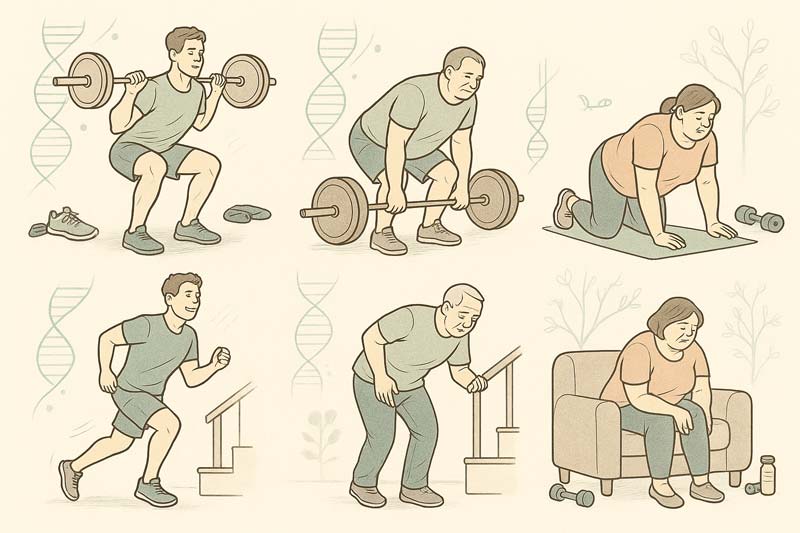
Why Does DOMS Severity Vary Between People and Different Exercises?
Individual responses to DOMS muscle soreness after exercise vary dramatically, even when people perform identical workouts. Understanding these differences helps explain why your gym partner might skip downstairs easily, whilst you grip the handrail for dear life.
- Genetic Influences on Soreness
Your DNA significantly affects how your body responds to exercise stress. Some people inherit efficient inflammatory control systems that limit soreness severity. Others possess genetic variants that amplify inflammatory responses, creating more intense discomfort from similar training loads.
Muscle fibre type distribution also plays a role. Individuals with higher percentages of Type II (fast-twitch) fibres often experience more soreness from eccentric exercises compared to those with predominantly Type I (slow-twitch) fibres.
- Training History Creates Protection
Exercise experience profoundly influences DOMS muscle soreness after exercise severity. Beginners often experience intense soreness from modest training loads, whilst experienced individuals handle much greater demands with minimal discomfort.
This occurs due to numerous adaptations, including improved muscle coordination, enhanced repair processes, and better inflammatory control. The repeated bout effect can last weeks to months, providing long-term protection against familiar movement patterns.
- Age and Recovery Capacity
Younger individuals typically recover faster and experience less severe soreness compared to older adults performing similar exercises. However, this relationship isn’t absolute. Well-trained older adults often outperform sedentary younger people in terms of soreness management and recovery speed.
Age-related changes in inflammatory responses, protein synthesis rates, and sleep quality all influence how severely someone experiences delayed muscle soreness.
- Exercise-Specific Factors
Leg exercises consistently produce more severe soreness than upper-body movements. The large muscle groups in your legs create more total tissue damage, whilst daily activities like walking and stair climbing constantly remind you of the discomfort.
Eccentric exercises (lowering weights or controlling resistance whilst muscles lengthen, like lowering yourself in a squat) cause more DOMS muscle soreness after exercise than concentric (lifting or pushing movements where muscles shorten, like the upward phase of a push-up) or isometric (holding positions without movement, like maintaining a plank) contractions. The mechanical stress from lengthening muscles under load creates greater tissue disruption.
- Movement Novelty Impact
New exercise patterns trigger more intense soreness regardless of fitness level. Your muscles lack the specific adaptations needed to handle unfamiliar stresses efficiently. Even athletes experience significant soreness when trying completely new activities.
This explains why changing workout routines, switching sports, or modifying exercise techniques can create unexpected soreness even in well-trained individuals.
- Hormonal and Gender Differences
Women often experience different soreness patterns compared to men, partly due to hormonal influences on inflammatory responses and muscle recovery processes. Estrogen (the primary female sex hormone) provides some protective effects against muscle damage, whilst testosterone (the primary male sex hormone that promotes muscle growth and repair) influences repair rates.
However, individual variation within genders often exceeds differences between genders, making personal experience more predictive than biological sex alone.
- Psychological Factors
Stress levels, sleep quality, and even expectations about soreness can influence how severely you experience DOMS muscle soreness after exercise. People anticipating intense discomfort often report higher pain levels than those expecting mild symptoms.
This doesn’t mean soreness is “all in your head,” but rather that multiple factors beyond tissue damage contribute to the overall experience.
- Environmental and Lifestyle Influences
Nutrition status, hydration levels, and recovery practices significantly affect soreness severity. Well-nourished, adequately rested individuals typically experience less intense and shorter-duration soreness compared to those with poor lifestyle habits.
Temperature, altitude, and even air quality can influence inflammatory responses and recovery processes, creating additional variation in soreness experiences.
• Peaks at 48-72 hours
• Resolves within 5-7 days
• Follows predictable pattern
• May worsen over time
• Persists beyond 7-10 days
• No improvement pattern
• Diffuse throughout muscle
• Cannot pinpoint exact location
• Symmetrical on both sides
• Can pinpoint exact problem area
• Often one-sided (asymmetrical)
• May include numbness/tingling
• General stiffness affects patterns
• Can perform daily activities
• Gradual improvement over days
• May prevent weight bearing
• Compensatory movement patterns
• No improvement or worsening
How to Tell DOMS Muscle Soreness After Exercise Apart from a Real Injury
Distinguishing between normal muscle soreness and genuine injury can prevent minor issues from becoming major problems. DOMS muscle soreness after exercise follows predictable patterns that differ significantly from injury-related pain.
Timing Tells the Story:
Normal delayed soreness appears 12-24 hours after exercise and peaks around 48-72 hours. Injury pain typically occurs during exercise or immediately afterwards. If you felt fine during your workout and pain developed the next day, it’s likely DOMS rather than injury.
However, some injuries can have delayed presentations, so timing alone isn’t definitive. Consider timing alongside other factors for an accurate assessment.
Pain Quality Differences:
DOMS presents as deep, aching discomfort that feels diffuse throughout the muscle. You can’t pinpoint an exact location where pain originates. Instead, the entire muscle group feels stiff and uncomfortable.
Injury pain tends to be sharp, localised, and specific. You can often point to the exact spot causing problems. Acute injuries frequently produce sudden, intense pain that feels different from the dull ache of delayed soreness.
Movement Patterns Matter:
Muscle soreness from DOMS affects entire movement patterns rather than specific positions. Activities like walking downstairs or reaching overhead become generally uncomfortable rather than impossible.
Injuries often cause pain with specific movements, while leaving others completely normal. A hamstring strain might hurt during forward bending but feel fine during other activities. DOMS muscle soreness after exercise creates more generalised discomfort.
Symmetry Considerations:
Normal soreness typically affects both sides relatively equally, especially after bilateral exercises like squats or push-ups. Significant asymmetry (uneven differences between left and right sides) between left and right sides might suggest injury rather than typical delayed soreness.
However, some asymmetry is normal if you perform unilateral (single-sided) exercises or have existing strength imbalances. Use symmetry as one factor rather than a definitive indicator.
Functional Assessment:
Despite discomfort, DOMS allows you to perform routine daily activities with some stiffness. You might move more slowly or carefully, but basic functions remain intact.
Injuries often prevent specific functions entirely. A significant muscle strain might make walking impossible, whilst severe soreness simply makes it uncomfortable. DOMS muscle soreness after exercise rarely causes complete functional loss.
Progression Patterns:
Delayed soreness follows a predictable improvement pattern. Pain peaks around 48-72 hours, then gradually subsides over the following days. Steady improvement indicates normal recovery.
Injury pain may worsen over time, fluctuate unpredictably, or show no improvement after several days. Lack of progressive improvement suggests something beyond typical muscle soreness.
Associated Symptoms:
DOMS occasionally includes mild muscle stiffness and generalised fatigue but rarely produces other symptoms. Significant swelling, visible bruising, numbness, tingling, or severe weakness suggest injury requiring professional evaluation.
Dark-coloured urine (rhabdomyolysis), extreme weakness, or inability to bear weight warrant immediate medical attention regardless of suspected cause.
Biomarker Considerations:
Laboratory tests can help differentiate severe muscle damage from normal exercise responses. Creatine kinase (CK) levels increase with both DOMS and injury, but extreme elevations often indicate more serious problems.
However, biomarker testing isn’t typically necessary for routine soreness assessment. Clinical evaluation usually provides sufficient information for appropriate decision-making.
When Professional Help is Needed:
Seek medical evaluation if pain persists beyond 7-10 days without improvement, prevents normal daily activities, or occurs alongside concerning symptoms like significant swelling or neurological changes.
DOMS muscle soreness after exercise should steadily improve with time and appropriate self-care. Absence of improvement or worsening symptoms warrants professional assessment to rule out injury or other complications.
The Professional Assessment Approach:
Healthcare providers use systematic evaluation methods to differentiate DOMS muscle soreness after exercise from injury. This includes assessing pain location, quality, timing, and associated symptoms alongside functional testing and physical examination.
They may perform specific tests to evaluate muscle integrity, nerve function, and joint mobility. These assessments help identify red flags requiring immediate intervention versus conditions that respond well to conservative management.
Recognising these distinctions empowers you to make appropriate decisions about when self-care is sufficient versus when professional guidance becomes necessary. Most post-exercise soreness resolves naturally with time and proper management, but knowing the warning signs prevents minor issues from becoming major problems.
DOMS muscle soreness after exercise represents a normal adaptation response that virtually everyone experiences when challenging their body in new ways. While uncomfortable, it signals your muscles are adapting and growing stronger.
The key lies in distinguishing normal soreness from potential injury, managing discomfort appropriately, and using evidence-based strategies to minimise future severity. Armed with a proper understanding, you can navigate post-workout soreness confidently while continuing to progress toward your fitness goals.

Sources
- Baltaci, S.B., Mogulkoc, R., Baltaci, A.K. Resveratrol and exercise. Biomedical Reports. 2016;5(5):525–530.
- Bartholomae E., Incollingo A., Vizcaino M., Wharton C., Johnston C.S. Mung Bean Protein Supplement Improves Muscular Strength in Healthy, Underactive Vegetarian Adults. Nutrients. 2019;11:2423.
- Boyd, L., Deakin, G. B., Devantier‐Thomas, B., Singh, U., & Doma, K. The effects of pre‐conditioning on exercise‐induced muscle damage: A systematic review and meta‐analysis. Sports Medicine. 2023;53(8):1537–1557.
- Chen TC, Lin KY, Chen HL, et al. Comparison in eccentric exercise-induced muscle damage among four limb muscles. Eur J Appl Physiol. 2011;111:211–223.
- Chen, T. C., Yang T.‐, Huang M.‐J., Wang H.‐S., Tseng K.‐W., Chen H.‐L., and Nosaka Kazunori. Damage and the Repeated Bout Effect of Arm, Leg and Trunk Muscles Induced by Eccentric Resistance Exercises. Scandinavian Journal of Medicine & Science in Sports. 2019;29(5):725–735.
- Cheung K., Hume P.A., Maxwell L. Delayed onset muscle soreness: Treatment strategies and performance factors. Sports Med. 2003;33:145–164.
- Clarkson, P. M., and Hubal M. J. Exercise‐Induced Muscle Damage in Humans. American Journal of Physical Medicine & Rehabilitation. 2002;81(11):S52–S69.
- Clarkson PM, Hoffman EP, Zambraski E, et al. ACTN3 and MLCK genotype associations with exertional muscle damage. J Appl Physiol. 2005;99(2):564–569.
- Close G.L., Ashton T., McArdle A., Maclaren D.P. The emerging role of free radicals in delayed onset muscle soreness and contraction-induced muscle injury. Comp. Biochem. Physiol. Part A Mol. Integr. Physiol. 2005;142:257–266.
- Dupuy O., Douzi W., Theurot D., Bosquet L., Dugué B. An Evidence-Based Approach for Choosing Post-Exercise Recovery Techniques to Reduce Markers of Muscle Damage, Soreness, Fatigue, and Inflammation: A Systematic Review With Meta-Analysis. Front. Physiol. 2018;9:403.
- Fernandes, T. L., Pedrinelli, A. & Hernandez, A. J. Muscle injury: Physiopathology, diagnosis, treatment and clinical presentation. Revista Brasileira de Ortopedia English Edition. 2011;46:247–255.
- Foley, J. M., Jayaraman, R. C., Prior, B. M., Pivarnik, J. M., & Meyer, R. A. MR measurements of muscle damage and adaptation after eccentric exercise. Journal of Applied Physiology. 1999;87(6):2311–2318.
- Govindasamy K, Parpa K, Katanic B, Clark CCT, Elayaraja M, Kambitta Valappil IN, Dulceanu C, Geantă VA, Tolan GA, Zouhal H. Effect of Plant-Based Proteins on Recovery from Resistance Exercise-Induced Muscle Damage in Healthy Young Adults-A Systematic Review. Nutrients. 2025;17:2571.
- Hill J., Howatson G., Van Someren K., Leeder J., Pedlar C. Compression garments and recovery from exercise-induced muscle damage: a meta-analysis. Br. J. Sports Med. 2014;48(18):1340–1346.
- Hubal M, Rubinstein S, Clarkson P. Mechanisms of variability in strength loss after muscle-lengthening actions. Med Sci Sports Exerc. 2007;39(3):461–468.
- Hübscher M, Vogt L, Bernhörster M, et al. Effects of acupuncture on symptoms and muscle function in delayed-onset muscle soreness. J Altern Complement Med. 2008;14:1011–6.
- Joy J.M., Lowery R.P., Wilson J.M., Purpura M., De Souza E.O., Wilson S.M., Kalman D.S., Dudeck J.E., Jäger R. The effects of 8 weeks of whey or rice protein supplementation on body composition and exercise performance. Nutr. J. 2013;12:86.
- Ma F., Li Y., Yang J., Li X., Zeng N., Martin R.L. The Effectiveness of Low Intensity Exercise and Blood Flow Restriction without Exercise on Exercise Induced Muscle Damage: A Systematic Review. Phys. Ther. Sport Off. J. Assoc. Chart. Physiother. Sports Med. 2020;46:77–88.
- Machado A. F., Almeida A. C., Micheletti J. K., Vanderlei F. M., Tribst M. F., Netto Junior J., and Pastre C. M. Dosages of cold‐water immersion post exercise on functional and clinical responses: a randomised controlled trial. Scandinavian Journal of Medicine & Science in Sports. 2017;27(11):1356–1363.
- Markus I., Constantini K., Hoffman J.R., Bartolomei S., Gepner Y. Exercise-induced muscle damage: Mechanism, assessment and nutritional factors to accelerate recovery. Eur. J. Appl. Physiol. 2021;121:969–992.
- Mizumura K., Taguchi T. Delayed onset muscle soreness: Involvement of neurotrophic factors. J. Physiol. Sci. 2016;66:43–52.
- Nosaka, K., Sakamoto, K., Newton, M., & Sacco, P. How long does the protective effect on eccentric exercise‐induced muscle damage last? Medicine and Science in Sports and Exercise. 2001;33(9):1490–1495.
- Owens D. J., Twist C., Cobley J. N., Howatson G., Close G. L. Exercise‐induced muscle damage: what is it, what causes it and what are the nutritional solutions? J. Sport Sci. 2019;19(1):71–85.
- Peake JM, Neubauer O, Della Gata PA, et al. Muscle damage and inflammation during recovery from exercise. J Appl Physiol. 2017;122(3):559–570.
- Peake J, Nosaka K, Suzuki K. Characterization of inflammatory responses to eccentric exercise in humans. Exerc Immunol Rev. 2005;11:64–85.
- Poppendieck W., Wegmann M., Ferrauti A., Kellmann M., Pfeiffer M., Meyer T. Massage and Performance Recovery: A Meta-Analytical Review. Sports Med. 2016;46:183–204.
- Singh R.G., Guérin-Deremaux L., Lefranc-Millot C., Perreau C., Crowley D.C., Lewis E.D., Evans M., Moulin M. Efficacy of Pea Protein Supplementation in Combination with a Resistance Training Program on Muscle Performance in a Sedentary Adult Population: A Randomised, Comparator-Controlled, Parallel Clinical Trial. Nutrients. 2024;16:2017.
- Stožer A, Vodopivc P, Bombek LK. Pathophysiology of exercise-induced muscle damage and its structural, functional, metabolic, and clinical consequences. Pflugers Arch. 2020;69(4):565.
- Tumkur Anil Kumar N., Oliver J.L., Lloyd R.S., Pedley J.S., Radnor J.M. The Influence of Growth, Maturation and Resistance Training on Muscle-Tendon and Neuromuscular Adaptations: A Narrative Review. Sports. 2021;9:59.
- Van Der Heijden I.N.O., Monteyne A.J., West S.A.M., Morton J.P., Langan-Evans C., Hearris M.A., Abdelrahman D.R., Murton A.J., Stephens F.B., Wall B.T. Plant Protein Blend Ingestion Stimulates Postexercise Myofibrillar Protein Synthesis Rates Equivalently to Whey in Resistance-Trained Adults. Med. Sci. Sports Exerc. 2024;56:1467–1479.