


Creatine for brain health is a game-changer for the 95% who never set foot in gyms yet desperately need cognitive support. Your brain devours energy at staggering rates, consuming 20% of your body’s total fuel despite weighing just 2% of body mass.
This energy hunger becomes critical during stress, sleep deprivation, and mental fatigue when conventional approaches fail.
Research reveals that brain ATP (adenosine triphosphate, your cells’ primary energy currency) turnover accelerates dramatically during complex mental tasks. Creatine for brain health works by supporting phosphocreatine (PCr, a rapid energy backup system) stores within neurons (nerve cells) and glial cells (brain support cells), stabilising energy when you need it most.
Studies demonstrate cognitive improvements in sleep-deprived adults, enhanced memory performance, and better reasoning under stress. The compound shows remarkable safety across healthy populations, making it accessible for everyday cognitive enhancement rather than just athletic performance.
Office workers battling afternoon brain fog, parents managing sleepless nights, and ageing adults concerned about mental sharpness represent the real beneficiaries. This post explores who gains most, optimal dosing strategies, safety considerations, and practical implementation for sustainable cognitive enhancement.
What Creatine Does in The Brain
The brain operates like a high-performance engine requiring constant fuel. ATP turnover remains relentless, particularly during demanding cognitive tasks. Unlike muscle tissue, brain cells cannot afford energy interruptions without immediate functional consequences.
Creatine and phosphocreatine form an elegant energy shuttle system within cellular microdomains (tiny functional zones inside cells). This buffering mechanism supports synaptic function (nerve connection processes) and ion pump activity during acute energy demands. The system proves especially valuable during stress, sleep loss, and cognitive overload when traditional glucose metabolism struggles.
Significant creatine concentrations exist throughout the nervous system, appearing in neurons, heart cells, and liver tissue. These widespread distributions reflect creatine’s fundamental role in cellular energy management beyond muscle function.
The brain’s unique vulnerability stems from its inability to store substantial energy reserves. Phosphocreatine acts as an immediate energy buffer, rapidly donating phosphate groups to regenerate ATP within milliseconds. This speed proves critical during intense mental work when glucose delivery cannot match energy demands.
Key mechanisms:
- ATP serves as the universal energy currency
- PCr rapidly regenerates ATP through phosphate donation
- Microdomains deliver targeted energy where needed most
- Buffer systems maintain function during energy stress
HOW CREATINE REACHES YOUR BRAIN FOR COGNITIVE SUPPORT
SUPPLEMENT INTAKE
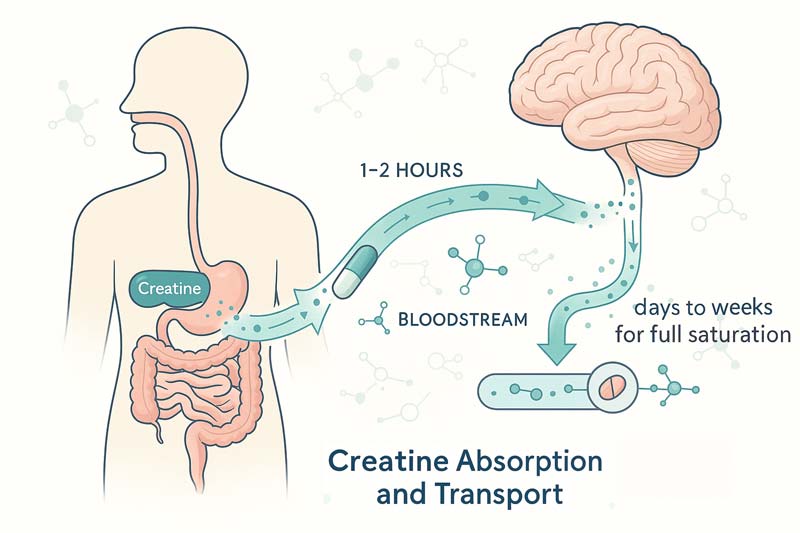
You consume 3-5g of creatine monohydrate, typically with a meal. The supplement dissolves in your digestive system, preparing for absorption into your bloodstream.
INTESTINAL ABSORPTION
Specialised transporters in your small intestine recognise creatine molecules and actively transport them across the intestinal wall into your bloodstream. Carbohydrate intake enhances this process through insulin stimulation.
BLOOD CIRCULATION
Creatine travels through your bloodstream, reaching peak blood levels within 1-2 hours after consumption. Your body maintains these elevated levels for several hours, providing a delivery window to target tissues.
BRAIN UPTAKE
Brain cells use dedicated creatine transporters to pull creatine from your bloodstream across the blood-brain barrier. This process builds up brain creatine stores over days and weeks of consistent supplementation.
COGNITIVE ENHANCEMENT
Inside brain cells, creatine converts to phosphocreatine, creating an energy buffer system. During demanding mental tasks, this system rapidly regenerates ATP to maintain cognitive performance, memory function, and mental clarity.
Who Benefits Most: Women, Older Adults, Vegans, and High-Stress Lifestyles?
Individual creatine needs vary dramatically based on diet, hormonal status, and lifestyle factors. This pattern supports targeted creatine for brain health strategies where dietary intake is minimal. Baseline creatine levels fluctuate significantly between people depending on nutritional patterns, sex, age, and genetic factors.
Vegetarians and Vegans: Plant-based eaters show substantially lower creatine stores across multiple tissues. Vegetarians and vegans typically demonstrate reduced creatine levels in serum (blood fluid), plasma (liquid blood component), red blood cells, and muscle tissue compared to omnivores. This occurs because plant foods contain virtually no creatine, creating baseline deficiencies that supplementation addresses effectively.
Women Across Life Stages: Female physiology presents unique considerations for creatine use. Women show lower endogenous (body-produced) creatine synthesis rates compared to men, approximately 70-80% of male production levels. Menstrual cycle phases influence fatigue patterns and hydration responses, making consistent supplementation beneficial during hormonally challenging periods.
Older Adults: Ageing populations face declining cognitive function alongside muscle deterioration. Research demonstrates that creatine supplementation combined with resistance exercise produces superior improvements in lean mass, strength, and physical function compared to exercise alone in older adults. These physical improvements often correlate with enhanced cognitive independence and quality of life.
High-Stress Lifestyles: Individuals managing chronic stress, demanding work schedules, or sleep deprivation represent prime candidates. The brain’s elevated energy demands during stress responses make creatine’s buffering capacity particularly valuable for maintaining cognitive performance under pressure.
At-a-glance benefits:
| Group | Primary Advantage | Implementation Note |
|---|---|---|
| Vegans/Vegetarians | Higher response due to lower baseline | Standard dosing sufficient |
| Women | Cycle support and energy stability | Continuous daily protocol preferred |
| Older Adults | Cognitive and physical function support | Combine with regular exercise |
| High-Stress | Enhanced performance under pressure | Focus on consistency during demands |
The Evidence for Creatine for Brain Health
Controlled trials reveal compelling cognitive benefits, particularly under challenging conditions. Randomised studies report improvements in reasoning abilities and memory tasks during sleep deprivation and mental fatigue scenarios.
Recent systematic reviews show small to moderate cognitive enhancements in healthy adults. Such patterns guide realistic expectations for creatine for brain health in daily life. Effect sizes appear larger when baseline dietary creatine intake remains low, suggesting greater responsiveness in individuals with limited natural stores. Study protocols vary considerably, creating different response patterns across research populations.
Cognitive Performance Studies
Double-blind, placebo-controlled trials demonstrate improved brain performance across multiple cognitive domains. Tasks involving working memory (temporary information storage), processing speed, and complex reasoning show consistent improvements following supplementation periods.
Memory Enhancement
Meta-analyses confirm significant memory improvements in healthy individuals, with effects most pronounced in tasks requiring rapid information recall and manipulation. These benefits go beyond simple memorisation to include complex cognitive processing.
Clinical Applications
Therapeutic research explores creatine’s potential in neurological conditions. Studies investigate energy support and neuroprotection in traumatic brain injury, with preliminary evidence suggesting protective effects. Clinical applications remain investigational, while routine cognitive enhancement shows established benefits.
Research Quality Considerations
Study methodologies differ in dosing protocols, duration, and participant selection. Current evidence supports cognitive benefits, though individual responses vary based on baseline creatine status and specific cognitive demands.
Key findings summary:
- Acute dosing aids demanding mental tasks
- Larger benefits in individuals with lower dietary intake
- Memory and reasoning show the most consistent improvements
- Effects appear within days to weeks of supplementation

Creatine for Brain Health and Sleep Deprivation: Protection When You Need It Most
Sleep deprivation devastates cognitive performance, yet creatine supplementation offers extraordinary protection during these vulnerable periods. Research reveals how creatine for brain health becomes essential when natural recovery mechanisms fail.
Studies demonstrate that creatine supplementation significantly improves cognitive performance during sleep restriction scenarios. The brain’s energy demands remain elevated during sleep loss. At the same time, glucose metabolism becomes impaired, creating perfect conditions for creatine’s energy buffering capabilities.
1: Mechanisms During Sleep Loss
Sleep deprivation disrupts normal ATP production pathways. Creatine’s phosphocreatine system provides rapid energy restoration when conventional glucose-based systems struggle under sleep stress. This buffering proves critical for maintaining decision-making abilities, attention span, and memory formation during exhaustion.
2: Real-World Applications
Shift workers, new parents, students, and travel-weary professionals represent prime beneficiaries. Research shows maintained cognitive performance during extended wakefulness periods when creatine stores remain optimised. The supplement doesn’t replace sleep but provides cognitive protection during unavoidable sleep disruption.
3: Performance Metrics:
Controlled trials reveal preserved reaction times, improved working memory capacity, and maintained attention during sleep deprivation when participants used creatine supplementation. Tasks requiring complex reasoning and rapid decision-making show particular improvement.
The energy crisis created by sleep loss makes creatine for brain health supplementation especially valuable for maintaining cognitive function when rest remains impossible.
Age-Related Cognitive Decline: Why Creatine for Brain Health Matters More as You Get Older
Ageing brains face mounting energy challenges that make creatine for brain health increasingly vital for cognitive preservation. Research reveals how supplementation addresses fundamental metabolic changes occurring throughout the lifespan.
Studies demonstrate that older adults experience declining creatine synthesis capacity alongside reduced muscle mass and cognitive function. The brain’s energy infrastructure deteriorates with age, making external creatine support essential for maintaining mental sharpness.
Metabolic Changes with Ageing
Older adults show decreased endogenous creatine production while simultaneously experiencing higher energy demands for basic cognitive maintenance. This creates a perfect storm where energy supply declines precisely when cognitive preservation requires additional support.
Neuroprotective Benefits
Research indicates that creatine supplementation may provide neuroprotective effects, potentially slowing cognitive decline through enhanced cellular energy metabolism. The compound supports mitochondrial function (cellular powerhouse activity) during the ageing process when these energy centres become less efficient.
Combination with Physical Activity
Meta-analyses show superior outcomes when creatine supplementation accompanies resistance exercise in older populations. This combination approach addresses both physical and cognitive aspects of healthy ageing, creating synergistic benefits for overall function.
Memory and Processing Speed
Ageing affects working memory and processing speed most dramatically. Studies reveal that creatine supplementation helps maintain these cognitive functions, particularly in tasks requiring rapid information manipulation. The energy support proves especially valuable during complex mental activities that challenge ageing brains.
The compound offers a practical intervention for cognitive preservation when conventional approaches provide limited options for healthy ageing adults.
BRAIN ENERGY DEMANDS: WITHOUT VS WITH CREATINE SUPPORT
⚠️ BRAIN ENERGY CRISIS
Sleep Deprivation
ATP production disrupted, glucose metabolism impaired, decision-making deteriorates, attention span reduced
Mental Fatigue
Cognitive resources depleted during extended mental work, processing speed slows, error rates increase
High Stress
Brain energy demands spike during pressure situations, working memory capacity reduced, complex reasoning impaired
Age-Related Decline
Natural creatine synthesis decreases, cellular energy systems become less efficient, cognitive processing slows
🛡️ CREATINE PROTECTION
Sleep Loss Support
Phosphocreatine system provides rapid energy when glucose systems struggle, maintains cognitive performance during exhaustion
Mental Endurance
Energy buffering helps maintain attention span, reduces performance decrements during prolonged mental tasks
Stress Resilience
Improved reasoning abilities under pressure, maintained decision quality during time-pressured situations
Cognitive Preservation
Supports brain energy metabolism during ageing, helps maintain working memory and processing speed
COGNITIVE ENERGY AVAILABILITY
Without Creatine
Energy depleted quickly
With Creatine Support
Sustained energy reserves
Mental Fatigue and Workplace Performance: Real-World Applications
Modern work environments create perfect conditions for mental exhaustion, where creatine for brain health supplementation offers practical cognitive support. Research demonstrates how energy buffering translates into measurable workplace benefits.
Studies show improved performance on complex cognitive tasks requiring sustained attention and rapid decision-making. Office workers facing afternoon cognitive crashes, healthcare professionals managing demanding shifts, and students during intensive study periods represent ideal candidates.
- Sustained Attention Benefits – Mental fatigue typically emerges during extended cognitive work. Research reveals that creatine supplementation helps maintain attention span and reduces performance decrements during prolonged mental tasks. The energy support proves especially valuable during meetings, detailed analysis work, and complex problem-solving scenarios.
- Decision-Making Under Pressure – High-pressure situations drain cognitive resources rapidly. Controlled trials demonstrate improved reasoning abilities and maintained decision quality when participants face mental stress with optimised creatine stores. This benefit extends to time-pressured work scenarios and demanding professional environments.
- Practical Implementation – Consistent daily supplementation provides more reliable cognitive support than acute dosing for workplace applications. The goal involves maintaining optimal brain energy reserves rather than seeking immediate performance boosts during specific tasks.
- Performance Indicators – Research measures include improved working memory capacity, faster processing speeds, and reduced error rates during complex tasks. These metrics translate directly into enhanced productivity and reduced mental fatigue during typical work demands.
Timing and Absorption: Getting Creatine to Your Brain
Optimising the delivery of creatine for brain health tissue requires understanding absorption dynamics and timing strategies. Research reveals specific approaches that maximise cognitive benefits while ensuring practical implementation.
Carbohydrate co-ingestion significantly enhances creatine uptake through insulin-mediated transport mechanisms. High carbohydrate intake (approximately 100g per serving) stimulates insulin release, promoting creatine transport into both muscle and brain tissue more effectively than creatine alone.
Timing Considerations
Consistency proves more important than specific timing for cognitive applications. Unlike immediate pre-workout supplementation, brain benefits accumulate through sustained tissue saturation rather than acute dosing effects.
Absorption Enhancement Strategies
Research demonstrates that insulin stimulation through carbohydrate intake markedly improves creatine accumulation in target tissues. This mechanism works by enhancing cellular uptake through improved transporter activity, making each dose more effective for building brain creatine stores.
Practical Implementation
Most people benefit from taking creatine with meals containing moderate carbohydrates. The enhanced uptake occurs through natural insulin responses to food intake, eliminating the need for specific timing protocols. Breakfast or post-meal supplementation provides convenient and effective delivery.
Steady-State Benefits
Brain creatine levels increase gradually over weeks rather than hours, making daily consistency more valuable than perfect timing. The goal involves maintaining optimal tissue saturation for sustained cognitive support rather than seeking immediate effects.
Dosing for Everyday Use Without Loading
Effective cognitive enhancement requires practical dosing strategies that fit everyday lifestyles. Research supports 3-5 grams of creatine monohydrate daily as the optimal approach for most adults seeking brain benefits.
Loading phases remain optional for cognitive applications. Consistent daily intake achieves similar tissue saturation over time without the complexity of high-dose protocols. This approach eliminates potential digestive discomfort while maintaining effectiveness with creatine for brain health enhancement.
Body Weight Considerations: Individuals with greater body weight may require 5-10 grams daily to maintain optimal creatine stores. This scaling ensures adequate tissue saturation across different body sizes while avoiding unnecessary excess.
Gender-Specific Approaches: Women may benefit from steady daily protocols that avoid supplementation fluctuations throughout menstrual cycles. Consistent intake supports stable energy metabolism during hormonal changes that affect fatigue and cognitive performance.
Enhanced Absorption: Adding carbohydrate sources increases creatine uptake through insulin-mediated transport enhancement. Simple approaches include taking creatine with fruit juice, oatmeal, or other carbohydrate-containing meals.
Implementation Guide:
| Approach | Daily Dose | Timeline | Best For |
|---|---|---|---|
| Standard | 3-5g | 2-4 weeks to saturation | Most adults |
| Higher Weight | 5-10g | 2-4 weeks to saturation | >80kg individuals |
| Loading Optional | 20g for 5-7 days, then 3-5g | 1 week to saturation | Faster results desired |
Safety Kidneys and When to Speak to Your GP
Creatine for brain health supplementation demonstrates excellent safety profiles in healthy individuals across decades of research. Long-term studies spanning up to 5 years show no adverse effects on kidney or liver function markers in healthy adults.
- Understanding Creatinine Elevation – Serum creatinine levels typically increase during supplementation due to higher creatine turnover, not kidney damage. This elevation reflects increased creatine metabolism rather than impaired kidney function, remaining within normal ranges throughout supplementation periods.
- Temporary Fluid Changes – Water retention commonly occurs during initial supplementation, with increased total body water and both intracellular and extracellular fluid. These changes appear temporary, typically normalising within 4-6 weeks of continued use.
- Medical Consultation Guidelines – Individuals with existing kidney conditions, complex medication schedules, or uncertain health status should discuss supplementation with healthcare professionals. Medical guidance helps tailor creatine use to individual risk profiles and health goals.
- Monitoring Recommendations – Current research indicates no routine monitoring requirements for healthy individuals using recommended doses. Standard blood work can confirm normal kidney function if concerns arise, though adverse effects remain extremely rare.
Key safety points:
- Use recommended doses (3-5g daily)
- Expect minor, temporary fluid changes
- Consult healthcare providers if kidney disease exists
- Monitor hydration during initial use
Best Form of Creatine for Brain Health
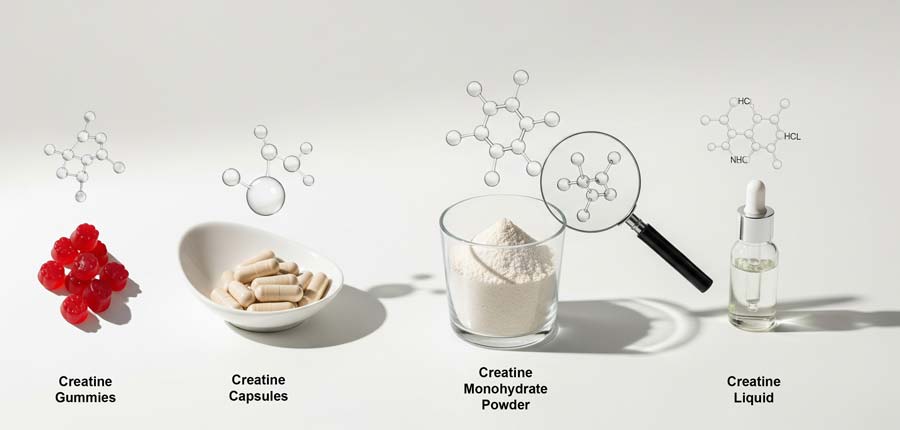
Product selection significantly impacts both effectiveness and value for cognitive enhancement. Creatine monohydrate remains the most extensively researched and cost-effective option for brain health applications.
Monohydrate Advantages: Research consistently demonstrates high bioavailability, proven brain uptake, and established safety with monohydrate formulations. This form provides the foundation for virtually all cognitive enhancement studies, ensuring evidence-based effectiveness.
Alternative Forms Comparison: Other formulations, including ethyl ester, citrate, gluconate, and magnesium chelate, offer theoretical advantages but lack consistent superiority over monohydrate in healthy populations. These alternatives typically cost significantly more without providing measurable cognitive benefits.
Vegan Considerations: Most creatine for brain health supplements use synthetic production methods without animal inputs, making them suitable for plant-based users. Powder formulations avoid gelatin capsules (animal-derived capsule shells), providing the simplest vegan-friendly option.
Quality Factors: Third-party testing ensures purity and potency. Unflavoured powders mix easily into beverages while avoiding unnecessary additives that might affect absorption or cause digestive discomfort.
Selection guide:
| Form | Benefits | Considerations |
|---|---|---|
| Monohydrate | Best evidence, lowest cost, proven effectiveness | Requires daily consistency |
| Alternatives | Theoretical improvements | Higher cost, limited brain research |
| Powder | Flexible dosing, vegan-friendly | Requires mixing |
| Capsules | Convenience | Check for gelatin content |

Creatine for Brain Health FAQs
Does timing matter for cognitive benefits?
Consistency proves more important than specific timing for brain applications. Most people take creatine with breakfast or meals for convenience. Regular daily intake maintains optimal creatine levels for brain health more effectively than relying on perfect timing strategies.
Do I need a loading phase for cognitive enhancement?
Loading remains optional with creatine for brain health benefits. Daily 3-5 gram doses achieve similar cognitive improvements over 4-6 weeks compared to loading protocols. Steady approaches cause fewer digestive issues while maintaining effectiveness for mental performance.
Will I experience bloating or weight gain?
Early water retention affects some users, with increases in total body water that typically stabilise within 4-6 weeks. This represents improved cellular hydration rather than harmful fluid accumulation. Weight changes usually remain minimal with recommended doses.
What about vegetarians and vegans?
Plant-based eaters often show larger cognitive improvements due to lower baseline creatine stores. Standard daily doses prove effective, with powder forms avoiding animal-derived gelatin capsules altogether.
How does it affect women throughout their hormonal cycles?
Steady daily supplementation provides stable cognitive support across menstrual phases. Research shows fluid changes occur without harmful effects, making consistent protocols preferable to cycling approaches.
Does it help with endurance activities or just high-intensity tasks?
Cognitive benefits appear independent of physical activity type, focusing on brain energy support rather than exercise performance. Mental tasks show improvements regardless of accompanying physical demands.
Sources
- Avgerinos K.I., Spyrou N., Bougioukas K.I., Kapogiannis D. Effects of creatine supplementation on cognitive function of healthy individuals: A systematic review of randomised controlled trials. Exp. Gerontol. 2018;108:166–173.
- Balestrino M. Role of Creatine in the Heart: Health and Disease. Nutrients. 2021;13:1215.
- Benzi G., Ceci A. Creatine as nutritional supplementation and medicinal product. J. Sports Med. Phys. Fit. 2001;41:1–10.
- Bonilla D.A., Kreider R.B., Stout J.R., Forero D.A., Kerksick C.M., Roberts M.D., Rawson E.S. Metabolic Basis of Creatine in Health and Disease: A Bioinformatics-Assisted Review. Nutrients. 2021;13:1238.
- Brilla L.R., Giroux M.S., Taylor A., Knutzen K.M. Magnesium-creatine supplementation effects on body water. Metab. Clin. Exp. 2003;52:1136–1140.
- Brosnan J.T., Brosnan M.E. Creatine: Endogenous metabolite, dietary, and therapeutic supplement. Annu. Rev. Nutr. 2007;27:241–261.
- Brosnan M.E., Edison E.E., da Silva R., Brosnan J.T. New insights into creatine function and synthesis. Adv. Enzym. Regul. 2007;47:252–260.
- Delanghe J., De Slypere J.P., De Buyzere M., Robbrecht J., Wieme R., Vermeulen A. Normal reference values for creatine, creatinine, and carnitine are lower in vegetarians. Clin. Chem. 1989;35:1802–1803.
- Devries M.C., Phillips S.M. Creatine supplementation during resistance training in older adults—A meta-analysis. Med. Sci. Sports Exerc. 2014;46:1194–1203.
- Fairman C.M., Kendall K.L., Hart N.H., Taaffe D.R., Galvão D.A., Newton R.U. The potential therapeutic effects of creatine supplementation on body composition and muscle function in cancer. Crit. Rev. Oncol. Hematol. 2019;133:46–57.
- Fazio C., Elder C.L., Harris M.M. Efficacy of Alternative Forms of Creatine Supplementation on Improving Performance and Body Composition in Healthy Subjects: A Systematic Review. J. Strength. Cond. Res. 2022;36:2663–2670.
- Fernández-Landa J., Santibañez-Gutierrez A., Todorovic N., Stajer V., Ostojic S.M. Effects of Creatine Monohydrate on Endurance Performance in a Trained Population: A Systematic Review and Meta-analysis. Sports Med. 2023;53:1017–1027.
- Forsberg A.M., Nilsson E., Werneman J., Bergström J., Hultman E. Muscle composition in relation to age and sex. Clin. Sci. 1991;81:249–256.
- Green A.L., Hultman E., Macdonald I.A., Sewell D.A., Greenhaff P.L. Carbohydrate ingestion augments skeletal muscle creatine accumulation during creatine supplementation in humans. Am. J. Physiol.-Endocrinol. Metab. 1996;271:E821–E826.
- Hall M., Trojian T.H. Creatine supplementation. Curr. Sports Med. Rep. 2013;12:240–244.
- Harmon K.K., Stout J.R., Fukuda D.H., Pabian P.S., Rawson E.S., Stock M.S. The Application of Creatine Supplementation in Medical Rehabilitation. Nutrients. 2021;13:1825.
- Kaviani M., Shaw K., Chilibeck P.D. Benefits of Creatine Supplementation for Vegetarians Compared to Omnivorous Athletes: A Systematic Review. Int. J. Environ. Res. Public Health. 2020;17:3041.
- Kreider R.B. Effects of creatine supplementation on performance and training adaptations. Mol. Cell Biochem. 2003;244:89–94.
- Kreider R.B., Jäger R., Purpura M. Bioavailability, Efficacy, Safety, and Regulatory Status of Creatine and Related Compounds: A Critical Review. Nutrients. 2022;14:1035.
- Kreider R.B., Kalman D.S., Antonio J., Ziegenfuss T.N., Wildman R., Collins R., Candow D.G., Kleiner S.M., Almada A.L., Lopez H.L. International Society of Sports Nutrition position stand: Safety and efficacy of creatine supplementation in exercise, sport, and medicine. J. Int. Soc. Sports Nutr. 2017;14:18.
- Longobardi I., Gualano B., Seguro A.C., Roschel H. Is It Time for a Requiem for Creatine Supplementation-Induced Kidney Failure? A Narrative Review. Nutrients. 2023;15:1466.
- Mayhew D.L., Mayhew J.L., Ware J.S. Effects of long-term creatine supplementation on liver and kidney functions in American college football players. Int. J. Sport. Nutr. Exerc. Metab. 2002;12:453–460.
- Moore S.R., Gordon A.N., Cabre H.E., Hackney A.C., Smith-Ryan A.E. A Randomised Controlled Trial of Changes in Fluid Distribution across Menstrual Phases with Creatine Supplementation. Nutrients. 2023;15:429.
- Poortmans J.R., Francaux M. Long-term oral creatine supplementation does not impair renal function in healthy athletes. Med. Sci. Sports Exerc. 1999;31:1108–1110.
- Powers M.E., Arnold B.L., Weltman A.L., Perrin D.H., Mistry D., Kahler D.M., Kraemer W., Volek J. Creatine Supplementation Increases Total Body Water Without Altering Fluid Distribution. J. Athl. Train. 2003;38:44–50.
- Preen D., Dawson B., Goodman C., Beilby J., Ching S. Creatine supplementation: A comparison of loading and maintenance protocols on creatine uptake by human skeletal muscle. Int. J. Sport. Nutr. Exerc. Metab. 2003;13:97–111.
- Prokopidis K., Giannos P., Triantafyllidis K.K., Kechagias K.S., Forbes S.C., Candow D.G. Effects of creatine supplementation on memory in healthy individuals: A systematic review and meta-analysis of randomised controlled trials. Nutr. Rev. 2023;81:416–427.
- Rae C., Digney A.L., McEwan S.R., Bates T.C. Oral creatine monohydrate supplementation improves brain performance: A double-blind, placebo-controlled, cross-over trial. Proc. Biol. Sci. 2003;270:2147–2150.
- Ribeiro F., Longobardi I., Perim P., Duarte B., Ferreira P., Gualano B., Roschel H., Saunders B. Timing of Creatine Supplementation around Exercise: A Real Concern Nutrients. 2021;13:2844.
- Sandkühler J.F., Kersting X., Faust A., Königs E.K., Altman G., Ettinger U., Lux S., Philipsen A., Müller H., Brauner J. The Effects of Creatine Supplementation on Cognitive Performance—A Randomised Controlled Study. BMC Med. 2023;21:440.
- Schlattner U., Klaus A., Rios S.R., Guzun R., Kay L., Tokarska-Schlattner M. Cellular compartmentation of energy metabolism: Creatine kinase microcompartments and recruitment of B-type creatine kinase to specific subcellular sites. Amino Acids. 2016;48:1751–1774.
- Smith-Ryan A.E., Cabre H.E., Eckerson J.M., Candow D.G. Creatine Supplementation in Women’s Health: A Lifespan Perspective. Nutrients. 2021;13:877.
- Steenge G.R., Lambourne J., Casey A., Macdonald I.A., Greenhaff P.L. Stimulatory effect of insulin on creatine accumulation in human skeletal muscle. Am. J. Physiol.-Endocrinol. Metab. 1998;275:E974–E979.
- Sullivan P.G., Geiger J.D., Mattson M.P., Scheff S.W. Dietary supplement creatine protects against traumatic brain injury. Ann. Neurol. 2000;48:723–729.
- Wallimann T., Tokarska-Schlattner M., Schlattner U. The creatine kinase system and pleiotropic effects of creatine. Amino Acids. 2011;40:1271–1296.
- Weinstein, S.J., Mackrain, K., Stolzenberg-Solomon, R.Z., et al. Serum creatinine and prostate cancer risk in a prospective study. Cancer Epidemiol. Biomarkers Prev. 2009;18:2643–2649.
- Xu C., Bi S., Zhang W., Luo L. The effects of creatine supplementation on cognitive function in adults: A systematic review and meta-analysis. Front. Nutr. 2024;11:1424972.