



Fibre macronutrient intake supports digestive health, metabolic function, and disease prevention. Unlike other macronutrients, fibre passes through the digestive system largely undigested, providing unique benefits that carbohydrates, proteins, and fats cannot offer.
Dietary fibre exists in two primary forms: soluble and insoluble. Each type provides distinct health advantages that support overall well-being.
The World Health Organization’s 2023 guidelines specifically promote fibre-rich foods to achieve an intake of at least 25g daily. This recommendation represents a significant increase from global estimated intakes of approximately 20g per day.
Higher fibre macronutrient consumption has demonstrated consistent benefits for various cardiometabolic risk factors. These benefits include:
- Improved blood glucose control
- Lower cholesterol levels
- Reduced blood pressure
- Decreased inflammation
Evidence consistently shows that diets incorporating sufficient fibre improve glycaemic (blood sugar) control, cholesterol levels, and blood pressure while reducing inflammation. The fermentation of certain fibre types by gut bacteria produces short-chain fatty acids that nourish colon cells and support immune function. These processes highlight why fibre holds such importance in dietary recommendations worldwide.
Across the coming sections, we’ll explore the types and functions of fibre, examine its impact on health and disease prevention, present a comprehensive food guide table, discuss optimal intake guidelines, and provide practical strategies for incorporating fibre-rich foods into your daily diet.
Understanding Fibre as a Macronutrient: Types and Functions
The fibre macronutrient category differs fundamentally from other nutrients as it passes through our digestive system largely intact. This unique characteristic enables fibre to perform various beneficial functions that impact digestive health, metabolism, and disease prevention.
When we examine fibre closely, we discover a diverse group of compounds with different properties and health effects.
Fibre can be categorised in several ways, including its solubility, fermentability, and viscosity. Each classification helps us understand how different fibre types function in the body and which health benefits they provide. Let’s explore the key aspects of fibre as a macronutrient and how its various forms support human health.
What is dietary fibre?
Dietary fibre is a macronutrient comprising the indigestible parts of food humans cannot break down and absorb. Unlike other macronutrients, fibre passes through the digestive system relatively intact, providing unique health benefits.
Fibre exists naturally in plant foods such as fruits, vegetables, whole grains, and legumes. Some manufactured foods may contain added fibre ingredients to enhance their nutritional profile or modify their texture and consistency.
Soluble vs. Insoluble: The two main categories
Fibre is most commonly categorised by its behaviour in water, which affects how it functions in the digestive system.
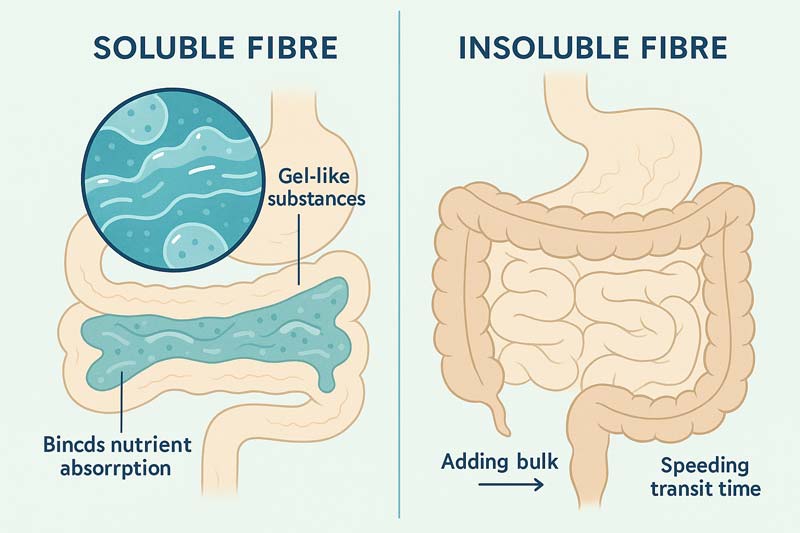
Soluble fibres dissolve in water, forming gel-like substances that slow digestion. These include pectins (found in fruits), gums (in oats and barley), and beta-glucans (unique fibre compounds in oats and mushrooms), which trap water and form viscous solutions in the digestive tract. This slows nutrient absorption and helps regulate blood sugar levels.
Insoluble fibres don’t dissolve in water and add bulk to stools. They include cellulose (the structural component of plant cell walls) and lignin (a tough, woody fibre) found in whole grains, vegetable skins, and wheat bran. Insoluble fibre acts like a broom, sweeping through the digestive tract and promoting regularity.
Most fibre-containing foods contain a mixture of soluble and insoluble fibres in varying proportions, providing various health benefits.
Fermentability: How gut bacteria process fibre
Fermentability refers to how readily gut bacteria can break down and utilise fibre.
Fermentable fibres serve as food for gut bacteria, producing beneficial short-chain fatty acids (SCFAs—compounds like acetate, propionate, and butyrate fuel intestinal cells and influence metabolism). These SCFAs nourish the cells lining the colon and help maintain intestinal barrier function.
The degree of fermentation varies by fibre type, with soluble fibres typically being more fermentable than insoluble ones. This variation creates diversity in the gut microbiome, supporting different bacterial populations that provide various health benefits.
Sodium butyrate, formed when gut bacteria ferment dietary fibre macronutrients, is a crucial metabolite for maintaining gastrointestinal health. It provides energy to colon cells and has anti-inflammatory properties that support digestive wellness.
How soluble fibre works
Soluble fibre transforms in the digestive system through several key mechanisms:
- Forms gel-like substances in the digestive tract, creating a viscous solution that slows food movement through the stomach and small intestine.
- Slows digestion and nutrient absorption, which helps moderate blood glucose levels and prevents rapid spikes in blood sugar after meals.
- Helps control blood sugar levels by creating a barrier between digestible carbohydrates and digestive enzymes, delaying glucose absorption.
- Binds to cholesterol and bile acids in the intestine, aiding their removal from the body and potentially lowering blood cholesterol levels.
- Generally, it is more fermentable by gut bacteria, producing beneficial short-chain fatty acids that support colon health and reduce inflammation.
How insoluble fibre works
- Insoluble fibre provides structural benefits throughout the digestive tract:
- It adds bulk to the stool by attracting water to the digestive tract, increasing faecal volume, and softening stool consistency.
- Speeds transit time through the digestive tract, helping waste move more quickly through the intestines and reducing the time harmful compounds remain in contact with the gut lining.
- Promotes regular bowel movements by stimulating peristalsis, the wave-like muscle contractions that move food through the digestive system.
- Helps prevent constipation by increasing stool bulk and stimulating intestinal muscles to contract more effectively.
- Generally, it is less fermentable by gut bacteria, meaning it retains its structure throughout the digestive tract and provides mechanical benefits rather than being converted to SCFAs.
Prebiotic effects on gut microbiome
Prebiotics are primarily dietary fibre compounds that stimulate beneficial gut bacteria growth.
They include inulin (a type of fructan fibre found in chicory, onions, and garlic), fructooligosaccharides (FOS – short chains of fructose molecules found in many vegetables), galactooligosaccharides (GOS – chains of galactose sugars), and resistant starch (starch that resists digestion).
These fibres selectively feed beneficial bacteria, producing SCFAs that nourish colon cells. The bacterial fermentation process creates a more acidic environment in the colon, inhibiting the growth of potentially harmful bacteria and promoting the development of beneficial species.
Prebiotic fibres support the growth of specific beneficial bacteria, such as Bifidobacteria and Lactobacilli, which help maintain gut barrier function and modulate immune responses.
Fibre’s role in carbohydrate digestion
Fibre significantly influences how the body processes carbohydrates through several mechanisms:
- Fibre slows down carbohydrate digestion and glucose absorption by increasing the viscosity of food in the digestive tract and forming a physical barrier around carbohydrate molecules.
- When calculating “net carbs” for digestion impact, fibre is subtracted from total carbohydrates because it doesn’t contribute significantly to blood glucose increases.
- This slower digestion helps prevent blood sugar spikes after meals, supports more stable energy levels, and reduces strain on insulin-producing cells.
- Fibre-rich foods typically have a lower glycaemic impact than refined carbohydrates, making them better choices for blood sugar management and metabolic health.
How Fibre Impacts Health and Disease Prevention
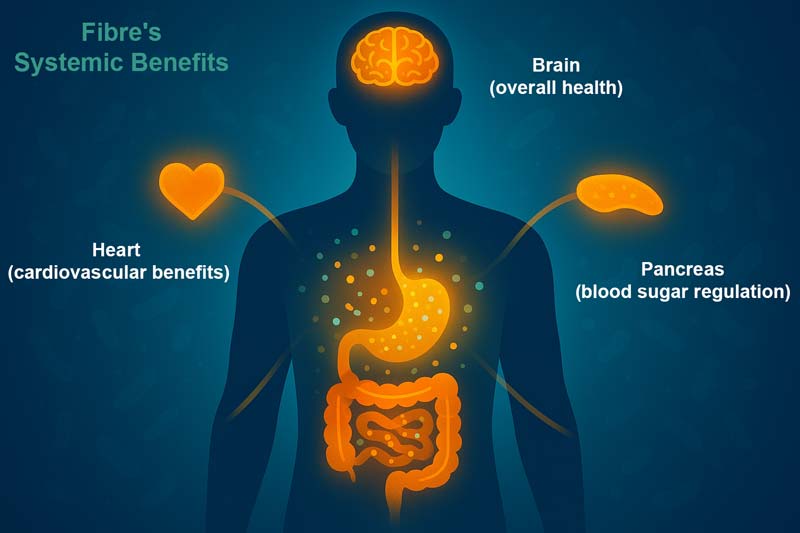
Fibre’s health effects extend throughout the body’s systems, from improving digestive function to supporting metabolic health and reducing disease risk.
Research consistently demonstrates that adequate fibre macronutrient intake provides multiple health benefits that cannot be achieved through other dietary components. Let’s examine how fibre contributes to health and helps prevent various conditions.
Digestive Health Improvements
Fibre’s role in digestive health stems from its ability to alter stool consistency and transit time. Insoluble fibre adds bulk to stool, while soluble fibre forms a gel that softens the stool.
Wheat bran demonstrates superior effectiveness for constipation relief compared to more fermentable fibres. Fibre intake and total faecal wet weight are directly related.
Food moves through the digestive system in 10 to 96 hours. Women and older people typically experience slower gastrointestinal motility.
Estimated fermentability determines fibre’s contribution to faecal weight. Less fermentable fibres from cereals contribute more to total faecal weight than highly fermentable fruit fibres.
Blood Sugar Management
The fibre macronutrient significantly influences blood glucose control through several mechanisms. High-fibre diets have reduced HbA1c (a long-term blood sugar marker) by 0.50% on average.
Fibre slows carbohydrate digestion, preventing rapid blood sugar spikes after meals and leading to more stable blood glucose levels throughout the day.
Dietary fibre substantially benefits glycaemic control and cardiovascular risk factors in people with diabetes. A minimum daily intake of 35g is recommended.
When reviewing carbohydrate quality, nutrition guidance should emphasise type and source rather than total amount. Minimally processed carbohydrates provide optimal benefits.
Cardiovascular Protection
Fibre intake shows strong associations with improved cardiovascular health markers. Studies consistently report reductions in total cholesterol and LDL (low-density lipoprotein, often called “bad” cholesterol) with higher fibre consumption.
Soluble fibre binds with cholesterol in the digestive system, facilitating its removal from the body. This directly impacts blood lipid (fat and fat-like substances in the blood) profiles.
Meta-analyses demonstrate that high-fibre diets reduce blood pressure and improve other cardiovascular risk factors. These benefits extend to both healthy populations and those with existing conditions.
Several fibre-rich foods offer additional cardioprotective effects. Walnuts provide benefits through their content of phenolic compounds (plant-based antioxidants), phytosterols (plant compounds similar to cholesterol), gamma-tocopherol (a form of vitamin E), protein, and alpha-linolenic fatty acid (a plant-based omega-3).
Weight Management Benefits
Different fibres impact weight management in varying ways. Analysis of clinical trials revealed interesting patterns in body weight changes.
Diets emphasising whole grains and legumes showed weight reduction (average decrease of 0.85 kg). Conversely, diets focusing on high fibre and healthy fats increased weight by 0.59 kg on average.
These outcomes suggest that specific food choices matter more than increasing fibre intake. The food sources used to increase fibre significantly affect body composition results.
Fibre increases satiety through multiple mechanisms. Chia seeds exemplify this effect; their mucilage properties delay gastric emptying and potentially reduce overall calorie intake.
Microbiome Enhancement
The gut microbiome (the community of bacteria, fungi, and other microbes living in the digestive tract) extends our metabolic capacity by facilitating the digestion of insoluble fibres and nutrient absorption. Fibre serves as the primary food source for beneficial gut bacteria.
During infancy, gut bacteria primarily digest simple sugars. As the microbiome matures, bacteria capable of breaking down fibre macronutrient become established.
Sodium butyrate (a short-chain fatty acid), produced when gut bacteria ferment dietary fibre, is a pivotal metabolite for gastrointestinal health. It modulates inflammation by inhibiting pro-inflammatory cytokines (signalling proteins that promote inflammation).
Short-chain fatty acids generated by gut microbiota consuming dietary fibre correlate with increased muscle function and glycogen in skeletal muscles. This represents an emerging area of research.
The Comprehensive Fibre Macronutrient Food Table
Understanding the fibre content of different foods is essential for making informed dietary choices. Our comprehensive fibre macronutrient table provides detailed information about 33 common foods across various food groups.
The table below offers a unique and extensive analysis of fibre-containing foods. It covers fibre quantity, fibre types present, and their specific health effects. This level of detail goes beyond what’s typically available in standard nutritional databases.
Fibre Macronutrient Food Guide
g = gramme | mL = millilitre | oz = ounce | Tbsp = tablespoon | cup = measuring cup | DV = Daily Value | AI = Adequate Intake | SCFAs = Short-Chain Fatty Acids | LDL = Low-Density Lipoprotein (cholesterol) | HDL = High-Density Lipoprotein (cholesterol) | IBS = Irritable Bowel Syndrome | GI = Gastrointestinal
Detailed analysis of 33 common foods across 8 key metrics, including fibre content, solubility types, and fermentability in the gut. This comprehensive fibre macronutrient reference explains different fibre categories and their specific effects on digestive health and disease prevention.
Understanding the Table Headers and Their Significance
The comprehensive fibre macronutrient food table presents detailed information about fibre content across 33 common foods. Below, we explain each column heading to help you interpret the data:
Food Group & Food
Foods are divided into major groups (Dairy and alternatives, Fruits, Grains and cereals, Legumes and beans, Nuts and seeds, and Vegetables). This classification helps identify patterns in fibre content across similar food types.
Serving Size
Measurements are standardised for practical application in meal planning. Sizes vary by food density and typical consumption amounts (e.g., cups for grains and ounces for nuts).
Fibre per Serving (g)
The total fibre content in grams for the specified serving size. This measurement helps compare foods’ fibre contribution to the recommended daily intake of 25-38g.
Type of Fibre (Soluble/Insoluble)
This indicates the proportion of soluble and insoluble fibres in each food. Soluble fibres form gels in water and affect blood sugar and cholesterol. In contrast, insoluble fibres add bulk to stool and aid in bowel regularity.
Fermentability (Gut Bacteria Utilisation)
Rated as low, moderate, or high, this measures how readily gut bacteria can break down and utilise the fibre. Fermentable fibres produce beneficial short-chain fatty acids that nourish colon cells.
Health Benefits
This section summarises each food’s advantages for digestion, cholesterol management, weight control, and other health aspects. These benefits often correlate with the particular fibre types present.
Optimal Daily Intake
Guidelines for how much each food contributes meaningfully to daily fibre requirements, expressed as a percentage of the daily value (DV) based on a 25-38g daily target.
Deficiency Risks
The potential health consequences of not consuming sufficient quantities of specific fibre types in each food highlight why dietary diversity matters.
Key Insights from the Table Data
- Highest Fibre Content Foods: Wheat bran (12-13g per ½ cup), chia seeds (10g per ounce), and raspberries (8g per cup) rank among the wealthiest fibre sources in standard serving sizes].
- Fibre Distribution Across Food Groups: Legumes consistently deliver 6-8g fibre per serving, while nuts and seeds show more significant variation (2-10g). Most vegetables provide 4-7g per cup, and fruits typically range from 3-8g per serving.
- Solubility Patterns: Oats, barley, and chia seeds contain predominantly soluble fibre, while wheat bran and most fruit and vegetable skins feature mainly insoluble fibre. Many foods contain a mixture of both types.
- Fermentability Insights: Highly fermentable foods like artichoke (high in inulin) support gut bacteria growth. Low fermentability foods such as wheat bran primarily add bulk for digestive transit.
- Food Fortification: Some plant-based dairy alternatives like coconut yoghurt often contain added fibre (inulin, pectin) as thickeners, boosting their fibre macronutrient content beyond their natural levels.
The table is a practical guide for making informed dietary choices to reach optimal fibre intake. By consulting this resource, you can identify which foods best address specific health goals related to digestion, heart health, weight management, or blood sugar control.
Optimal Fibre Intake: Recommendations and Guidelines
Understanding how much fibre your body needs helps ensure you receive its full health benefits.
Research shows that most people consume significantly less fibre than recommended worldwide, missing its protective effects. This section examines the scientific evidence behind fibre macronutrient intake recommendations and provides practical guidance for different demographic groups.
Global Recommendations for Daily Fibre Intake
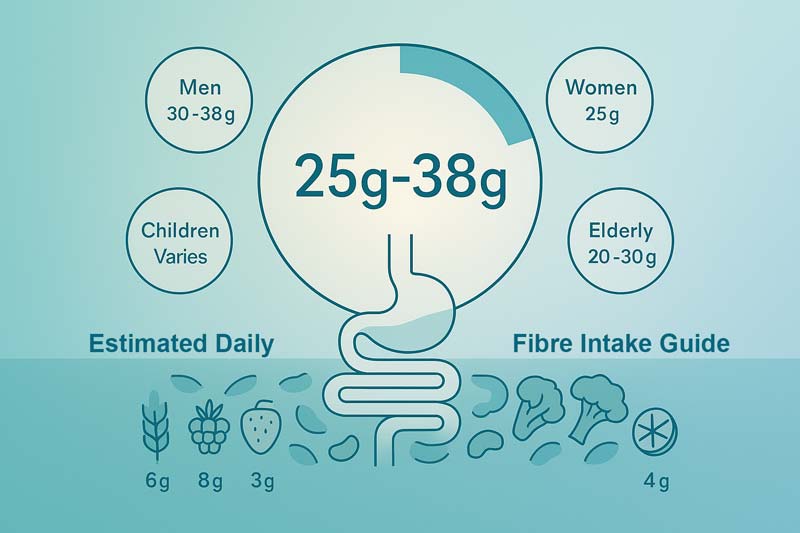
This recommendation represents a significant increase from global estimated intakes of approximately 20g daily. The gap between recommended and actual consumption highlights a widespread nutritional shortfall affecting populations across all continents.
For people with diabetes or cardiovascular concerns, higher targets of at least 35g daily are suggested for optimal health benefits. This increased amount provides enhanced protection against blood sugar fluctuations and cardiovascular complications.
Most health authorities worldwide agree on similar ranges, though specific numbers vary slightly between countries. This consensus reflects the strong scientific evidence supporting fibre’s health benefits.
Age and Gender Considerations
Adult men typically require more fibre than women due to higher overall calorie needs. Guidelines often suggest 30-38g daily for men compared to 25-30g for women, reflecting differences in average energy requirements and metabolic rates.
Children need progressively increasing amounts as they grow, scaled appropriately to their body size and energy requirements. Starting with lower amounts in early childhood and gradually increasing intake through adolescence helps establish healthy eating patterns.
Older adults maintain similar fibre requirements but may need more focus on fibre intake due to decreased appetite. Changes in digestive function with ageing can sometimes affect tolerance, requiring careful food selection while maintaining adequate intake.
The Science Behind Recommended Amounts
Fibre macronutrient recommendations are based on extensive research demonstrating tangible health improvements at certain intake thresholds. Population studies consistently show that higher fibre consumption correlates with lower rates of chronic disease.
Studies consistently show that higher fibre consumption benefits cardiometabolic risk factors across various populations. Improvements become statistically significant at intakes above 25g daily and continue to increase with higher consumption.
Clinical trials have established that high-fibre diets improve glycaemic control and reduce premature mortality compared to lower-fibre approaches. These findings come from diverse populations across different geographic regions.
The Institute of Medicine suggests that people obtain 45% to 65% of calories from carbohydrates, emphasising complex carbohydrates and fibre. This range accommodates different physiological needs while ensuring adequate nutrient intake.
Special Considerations for Athletes
Athletes should focus on timing fibre intake around exercise sessions to avoid gastrointestinal discomfort. Consuming high-fibre foods at least 2-3 hours before training allows for digestion while maintaining energy availability.
Research shows fibre can reduce gastric emptying rates, so limiting intake immediately before or after training may be beneficial. This strategy helps prevent digestive distress during high-intensity activity while ensuring adequate daily intake.
Interestingly, insoluble dietary fibre intake was significantly higher in better-performing athletes compared with lower-performing ones. This observation suggests potential performance benefits beyond essential health maintenance.
Balancing Fibre with Other Nutrients
The fibre macronutrient works synergistically with protein and healthy fats for optimal health outcomes. A balanced approach ensures adequate nutrition while maximising fibre’s benefits.
While increasing fibre intake, ensure adequate hydration as fibre absorbs water in the digestive tract. A general guideline is to drink about 1.5-2 litres of water daily when consuming higher-fibre diets.
For those with kidney concerns, consult healthcare providers about fibre intake. High-protein diets should be balanced with appropriate fibre. Certain kidney conditions may require specific dietary modifications that affect fibre consumption.
Signs of Inadequate or Excessive Intake
Insufficient fibre often manifests as digestive irregularity, particularly constipation. Infrequent bowel movements or difficult passage may indicate inadequate intake.
Low-fibre diets correlate with higher inflammation markers and reduced gut microbiome diversity. These changes may contribute to chronic disease risk without causing immediate symptoms.
Excessive fibre intake, particularly when increased too rapidly, may cause bloating, gas, or abdominal discomfort. These symptoms usually subside as the digestive system adapts to higher fibre levels.
Practical Application of Guidelines
Rather than counting grams meticulously, gradually incorporate fibre-rich foods into daily meals. Adding one additional high-fibre food daily represents a manageable approach to increasing intake.
Aim to include foods from diverse sources to obtain soluble and insoluble fibres in appropriate proportions. Different fibre types provide complementary digestive, metabolic, and cardiovascular health benefits.
Remember that whole food approaches provide better outcomes than supplements or isolated fibre sources. The matrix of nutrients in natural fibre-rich foods offers synergistic effects beyond what supplements can provide.

Integrating Fibre-Rich Foods into Your Diet
Incorporating adequate fibre into your daily eating pattern need not be complicated. With strategic food choices and simple meal planning approaches, you can quickly meet recommended fibre macronutrient targets while enjoying delicious, satisfying meals.
The following practical strategies can help you increase your fibre intake gradually and sustainably.
Starting the day with high-fibre breakfast options sets a positive tone for daily intake. Whole grain cereals, particularly those containing barley and oats, provide beta-glucans (unique fibre compounds that form gels in the digestive tract) that support heart health. Adding just a half-cup of cooked steel-cut oats provides about 4g of fibre to kickstart your day.
Adding berries to breakfast dishes contributes soluble and insoluble fibre macronutrient forms while boosting antioxidant (compounds that protect cells from damage) intake. Just one cup of raspberries delivers approximately 8g of fibre, making it one of the most fibre-dense fruits available.
Legumes are among the most fibre-dense food categories. Black beans, chickpeas, lentils, and split peas provide 6-8g of fibre per half-cup serving. These versatile ingredients work well in soups, salads, curries, and dips, making them easy to incorporate into various meal types.
When selecting grains, choose minimally processed versions whenever possible. Brown rice contains 3.5g of fibre per cup compared to white rice, which has been stripped of its fibrous bran layer. Similarly, whole wheat products retain more natural fibre content than refined alternatives.
Vegetables with edible skins generally offer higher fibre content. Sweet potatoes with skin provide 4g of fibre per medium potato, with approximately half being soluble pectin. Cruciferous vegetables like broccoli and Brussels sprouts offer around 4-5g per cup while providing beneficial phytonutrients (plant compounds that support health and protect cells).
Nuts and seeds make excellent high-fibre snacks that deliver healthy fats and protein. Chia seeds stand out with 10g of fibre per ounce, while almonds provide 3.5g per ounce. Sprinkling these onto yoghurt, salads, or porridge adds crunch and nutritional benefits.
For those following carbohydrate-conscious eating patterns, focus on net carbs by subtracting fibre from total carbohydrate counts. This approach encourages selecting higher-fibre carbohydrate sources that have less impact on blood sugar levels despite their total carbohydrate content.
Incorporating these fibre macronutrient foods gradually helps prevent digestive discomfort. Sudden significant increases in fibre intake can cause bloating or gas as the gut microbiome adjusts. Adding 5g of fibre daily allows your digestive system to adapt comfortably.
Remember to increase water consumption alongside higher fibre intake. Fibre absorbs water in the digestive tract, so adequate hydration helps it function optimally. Without sufficient fluid, high-fibre diets may contribute to constipation rather than relieve it.
When planning meals around exercise, consider timing fibre intake appropriately. Consuming high-fibre foods 2-3 hours before exercise rather than immediately prior helps prevent gastrointestinal distress. After workouts, you might initially focus on easily digestible nutrients before reintroducing higher-fibre options.
For convenience, prepare fibre-rich foods in batches. Cook large portions of beans, whole grains, or roasted vegetables to incorporate into multiple weekly meals. These readily available ingredients make it easier to assemble quick, fibre-rich meals, even on busy days.
Read nutrition labels carefully to identify added fibres in manufactured foods. Ingredients like inulin, chicory root fibre, or resistant maltodextrin boost fibre content but may affect sensitive individuals differently than naturally occurring fibres. Pay attention to how your body responds to these added ingredients.

Sources
- Beisner J., Filipe Rosa L., Kaden-Volynets V., Stolzer I., Günther C., Bischoff S.C. Prebiotic Inulin and Sodium Butyrate Attenuate Obesity-Induced Intestinal Barrier Dysfunction by Induction of Antimicrobial Peptides. Front. Immunol. 2021;12:678360.
- Chen G., Ran X., Li B., Li Y., He D., Huang B., Fu S., Liu J., Wang W. Sodium Butyrate Inhibits Inflammation and Maintains Epithelium Barrier Integrity in a TNBS-induced Inflammatory Bowel Disease Mice Model. EBioMedicine. 2018;30:317–325.
- de Vries J, Birkett A, Hulshof T, et al. Effects of cereal, fruit and vegetable fibres on human faecal weight and transit time: a comprehensive review of intervention trials. Nutrients. 2016;8(3):130.
- Derrien M, Alvarez AS, de Vos WM. The gut microbiota in the first decade of life. Trends Microbiol. (2019) 27:997–1010.
- Ferreira, H., Vasconcelos, M., Gil, A.M. & Pinto, E. (2021) Benefits of pulse consumption on metabolism and health: A systematic review of randomised controlled trials. Critical Reviews in Food Science and Nutrition, 61(1), 85–96.
- Foo WL, Harrison JD, Mhizha FT, et al. A short-term low-fiber diet reduces body mass in healthy young men: implications for weight-sensitive sports. Int J Sport Nutr Exerc Metab. 2022;32(4):256–264.
- Food and Nutrition Board of the Institute of Medicine. Dietary Reference Intakes for Energy, Carbohydrate, Fiber, Fat, Fatty acids, Cholesterol, Protein, and Amino Acids. Washington, DC: National Academy Press; 2005.
- Graff J, Brinch K, Madsen JL. Gastrointestinal mean transit times in young and middle-aged healthy subjects. Clin Physiol. 2001;21(2):253–259.
- Hervik AK, Svihus B. The role of fiber in energy balance. J Nutr Metab. 2019, 20192019:1–11.
- Kerksick CM, Arent S, Schoenfeld BJ, et al. International society of sports nutrition position stand: nutrient timing. J Int Soc Sports Nutr. 2017;14(1):33.
- Littlejohn P, Finlay BB. When a pandemic and an epidemic collide: COVID-19, gut microbiota, and the double burden of malnutrition. BMC Med. (2021) 19:31.
- Liu B, Hu Y, Rai SK, Wang M, Hu FB, Sun Q. Low‐carbohydrate diet macronutrient quality and weight change. JAMA Netw Open. 2023;6(12).
- Mann J, Truswell S, Hodson L. Essentials of human nutrition 6e. UK, Oxford University Press; 2023.
- Martyniak A., Medyńska-Przęczek A., Wędrychowicz A., Skoczeń S., Tomasik P.J. Prebiotics, Probiotics, Synbiotics, Paraprobiotics and Postbiotic Compounds in IBD. Biomolecules. 2021;11:1903.
- Motyka S., Koc K., Ekiert H., Blicharska E., Czarnek K., Szopa A. The current state of knowledge on Salvia hispanica and Salviae hispanicae semen (chia seeds) 2022;27:1207.
- Nay K, Jollet M, Goustard B, et al. Gut bacteria are critical for optimal muscle function: a potential link with glucose homeostasis. Am J Physiol Endocrinol Metab. 2019. Jul 1;317(1)–E171.
- Naude CE, Brand A, Schoonees A, Nguyen KA, Chaplin M, Volmink J. Low‐carbohydrate versus balanced‐carbohydrate diets for reducing weight and cardiovascular risk. Cochrane Database Syst Rev. 2022;2022(1).
- Nchanji E.B., Ageyo O.C. Do common beans (Phaseolus vulgaris L.) promote good health in humans? A systematic review and meta-analysis of clinical and randomised controlled trials. Nutrients. 2021;13:3701. doi: 10.3390/nu13113701.
- Reynolds AN, Akerman A, Kumar S, Diep Pham HT, Coffey S, Mann J. Dietary fibre in hypertension and cardiovascular disease management: systematic review and meta‐analyses. BMC Med. 2022;20(1):139.
- Reynolds AN, Akerman AP, Mann J. Dietary fibre and whole grains in diabetes management: systematic review and meta‐analyses. PLoS Med. 2020;17(3).
- Reynolds A, Mann J, Cummings J, Winter N, Mete E, Te Morenga L. Carbohydrate quality and human health: a series of systematic reviews and meta‐analyses. The Lancet. 2019;393(10170):434‐
- Ros E., Izquierdo-Pulido M., Sala-Vila A. Beneficial effects of walnut consumption on human health: Role of micronutrients. Curr. Opin. Clin. Nutr. Metab. Care. 2018;21:498–504.
- Sami W, Ansari T, Butt NS, et al. Effect of diet on type 2 diabetes mellitus: A review. Int. J. Health Sci. 2017;11(2):65–71.
- Stephen AM, Champ MM‐J, Cloran SJ, et al. Dietary fibre in Europe: current state of knowledge on definitions, sources, recommendations, intakes and relationships to health. Nutr Res Rev. 2017;30(2):149‐
- Stiemsma LT, Michels KB. The role of the microbiome in the developmental origins of health and disease. Pediatrics. (2018) 141:2437. doi: 10.1542/peds.2017-2437
- The Diabetes Nutrition Study Group of the European Association for the Study of Diabetes (DNSG). Evidence‐based European recommendations for the dietary management of diabetes. Diabetologia. 2023;66(6):965‐
- Trumbo P, Schlicker S, Yates AA, Poos M., Food and Nutrition Board of the Institute of Medicine, The National Academies. Dietary reference intakes for energy, carbohydrate, fiber, fat, fatty acids, cholesterol, protein and amino acids. J Am Diet Assoc. 2002 Nov;102(11):1621-30.
- World Health Organization. Carbohydrate intake for adults and children: WHO guideline. 2023.
- World Health Organization. Sugars intake for adults and children: Guideline. 2015. Geneva, Switzerland Ref Type: Report.
- Yadav M.K., Kumari I., Singh B., Sharma K.K., Tiwari S.K. Probiotics, prebiotics and synbiotics: Safe options for next-generation therapeutics. Appl. Microbiol. Biotechnol. 2022;106:505–521.