


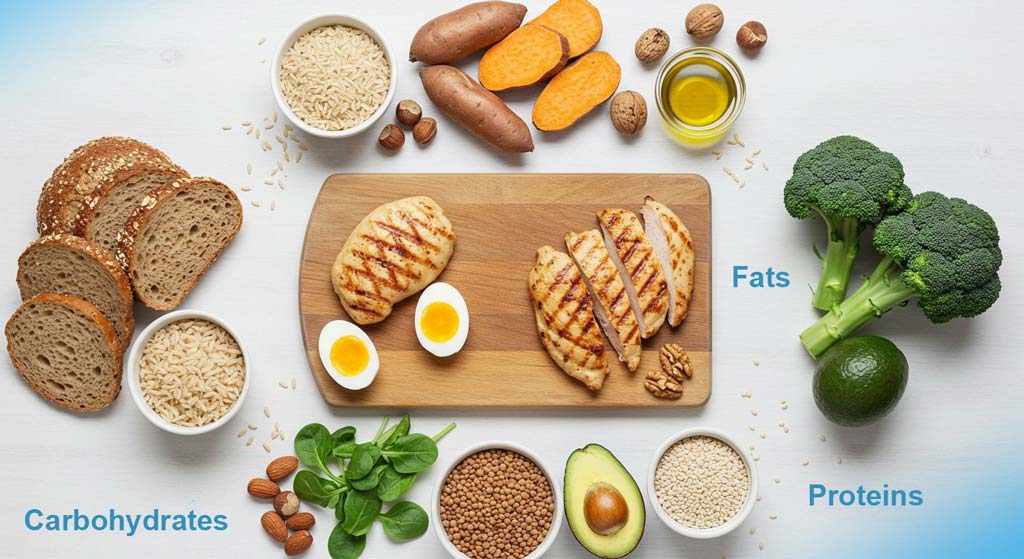
Macronutrients provide energy for daily activities and exercise, forming the foundation of human nutrition. They supply different amounts per gram: carbohydrates and proteins each provide about 4 calories per gram. In comparison, fats deliver 9 calories per gram.
This caloric density difference explains why high-fat foods contain more calories than those lower in fat with similar portion sizes.
These essential nutrients serve distinct yet complementary roles in supporting bodily functions. Carbohydrates power the brain and central nervous system, supplying readily available energy during physical activity. You cannot fully benefit from workouts or competitions without sufficient carbohydrates because your body lacks the fuel for optimal performance.
Proteins consist of small units called amino acids, which act as building blocks for the body. They promote muscle growth and participate in many body functions, including assistance with chemical reactions and hormone production. Proteins aren’t used for energy unless carbohydrate or fat intake is insufficient, allowing them to fulfil their primary roles in growth and normal bodily processes.
Dietary fats and cholesterol (a waxy substance in the blood) support normal tissue functioning and good health. Fats enable the absorption of fat-soluble vitamins (A, D, E, and K) and provide essential biochemical precursors for cellular products.
Fats also enhance food flavour and texture while promoting satiety, helping to prevent hunger. They offer a concentrated energy form, and cholesterol plays essential roles in cell membrane formation and hormone creation.
The balance of these nutrients affects various aspects of health, from daily energy levels to long-term well-being.
In the following sections, we’ll examine what macronutrients are and why they matter, explore their functions and importance, discuss optimal balance and distribution, investigate their relationship with micronutrients, address how needs change across different activities and life stages, and provide links to more detailed information about each specific nutrient.
What Are Macronutrients and Why Do They Matter?
The body’s energy sources and building blocks are the three primary macronutrients—carbohydrates, proteins, and fats. Unlike micronutrients (vitamins and minerals), which are needed in small amounts, micronutrients are required in larger quantities to maintain bodily functions and support physical activity. They each play unique roles in health maintenance, physical performance, and disease prevention.
These nutrients form the basis of every diet worldwide. However, proportions vary based on cultural practices, food availability, and individual needs. The recommended balance of energy production ratios ranges from 13-20% for protein, 20-30% for fat, and 50-65% for carbohydrate. For someone weighing 75 kg, this might translate to 105-150 g of protein daily.
Carbohydrates, including sugars, starches, and fibres, are the body’s preferred energy source. They exist in simple and complex forms, with dietary intake recommendations for athletes ranging from 6-10 g per kilogram of body weight daily. When carbohydrate intake is insufficient, stored glycogen (the form in which the body stores carbohydrates) decreases, limiting available energy during exercise and reducing athletic performance.
Proteins consist of amino acids, which the body uses to build and repair tissues. All essential amino acids and proteinogenic amino acids (those involved in protein synthesis) are necessary for muscle development. The International Society of Sports Nutrition recommends 1.4-2.0 g of protein per kilogram of body weight daily. highlighting its importance for tissue growth and recovery.
Fats enable efficient energy metabolism (the chemical processes that convert food into energy), with each gram containing 9 kcal. While excessive fat intake should be avoided, this nutrient supports numerous bodily functions, including hormone production and vitamin absorption. Body fat that negatively impacts athletic performance requires careful management, particularly in sports relying on instantaneous force.
The balance between these macronutrients significantly influences metabolism. The Randle glucose-fatty acid cycle describes how circulating glucose levels affect fatty acid release from adipose tissue and how increased fatty acid oxidation in muscle regulates glucose oxidation. This relationship helps explain how different dietary patterns affect energy utilisation.
The Three Primary Nutrient Categories: Function and Importance
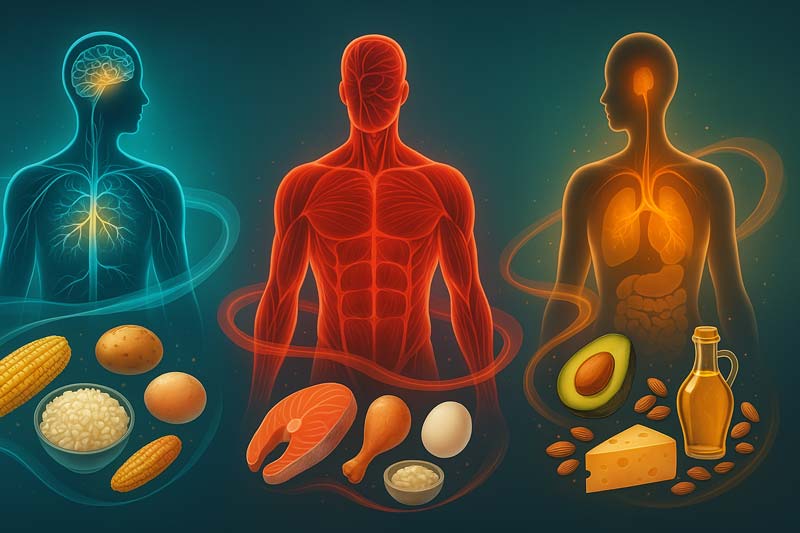
Each primary nutrient category fulfils specific functions while working together to support overall health and physical performance. Recognising these distinct roles helps inform better nutritional choices for various health goals and activity levels.
The macronutrients serve as the primary fuel source during exercise, with carbohydrate oxidation (the process of breaking down carbohydrates for energy) increasing as exercise intensity rises. They are the primary energy source, especially in sports, which require a continuous energy supply. For optimal athletic performance, consuming carbohydrates habitually is essential to increasing glycogen stores in muscles and the liver.
The body processes carbohydrates for immediate energy needs while also using them to maintain blood glucose levels for brain function. Under limited dietary carbohydrate intake, the brain adapts to using ketone (energy molecules produced when the liver breaks down fat) bodies derived from fatty acids but may not achieve optimal cognitive performance during metabolic stress. Complex carbohydrates from whole grains, fruits, vegetables, and legumes provide vitamins and minerals alongside energy for sustained energy.
Proteins play crucial roles in muscle development and recovery. Muscle proteins break down during exercise and rebuild afterwards, requiring adequate amino acid availability. The daily protein requirements for trained individuals should be approximately 2 g/kg of body weight, with research showing that protein consumption enhances both strength and hypertrophy (increased muscle size) in people engaging in resistance training.
Protein metabolism significantly influences health and physical performance. The balance between muscle protein synthesis and breakdown determines muscle mass maintenance—when synthesis exceeds breakdown, muscle protein increases; when breakdown exceeds synthesis, muscle protein decreases. This balance depends heavily on nutritional factors, particularly protein intake and constituent amino acids.
Fats are macronutrients that support hormone production, cell membrane integrity, and energy storage. The body can synthesise saturated and monounsaturated fatty acids (fats containing one double bond in their chemical structure) from carbohydrates and protein-derived carbon groups.
However, humans lack the enzymes to introduce certain double bonds in fatty acids, making omega-3 and omega-6 polyunsaturated fatty (fats containing multiple double bonds in their chemical structure) acids essential nutrients that must come from the diet.
These essential fatty acids undergo conversion through desaturation and elongation to other critical fatty acids, including arachidonic acid (an omega-6 fatty acid found in animal products), eicosapentaenoic acid (EPA, an omega-3 fatty acid found in fish oil), and docosahexaenoic acid (DHA, an omega-3 fatty acid essential for brain health). Their synthesis depends on enzyme availability and the relative intake of other fatty acids, as omega-3, omega-6, and omega-9 fatty acids compete for the same enzymes.
Dietary fatty acids incorporate triglycerides (the main form of fat in the body), phospholipids (fatty substances that form cell membranes), and other complex lipids (fats and fat-like substances) that become part of cell membranes and tissues. This integration influences cell function and signalling, including gene expression via effects on transcription factors, ultimately affecting tissue and organ composition and function.
Macronutrient Balance and Energy Distribution
The balance of macronutrients in your diet significantly affects health outcomes, physical performance, and body composition. Rather than focusing solely on total calorie intake, the distribution of these calories across carbohydrates, proteins, and fats determines how effectively your body functions.
For most people, optimal energy distribution involves balancing carbohydrates, proteins, and fats appropriately according to individual needs. This distribution supports optimal functioning for most people, though individual needs vary based on activity level, health status, and personal goals.
For active individuals, the ratio may shift to accommodate higher energy demands. Athletes meet caloric requirements by consuming adequate amounts of carbohydrates, protein, and fat, varying proportions based on body mass, workout type, training intensity, and training phase. Recommended carbohydrate intake ranges from 3-5 g per kg of body weight daily for light activity to 8-12 g per kg for intense training.
Protein requirements also differ based on activity level and goals. While general recommendations suggest 1.2 g per kg of body weight as a minimum, amounts up to 2.4 g per kg or 15-30% of total calories benefit active individuals. This higher intake supports muscle recovery, enhances muscle protein synthesis, and promotes favourable body composition changes, especially during energy deficits.
Fat requirements generally align with those for non-active individuals, ranging from 20–35% of total daily calories or approximately 1.0 g of fat for every kilogram of body weight per day. Despite being energy-dense, dietary fat should not drop below 15–20% of total calorie intake, as it supports hormone production and vitamin absorption.
During weight management phases, macronutrients balance requires special attention. For periods of energy deficit, protein intake of 1.6–2.2 g/kg/d helps preserve lean tissue and support recovery. Fat intake typically ranges from 0.7 to 1.3 g/kg/d, while carbohydrate intake should remain above 3–4 g/kg/d to support training demands.
The body’s ratio of fat to carbohydrate oxidation can predict weight gain. Individuals in the highest decile of respiratory quotient (a measure of carbohydrate vs fat metabolism) have a 2.5-fold increased risk of at least a 5 kg weight gain compared to those in the lowest decile. This finding highlights how individual metabolic differences affect weight management.
Different macronutrients undergo distinct metabolic pathways. During energy production, ingested macronutrients break down into glucose, fatty acids, and/or amino acids for cellular use, primarily stored as adenosine triphosphate (ATP, the primary energy currency of cells). The body preferentially uses glucose from carbohydrates for ATP synthesis through cellular respiration processes occurring mainly in the mitochondria (cell structures that produce energy).
Dietary Nutrients: The Synergy Between Macro and Micro
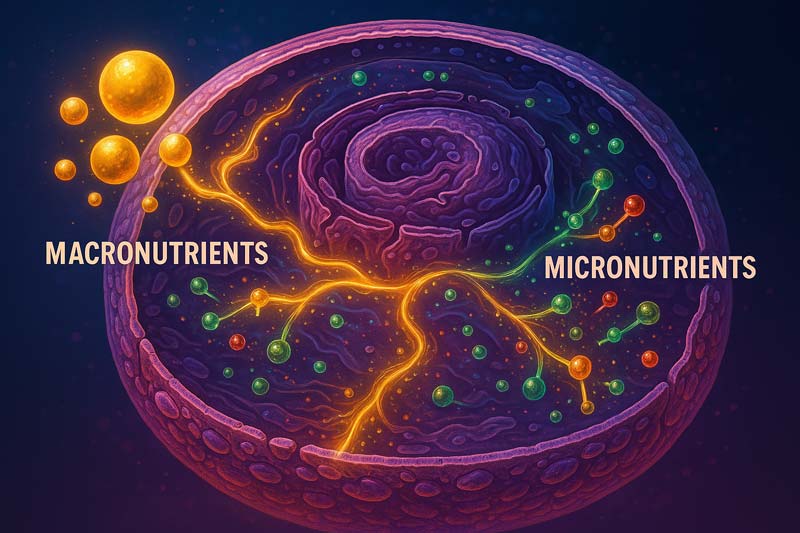
The relationship between macronutrients and micronutrients creates a nutritional synergy essential for optimal health and physical performance. While macronutrients provide energy and building blocks, micronutrients enable the biochemical reactions necessary to use these larger nutrients effectively.
Without adequate micronutrients, the body cannot properly process macronutrients for energy and tissue building. For example, riboflavin (vitamin B2) is essential for metabolising fats, proteins, and carbohydrates into glucose for energy. Similarly, minerals participate directly in energy-yielding pathways, affecting physical performance and daily energy levels.
B vitamins play fundamental roles in energy metabolism. They serve as coenzymes (helper molecules that assist enzymes in chemical reactions) that convert dietary energy into adenosine triphosphate (ATP), the primary energy molecule in cells. These vitamins support red blood cell formation and nervous system function while facilitating the body’s use of macronutrients for energy production and tissue repair.
Many vitamins and minerals support protein synthesis and muscle function. Calcium and magnesium help regulate muscle contractions, while zinc enables immune function, wound healing, and DNA synthesis. These micronutrients are essential for translating protein intake into actual muscle development and repair.
Iron forms a central component of haemoglobin (oxygen-carrying protein in red blood cells), enabling oxygen delivery to tissues during exercise. Inadequate iron status often manifests as fatigue and reduced exercise capacity, highlighting its importance for energy metabolism. This demonstrates how micronutrient status affects the body’s ability to use macronutrients for energy production.
Fat-soluble vitamins (A, D, E, and K) require dietary fat for proper absorption. Without sufficient fat consumption, these vitamins pass through the digestive system largely unutilised. For instance, vitamin E absorption can be as low as 10% without fat present, whilst consuming fat alongside vitamin E can increase absorption to nearly 60%.
The combined intake of protein and micronutrients supports muscle health more effectively than either nutrient category alone. Studies show that low-dose dairy protein (10.5 g/day) plus micronutrient supplementation during resistance exercise significantly increased muscle mass in community-dwelling older adults. This synergistic effect highlights the importance of comprehensive nutrition.
Optimal nutrition requires attention to both the quantity and quality of macronutrients and sufficient micronutrient intake. Food quality matters as much as macronutrient ratios—diets emphasising whole grains and legumes show better health outcomes than those focusing only on macronutrient percentages.
Nutrition Needs Across Different Activities and Life Stages
Nutritional requirements vary considerably across different activities and life stages, requiring adjustments to maintain optimal health and performance. These variations reflect changing physiological demands and metabolic priorities throughout life.
For endurance sports like marathon running or cycling, carbohydrates become the primary macronutrients focus, as high glycogen levels are necessary to maintain performance. Endurance athletes typically require 6-10 g of carbohydrates per kilogram of body weight daily to maintain glycogen stores and prevent fatigue. While protein remains essential, it primarily supports recovery rather than serving as a primary energy source.
In contrast, strength and power athletes maintain different requirements than endurance performers. Though they still need adequate carbohydrates (4-7 g/kg/day), their primary focus is protein intake for muscle repair and growth. Sufficient carbohydrate availability remains essential for high-intensity resistance training, which depends on glycolytic (the metabolic pathway that converts glucose into energy without oxygen) energy pathways.
During prolonged exercise lasting beyond 60 minutes, consuming external carbohydrates (30-60 g per hour) helps maintain blood glucose levels and preserves muscle glycogen. Specially formulated sports drinks containing 6-8% carbohydrate solution prove effective during hot conditions, simultaneously addressing energy and hydration needs.
Life stage significantly influences macronutrients requirements. Childhood and adolescence demand increased nutrient intake to support development. Protein needs peak during adolescent growth spurts to support rapid bone formation. At the same time, zinc becomes particularly important for growth and sexual maturation during puberty. Iron needs increase with muscle development and blood volume expansion.
Pregnancy and lactation substantially alter nutritional demands. Iron requirements nearly double during pregnancy to support increased blood volume and foetal development. At the same time, calcium and magnesium need to increase to support foetal skeletal development while maintaining maternal bone health. Adequate protein intake becomes crucial, with recommendations suggesting an additional 25g daily during pregnancy and 19g during lactation.
Older adults face unique nutritional challenges as absorption efficiency often decreases with age. At the same time, medication use may further affect nutrient status. Calcium and vitamin D requirements increase to combat age-related bone loss, particularly in postmenopausal women. Protein needs also rise as “anabolic resistance”, a reduced ability to stimulate muscle protein synthesis from dietary protein, develops with age.
For weight management, higher protein intakes offer several advantages: increased satiety, greater thermic effect (energy expended during digestion), preservation of lean mass during caloric restriction, and better long-term weight maintenance outcomes. Research shows proper protein timing and distribution help maximise muscle maintenance during weight loss.

Your Complete Guide to Essential Nutrients
The foundations of nutrition provide a framework for informed choices that benefit health and well-being. The macronutrients and micronutrients covered in this guide form the basis of a balanced diet that supports energy production, tissue building, and overall health maintenance.
To expand your knowledge about specific nutrients, these dedicated articles offer detailed insights:
Micronutrients Explained: Vitamins and minerals are required in small amounts yet play outsized roles in health. Unlike macronutrients, they don’t provide energy directly but enable countless physiological processes, from metabolism to immunity and tissue repair. Discover how these essential nutrients support overall health despite their tiny quantities. Learn more about Micronutrients →.
Carbohydrates Macronutrient Fundamentals: Carbohydrates are your body’s primary energy source, especially during high-intensity activities. They provide approximately 4 calories per gram and exist in simple and complex forms, each offering distinct energy production and health benefits. Learn how carbohydrates fuel your brain, muscles, and daily activities while supporting optimal physical performance. Learn more about Carbohydrates as macronutrient →.
Protein Macronutrient Fundamentals: Proteins, delivering 4 calories per gram, provide the building blocks your body needs for tissue growth, enzyme production, and hormone synthesis. Discover how these amino acid chains support muscle development, immune function, and metabolic processes, and learn about optimal intake strategies for different fitness goals and life stages. Learn more about Protein as macronutrient →.
Fats Macronutrient Fundamentals: At 9 calories per gram, fats represent your most energy-dense macronutrient. Beyond energy provision, they enable vitamin absorption, hormone production, and cell membrane formation. Explore the different types of dietary fats, their health effects, and strategies for incorporating healthy fats into your diet for optimal well-being. Learn more about Fats as macronutrient →.
Fibre Macronutrient Fundamentals: Fibre is often considered a subset of carbohydrates, so fibre deserves special attention for its unique health benefits. Unlike other nutrients, fibre passes through your digestive system largely undigested, supporting gut health, blood sugar regulation, and cholesterol management. Learn how different fibre types function in your body and how to incorporate them into your diet. Learn more about Fibre as macronutrient →.
Vitamins Micronutrient Fundamentals: These organic compounds enable countless biochemical reactions that allow your body to use macronutrients effectively. From energy metabolism to immune function and tissue repair, vitamins play essential roles in nearly every physiological process. Discover how these critical nutrients support overall health and how to ensure adequate intake. Learn more about Vitamins as micronutrient →.
Minerals Micronutrient Fundamentals: Inorganic elements are required for structural support, fluid balance, nerve signalling, and enzyme function, and minerals work alongside vitamins to properly utilise macronutrients. Learn about primary and trace minerals, their specific roles in human health, and strategies for maintaining optimal mineral status through diet. Learn more about Minerals as micronutrient →.
These dedicated resources offer information about each nutrient category and their contributions to overall health and well-being. This knowledge provides the basis for making informed dietary choices that support your unique health goals and lifestyle needs.
Sources
- American Dietetic Association; Dietitians of Canada; American College of Sports Medicine; Rodriguez NR, Di Marco NM, Langley S. American College of Sports Medicine position stand. Nutrition and athletic performance. Med Sci Sports Exerc. 2009 Mar;41(3):709-31.
- Aragon AA, Schoenfeld BJ, Wildman R, et al. International society of sports nutrition position stand: diets and body composition. J Int Soc Sports Nutr. 2017;14(1):16.
- Atherton PJ, Smith K. Muscle protein synthesis in response to nutrition and exercise. J Physiol. 2012;590(5):1049–1057.
- Berger M.M., Shenkin A., Schweinlin A., Amrein K., Augsburger M., Biesalski H.K., Bischoff S.C., Casaer M.P., Gundogan K., Lepp H.L., et al. ESPEN micronutrient guideline. Clin. Nutr. 2022;41:1357–1424.
- Biesalski Hans K, Jana T. Micronutrients in the life cycle: requirements and sufficient supply. NFS J. (2018) 11:1–11.
- Burke LM, Hawley JA, Wong SH, et al. Carbohydrates for training and competition. Food, Nutr Sports Perform III. 2013;29:17–27.
- Bytomski JR. Fueling for performance. Sports Health. 2018;10(1):47–53.
- Calder PC. Functional roles of fatty acids and their effects on human health. JPEN J Parenter Enteral Nutr. 2015;39(1 suppl):18s‐
- Da Poian AT, El-Bacha T, Luz MRMP. Nutrient Utilisation in Humans: Metabolism Pathways. Nature Education 2010;3(9):11
- Huskisson E, Maggini S, Ruf M. The role of vitamins and minerals in energy metabolism and well-being. J Int Med Res 2007;35:277-89.
- Kerksick CM, Wilborn CD, Roberts MD, et al. ISSN exercise & sports nutrition review update: research & recommendations. J Int Soc Sports Nutr. 2018. Aug 1;15(1):38.
- Kuo C, Shiao G, Lee J. The effects of high-fat and high-carbohydrate diet loads on gas exchange and ventilation in COPD patients and normal subjects. Chest. (1993) 104:189–96.
- Lukaski HC. Vitamin and mineral status: effects on physical performance. Nutrition., 20 (2004), pp. 632-644
- Mahabadi N, Bhusal A, Banks SW. Riboflavin Deficiency. [Updated 2023 Jul 17]. In: StatPearls [Internet]. Treasure Island (FL): StatPearls Publishing; 2025 Jan-.
- Office of Dieary Supplements. Omega-3 fatty acids: Fact Sheet for Health Professionals. National Institutes of Health. 2022.
- Pérez-Castillo Í., Williams J., López-Chicharro J., Mihic N., Rueda R., Bouzamondo H., Horswill C. Compositional Aspects of Beverages Designed to Promote Hydration Before, During, and After Exercise: Concepts Revisited. Nutrients. 2023;16:17.
- Phillips SM, Van Loon LJ. Dietary protein for athletes: from requirements to optimum adaptation. J Sports Sci. 2011;29Suppl 1)–38.
- Pourabbas, M, Bagheri, R, Hooshmand Moghadam, B, et al. Strategic ingestion of high-protein dairy milk during a resistance training program increases lean mass, strength, and power in trained young males. Nutrients. 2021;13(3):948.
- Randle PJ, Garland PB, Hales CN, Newsholme EA. The glucose fatty-acid cycle. Its role in insulin sensitivity and the metabolic disturbances of diabetes mellitus. Lancet 1: 785–789, 1963.
- Seino S, Sumi K, Narita M, Yokoyama Y, Ashida K, Kitamura A, Shinkai S. Effects of Low-Dose Dairy Protein Plus Micronutrient Supplementation during Resistance Exercise on Muscle Mass and Physical Performance in Older Adults: A Randomised, Controlled Trial. J Nutr Health Aging. 2018;22(1):59-67.
- Thomas D.T., Erdman K.A., Burke L.M. American College of Sports Medicine Joint Position Statement. Nutrition and Athletic Performance. Med. Sci. Sports Exerc. 2016;48:543–568.
- Westerterp K.R., Wilson S.A., Rolland V. Diet Induced Thermogenesis Measured over 24h in a Respiration Chamber: Effect of Diet Composition. Int. J. Obes. Relat. Metab. Disord. 1999;23:287–292.
- Weyh C., Krüger K., Peeling P., Castell L. The Role of Minerals in the Optimal Functioning of the Immune System. Nutrients. 2022;14:644.
- Wijendran V, Hayes KC. Dietary n-6 and n-3 fatty acid balance and cardiovascular health. Annu Rev Nutr. 2004;24(1):597–615.
- Yang Y, Breen L, Burd NA, et al. Resistance exercise enhances myofibrillar protein synthesis with graded intakes of whey protein in older men. Br J Nutr, 108 (2012), pp. 1780-1788
- Zembron-Lacny A, Morawin B, Wawrzyniak-Gramacka E, Gramacki J, Jarmuzek P, Kotlega D, Ziemann E. Multiple Cryotherapy Attenuates Oxi-Inflammatory Response Following Skeletal Muscle Injury. Int J Environ Res Public Health. 2020 Oct 27;17(21):7855.
- Zhang S., Lachance B.B., Mattson M.P., Jia X. Glucose Metabolic Crosstalk and Regulation in Brain Function and Diseases. Prog. Neurobiol. 2021;204:102089.
- Zurlo F, Lillioja S, Esposito-Del Puente A et al. Low ratio of fat to carbohydrate oxidation as predictor of weight gain: study of 24-h RQ. Am J Physiol 1990;259–E657.