


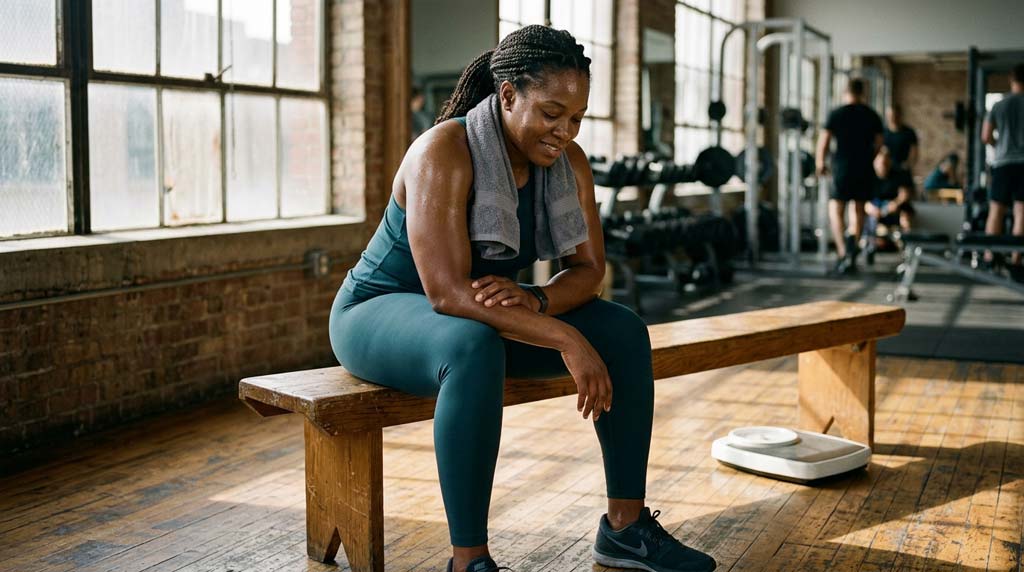
Exercise without weight loss divides opinion more sharply than almost any other health question. One camp treats the scale as the final verdict. The other insists that body size reveals nothing worth knowing. Both are arguing about the wrong measurement.
The trouble is that five separate things get squeezed into a single word. Activity, fitness, body size, body composition and health are not the same thing. A person can improve one while another stays completely flat. Consequently, two people can train identically and reach opposite conclusions about whether it worked.
Start with what a set of bathroom scales actually measures. It measures the total. Nothing else. However, body weight cannot separate fat from muscle, and it cannot show where fat sits.
Then there is the size of the effect people expect. Large amounts of training usually produce modest weight change, and individual results vary enormously. Two people can follow the same supervised programme and finish nowhere near each other.
Meanwhile, fitness often improves regardless of what the scale does. That improvement is not a consolation prize. It is a direct adaptation to training, not a side effect of losing weight.
Yet the opposite claim fails just as badly. Weight that stays still can hide fat quietly increasing underneath. So a steady number is not automatically good news either.
This is a measurement problem, not a moral one. Exercise without weight loss can improve health in ways the scale was never built to detect. At the same time, body fat and where it sits still carry real risk. Holding both of those ideas at once is the honest position. The useful question is not whether the scale moved, but what did.
What exercise without weight loss can still change
The body starts adapting long before it starts shrinking. Some of those adaptations begin within days, and several are measurable within weeks. None of them requires the number on the scale to move.
Take insulin sensitivity, which describes how readily your cells accept sugar from the blood. Training improves it in previously sedentary adults even when body weight and body fat stay unchanged. Poor insulin sensitivity sits underneath a great deal of long-term metabolic trouble.
Something useful also happens during the activity itself. Working muscles pull glucose out of the blood through routes that need no insulin. That effect outlasts the session, with improved insulin sensitivity persisting anywhere from 2 to 72 hours. How long it lasts depends on how hard and how long you worked.
For people with type 2 diabetes, regular training lowers HbA1c. That blood test shows average blood sugar over roughly three months. Meta-analyses put the reduction at around 0.5% to 0.7%, alongside fewer daily glucose spikes. Moreover, the improvement appears without any fall in body weight.
Regular activity improves how the pancreas releases insulin in the first place. Blood vessel function improves as well. Even the balance of bacteria in the gut shifts.
Blood pressure responds too. Both aerobic training and resistance work lower it by roughly 3 to 4 mmHg. That stands for millimetres of mercury, the standard blood pressure unit. Such numbers sound small. They are not. A 2 mmHg fall in systolic pressure links to about 4% lower cardiovascular death in middle age.
Arterial stiffness falls with regular aerobic training, independently of weight change. The improvement comes partly through better function in the vessel lining. It also comes through calmer nervous system signalling and fewer circulating substances that tighten vessels.
The wider risk profile shifts in the same direction. HDL cholesterol rises, and triglycerides fall, meaning the protective blood fat goes up and the harmful one comes down. Inflammation reduces. Blood becomes less prone to clotting. At any given effort, heart rate and blood pressure both sit lower than before.
Then there is the fat you cannot pinch. Visceral fat sits deep in the abdomen, packed around the organs. Higher intensity or longer training produces greater loss of abdominal fat, even when total weight does not change. So the scale can hold perfectly steady while the picture underneath genuinely improves.
Cardiorespiratory fitness deserves particular attention here. It describes how well your heart, lungs and muscles use oxygen during sustained effort. It rises with exercise without weight loss, and it carries unusual predictive power. Across healthy men and women, fitness works as a quantitative predictor of death from any cause and of cardiovascular events.
Strength follows a similar pattern. Resistance training rarely produces meaningful weight loss, yet it clearly improves muscle strength and physical function. Regular strength work is also associated with lower all-cause mortality. That holds in healthy adults and in groups living with disease, including cancer survivors.
Bone responds to load, although the response depends heavily on the activity chosen. Swimming does little for bone density. Walking protects against further loss at the hip and spine. Running, weight training and high-impact work actively increase it.
Function matters as much as any laboratory number. In frail and nearly frail older people, exercise improves muscle strength, physical performance and muscle mass. Falls and injuries become less likely. Independent living lasts longer.
Mood, sleep and thinking shift as well. Regular activity reduces symptoms of depression and anxiety, partly through hormonal change and altered brain function. Sleep improves on several fronts, including how long people sleep, how efficiently, and how quickly they fall asleep.
One finding here is easy to miss. Activity programmes aimed at depression may only work when fitness genuinely improves. That points to the training effect, rather than the weight effect, as the active ingredient.
Higher activity levels are associated with better cognitive performance, slower decline and lower rates of dementia. Exercise appears to build reserve by lowering cardiovascular risk, reducing inflammation and improving blood flow to the brain. Trials also show improved thinking across several domains.
Cancer sits in similar territory. Physical activity is associated with reduced colon cancer risk, and with roughly 11% lower pancreatic cancer risk. Endometrial cancer shows a comparable pattern. For people already treated, exercise reduces cancer-related fatigue and improves quality of life.
Much of that last group comes from observational studies rather than controlled trials. Association is not proof of cause. Even so, the training studies and the population studies point the same way.
None of this is a consolation prize for failing to lose weight. Exercise without weight loss is not a lesser version of the real thing. These changes are the mechanisms through which activity protects people, whatever their size. Much of it happens where no scale can reach.
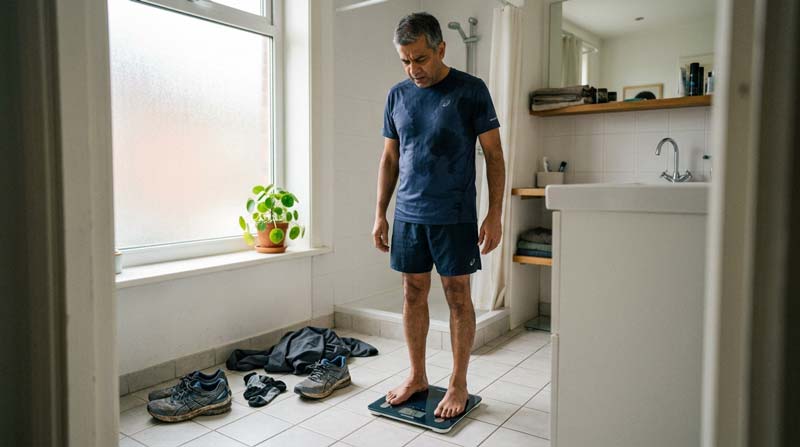
Why the scale may stay still
Here is where most people quietly give up. They train consistently for two months, step on the scale, and see almost nothing. The conclusion feels obvious. It is also wrong.
Start with what the research actually promises. Around 150 minutes of activity a week produces roughly 2 to 3 kg of weight loss. Reaching 225 to 420 minutes weekly lifts that to about 5 to 7.5 kg. Those figures are averages across whole groups, not promises made to individuals.
Individual results scatter widely around any average. Even under supervision, with attendance recorded, people respond very differently to identical programmes.
The body also answers back. On average, people offset roughly half of the calories they burn through exercise. That compensation runs to around 1,000 calories a week, and it happens whatever the dose. Frequency, duration, and intensity make surprisingly little difference.
Compensation arrives in two forms. Some of it is behavioural, meaning conscious decisions such as eating more. The rest is automatic, happening through changes in metabolic rate that nobody chooses.
Part of the answer sits in movement nobody thinks about. Fidgeting, standing, walking to the shops and general pottering all burn energy. In most people, including regular exercisers, that accounts for more daily energy use than workouts do. It also varies by as much as 2,000 calories a day between individuals.
After a demanding session, that background activity often drops without any decision. Researchers describe this as a constrained energy budget, where the body defends its total output. Consequently, adding exercise does not simply add to everything you already burn.
Appetite behaves less predictably than most people assume. Hard exercise tends to suppress hunger briefly, sometimes for a day or two afterwards. Hunger hormones shift, with ghrelin falling and appetite-suppressing signals rising. Over months, though, some people eat considerably more while others barely change at all.
Resting metabolism varies too. Lean mass and fat mass together explain around 70% of the difference between people. For any given body composition, the remainder still swings by roughly 300 calories a day.
Short-term readings carry a separate problem. Muscles store 350 to 700 g of carbohydrate as glycogen, with another 80 to 100 g in the liver. Every gram of that glycogen binds around 2.7 grams of water with it. So training, rest days and yesterday’s meals all move the number. None of that reflects fat gained or fat lost.
Lean tissue complicates things further. A popular claim holds that resistance training adds enough muscle to raise resting metabolism substantially. The evidence is considerably weaker than the claim. What exercise does reliably is limit the lean tissue normally lost alongside fat.
Time changes the arithmetic as well. As people lose weight, energy expenditure falls through adaptive slowing and through the loss of active tissue. An initial deficit therefore shrinks the longer it runs.
Sleep sits quietly behind much of this. Short sleep alters the hormones governing hunger and pushes appetite upward.
None of this breaks the rules of energy balance. Energy in and energy out still govern body weight. However, both sides of that equation move when you change one of them. Exercise without weight loss is what a responsive body looks like, not a broken one. That same responsiveness explains why exercise without weight loss appears so often in careful trials. A still scale is evidence about energy, not evidence about health.
What body weight still tells us
Rejecting the scale entirely is the other easy mistake. Body weight is a crude measure. It is not a useless one.
BMI is the usual shorthand in this argument. It stands for body mass index, which compares your weight against your height. It works across sexes and ethnic groups as a height-independent number. Both low and high values link to higher death rates. Even so, one 15-year study of 30,000 people found BMI predicted cardiovascular death better than measured total body fat.
That does not make it accurate for any given individual. It misreads muscular people as heavier than their health warrants. Roughly 29% of people classed as obese by BMI are metabolically healthy. Meanwhile, about 30% of people at so-called normal weight show poor heart and blood sugar markers. Those labels also describe a moment in time rather than a permanent state.
Ethnicity complicates it further. The link between BMI and death rates runs stronger in White Americans than in African Americans. Abdominal fat also distributes differently between groups. A single cut-off applied to everybody will therefore misclassify some of them.
Distribution turns out to matter more than the total. Waist circumference is now treated as a vital sign in clinical practice. It captures both the fat under the skin and the deeper fat around the organs. Higher amounts of both are linked with a 20% to 80% greater risk of several problems. Those include high blood pressure, raised blood fats and metabolic syndrome. Metabolic syndrome means a cluster of risk factors that tend to appear together.
Visceral fat is not simply stored energy sitting quietly. It releases free fatty acids and inflammatory signals into the bloodstream. People carrying a lot of it, whatever their BMI, tend to show insulin resistance and raised triglycerides. HDL cholesterol runs low. The LDL particles linked with artery disease become small and dense.
Waist reflects deep abdominal fat better than the waist-to-hip ratio does. That ratio still has its own logic, though. A high figure can mean plenty of abdominal fat, or relatively little muscle around the hips.
Hip circumference adds something different again. It mostly captures fat and muscle around the buttocks and thighs. Larger hips are independently associated with lower rates of death, heart attack and diabetes.
None of this crowns a winner. No conclusive evidence shows that waist measurements predict early death better than BMI does. Yet waist and the waist-to-hip ratio still predict death when added to a model already containing BMI. That means they capture different parts of the same risk, not competing for the same one.
Waist therefore works best alongside BMI rather than instead of it. Because waist tracks abdominal fat, it can shift during exercise without weight loss. So the honest position is unglamorous. Every one of these measures is incomplete, and each reveals something the others miss. Judging exercise progress by body weight alone throws away most of the available information.
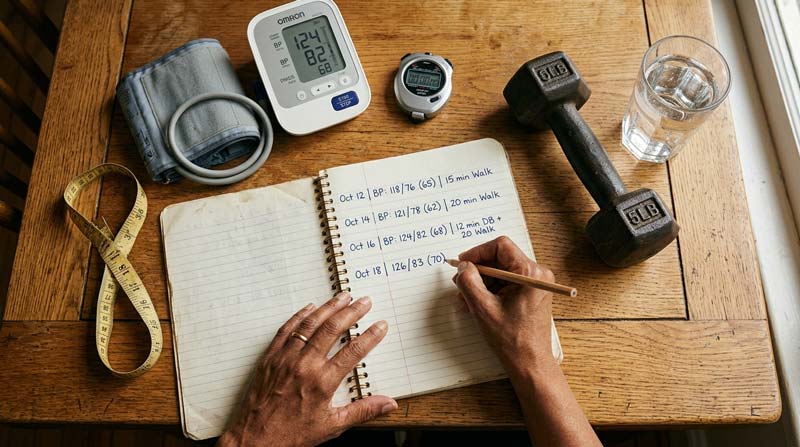
How to track exercise without weight loss
Replacing one number with eight numbers is not progress. The useful approach is picking measures that match what you actually want.
Every measurement wobbles. The real question is whether that wobble is smaller than the change you hope to see. A tool that swings by 10% cannot reliably detect a 5% improvement. That single idea decides which measures deserve your attention.
Two different properties matter here, and people constantly confuse them. Validity means the device agrees with a proper reference measurement. Reliability means it gives the same answer twice under the same conditions. A device can be reliably wrong.
Match the measure to the goal. Exercise without weight loss improves different systems at different speeds. Fitness moves within weeks. Waist takes longer. Bone takes longer still.
For heart and lung capacity, maximal oxygen uptake is the standard measure. It reflects how much oxygen the body can use at full effort. Most people will use a repeatable field test instead, run under identical conditions each time.
Strength is the most underrated entry on the list. Low muscular strength in late adolescence is associated with early death, comparably to BMI or blood pressure. Grip strength alone tracks with mortality and with the risk of falling. It costs almost nothing to measure, and it responds to training regardless of body weight. Repeated over time, it also shows whether a programme is genuinely working.
Waist is the cheapest useful measure you can take at home. Use a tape that does not stretch, and keep it horizontal to the body. Apply enough tension to sit snug without squashing the fat underneath. Take two readings in rotation rather than one. Done properly, circumference measures land within roughly 2.5% to 4% of laboratory methods.
More elaborate options exist, including skinfold callipers, bioelectrical impedance, ultrasound and DXA scanning. DXA stands for dual-energy X-ray absorptiometry, a scan separating fat, lean tissue and bone. Few people need them, and none replace a tape measure for tracking a trend.
Blood pressure needs similar discipline. Sit quietly in a calm room for five minutes first. Take more than one reading, and record the conditions each time.
Blood glucose and blood fats belong on the list too. Continuous glucose monitors, worn on the skin, track blood sugar between finger-prick tests. Their accuracy is judged by a measure called mean absolute relative difference. Commercial systems meet international standards, although readings still differ from true blood values. Blood fats need a laboratory test, so they sit naturally alongside other periodic checks.
Sleep and mood are easier to track than people expect. In adults, self-reported sleep quality can be as reliable as laboratory measurement. Mood suits the same honest approach, recorded consistently rather than obsessively. Daily function counts as well, meaning ordinary tasks that used to feel harder.
Wearables deserve a warning. The evidence on them is substantial, covering eight systematic reviews and 218 studies of over 7,700 people. Wrist devices underestimate step counts by around 9% on average. Some brands undercount consistently, while others vary far more from reading to reading.
Accuracy depends on things nobody mentions in the advertising. Algorithms differ between manufacturers. Age, body size and skin tone all affect the readings. So do where you wear it, how long you wear it, and even temperature and humidity.
Heart rate is where this matters most. One assessment of a popular tracker found an average error of about 6 beats per minute. Individual readings, though, ranged from 28 beats too low to 17 beats too high. Since calorie estimates are built on heart rate, those errors travel straight into the numbers people trust.
There is a cost to all this counting. Self-tracking only works while it continues, so it easily becomes constant recordkeeping. Fitness and healthy-eating apps have been shown to encourage addictive tracking and to harm body image in young people. Tracking exercise without weight loss is meant to restore perspective, not to replace one obsession with several. Measured too often, every one of these numbers becomes noise rather than signal.

When weight loss still matters
Everything so far argues against treating weight as the only measure. It does not argue that weight never matters. For certain goals, the amount of fat carried is the thing actually being treated.
The thresholds are lower than most people assume. Losing just 2% to 3% of body weight already improves cardiovascular risk factors. Holding a 3% to 5% loss lowers blood glucose and HbA1c. For someone weighing 90 kg, that upper figure is under 5 kg.
In type 2 diabetes, the effect becomes more direct. Sustained losses of 5% to 7% reduce insulin resistance and improve blood glucose control. For some people, that translates into a lower medication dose. Avoiding excess weight gain matters in type 1 diabetes too, since it keeps insulin working better.
Joints respond to load, and load depends partly on body weight. Losing as little as 4.5 kg reduces knee arthritis pain. Less weight means less force travelling through the joint with every step. Keeping weight reasonable also lowers the risk of developing arthritis in the first place.
Sleep is affected as well. Sleep disorders affect around 25% of adults generally, rising to about 45% among people with obesity. A 10% weight gain can raise the risk of disordered breathing at night sixfold. An equivalent loss improves severity by more than 20%.
Waist deserves separate mention here. Visceral fat is an independent risk factor for heart and metabolic disease. Waist predicts it better than any other simple measure. Programmes combining exercise with periods of fasting reduce both.
Bigger losses buy something different again. In adults with type 2 diabetes, intensive lifestyle programmes improved risk factors across the board. However, reduced cardiovascular events showed up mainly among those losing at least 10%. That analysis reported 21% lower cardiovascular disease incidence in the group that achieved it. It examined existing trial data afterwards, so it shows association rather than proof.
This is also where diet and exercise part company. For shifting weight itself, food does most of the work. Combining the two beats dieting alone over the long term. Combined programmes also improve body composition, inflammation, blood sugar markers and blood fats more than either tool alone.
The advantage is real but not unlimited. Adding exercise to a diet typically produces around 20% more weight loss. That edge shrinks once calorie restriction becomes severe. Matched for the same energy deficit, food and activity produce comparable results.
So the two positions were never truly opposed. Exercise without weight loss improves health, and losing excess fat improves health. What differs is the goal being served and the measure that answers it. Someone chasing blood pressure, fitness or mood is not failing when the scale holds still. Someone with knee pain or disturbed breathing at night has reason to watch weight specifically.
Judged properly, exercise without weight loss and deliberate fat loss answer different questions. Progress a scale cannot see is still progress. A risk a scale cannot see is still a risk.
Sources
- Atkinson, G., & Nevill, A. M. (1998). Statistical methods for assessing measurement error (reliability) in variables relevant to sports medicine. Sports Medicine, 26, 217-238.
- Benedetto S, Caldato C, Bazzan E, et al. Assessment of the fitbit charge 2 for monitoring heart rate. PLoS One 2018;13:e0192691.
- Cornelissen VA, Smart NA. Exercise training for blood pressure: A systematic review and meta-analysis. J Am Hear Assoc. 2013;2: e004473
- Donnelly JE, Blair SN, Jakicic JM, et al. American College of Sports Medicine position stand. Appropriate physical activity intervention strategies for weight loss and prevention of weight regain for adults. Med Sci Sports Exerc. 2009;41(2):459–71.
- Duncan GE, Perri MG, Theriaque DW, et al. Exercise training, without weight loss, increases insulin sensitivity and postheparin plasma lipase activity in previously sedentary adults. Diabetes Care. 2003;26:557–562.
- Flack KD, Ufholz K, Johnson L, Fitzgerald JS, Roemmich JN. Energy compensation in response to aerobic exercise training in overweight adults. Am J Physiol Regul Integr Comp Physiol. 2018;315(4):R619–26.
- Fox CS, Massaro JM, Hoffmann U, et al. Abdominal visceral and subcutaneous adipose tissue compartments: association with metabolic risk factors in the Framingham Heart Study. Circulation. 2007;116(1):39‐
- Jensen MD, Ryan DH, Apovian CM, et al. 2013 AHA/ACC/TOS guideline for the management of overweight and obesity in adults: a report of the American College of Cardiology/American Heart Association Task Force on Practice Guidelines and The Obesity Society. J Am Coll Cardio. 2014;63(25 Pt B):2985–3023.
- Knuiman P, Hopman MTE, Mensink M. Glycogen availability and skeletal muscle adaptations with endurance and resistance exercise. Nutr Metab (Lond). 2015;12(1):59.
- Kodama S, Saito K, Tanaka S, et al. Cardiorespiratory fitness as a quantitative predictor of all-cause mortality and cardiovascular events in healthy men and women: a meta-analysis. JAMA. 2009;301(19):2024–35.
- Look AHEAD Research Group , Gregg EW, Jakicic JM, et al.. Association of the magnitude of weight loss and changes in physical fitness with long-term cardiovascular disease outcomes in overweight or obese people with type 2 diabetes: A post-hoc analysis of the Look AHEAD randomised clinical trial. Lancet Diabetes Endocrinol 2016; 4: 913–921
- Lupton D. The diverse domains of quantified selves: self-tracking modes and dataveillance. Econ Soc. 2016;45(1):101–122.
- Melanson EL, Keadle SK, Donnelly JE, et al. Resistance to exercise-induced weight loss: compensatory behavioral adaptations. Med Sci Sports Exerc. 2013;45:1600–1609.
- Messier, S.P. et al. 2004. Exercise and dietary weight loss in overweight and obese older adults with knee osteoarthritis: the Arthritis, Diet, and Activity Promotion Trial. Arthritis Rheum. May;50(5):1501-10.
- Ohkawara K, Tanaka S, Miyachi M, Ishikawa-Takata K, Tabata I. A dose-response relation between aerobic exercise and visceral fat reduction: systematic review of clinical trials. Int J Obes (Lond) 2007;31:1786–97.
- Oppert JM, Bellicha A, van Baak MA, et al. Exercise training in the management of overweight and obesity in adults: synthesis of the evidence and recommendations from the European Association for the Study of Obesity Physical Activity Working Group. Obes Rev. 2021;22(Suppl 4):e13273.
- Ortega FB, Silventoinen K, Tynelius P, Rasmussen F. Muscular strength in male adolescents and premature death: cohort study of one million participants. BMJ. 2012;345:e7279.
- Ortega FB, Sui X, Lavine CJ, Blair SN. Body mass index, the most widely used but also widely criticized index: would a criterion standard measure of total body fat be a better predictor of cardiovascular disease mortality? Mayo Clin Proc. 2016;91(4):443–55.
- Pischon T, Boeing H, Hoffmann K, Bergmann M, Schulze MB, Overvad K, van der Schouw YT, Spencer E, Moons KGM, Tjønneland A, et al. General and abdominal adiposity and risk of death in Europe. N Engl J Med. 2008;359:2105–2120.
- Pontzer H. Constrained total energy expenditure and the evolutionary biology of energy balance. Exerc Sport Sci Rev. 2015;43:110–116.
- Raguso C.A., Kyle U., Kossovsky M.P., Roynette C., Paoloni-Giacobino A., Hans D., et al. A 3-year longitudinal study on body composition changes in the elderly: role of physical exercise. Clin. Nutr. 2006;25(4):573–580.
- Sui X, LaMonte MJ, Laditka JN, et al. Cardiorespiratory fitness and adiposity as mortality predictors in older adults. JAMA. 2007;298(21):2507‐
- Tomiyama AJ, Hunger JM, Nguyen-Cuu J, Wells C. Misclassification of cardiometabolic health when using body mass index categories in NHANES 2005–2012. Int J Obes. 2016;40(5):883–6.
- Wu T, et al. Long‐term effectiveness of diet‐plus‐exercise interventions vs. diet‐only interventions for weight loss: a meta‐analysis. Obes Rev. 2009;10(3):313–323.