


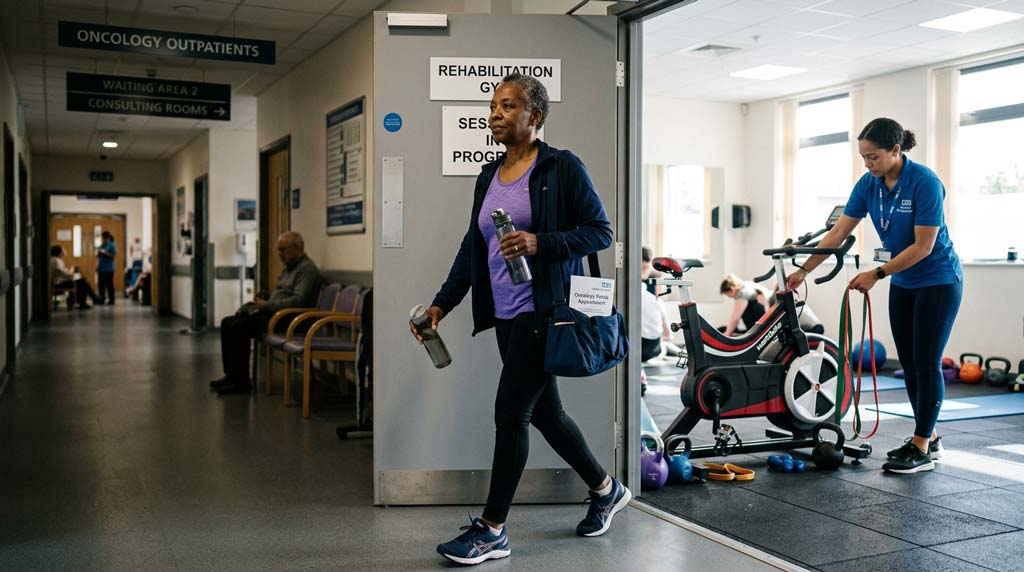
Exercise after cancer is widely recommended to ease fatigue, protect physical function and improve quality of life. Its effect on survival is much harder to pin down.
Cancer ranks among the leading causes of death worldwide. Treatment with curative intent (aimed at removing the disease entirely) does not always end the threat. Even after surgery and chemotherapy, the disease returns in 20% to 40% of patients, a problem known as recurrence.
Most evidence for a survival benefit has come from observational studies (research that tracks people’s habits without assigning them). Across many cancer types, these studies consistently link physical activity after diagnosis with fewer deaths. Pooled analyses report roughly 20% to 30% fewer cancer deaths among physically active survivors.
However, observation alone cannot prove cause. People who feel well enough to exercise may already have better prospects. This problem, called reverse causation, means the outcome may be shaping the behaviour. Hidden differences between active and inactive people, known as confounding, can distort the picture too.
Randomised controlled trials (studies that assign people to groups by chance) are designed to remove these distortions. Yet randomised evidence on recurrence and survival has long been limited.
A systematic review and meta-analysis published in the British Journal of Sports Medicine set out to close that gap. In practice, it gathered every suitable trial and pooled their results into one analysis. The researchers combined 21 randomised trials involving 8,449 adults with cancer.
To the authors’ knowledge, it is the first such analysis of trials to focus on survival. Across those trials, structured exercise (planned and supervised training programmes) was linked with lower death rates and less cancer returning.
Yet a pooled result is only as broad as the people and programmes behind it. The trials differed in the cancers they studied, the exercise they prescribed and how faithfully people kept going. Some outcomes shifted clearly, while others barely moved. Together, those details shape what the case for exercise after cancer can and cannot yet claim.
Inside the 21 Trials and the People Who Took Part
The researchers screened more than 12,000 records to find trials that met their standards. Only 21 qualified. Each one randomly assigned adults with confirmed cancer to structured exercise or to a comparison group. Two reviewers assessed each study independently, and a third resolved any disagreements.
Programmes had to be structured and supervised, using aerobic training, resistance training or both. Aerobic training raises the heart rate over sustained periods, while resistance training builds strength against a load. Comparison groups received usual care, health education or medication alone. In addition, every trial had to report at least one survival or tumour outcome. Trials focused only on short-term rehabilitation were excluded.
Canada and Germany hosted three trials each, while the United States and the Netherlands hosted two each. Others ran in Australia, Japan, India, France, Sweden, Denmark, Portugal, Italy and Hong Kong. One colon cancer trial, called CHALLENGE, recruited across six countries and was led by Canada and Australia.
Women made up 88% of the 8,449 participants. Breast cancer dominated, appearing in 11 trials and accounting for 75% of participants. Colorectal (bowel) and pancreatic cancer came next. Smaller trials covered lymphoma (cancer of the lymph system), multiple myeloma (a bone marrow cancer) and ovarian cancer. Others studied lung and oesophageal (food pipe) cancer.
The average participant was around 54 years old, although typical ages ranged from 47 to 76 across trials. Follow-up averaged about 64 months, or just over five years. However, individual trials ranged from roughly two months to more than eight years.
Timing varied just as widely, so exercise after cancer was tested at almost every stage of care:
- Nine trials started as chemotherapy began, whether before surgery, after surgery or as first treatment for advanced disease.
- Five enrolled people after surgery or once treatment had finished.
- Two enrolled people before the treatment given ahead of surgery.
- Three began within 7 to 60 days of diagnosis or starting treatment.
- One enrolled people one to two years after diagnosis, and another an average of 25 months after an advanced diagnosis.
The programmes themselves were far from identical. Some used high-intensity interval training (short bursts of hard effort separated by recovery). Others used Tai Chi, for example in people with advanced lung cancer. Yoga also appeared alongside conventional exercises in a large breast cancer trial.
Several programmes bundled exercise with diet or weight-loss support. One trial, for instance, delivered a telephone-based weight-loss programme to women taking letrozole (a breast cancer drug). As a result, the evidence on exercise after cancer blends pure training programmes with wider lifestyle programmes.
What Exercise After Cancer Meant for Survival and Recurrence
People in structured exercise programmes had a 23% lower risk of death during follow-up than those in comparison groups. That figure came from 11 trials involving 3,828 people. Three related measures pointed the same way:
- Cancer returning, a second cancer or death: 17% lower risk across seven trials and 5,077 people.
- Death from any cause by the end of each trial: 18% lower risk across 13 trials and 5,492 people.
- Death from cancer itself: 26% lower risk across six trials and 2,048 people.
Each figure compares the risk in one group with the other, known as relative risk. A 23% lower risk therefore does not mean 23 extra survivors in every 100 people. The actual number depends on how many deaths occurred in each group. The pooled results do not report that absolute difference (the real change in a person’s chances).
The benefit of exercise after cancer held up when the analysis was tested in several ways. In CHALLENGE, a major contributor, exercise following colon cancer chemotherapy was linked with a 37% lower risk of death. Even so, removing that trial, or any other single trial, did not overturn the pooled result. Results were also broadly consistent between trials, especially for deaths from cancer.
The better-designed trials showed the stronger effect. Trials at low risk of bias (design flaws that can skew results) showed a 29% lower risk of death. By contrast, trials with more design concerns showed an 11% reduction that could have been chance.
One statistical test suggested that small studies with favourable results might be over-represented. After adjusting for that possibility, the survival benefit narrowed to 17% and could no longer fully rule out chance. Overall, the main findings were rated moderate certainty using a standard system for grading confidence in evidence. The rating was lowered mainly because the trials, combined, were still too small for high confidence.
Two shorter-term measures did not shift. The time before advanced cancer worsened showed no clear difference across five trials. Neither did the chance of pre-surgery treatment clearing all invasive cancer, across another five trials. Both measures rested on few people and few events, so certainty was low.
The gains from exercise after cancer appeared in outcomes that build up over years. According to the authors, long-term survival captures the combined effects of recurrence, other causes of death and completing treatment. Tumour progression and response, by contrast, depend heavily on scan timing, treatment setting and small trial sizes.
The size of the survival benefit also matches earlier observational research. A review of 71 cohort studies (groups followed over time) found 17% to 22% fewer cancer deaths in active people. Neither type of study settles the question on its own. The authors argue that when both agree, the case for a genuine benefit becomes stronger.
The Type of Exercise After Cancer That Stood Out
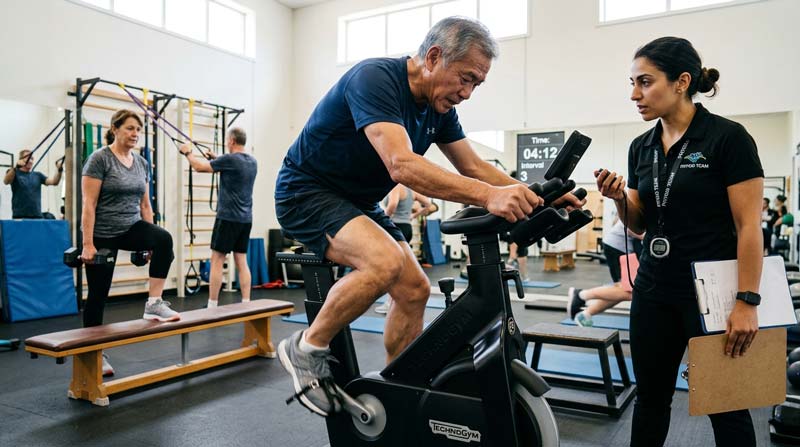
Aerobic training alone was linked with a 29% lower risk of death across five trials. Combining aerobic and resistance training produced a similar 25% reduction across seven trials. OptiTrain, for example, paired resistance or aerobic training with interval training during breast cancer chemotherapy. Aerobic work therefore features in both types of programme linked with longer survival.
Resistance training alone showed no clear difference in survival. However, that result came from a single trial of 129 people. A trial of that size is too small to rule a benefit in or out. Moreover, none of the differences between exercise types was statistically strong enough to confirm.
Resistance training still preserves lean mass (muscle and other non-fat tissue). It also helps counter sarcopenia (loss of muscle mass and strength). Its wider effects on immunity and metabolism are still being compared with those of aerobic exercise.
The benefit of exercise after cancer also appeared larger among people who completed more of their programme. Adherence describes how much of the planned exercise people actually did. When the analysis focused on high adherence, meaning at least 70% of the programme, the results strengthened:
- Risk of death: 28% lower, against 23% across all participants.
- Risk of recurrence, a second cancer or death: 29% lower, against 17%.
- Risk of death from any cause by trial end: 20% lower, against 18%.
Adherence also differed sharply between trials. Participants in CHALLENGE followed their programme closely, while adherence elsewhere varied widely. That variation may help explain why individual trials have produced mixed and sometimes contradictory results.
However, people who stick with a programme may differ in other ways. They may begin with a better outlook or healthier habits, which could inflate the apparent benefit. For that reason, the authors treat this analysis as exploratory (useful for generating ideas that still need testing).
The best dose and timing also remain unknown. Programmes differed in type, supervision, intensity and length. Meanwhile, few trials objectively measured completed exercise. As a result, no specific weekly amount of exercise after cancer can yet be tied to longer survival.
How Exercise May Influence Cancer Inside the Body
The review measured survival and recurrence, while the biology behind those results lay outside its scope. Instead, the authors drew on wider research to suggest how exercise after cancer might influence the disease. These explanations are proposed pathways (possible routes from cause to effect) that the pooled trials did not test.
Immune cells on the move
Exercise increases the release of cytotoxic T cells and natural killer cells, immune cells that kill abnormal cells. It also helps these cells enter tumours. As a result, a tumour may shift from ‘cold’ (ignored by the immune system) to ‘hot’ (recognised and attacked). A ‘hot’ tumour may also respond better to immunotherapy (treatment that helps the immune system fight cancer).
Steadier blood flow inside tumours
Exercise appears to normalise blood flow within tumours, which reduces acidity. In turn, improved flow may help cancer drugs reach tumour cells. The authors link these blood flow and immune effects to aerobic exercise in particular.
Lower sex hormone levels
Exercise can modestly reduce circulating oestrogens and androgens (sex hormones such as testosterone). It can also raise sex hormone-binding globulin, a protein that binds these hormones and limits their activity. Higher oestrogen and androgen levels after menopause are linked with greater breast cancer risk. Since most participants were women with breast cancer, this pathway may be especially relevant. If so, part of the benefit of exercise after cancer in these trials may work through hormones.
Competition for fuel
Working muscles take up and burn more glucose (blood sugar). That may leave less fuel for tumour cells. It may also quieten chemical signals inside cells that drive tumour growth. Even so, evidence linking insulin itself to oestrogen-driven breast cancer appears weak and imprecise. Its role likely varies by context.
Repair and chemical messengers
Exercise also increases DNA repair enzymes, proteins that fix damage to genetic material. This may reduce mutations (genetic errors) and make tumours less aggressive. Meanwhile, working muscles release myokines (chemical messengers) that may act against tumours and influence metabolism across the body.
Where the Evidence on Exercise After Cancer Falls Short
In one lymphoma trial, 42% of the comparison group crossed over to supervised exercise. Once that happens, the two groups become harder to tell apart. In another trial, focused on diet and breast cancer, comparison participants also adopted healthier habits. Both problems shrink the measured difference, so the true benefit of exercise after cancer could be larger than reported.
Another force may push in the opposite direction. Exercise trials tend to attract volunteers who are healthier, more highly educated and better off than typical patients. Consequently, adherence and benefit in everyday care may be lower than the trials suggest.
The makeup of the trials also leaves three groups thinly covered:
- Men, who formed a small minority of participants.
- People with cancers other than breast and colorectal cancer, who together made up only around one in seven participants.
- People with advanced cancer, represented by four survival trials involving 812 people.
For advanced cancer, the estimated benefit resembled that of early-stage trials, although uncertainty was far greater. Rapid progression and heavy symptoms can make regular exercise hard to sustain. In one advanced pancreatic cancer trial, substantial dropout further complicated the results. Findings on exercise after cancer therefore apply most securely to earlier-stage disease.
Participants also knew which group they were in. Blinding (keeping people unaware of their group) is not possible in exercise trials, so that knowledge could change other behaviours. Survival, however, is recorded in registries and medical records, which are less open to bias.
Finally, several trials were designed around other goals and examined survival afterwards. One advanced lung cancer trial, for instance, set out to improve sleep quality.
Making Structured Exercise Part of Cancer Care
The American Society of Clinical Oncology strongly recommends exercise to reduce fatigue and functional decline during cancer treatment. Yet it has been cautious about promoting exercise as a way to control cancer itself.
An international roundtable behind exercise guidelines for cancer survivors reached a similar view. In both cases, randomised evidence on recurrence and survival had been limited. A global expert panel reviewing bowel cancer rated the link between activity and survival as limited-suggestive (promising, yet unproven).
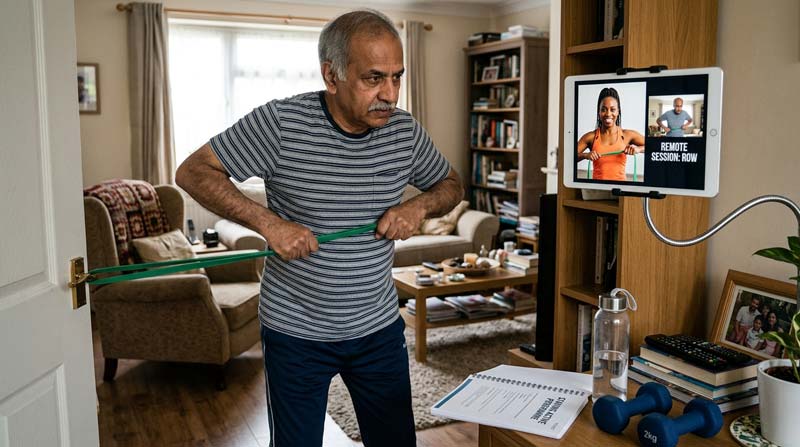
The review’s authors propose a wider role for structured exercise as an adjuvant therapy. An adjuvant therapy is one added alongside the main cancer treatment. In their view, clinicians can reasonably recommend structured exercise as part of cancer care. They see the strongest case for exercise after cancer in early-stage, curative settings where sustained training is achievable.
Their proposal also comes with conditions on how programmes are built:
- Supervision close enough to keep people engaged through treatment.
- Individualised programmes matched to the person.
- Progression that adapts to symptoms, building up as the body allows.
- Behavioural support that helps people keep going.
Several questions still limit routine use. Trials need to test survival as their main goal and to reach well beyond breast cancer. They also need objective measures of prescribed and completed exercise, plus close tracking of activity in comparison groups.
Effects by stage and by functional status (how well a person manages daily life) still need defining. So do the most effective type, dose and timing of training. To reach under-served patients, the authors call for home-based programmes, practical trial designs and culturally tailored recruitment.
Exercise in cancer care has mainly been valued for helping people feel and function better. Pooled randomised trials link it with fewer deaths and less recurrence, at moderate certainty. That evidence comes mostly from women with early-stage breast cancer who volunteered and kept training.
Within those limits, exercise after cancer is linked with outcomes traditionally associated with medical treatment itself. Unanswered questions include who benefits most, which programmes work best, and how much exercise is enough.
Sources
- Anandavadivelan P, Mijwel S, Wiklander M, et al. Five-year follow-up of the OptiTrain trial on concurrent resistance and high-intensity interval training during chemotherapy for patients with breast cancer. Sci Rep 2024;14:15333.
- Berrino F, Villarini A, Gargano G, et al. The Effect of Diet on Breast Cancer Recurrence: The DIANA-5 Randomized Trial. Clin Cancer Res 2024;30:965–74.
- Bower JE, Lacchetti C, Alici Y, et al. Management of Fatigue in Adult Survivors of Cancer: ASCO-Society for Integrative Oncology Guideline Update. J Clin Oncol 2024;42:2456–87.
- Bray F, Laversanne M, Sung H, et al. Global cancer statistics 2022: GLOBOCAN estimates of incidence and mortality worldwide for 36 cancers in 185 countries. CA Cancer J Clin 2024;74:229–63.
- Brunson A, Wun T, Abrahão R, et al. Metastatic Recurrence Among Adolescents and Young Adults With Cancer. JAMA Oncol 2026;12:75–83.
- Campbell KL, Winters-Stone KM, Wiskemann J, et al. Exercise Guidelines for Cancer Survivors: Consensus Statement from International Multidisciplinary Roundtable. Med Sci Sports Exerc 2019;51:2375–90.
- Courneya KS, Friedenreich CM, Franco-Villalobos C, et al. Effects of supervised exercise on progression-free survival in lymphoma patients: an exploratory follow-up of the HELP Trial. Cancer Causes Control 2015;26:269–76.
- Courneya KS, Vardy JL, O’Callaghan CJ, et al. Structured Exercise after Adjuvant Chemotherapy for Colon Cancer. N Engl J Med 2025;393:13–25.
- Egger M, Smith GD, Schneider M, et al. Bias in meta-analysis detected by a simple, graphical test. BMJ 1997;315:629–34.
- Esteves M, Monteiro MP, Duarte JA. The Effects of Physical Exercise on Tumor Vasculature: Systematic Review and Meta-analysis. Int J Sports Med 2021;42:1237–49.
- Goodwin PJ, Segal RJ, Vallis M, et al. Randomized trial of a telephone-based weight loss intervention in postmenopausal women with breast cancer receiving letrozole: the LISA trial. J Clin Oncol 2014;32:2231–9.
- Guyatt GH, Oxman AD, Vist GE, et al. GRADE: an emerging consensus on rating quality of evidence and strength of recommendations. BMJ 2008;336:924–6.
- Hapuarachi B, Danson S, Wadsley J, et al. Exercise to transform tumours from cold to hot and improve immunotherapy responsiveness. Front Immunol 2023;14:1335256.
- Leitner BP, Fosam AE, Lee WD, et al. Precancer exercise capacity and metabolism during tumor development coordinate the skeletal muscle-tumor metabolic competition. Proc Natl Acad Sci U S A 2025;122:e2508707122.
- Li T, Wei S, Shi Y, et al. The dose-response effect of physical activity on cancer mortality: findings from 71 prospective cohort studies. Br J Sports Med 2016;50:339–45.
- Ligibel JA, Bohlke K, May AM, et al. Exercise, Diet, and Weight Management During Cancer Treatment: ASCO Guideline. J Clin Oncol 2022;40:2491–507.
- Markozannes G, Becerra-Tomás N, Cariolou M, et al. Post-diagnosis physical activity and sedentary behaviour and colorectal cancer prognosis: A Global Cancer Update Programme (CUP Global) systematic literature review and meta-analysis. Int J Cancer 2024;155:426–44.
- Neuzillet C, Bouché O, Tournigand C, et al. Effect of Adapted Physical Activity in Patients With Advanced Pancreatic Cancer: The APACaP GERCOR Randomized Trial. J Natl Compr Canc Netw 2023;21:1234–42.
- Swain CTV, Drummond AE, Boing L, et al. Linking Physical Activity to Breast Cancer via Sex Hormones, Part 1: The Effect of Physical Activity on Sex Steroid Hormones. Cancer Epidemiol Biomarkers Prev 2022;31:16–27.
- Takemura N, Cheung DST, Fong DYT, et al. Effectiveness of Aerobic Exercise and Tai Chi Interventions on Sleep Quality in Patients With Advanced Lung Cancer: A Randomized Clinical Trial. JAMA Oncol 2024;10:176–84.
- Ungvari Z, Fekete M, Varga P, et al. Exercise and survival benefit in cancer patients: evidence from a comprehensive meta-analysis. Geroscience 2025;47:5235–55.
- Zhang XN, Liang ZD, Li MD. Comparison of different exercise modalities on chronic inflammation and immune function in cancer survivors: a systematic review with network, dose–response, and Bayesian meta-analyses. Support Care Cancer 2025;33.
- Zhu C, Ma H, He A, et al. Exercise in cancer prevention and anticancer therapy: Efficacy, molecular mechanisms and clinical information. Cancer Lett 2022;544:215814.