



Exercise variety matters more than the total minutes you clock each week. A groundbreaking study tracking 111,467 people over three decades has revealed something most fitness recommendations miss entirely. Doing multiple types of physical activity protects against death in ways that simply doing more of one activity cannot match.
The research, published in BMJ Medicine, followed 70,725 women from the Nurses’ Health Study and 40,742 men from the Health Professionals Follow-Up Study from 1986 through to 2020. Participants reported their physical activities every two years across up to 15 assessment cycles.
Researchers measured walking, jogging, running, cycling, swimming, tennis, stair climbing, rowing, and resistance training. They then tracked who died and the causes of death, accumulating 2,431,318 person-years of observation (the total years of follow-up for all participants).
The findings challenge how we think about exercise prescriptions. People in the highest exercise variety group had 19% lower all-cause mortality (death from any cause) than those in the lowest group. This protection persisted even after accounting for total physical activity levels. Someone doing three different activities gained more protection than someone doing the same total volume in a single activity.
The variety effect wasn’t modest. Compared to people engaging in the fewest activity types, those with the greatest variety showed 13% to 41% lower mortality across cardiovascular disease, cancer, respiratory disease, and other causes. Each activity produced different dose-response patterns.
Benefits from walking plateaued around 7.5 MET hours per week (metabolic equivalent of task, a measure of energy expenditure). Tennis peaked at 5 MET hours weekly. Running showed no plateau at all, with benefits continuing as intensity increased.
Swimming produced the study’s most surprising finding. Despite being promoted as an ideal form of exercise, higher swimming volumes were not associated with lower mortality. The hazard ratio (measure of death risk) remained at 1.01 regardless of how much people swam. This contrasted sharply with activities like tennis, which reduced mortality risk by 15%, or walking, which cut risk by 17% in the highest category.
The implications stretch beyond academic interest. Current physical activity guidelines emphasise total weekly minutes, without addressing diversity in activity types. Yet this study suggests that someone walking 150 minutes weekly, whilst also lifting weights and playing tennis twice monthly, may gain more longevity benefit than someone running 300 minutes weekly and doing nothing else. The combination matters.
Respiratory disease mortality showed the most dramatic response to variety. People in the highest variety group experienced 41% lower respiratory death risk compared to the lowest group. Cardiovascular deaths dropped 17%. Cancer mortality fell 13%. The protection extended across causes, suggesting a variety of triggers and biological mechanisms that single-activity engagement cannot fully activate.
Individual activities revealed distinct mortality patterns when examined separately. Walking in the highest group was linked to 17% lower all-cause mortality. Jogging showed 11% reduction. Running delivered 13% lower risk. Tennis or racquet sports produced 15% reduction. Stair climbing, despite requiring minimal time, is associated with a 10% lower mortality rate. Each activity contributed uniquely.
The study’s scope exceeded previous research dramatically. Earlier investigations typically measured activity once at baseline, missing how patterns evolve over decades. This analysis captured repeated assessments across 30 years, averaging 13 measurement cycles per participant. It revealed that sustained variety, not sporadic dabbling, drives the mortality benefit.
Having thoroughly examined the study and its remarkable dataset, I’ll walk you through why different activities produce different effects, where benefits plateau for each type, and how variety operates independently from total volume.
We’ll explore the swimming anomaly, the respiratory disease findings, and what the joint analysis of volume and variety reveals about constructing an optimal activity portfolio. The data offer practical answers about how much of each activity is sufficient before returns diminish.
Why Exercise Variety Matters More Than You Think
Most people chase total weekly minutes. Hit 150 minutes of moderate activity or 75 minutes of vigorous activity, tick the box, job done. The data tells a different story.
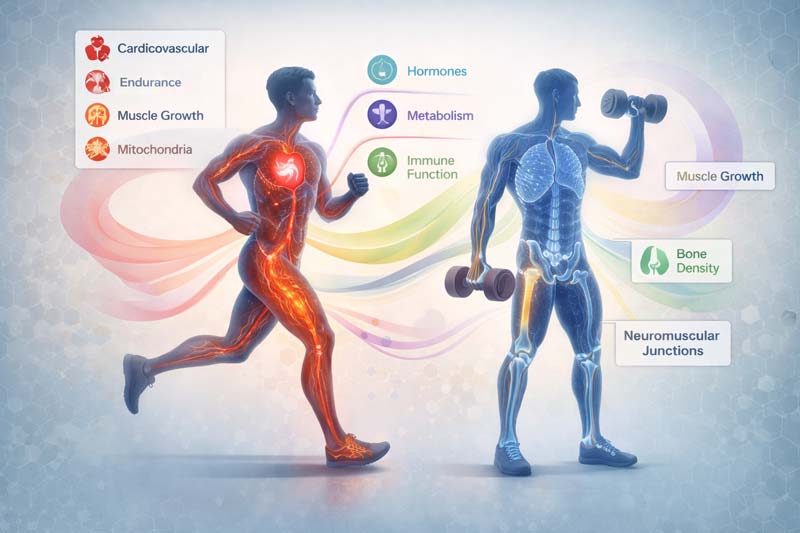
Emerging evidence reveals that different physical activities exert distinct physiological effects on body composition, cardiorespiratory fitness (the ability of the heart and lungs to supply oxygen during sustained activity), metabolic profiles, and bone strength. Aerobic exercise improves peak oxygen consumption but has minimal effect on muscular strength. Resistance training enhances strength without substantially changing peak oxygen consumption. Combining both modalities produces improvements in both domains.
The mechanisms explain why exercise variety matters independently. Each activity type stresses different physiological systems.
Complementary Physiological Adaptations
Aerobic activities increase cardiovascular efficiency and mitochondrial density (the number of energy-producing structures in cells). Running, cycling, and swimming train the heart to pump more blood per beat. They expand capillary networks in working muscles. They enhance the body’s ability to extract and utilise oxygen.
Resistance training works differently. It increases muscle cross-sectional area and neuromuscular coordination (the communication between nerves and muscles that control movement). It strengthens connective tissue and bone mineral density. It improves insulin sensitivity through mechanisms separate from aerobic pathways.
Someone who only runs develops excellent cardiovascular capacity but may lose muscle mass with age. Someone who only lifts weights builds strength but may lack cardiovascular reserve.
Tennis and racquet sports demand rapid direction changes, explosive movements, and sustained rallies. They train agility, coordination, and anaerobic capacity (the ability to produce energy without oxygen for short bursts). These attributes decline with age unless specifically challenged. Walking provides none of this stimulus, regardless of volume.
Metabolic and Hormonal Diversity
Different activities trigger distinct hormonal responses. High-intensity interval work elevates growth hormone and catecholamines (hormones like adrenaline that increase heart rate and mobilise energy). Prolonged steady-state exercise increases cortisol and fat oxidation (the breakdown of fat molecules for energy). Resistance training stimulates testosterone and insulin-like growth factor.
Each hormonal milieu (internal chemical environment) creates specific adaptations. Growth hormone promotes tissue repair and fat metabolism. Testosterone supports muscle protein synthesis. The exercise variety of stimuli may produce broader systemic benefits than repeated exposure to one hormonal pattern.
Metabolic pathways also differ. Aerobic exercise primarily uses oxidative metabolism in mitochondria (energy production using oxygen). Sprint-based activities rely on glycolytic pathways (energy production from glucose without oxygen). Resistance training depletes phosphocreatine stores (high-energy molecules used for rapid muscle contractions). Engaging multiple energy systems may enhance overall metabolic flexibility, the ability to switch efficiently between fuel sources.
Musculoskeletal Loading Patterns
Activities load joints and bones differently. Running creates repetitive vertical impact. Cycling involves sustained knee flexion without effects. Swimming eliminates ground reaction forces entirely. Rowing combines leg drive with upper body pull.
Bone responds to loading through remodelling (the continuous process of breaking down and rebuilding bone tissue). Impact activities increase bone mineral density in weight-bearing sites. Non-impact activities, such as swimming, provide cardiovascular benefits without skeletal stimulus. Someone who only swims may develop excellent aerobic fitness but lower bone density than someone who runs or plays tennis.
Joint health also varies by activity. Runners experience different injury patterns than cyclists or swimmers. Variety distributes mechanical stress across multiple movement patterns, potentially reducing the risk of overuse injury whilst maintaining musculoskeletal stimulus.
Sustained Engagement Through Variety
People who engage in multiple activities may sustain higher total physical activity across their lifespan. Injury or boredom with one activity doesn’t eliminate all movement when alternatives exist. Athletes who participate in multiple sports during youth show higher physical activity levels decades later than single-sport participants.
The psychological dimension matters. Monotony reduces adherence. Fresh challenges maintain engagement. Someone who walks daily for years may eventually reduce their volume due to boredom. Adding tennis on Fridays or swimming on Wednesdays provides novelty whilst preserving the walking habit.
The Nine Activities That Actually Reduce Your Risk of Dying
The analysis examined nine specific activities tracked in both cohorts. Each produced distinct effects on longevity, and exercise variety emerged as a protective factor beyond the benefits of individual activities.
Comparing the highest activity group to the lowest revealed substantial mortality reductions for most activities:
- Walking – 17% lower all-cause mortality in the highest group. The most frequently engaged activity in both cohorts. Benefits appeared across cardiovascular disease (21% reduction), cancer (10% reduction), and respiratory disease (27% reduction). The dose-response curve showed a sharp decline up to 7.5 MET hours weekly, then plateaued.
- Jogging – 11% lower mortality in the highest group. Cardiovascular deaths dropped 15%. Respiratory disease showed 12% reduction. Benefits plateaued around 9 MET hours per week. Beyond this threshold, associations weakened slightly.
- Running – 13% lower all-cause mortality. Running differed from jogging by pace, defined as 10 minutes per mile or faster. Cardiovascular mortality fell 24% in the highest group. Respiratory deaths dropped 58%, the largest reduction for any single activity. Running showed linear associations with cardiovascular and respiratory mortality, indicating that the benefits continued to increase without plateauing.
- Cycling – 4% lower mortality in the highest group, the most negligible effect among activities showing benefit. Benefits appeared strongest up to 7.5 MET hours weekly. Beyond this, associations weakened. Differences emerged between cohorts. Men showed inverse associations at higher cycling volumes. Women showed less consistent patterns. The authors noted the inability to separate recreational cycling from commuting as a limitation.
- Swimming – No mortality benefit detected. The hazard ratio remained at 1.01 across all swimming volumes. Swimming was not associated with cardiovascular, cancer, or respiratory mortality. The finding contradicts swimming’s reputation as an ideal form of exercise. Self-reported swimming duration may correspond to widely varying actual energy expenditure depending on intensity. Someone swimming vigorous laps expends far more energy than someone casually moving through water, yet both might report similar durations.
- Tennis, squash, or racquetball – 15% lower all-cause mortality. Cardiovascular deaths dropped 12%. Cancer mortality fell 10%. Respiratory deaths decreased 44%. Benefits plateaued sharply at 5 MET hours per week, requiring less volume than most activities to achieve maximum effect.
- Climbing flights of stairs – 10% lower mortality. Respiratory disease showed 23% reduction. Benefits plateaued at just 0.75 MET hours per week, equivalent to roughly 5 flights daily. This represents the lowest threshold of any activity examined.
- Rowing or callisthenics – 14% lower all-cause mortality. Cardiovascular deaths fell 11%. Respiratory mortality dropped 27%. Benefits appeared up to 2.5 MET hours weekly, with a continued slower decline beyond.
- Weight training or resistance exercises – 13% lower mortality. Cancer deaths showed 8% reduction in the middle categories, but the association weakened in the highest group. Cardiovascular mortality decreased by 9% in middle-aged groups. The nonlinear pattern suggests moderate volumes suffice.
Lower-intensity exercises, examined only in the Nurses’ Health Study due to limited follow-up in men, were associated with lower all-cause and cancer mortality. Heavy outdoor work in men is linked to reduced respiratory disease deaths.
The patterns reveal activity-specific effects. Running provided unmatched respiratory protection. Tennis requires minimal volume for maximum benefit. Stair climbing delivered meaningful protection from trivial time investment. Swimming alone among major activities showed no benefit. These distinct profiles underscore why exercise variety enhances protection beyond any single activity.
Why Swimming Shows No Mortality Benefit While Tennis Does
Swimming’s failure stands out starkly. Public health messaging promotes swimming as joint-friendly, accessible, whole-body exercise. Yet higher swimming volumes conferred no mortality benefit, a finding that challenges assumptions about optimal exercise variety.
The hazard ratio across all swimming categories remained essentially 1.0, indicating zero effect. This wasn’t measurement noise. Tennis, using similar self-report methods, showed an apparent 15% reduction in mortality. Walking demonstrated 17% benefit. Swimming alone flatlined.
Three explanations warrant consideration.
First, intensity misclassification. Participants reported time spent lap swimming without indicating pace or effort. Someone swimming vigorous freestyle for 30 minutes expends dramatically more energy than someone doing leisurely breaststroke for the same duration. Both report 30 minutes of swimming.
MET values assigned to activities assume active engagement. Swimming received a MET value based on moderate continuous effort. Casual swimmers may spend substantial time resting at the pool edge, adjusting their goggles, or moving slowly between laps. The recorded duration overestimates actual energy expenditure.
This misclassification biases associations towards null. Actual energy expenditure varies so widely that grouping all swimmers together obscures any real benefit among vigorous swimmers, whilst diluting the sample with minimal-effort participants.
Other activities are less affected by this problem. Someone reporting tennis typically engages actively during recorded time. Walking pace varies, but even slow walking maintains continuous movement.
Second, swimming attracts people with joint problems or injuries who avoid impact activities. This creates selection bias. People turn to swimming precisely because running or tennis hurts their knees or hips. They’re not randomly assigned to swim versus run. They swim because existing health problems prevent them from using alternatives.
The study excluded participants with baseline diagnoses of cardiovascular disease, cancer, diabetes, respiratory disease, or neurological disease. However, it couldn’t exclude arthritis, chronic pain, or subclinical conditions that may drive activity choice. If people with worse underlying health disproportionately choose swimming, the apparent lack of benefit may reflect their baseline risk rather than swimming’s actual effect.
Third, swimming eliminates impact. Impact activities stimulate bone remodelling and may trigger beneficial inflammatory responses. Swimming’s buoyancy removes all gravitational loading. The cardiovascular work occurs without skeletal stimulus or ground reaction forces.
Weight-bearing activities create mechanical stress that bones, tendons, and ligaments adapt to. These adaptations may contribute to longevity beyond cardiovascular fitness alone. Swimming provides aerobic stimulus without musculoskeletal loading. Someone who only swims develops cardiovascular fitness but may lose bone density and muscle mass more rapidly than runners or tennis players.
The contrast with tennis sharpens the puzzle. Tennis requires explosive movements, rapid direction changes, and sustained rallies. It combines aerobic and anaerobic demands. It loads joints and bones through impact and directional changes. Tennis showed 15% mortality reduction despite being reported less frequently than swimming.
Previous studies produced conflicting swimming findings. Some found inverse associations with mortality. Others found none. The inconsistency suggests that swimming’s benefits depend heavily on intensity, which self-report questionnaires capture poorly.
The swimming finding shouldn’t discourage swimmers. The absence of a detected mortality benefit doesn’t prove that swimming harms health. It suggests swimming alone may not suffice for longevity, and that intensity matters enormously. Someone swimming vigorous laps is likely to gain benefits that this analysis does not detect due to intensity misclassification. This reinforces why incorporating exercise variety beyond swimming alone enhances protection.
The practical implication favours variety. Swimming provides cardiovascular work and joint-friendly movement. Pairing it with weight-bearing activities like walking or resistance training may deliver benefits that swimming alone cannot.
How Much of Each Activity You Need Before Benefits Plateau
Each activity reached maximum mortality benefit at different volumes. The dose-response curves revealed nonlinear patterns (curved relationships rather than straight lines) for most activities, with implications for how people construct exercise variety in their routines.
The chart above shows where benefits plateau for each activity, with a dramatic range from 0.75 MET hours weekly for stairs to over 40 MET hours achievable through walking.
Stair climbing plateaued fastest at 0.75 MET hours per week. This translates to roughly 5 flights daily, assuming 8 seconds per flight. Beyond this minimal threshold, additional stair climbing provided diminishing returns. Someone who climbed 10 flights daily gained little extra benefit compared to 5 flights. The shallow dose requirement makes stair climbing remarkably efficient. Brief daily stair use reduced mortality by 10% with a trivial time investment.
Tennis, squash, or racquetball reached the maximum benefit at around 5 MET hours per week. This represents perhaps 60 to 75 minutes of play. The curve declined sharply up to this point, then flattened completely. Playing tennis for 3 hours weekly provided no additional mortality protection compared with 75 minutes. The plateau suggests that tennis’s benefits come from intensity and variety of movement rather than duration. Short bursts of explosive effort may trigger adaptations that longer steady-state activities require more volume to achieve.
Walking showed diminishing returns beyond 7.5 MET hours per week, equivalent to roughly 2.5 hours at a moderate pace. The curve descended steeply up to this threshold. Beyond it, benefits continued but more gradually. Walking represents an accessible activity where substantial volumes remain achievable. Unlike running or tennis, most people can walk 5 to 10 hours per week without risk of injury. The study population demonstrated walking volumes exceeding 40 MET hours per week, far higher than for any other activity.
Weight training plateaued at around 7.5 MET hours per week. This might represent 2 to 3 sessions of 45 to 60 minutes. The pattern suggests moderate consistent resistance training suffices. Marathon weightlifting sessions provide little additional longevity benefit over focused moderate-volume training.
Rowing or callisthenics showed a sharp reduction in risk up to 2.5 MET hours per week, followed by a slower, sustained decline. The initial steep portion suggests even modest engagement delivers substantial benefit. Additional volume adds protection but at diminishing rates.
Cycling demonstrated benefits of up to 7.5 MET hours per week in men. Beyond this, associations weakened. Women showed less consistent patterns. The sex difference may reflect differences in cycling purpose (commuting versus recreation) or in intensity.
Jogging benefits appeared to be up to approximately 9 MET hours weekly. Beyond this threshold, associations no longer reached significance. The pattern suggests moderate jogging volumes suffice. Excessive jogging provided no detected additional benefit.
Running differed sharply from other activities. It showed no plateau for cardiovascular and respiratory mortality. Benefits continued increasing linearly with higher running volumes. Someone running 15 MET hours per week had lower mortality than someone running 9 MET hours. This linear pattern appeared unique among the activities examined. Running’s sustained benefit at high volumes may reflect its intensity. Faster running pushes the cardiovascular and respiratory systems harder than equivalent time walking or cycling.
Swimming showed an initial risk reduction up to approximately 2.5 MET hours per week, after which it flattened to no effect. The pattern differed from other activities; rather than plateauing at benefit, swimming plateaued at neutral. This reinforces concerns about intensity misclassification. If vigorous swimmers cluster in lower reported time categories due to higher efficiency, the curve might show early benefit from intense swimmers, then flatten as casual swimmers dominate higher time categories.
The varied thresholds reveal activity-specific efficiency and support building exercise variety rather than maximising single-activity volume. Stair climbing delivers maximum benefit for minimal time. Tennis requires moderate volume. Walking tolerates high volumes with continued gradual benefit. Running uniquely sustains linear benefit at high intensity.
Practical application depends on individual capacity and preference. Someone time-constrained might prioritise tennis or stair climbing for efficiency. Someone with ample time and joint health might accumulate high walking or running volumes. The key insight is that more isn’t always better. For most activities, a threshold exists beyond which returns sharply diminish.
Our previous analysis of how many steps a day you need revealed similar nonlinear patterns, with benefits plateauing around 7,000 to 8,000 steps daily, depending on the health outcome. The current findings extend this principle across activity types.

Exercise Variety Reduces Death Risk Independent of Total Activity
The exercise variety score measured the number of individual activities participants consistently engaged in. Each activity counted as one point if it met predefined thresholds. Stair climbing required 5 flights daily. Other activities require at least 20 minutes weekly.
The maximum variety score reached 11 in women and 13 in men, reflecting cohort-specific activities tracked. Researchers calculated variety scores for each follow-up cycle, then averaged them cumulatively to represent long-term patterns.
Participants in the highest-variety group had 19% lower all-cause mortality than those in the lowest-variety group. This benefit persisted after adjusting for total physical activity levels. Someone who accumulated 20 MET hours per week across four activities had lower mortality than someone who accumulated 20 MET hours per week across one activity.
Independence from total volume is the critical finding. Previous research documented that higher total activity reduces mortality. This study asked whether how you accumulate that activity matters. The answer: unequivocally yes.
The exercise variety effect extended across specific causes:
- Cardiovascular disease mortality – 17% lower in the highest variety group compared to the lowest, after adjusting for total activity levels. Heart disease deaths responded more strongly to variety than to total volume alone. Someone doing moderate total activity across multiple types had lower cardiovascular risk than someone doing high total activity in a single type.
- Cancer mortality – 13% reduction in the highest variety group. The effect appeared smaller than for cardiovascular deaths but remained statistically significant. Different cancer types may respond differently to activity variety. The composite cancer outcome masks potential heterogeneity.
- Respiratory disease mortality – 41% lower in the highest variety group, the largest reduction observed. Respiratory deaths showed the most dramatic response to exercise variety. Even after accounting for total activity volume, engaging in multiple activity types slashed respiratory mortality by nearly half. The mechanism remains unclear but may involve diverse physiological stresses improving pulmonary function through various pathways.
- Other causes – 18% reduction in the highest variety group. Deaths from causes other than cardiovascular disease, cancer, or respiratory disease also responded to a variety. This suggests broad systemic benefits beyond specific disease pathways.
Statistical testing confirmed that adding variety to regression models improved fit beyond total activity alone. The likelihood ratio test comparing models with and without variety was significant, indicating that variety provides information that total volume doesn’t capture.
The correlation between total activity and variety was 0.75 in women and 0.70 in men. Whilst people doing more total activity tended to do more activity types, the correlation wasn’t perfect. Some people accumulated high volumes through one or two activities. Others engaged in many activities at lower individual volumes. The variety effect operated independently after statistical adjustment for total volume.
The magnitude of variety’s independent effect rivals the benefits of a single activity. Walking in the highest category reduced mortality 17%. Tennis reduced it 15%. Variety, independent of volume, reduced it 19%. This position exercises variety as crucial as choosing beneficial individual activities.
Biological mechanisms likely involve complementary adaptations. Aerobic activities enhance cardiovascular efficiency. Resistance work builds muscle and bone. Dynamic sports train coordination and explosive power. Engaging all three categories produces broader systemic resilience than specialisation.
The finding challenges single-modality training approaches. Someone running 60 minutes daily, six days a week, achieves impressive cardiovascular fitness and substantial health benefits. But adding two resistance sessions and a tennis game whilst reducing running to four days weekly may further enhance longevity, even if total weekly MET hours remain constant or slightly decrease.

Why Doing Multiple Activities Cuts Respiratory Disease Risk by 41%
Respiratory disease mortality responded more dramatically to exercise variety than to any other cause examined. The 41% reduction in the highest variety group dwarfed the 17% cardiovascular reduction and 13% cancer reduction.
The magnitude demands explanation. Why would lung-related deaths respond so strongly to activity diversity?
Ventilatory Stress Diversity
Different activities create distinct breathing patterns and ventilatory demands. Running and jogging produce a sustained, elevated respiratory rate, with deep, rhythmic breathing. Tennis involves intermittent explosive efforts with recovery periods, creating variable breathing patterns.
Swimming forces breathing coordination with stroke mechanics, often creating mild hypoxic stress (temporary low oxygen) during underwater phases. Resistance training involves brief breath-holding, or Valsalva manoeuvres (forceful exhalation against a closed airway), during lifts.
Each pattern stresses the respiratory system differently. Sustained aerobic work enhances oxygen extraction efficiency and increases ventilatory threshold (the point at which breathing sharply increases during exercise). Interval work improves tolerance to carbon dioxide accumulation. Varied breathing patterns may strengthen respiratory muscles through diverse loading.
Engaging multiple activities trains the respiratory system across this whole spectrum. Someone who only walks develops efficiency at steady moderate breathing, but never challenges their system with explosive efforts or breath coordination. Someone who walks, plays tennis, and does resistance training exposes their lungs to all these stresses. This exercise variety may enhance respiratory reserve more comprehensively than single-activity training.
Immune Function and Inflammation
Different exercise types modulate immune function through distinct pathways. Moderate aerobic exercise reduces systemic inflammation and enhances immune surveillance. Resistance training influences inflammatory cytokines (signalling proteins that regulate immune responses) differently from endurance work.
Respiratory infections and chronic respiratory diseases involve inflammatory processes. Exercise variety may optimise immune function more effectively than single-modality training by engaging multiple anti-inflammatory pathways.
Someone doing only steady aerobic work activates one set of immune adaptations. Adding resistance and dynamic sports may activate complementary pathways, providing broader protection against respiratory disease.
Musculoskeletal Support for Breathing
Respiratory function depends on more than lung tissue. The diaphragm, intercostal muscles (muscles between ribs), and accessory breathing muscles all contribute to ventilation. These muscles respond to training.
Resistance training strengthens core and trunk muscles, supporting respiration. Dynamic activities like tennis engage rotational trunk movements, which stress the breathing muscles differently than linear running. Swimming requires coordinated breathing with arm movements and trains different muscle groups than land-based activities.
Variety may develop comprehensive respiratory muscle strength and endurance. Someone who only cycles develops leg strength but minimal upper body or rotational core strength. Adding rowing, resistance training, and dynamic sports builds musculature supporting efficient breathing across diverse demands.
Long-Term Lung Function Preservation
Lung function declines with age. The rate of decline predicts mortality. Physical activity slows this decline, but different activities may preserve other aspects of pulmonary function.
Aerobic training enhances oxygen uptake capacity. High-intensity work improves tolerance to carbon dioxide and ventilatory efficiency. Resistance training maintains respiratory muscle strength. Variety across these domains may preserve broader lung function than specialisation.
Someone entering older age with excellent aerobic capacity but weak respiratory muscles may struggle with activities of daily living requiring breath-holding or explosive effort. Someone with strong respiratory muscles but poor aerobic capacity tires quickly during sustained activity. Exercise variety develops both dimensions.
Confounding and Alternative Explanations
The variety and respiratory mortality association might partly reflect unmeasured confounding. People engaging in many activity types may differ systematically from single-activity people in ways not captured by measured covariates.
However, adjustment for smoking, body mass index, diet quality, social integration, and baseline disease didn’t eliminate the effect. The association persisted after accounting for total physical activity. Residual confounding remains possible but seems unlikely to explain a 41% effect.
The respiratory finding specifically suggests targeted benefit. If confounding drove the association, effects should appear similar across mortality causes. Instead, respiratory deaths showed a dramatically stronger response than cardiovascular or cancer deaths. This pattern supports a biological actual impact rather than confounding.
The Joint Effect of Exercise Variety and Total Activity on Longevity
The question becomes strategic. Should you increase total activity volume or diversify the types of activities? The data reveal both matter, but exercise variety contributes to protection beyond simply doing more.
The analysis examined joint associations by grouping participants into nine categories based on combinations of total physical activity level and variety score. Both factors were divided into low, medium, and high groups. The reference group combined low total activity with low variety.
The matrix above shows that maximum protection requires both high volume and a wide range of exercises. Neither alone suffices for optimal benefit.
Participants with high total activity but low variety had 15% lower all-cause mortality than the low-low reference group. This confirms that volume matters. Simply doing more exercise provides benefits.
Participants with high variety but low total activity showed 12% lower mortality. Diversifying activities provides benefits even without high total volume. This demonstrates the independent contribution of exercise variety.
Participants with high variety and high total activity showed 21% lower mortality. The combination exceeded either factor alone. Someone doing high total activity across many activity types gained more protection than someone achieving the same volume through one or two activities. They also gained more than someone who did many activities at a low total volume.
The pattern appeared consistent across specific causes, though less pronounced for cancer mortality. Cardiovascular deaths showed the clearest benefit from combining high volume with high variety. Respiratory deaths demonstrated the steepest gradient, with the high-high group showing a lower risk than any other combination, dramatically.
Testing for interaction between total activity and variety revealed no significant multiplicative interaction. This means the effects combine additively rather than synergistically. High variety doesn’t multiply the benefit of high volume. Instead, each contributes independently.
The practical implication favours balanced approaches. Someone time-constrained faces a choice. They might run for 60 minutes daily, achieving a high total volume in a single session. Or they might run 30 minutes three days weekly, lift weights twice weekly, and play tennis once weekly, achieving lower total volume but higher exercise variety.
The data suggest the latter approach may provide similar or greater longevity benefits. The 19% independent variety effect rivals the benefit from doubling total activity volume. Someone doing 15 MET hours weekly across five activities likely fares better than someone doing 15 MET hours through one activity, and possibly as well as someone doing 25 MET hours through two activities.
This challenges time-efficiency arguments for specialisation. Runners often argue that running provides the greatest benefit for the time invested. The data suggests that this ignores the independent contribution of variety. Sixty minutes of running provides excellent cardiovascular stimulus. But distributing that 60 minutes across running, resistance training, and a dynamic sport may provide broader systemic protection.
The additive model also means people can optimise incrementally. Someone currently doing high-volume walking can add variety without increasing total time by substituting some walking for other activities. Someone doing many activities at low volume can increase total time whilst maintaining variety. Both paths improve outcomes.
The highest protection group (high volume, high variety) represents an achievable target for many people. It doesn’t require elite athleticism or unlimited time. Three to four hours weekly distributed across walking, resistance training, a dynamic sport like tennis, and incidental stair climbing would place most people in this category.
Our earlier analysis of 5,000 steps daily showed that even modest activity levels provide substantial protection. The current findings suggest that diversifying how you achieve those steps further enhances the benefits through exercise variety.
Sources
- Chomistek AK, Henschel B, Eliassen AH, Mukamal KJ, Rimm EB. Frequency, Type, and Volume of Leisure-Time Physical Activity and Risk of Coronary Heart Disease in Young Women. Circulation 2016;134:290–9.
- Colleluori G, Aguirre L, Phadnis U, Fowler K, Armamento-Villareal R, Sun Z, Brunetti L, Hyoung Park J, Kaipparettu BA, Putluri N, Mauvais-Jarvis F, Qualls C, Villareal DT. Aerobic Plus Resistance Exercise in Obese Older Adults Improves Muscle Protein Synthesis and Preserves Myocellular Quality Despite Weight Loss. Cell Metab 2019;30:261–73.
- Garcia L, Pearce M, Abbas A, Mok A, Strain T, Ali S, Crippa A, Dempsey PC, Golubic R, Kelly P, Laird Y, Lavalette C, Meaz Mstaff P, Niamh Murphy N, Wijndaele K, Woodcock J, Brage S. Non-occupational physical activity and risk of cardiovascular disease, cancer and mortality outcomes: a dose-response meta-analysis of large prospective studies. Br J Sports Med 2023;57:979–89.
- Momma H, Kawakami R, Honda T, Sawada SS. Muscle-strengthening activities are associated with lower risk and mortality in major non-communicable diseases: a systematic review and meta-analysis of cohort studies. Br J Sports Med 2022;56:755–63.
- Oja P, Kelly P, Pedisic Z, Titze S, Bauman A, Foster C, Hamer M, Hillsdon M, Stamatakis E. Associations of specific types of sports and exercise with all-cause and cardiovascular-disease mortality: a cohort study of 80 306 British adults. Br J Sports Med 2017;51:812–7.
- Oja P, Memon AR, Titze S, Jurak G, Kokko S, Deelen I, Thøgersen-Ntoumani C, Vlahopoulos A, Antunes R, Stamatakis E. Health Benefits of Different Sports: a Systematic Review and Meta-Analysis of Longitudinal and Intervention Studies Including 2.6 Million Adult Participants. Sports Med Open 2024;10.
- Pedisic Z, Shrestha N, Kovalchik S, Stamatakis E, Liangruenrom N, Grgic J, Titze S, Biddle SJH, Bauman AE, Oja P. Is running associated with a lower risk of all-cause, cardiovascular and cancer mortality, and is the more the better? A systematic review and meta-analysis. Br J Sports Med 2020;54:898–905.
- Ross R, Blair SN, Arena R, Church TS, Després JP, Franklin BA, Haskell WL, Kaminsky LA, Levine BD, Lavie CJ, Myers J, Niebauer J, Sallis R, Sawada SS, Sui X, Wisløff U, Stroke Council, Council on Clinical Cardiology, Council on Nutrition, Physical Activity and Metabolism, Council on Cardiovascular and Stroke Nursing, Council on Functional Genomics and Translational Biology, and Council on Quality of Care and Outcomes Research. Importance of Assessing Cardiorespiratory Fitness in Clinical Practice: A Case for Fitness as a Clinical Vital Sign: A Scientific Statement From the American Heart Association. Circulation 2016;134:e653–99.
- Villareal DT, Aguirre L, Gurney AB, Waters DL, Sinacore DR, Colombo E, Armamento-Villareal R, Qualls C. Aerobic or Resistance Exercise, or Both, in Dieting Obese Older Adults. N Engl J Med 2017;376:1943–55.
- Wasfy MM, Siam UT, Gustus SK, Sun J, Isselbacher EM, Levine BD, Baggish AL. Long-term follow up from the Harvard Alumni Health Study: collegiate sport participation in males is associated with higher physical activity throughout midlife. Br J Sports Med 2025;59:791–7.
- Werner CM, Hecksteden A, Morsch A, Zundler J, Wegmann M, Kratzsch J, Thiery J, Hohl M, Bittenbring JT, Neumann F, Böhm M, Meyer T, Laufs U. Differential effects of endurance, interval, and resistance training on telomerase activity and telomere length in a randomised, controlled study. Eur Heart J 2019;40:34–46.