


Body recomposition, losing fat while keeping or building muscle, is often called impossible for trained people, yet trials record it. Fat loss has traditionally meant eating less, while muscle gain has meant eating more. As a result, research long followed the same division, with training and diet aimed at one goal or the other.
For most people, the question arrives through a bathroom scale, and dieting by the scale has a poor record. People with overweight and obesity may return to their starting weight within a year of a nutritional weight-loss programme. The usual pattern is rapid early loss, then a levelling off, then gradual regain. Around 85% of dieters also meet a plateau, a stretch when weight loss slows or stops despite continued effort.
The arithmetic behind many diets adds to the confusion. An old rule held that every 3,500-calorie shortfall removes one pound of body weight. On that logic, cutting about 320 calories of grains a day would remove nearly 15 kg in one year. After two years, the predicted loss would reach 30 kg. Real bodies do not follow that straight line, because weight loss slows as the body adapts.
The scale also reports a single number for a body built from very different tissues. A kilogram lost could be fat, water or muscle, yet the reading cannot tell them apart.
The consequences of losing muscle reach well beyond appearance. With age, muscle loss weakens strength, balance, and stability, raising the risk of falls. It also erodes the ability to walk, cook, manage personal care and handle household chores. Lower muscle strength even predicts earlier death in middle-aged and older adults.
Muscle also works as a secretory organ (a tissue that releases chemical messengers into the blood). It releases several hundred myokines (signalling molecules made by muscle) that act on the brain, liver, bone, gut and fat. Muscle power, meanwhile, is linked with fewer fall-related injuries in older adults. Ageing shifts body composition in the wrong direction on two fronts: shrinking muscle while adding fat. Reversing both together can therefore bring numerous health benefits, especially later in life.
The term body recomposition is recent, and it grew up in fitness and bodybuilding circles. The science behind it, however, is older. For decades, researchers have tested exercise and diet plans designed to cut fat while protecting muscle. Two controls recur throughout that work: resistance training (exercise against a load) that progresses over time, and carefully planned nutrition.
Yet the same controls produce very different results in different bodies. Training history, age, starting body fat, sleep and the size of the calorie gap all shift the odds. So does the choice of measuring tool, since some popular methods record changes that never happened. For some people, pursuing both goals at once is realistic. For others, one goal at a time offers a clearer path.

What Body Recomposition Actually Means
Body composition is usually divided into three parts: bone, fat mass and lean mass. Lean mass includes muscle, connective tissue, and internal organs, so a gain in lean mass isn’t automatically new muscle. Skeletal muscle (the muscle attached to bones that moves the body) is itself about 75% water. The rest is 15 to 25% protein, 2 to 3% glycogen (carbohydrate stored in muscle) and about 5% fat.
No standard name existed for gaining muscle and losing fat at the same time, so practitioners adopted one. Body recomposition is defined as losing body fat while keeping or increasing lean mass, often with no change in weight.
Fat-free mass (everything in the body except fat) is a calculated figure, and no scanner measures it as a tissue. On a standard body scan, it is calculated by subtracting fat from body weight. Lean soft tissue, the scan’s non-fat and non-bone portion, is defined by how X-rays pass through the body. Even in the arms and legs, that portion includes skin, connective tissue and the non-fat part of fat tissue.
In the abdomen, the same category also counts the liver and kidneys. In one person scanned twice, about two and a half years apart, abdominal lean tissue fell by 12.4%. With the liver and kidneys excluded, however, the fall was only 1%.
Fat tissue is not pure fat either. Adipose tissue (the body’s fat stores) is roughly 85% fat, with the remaining 15% fat-free. Losing fat tissue therefore removes a little fat-free mass, which can hide muscle gained at the same time. Trained lifters lost fat over 10 weeks on two different diets, and measured fat-free mass rose by about 1 kg. After correcting for the fat-free portion of the lost tissue, the gains grew to 1.22 kg and 1.50 kg.
Scale weight can also conceal an entirely different change underneath. Overweight adults on the same calorie deficit lost a similar 3.2 kg, whether or not their sleep was restricted. The make-up of that loss, however, was reversed. Most of the sleep-restricted group’s loss was fat-free mass, while most of the other group’s loss was fat.
Calorie arithmetic misses this for another reason. A kilogram of lean tissue holds about 1,815 calories of energy, while a kilogram of fat holds about 9,434. Swapping one for the other can therefore leave the scale unchanged while moving several thousand calories of stored energy. How much energy building new muscle actually costs is still unknown. Equally unclear is how much of that cost comes from stored fat and how much from food.
Fat and muscle are also separate conditions, and each can go wrong on its own. Obesity combined with declining muscle mass and function has its own name: sarcopenic obesity (excess fat alongside too little muscle). High fat and low muscle can therefore exist in the same body at the same time.
Because the two tissues move independently, different measures can disagree about the same programme. In older women, resistance training improved fat-free mass, yet body fat percentage and body mass index (BMI) stayed put. Pooled trials in similar women showed the reverse pattern. Body fat percentage fell by about 2.8 points, with no measurable muscle gain.
Fat loss with steady lean mass is also different from true body recomposition. On four weight-loss diets, people lost 4.2 kg of fat and 2.1 kg of lean mass over six months. Roughly 1 kg of every 3 kg lost was lean tissue. The higher-protein versions brought no advantage, possibly because both protein levels were too low to help.
Adding hard training and more protein changes the result. Dieters who ate 1.2 g of protein per kg of body weight daily while training intensely maintained lean mass. They lost 3.5 kg of fat. By contrast, those eating 2.4 g per kg gained 1.2 kg of lean mass while losing 4.8 kg of fat. The first group preserved muscle during weight loss, whereas the second achieved body recomposition.
The same shift appears in inactive adults. Overweight people, averaging 44 years of age, combined weight loss and aerobic exercise for eight weeks. Their fat mass and body weight fell while their lean mass rose, under two different eating schedules. One way to judge that kind of success is to treat it as a single result. It averages the changes in muscle and fat, so gaining muscle and losing fat both raise the score.
For people who lift regularly, this also changes what a stalled scale means. A plateau usually means weight hasn’t moved for a month or longer. Among resistance-trained people, however, short-term weight stability may reflect fat lost and muscle gained in offsetting amounts.
Who Can Achieve Body Recomposition
Recreational lifters have gained about 5 kg of fat-free mass while losing 1.4 kg of fat across 10 weeks. Highly trained lifters, by comparison, gained 1.9 kg of fat-free mass in eight weeks without meaningful fat loss. Training status therefore changes the pace of body recomposition, and newcomers usually adapt faster than advanced lifters. Both the length of someone’s training history and the novelty of a new programme affect how quickly muscle is added.
Time away from training changes the picture again. People returning after a lay-off tend to regain lost adaptations quickly. Elite rugby players who stopped training for four weeks then completed an 11-week pre-season block. They gained 1.8 kg of fat-free mass and lost 2.2 kg of fat over that period. Returning trainees, like beginners, therefore appear to have extra room to change.
Very lean people dieting hard sit at the other end. Most case studies of physique competitors preparing for contests show no muscle gain alongside their fat loss. Their conditions are extreme: severe calorie restriction, high energy expenditure, very low body fat, hormonal disruption and poor sleep. A few case studies of female competitors do show muscle gain during preparation. One proposed explanation is hormonal, since testosterone falls significantly in men dieting for competition.
Starting body fat produces the most conflicting evidence. One view holds that larger fat stores can fuel muscle building, which could enlarge the overall change. Some results fit that view. Untrained people with obesity who ate 800 calories a day while lifting for 12 weeks kept their lean mass. A similar programme even enlarged both slow and fast muscle fibres.
Other results point the opposite way. In a pooled analysis of training during calorie deficits, people with a higher body mass index gained less lean mass. Leaner people, by contrast, tend to lose more lean mass when they diet. Similarly, older women with more body fat gained no more muscle from 24 weeks of training than leaner women. Only the leanest group reduced absolute fat mass, which gave it the largest overall recomposition.
Researchers formed these groups by fat level rather than randomisation. The leanest women also ate more energy and protein for their size. Stored fat may not be the main fuel for new muscle, with food supplying most of it. Alternatively, the leaner women’s fat stores may already have been enough. The higher-fat women also started with more muscle, leaving less room to grow.
Excess fat may also work directly against muscle. Fat cells release inflammatory messengers that suppress muscle building and speed its breakdown. Even so, the higher-fat women still gained muscle, so any such effect did not block training. Reviews describe the evidence for body recomposition in people with obesity as limited.
Age adds a different headwind. Older muscle often shows anabolic resistance (a weaker muscle-building response to food and exercise). Slower digestion, reduced insulin sensitivity, weaker cell signalling and lower activity all contribute. Older muscle also builds fewer ribosomes (the cell’s protein-making machinery) in response to training.
Ageing 30 years has a similar predicted effect on training-induced lean mass gain as a 500-calorie daily deficit. The two effects appear to add together, at least until training produces almost no response. Men tend to add slightly more lean mass than women in a deficit, although sex was not a significant factor.
Older adults still respond, however. Untrained women over 60 who trained three times a week for 24 weeks all gained muscle and lost fat. They made no planned change to their usual diet. Their individual responses still varied widely, and what drives that variation remains unexplained.
For women, menopause adds a hormonal shift. The fall in oestrogen sets off a chain of hormonal signals that promotes fat storage around the organs. In women, testosterone, which supports muscle building, declines gradually and then falls rapidly later in life. How it responds to training in women remains unclear. Muscle loss and fat gain can also reinforce each other. Inactivity and low protein erode muscle, while expanding fat tissue deepens the problem.
Group averages hide a wide spread. Well-trained men and women followed the same heavy training and high-protein diet. Some gained up to 7 kg of fat-free mass while losing 4 kg of fat. Others lost fat-free mass and gained fat. Around 70% improved their overall body composition.
Bodies also differ in how soon progress stalls. Naturally lean people, women and older adults tend to reach a plateau earlier. Genetics, activity outside exercise, small rises in food intake and past dieting all shape when change stalls.
Resistance training itself does not appear to pick favourites. In randomised trials of healthy adults, its benefit over inactivity did not obviously vary with age or training status. The proportion of women in each trial also made no obvious difference. As a result, body recomposition has now been recorded in untrained, trained and highly trained people across different ages.
Experienced lifters, meanwhile, are almost absent from the evidence. Of 52 matched studies of training in a calorie deficit, only one pair explicitly involved resistance-trained people. Long-term studies with large samples of trained people losing weight also remain scarce. Women and older adults are also under-represented in research on diet and body composition.
How Resistance Training Changes Muscle and Fat
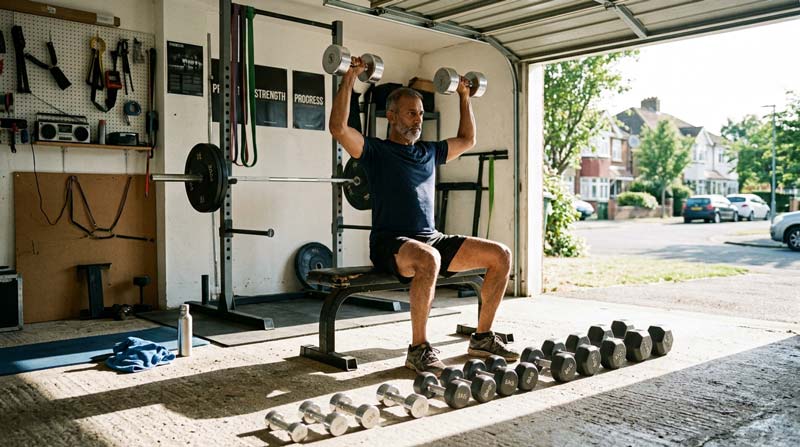
Every resistance training prescription tested across 119 randomised trials built more muscle than doing no exercise at all. The same held for strength across 178 trials involving 5,097 people. Resistance training means making muscles contract against an external weight or force. It raises strength and muscle mass, improves metabolic health and is linked with lower chronic disease risk.
Differences between programmes were small by comparison. In 111 head-to-head comparisons, 91% showed no clear winner. Heavier loads, above 80% of a one-repetition maximum (the heaviest weight lifted once), gave the biggest strength gains.
For muscle growth, however, load mattered much less, and all prescriptions promoted growth comparably. Multiple sets per exercise ranked highest for growth, pointing to training volume (total work done) as a major driver. Body recomposition has been recorded across many strength and muscle-building programmes.
More weekly work brings a little more growth. Ten or more weekly sets per muscle added about 3.2% more growth than five to nine sets. That advantage shrank to 1.4%, however, when one influential study was removed. Frequency is similarly forgiving. Training each muscle twice a week may maximise growth, yet once a week still builds muscle. In trained men, one weekly session per muscle maintained fat-free mass and strength over eight weeks.
Training to failure, meaning until another repetition is impossible, has been proposed as key when lighter loads are used. Yet accounting for it did not change the pooled results, and untrained people build substantial muscle without reaching failure. For trained lifters, failure may matter more.
What appears to matter for body recomposition is that the demand keeps rising. Over 10 weeks of supervised training, trained participants increased their weekly volume load (weight multiplied by repetitions) in every group. The largest increases came in the group eating maintenance calories. High protein intake, progressive overload (steadily increasing training demands), and adequate energy appeared to work together to produce these results. Early strength gains also come partly from the nervous system, which becomes better at recruiting and coordinating muscle fibres.
The form of resistance also shapes the result. Elastic bands are cheap, portable and popular with older adults. However, they shift the stimulus towards endurance and recruit fewer fast-twitch fibres (those producing rapid, powerful contractions). Their load is also hard to measure precisely, which limits gains in strength and size.
Duration counts too. In older adults, at least six months of training is recommended to see clearer gains in total muscle mass. Most trials in older women with excess fat and low muscle ran for about 12 weeks at moderate intensity. That has prompted calls for longer, progressive programmes at 70 to 80% of one-repetition maximum.
On the fat side, lifting alone produces modest change. Compared with no exercise, resistance training reduced body fat by 1.4 percentage points and fat mass by 0.55 kg. Several routes may contribute. The sessions themselves cost energy, and resistance training raises resting metabolic rate in older adults. Keeping fat-free mass also helps protect resting energy expenditure, since lean tissue is a major determinant of it.
Animal research suggests further routes. In mice, exercise raised fat-burning enzyme activity in muscle. In other mouse studies, a training-related molecule called alpha-ketoglutarate triggered hormone release that sped up fat breakdown.
Aerobic exercise is often added to lifting to burn more fat, a combination called concurrent training. Several studies support body recomposition, and coaches commonly recommend it.
The long-standing worry is that aerobic work interferes with muscle growth. Across 43 trials, however, adding aerobic work to an identical strength programme cost neither muscle growth nor maximal strength. Neither the type of aerobic exercise, weekly frequency, training status, nor age changed that result.
A molecular clash between the two, predicted from animal and cell studies, has not appeared in humans. Explosive strength is the exception. Jumping power and rapid force production dropped when both were done within 20 minutes of each other. Separating them by at least three hours removed the effect. One earlier analysis found a strength cost in trained people, but only when both were done in the same session. In dieting older adults with obesity, combining both improved overall physical function more than either alone.
More exercise does not translate neatly into more fat loss. Guidelines set 300 minutes a week of moderate activity, or 150 minutes of vigorous activity, to promote or maintain weight loss. Where people already exceeded 300 minutes alongside supervised lifting, extra aerobic work brought no further weight loss.
The body also compensates. Extra exercise can be offset by less activity elsewhere, so total energy use rises less than expected. Sustained training also makes movement more efficient, lowering its energy cost. Contestants on ‘The Biggest Loser’ roughly doubled their daily activity after losing about 60 kg. Yet their slowed metabolism did not return to normal.
Non-exercise activity thermogenesis (NEAT) is the energy burned by everyday movement outside formal exercise. It accounts for 6 to 10% of daily energy use in sedentary people and over 50% in very active people. By comparison, formal exercise accounts for 15 to 30% in regularly active people. Taking stairs or adding walking breaks raises NEAT. Some suggest this may support weight maintenance better than strict dieting alone.
How Food Intake Affects Body Recomposition
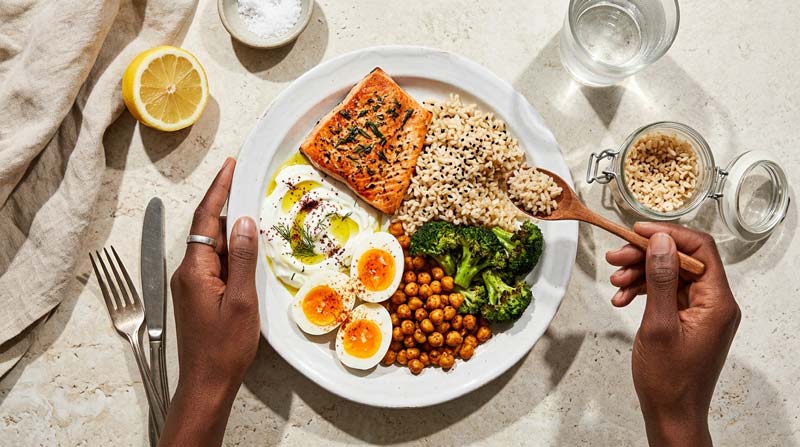
A deficit of about 500 calories a day can cancel the average muscle gain from resistance training. That estimate comes from pooling 52 matched studies involving 1,213 participants. Training while eating enough produced a small gain in lean mass. By contrast, a 1,000-calorie daily deficit pushed the expected change below zero. Strength, however, rose almost equally whether people ate enough or not.
During a diet, a heavier lift is therefore weak evidence of new muscle. The dampening did not fade over programmes lasting 3 to 26 weeks. The analysis could not account for protein, because few studies reported what participants actually ate.
A deficit works against muscle on two fronts. Muscle protein synthesis (the building of new muscle protein) slows when fasting, after meals and after training. At the same time, muscle becomes a reservoir of amino acids that the body can break down for fuel. In lean, active adults, ten days at a 20% deficit cut muscle protein synthesis by 19%. A similar deficit raised muscle protein breakdown by 60%. Muscle-building hormones such as insulin-like growth factor 1 (IGF-1) also respond less to training within three days.
Smaller gaps tell a different story. Young adults with at least a year of lifting experience trained four days a week for 10 weeks. Both groups ate 2.5 g of protein per kg of body weight daily. One ate at maintenance, the intake that holds weight steady, while the other ate 250 calories a day below it. The deficit group lost 2.94 kg of fat and gained 1.04 kg of fat-free mass. The maintenance group lost 1.41 kg of fat and gained 0.97 kg of fat-free mass.
Muscle gain was almost identical on both diets, whereas fat loss roughly doubled with the small deficit. A third group followed the same training without nutritional guidance and showed no meaningful change in either. For that group, training alone did not produce body recomposition.
Larger gaps carry a price. Weekly losses above 0.5 to 1% of body weight tend to cost lean mass, especially in lean, trained people. Across studies, rapid weight loss removed 0.74 kg more fat-free mass than gradual loss. It also further lowered resting energy expenditure. Lean tissue lost during a diet may also fuel regain afterwards. After heavy weight loss, people tend to keep overeating until fat-free mass recovers, even though fat returns faster. The result can be a temporary ‘body fat overshoot’.
Eating above maintenance tilts the balance the other way. Overfeeding adds lean mass, yet lean tissue typically makes up only 30 to 40% of the weight gained. Whether a surplus is even necessary to maximise muscle growth has been questioned. In well-trained people, fat mass can fall even during a calorie surplus when the extra calories come from protein.
Protein
The protective effect of higher protein on lean mass during a diet is well established. The Recommended Dietary Allowance (the official minimum) is 0.8 g per kg of body weight daily. For building muscle with adequate food, estimates cluster between 1.6 and 2.2 g per kg. During a deficit, however, needs appear higher. In trained, non-obese dieters, 1.9 to 3.2 g per kg daily best preserved lean mass. The main benefit is protecting existing muscle rather than promoting extra growth.
There is also a ceiling. Beyond roughly 2.2 to 2.5 g per kg, extra protein showed no added benefit in well-trained people. Intakes of 4.4 g per kg produced no difference in fat-free mass from 1.8 g per kg. In that trial, the high-protein group ate about 800 more calories a day, yet showed no difference in fat mass.
Older bodies may need more. Each meal appears to need about 0.40 to 0.55 g of protein per kg to switch on muscle building. In older people, that figure rises to 0.60 g. Untrained older women with habitual intakes of 0.92 g per kg or less gained 2.3% muscle from training. Women eating more gained about 5%. Trials of extra protein in older adults still disagree, possibly because of differences in dose, participants and measurement.
Protein also helps with the deficit itself. It is more filling per calorie than carbohydrate or fat. Digestion burns 20 to 30% of protein’s calories, against 5 to 10% for carbohydrate and 0 to 3% for fat. Among strength-trained people already eating plenty, however, extra protein did not increase fullness. Raising intake from 1.8 to 2.9 g per kg made no difference over a week. The extra protein came as a whey drink, and solid food tends to fill people more. Higher protein has not reliably produced more fat loss either.
When daily protein is matched, eating it before or after training produces similar results. Protein before sleep helped only in studies where it also raised the daily total. Spreading protein across three to six meals is one way to reach that per-meal amount. One expert position statement ranks nutrition like a cake. Total daily intake is the cake, timing is the icing, and supplements are the sprinkles.
Carbohydrate and fat
Lifting uses far less stored carbohydrate than endurance exercise. A strength session lowers muscle glycogen by 24 to 40%, whereas a long endurance session can empty it. During fat loss, carbohydrate can therefore range from 2 to 5 g per kg daily, set largely by preference. There is a floor, because very low glycogen impairs muscle contraction and power. Ketogenic diets (under 50 g of carbohydrate a day) preserve lifting strength, yet may protect lean mass less well. Low-calorie diets high in protein and carbohydrate have also preserved fat-free mass better than those high in protein and fat.
Fat has a floor too. Intakes of 20% of energy or less have been linked with lower testosterone, although other dieting factors cloud the link. Common guidance keeps fat at 20 to 30% of energy, or at least 0.5 g per kg daily.
For fat loss itself, the split between carbohydrate and fat makes little difference once calories and protein are matched. Across 32 tightly controlled feeding studies, higher-carbohydrate diets gave 16 g more fat loss a day, a trivial margin. The apparent edge of low-carbohydrate diets likely comes from their higher protein. Eaten freely, though, ketogenic diets can curb appetite, cutting intake by 294 calories a day in one trial.
Why a deficit stops working
Calories in and calories out still decide weight change. Yet the equation says nothing about what the weight is made of. It also ignores how the body responds. Adaptive thermogenesis is a fall in energy use beyond what the change in body size predicts. Resting energy expenditure can drop 100 to 500 calories a day below predicted, especially early in a diet. NEAT may also fall by 30% or more after modest weight loss.
Appetite moves faster still. Each kilogram lost may raise appetite by about 100 calories a day. Meanwhile, energy use falls by only 20 to 30 calories. A more realistic rule links about 55 calories a day to each pound of body weight. On that basis, a steady 500-calorie daily deficit removes about 4 kg over a year, then levels off.
Not every stall is metabolic, however. People reporting ‘diet resistance’ under-reported their food intake by 47% and over-reported their activity by 51%. Modelling suggests that stalls one to two years in stem mainly from intermittent slips in adherence.
Much of the evidence for metabolic slowdown also comes from harsh diets low in protein and without lifting. An 800-calorie diet containing only 15% protein slowed energy use 15% beyond prediction. When very low-calorie diets combined high protein with lifting three times a week, resting metabolic rate rose instead.
Muscle’s own contribution is modest, however. A kilogram of muscle burns about 13 calories a day at rest, against about 400 for the heart or kidneys. A 5 kg muscle gain would therefore lift resting energy use by only about 65 calories a day. Yet muscle is plentiful, so losing a lot of it can meaningfully lower resting energy use.
Breaks, refeeds and eating windows.
Planned breaks from dieting have produced mixed results. In inactive men with obesity, two-week diet blocks alternating with two weeks at maintenance beat continuous dieting for fat loss. In resistance-trained adults, however, similar breaks brought no clear advantage. A different pattern did help trained dieters keep muscle. One group ate at maintenance for two days each week, adding the extra calories as carbohydrate. Over seven weeks, it lost 0.4 kg of fat-free mass, against 1.3 kg with continuous dieting. Resting metabolic rate also fell by 38 calories a day, against 78.
Break days seem to work only if they genuinely reach maintenance, and many people undershoot. Three days of carbohydrate overfeeding raised leptin (a hormone that signals energy stores) by 28%. Daily energy expenditure rose by only 7%, then returned to normal once the deficit resumed.
Time-restricted eating (eating all meals within a set daily window) has also drawn attention. Inactive adults with overweight ate only between noon and 8 pm while training for eight weeks. They lost 9.0% of their fat mass. Those eating normally lost 3.3%, despite a similar mild deficit of 250 to 300 calories a day. Long-term evidence on fasted and fed training remains thin. In resistance-trained men, eight weeks of time-restricted eating lowered testosterone and IGF-1, although young women showed no such change. Eating more often, meanwhile, does not speed up metabolism.
Food quality, nutrient gaps and supplements
Food choices shape how well a deficit holds. Dieting increases hunger and cravings, particularly for sweet, high-calorie snacks. Fibre-rich diets built on vegetables, fruit, whole grains and pulses help counter that. Filling, low-calorie foods such as salads, soups and low-fat dairy also reduce hunger, and water before meals lowers meal intake. The European recommendation is 25 g of fibre a day, although excessive amounts may hinder absorption of some nutrients.
Diets can also leave gaps. A typical dieter on popular diet plans fell short on 15 of 27 essential micronutrients (vitamins and minerals). The recommended first fix is better food, with a targeted supplement where that fails. Health and body composition can also move separately. A vegetable-rich diet improved blood fats and fitness in inactive women. Yet it produced no body recomposition, possibly because protein was low.
Creatine monohydrate is the most studied supplement in this area. It lets muscles do more work in each set, which can add strength and size over time. It may also boost satellite cells (muscle stem cells) that help muscle fibres grow. A daily 3 to 5 g saturates muscle stores within about 28 days. Caffeine improves strength and power, although any effect on fat loss appears too small to matter.
Energy availability is the energy left for basic body functions after you subtract exercise costs from intake. For women, around 45 calories per kg of fat-free mass a day supports normal function. Below 30, disruptions can appear in reproductive hormones, thyroid hormone, insulin, growth hormone and leptin. Not every woman responds the same way to the same shortfall. Men’s reproductive hormones, meanwhile, appear less sensitive to low energy availability than women’s.
How to Measure Progress
Trained cyclists who ate extra carbohydrate for 48 hours gained about 1.3 kg of lean mass on a body scan. Adding creatine loading raised the figure to about 1.9 kg. Yet little of it was likely to be new muscle protein. The scan was DXA (dual-energy X-ray absorptiometry), a low-dose X-ray scan often treated as a reference method. It read the extra water stored alongside glycogen and creatine as lean tissue.
Every practical method of measuring body recomposition in a living person is indirect. Only dissection measures body tissues directly, so no true gold standard exists for everyday use. Each method rests on assumptions and can be thrown off by water, food, recent training and the device itself. Common tools differ in what they measure and what distorts them.
- Bathroom scales: Daily weight can swing by up to 2 kg due to bladder volume, food in the gut, and carbohydrate-related water. Across the menstrual cycle, daily swings of 0.59 to 2.07 kg have been recorded. Weight usually peaks just before or early in a period. Each gram of stored glycogen can hold 3 to 4 g of water, although the ratio varies with hydration. Creatine loading can add 1 to 2 kg within a week, mostly as water. A week of eating at maintenance during a diet raised home-scale weight by about 0.5 kg, with no fat regained. Weighing each morning, after the toilet and before eating, reduces the noise.
- Bioelectrical impedance analysis (BIA): These devices, built into many home scales, pass a small electrical current through the body. They estimate fat from its resistance using prediction equations. Readings are highly repeatable on the same device, but repeatability differs from accuracy. Equations are often secret, brands are not interchangeable, and results shift with posture, skin temperature and meals. A 6.5°C rise in skin temperature led to a 13% underestimate of body fat percentage. Impedance also falls for two to four hours after eating. The method struggles in people with more body fat, who carry extra body water. In dieting women, home BIA scales recorded more fat-free mass lost in one group, while laboratory ultrasound found no difference. Extra decimal places on a display signal nothing about accuracy.
- DXA scans: Under strict conditions, DXA is precise, but its lean readings respond to glycogen, creatine, meals and positioning. For example, a meal raised measured fat mass by up to 2.6%. One very tall athlete, scanned three ways on the same day, produced fat readings more than 3 kg apart. Switching between two scanner models from the same maker raised fat mass by 18% and cut lean mass by 4%. Body weight was unchanged. Compared with MRI (magnetic resonance imaging, a detailed magnetic scan), DXA overstates lean mass in the abdomen and hips. Over about two years, MRI showed muscle there falling by roughly 4 to 5%, while DXA showed no loss. The most widely used systems deliver less radiation than an average day of natural background exposure in the United Kingdom. Even so, debate over safe annual numbers makes monthly scanning unsuitable.
- Air displacement plethysmography (the Bod Pod): This chamber estimates body composition from the volume of air the body displaces. It is highly repeatable. Yet in hockey players, it differed from DXA by about 3 kg for both fat and fat-free mass. You can place more confidence in its changes over time than in its absolute figures.
- Ultrasound: Ultrasound measures fat and muscle thickness at selected sites. However, its accuracy depends heavily on the operator, and variation between operators reaches 13% for muscle thickness. Averaging three images at a site halved the error of a single image. Handheld devices costing under £2,000 have shown inconsistent accuracy. Fluid in the tissue can also make muscle look larger than it is.
- Skinfold callipers: Skinfolds are the method least affected by meals, hydration and daily activity. However, more than 100 equations convert them into body fat percentage. Applied to one footballer’s measurements, different equations gave anywhere from 4 to 8% body fat. Reporting the sum of eight sites in millimetres avoids that problem and agrees well with DXA. A 1 cm shift in site location can still change the result.
- 3D body scanners: These build a digital avatar of the body in seconds using light. Against a reference model, their errors reached 5.3 to 7.2 kg for fat and fat-free mass. That margin exceeds the changes that typical diet and exercise programmes produce.
- Strength tests: A one-repetition maximum can vary by up to 18% day to day because of fatigue, sleep, stress, and motivation.
A measured change only counts when it exceeds both the device’s error and the body’s natural variation. That threshold is the minimal detectable change, the smallest change a device can reliably pick up. If the threshold is 1 kg, a 50 kg fat-free mass must rise or fall by 1 kg to register. DXA estimates of body fat percentage have an error of about 1.6% compared with MRI. Some reported cases of body recomposition may therefore fall within the tool’s error.
Real change also needs time. Around four weeks is considered the minimum for meaningful change in fat and lean mass. Standard conditions then narrow the noise further. Research protocols ask for a fast of at least eight hours, no exercise for 12 hours and an empty bladder. Women are measured at the same point in their cycle, typically seven days after a period begins.
For DXA, the same machine, software and positioning are needed at every visit. Scan weight should also match scale weight to within 1 kg. For BIA, the same device, time of day, posture, and fasting state apply. Even then, different methods can reach different verdicts on the same diet. In pooled low-carbohydrate trials, BIA found no extra fat loss, while DXA found a small advantage.

When to Choose a Different Approach
Physique competitors split their year into two opposing phases. In the off-season, they eat a calorie surplus to build as much muscle as possible while limiting fat gain. In contest preparation, by contrast, they cut calories and raise activity to reach very low body fat. Each phase serves one goal at a time.
A dedicated muscle-building phase follows the same logic. Lean mass gains have been recorded during calorie deficits, yet sustained surpluses appear to optimise the rate of gain. The right surplus depends on training status. Elite athletes advised to eat about 544 extra calories a day for 12 weeks gained slightly more lean mass. The difference was not significant. They also gained 1.1 kg of fat, against 0.2 kg in athletes given no advice. Untrained people eating about 2,010 extra calories a day while lifting for eight weeks gained almost only lean mass. Larger surpluses therefore tend to suit beginners and very active people, while smaller ones suit advanced trainees. Some people fit neither pattern.
Everyday movement also decides how much of a surplus is stored. When adults were overfed by 1,000 calories a day for eight weeks, they stored about 432 and burned 531. Nearly two-thirds of that extra burning came from everyday movement that people did not notice. Protein also shapes what a surplus builds. In sedentary people overfed for eight weeks, a 5% protein diet cost 0.7 kg of lean mass. Diets of 15% and 25% protein added 2.87 and 3.98 kg, while fat gain was similar across all three.
A dedicated fat-loss phase has its own calibration. The higher the starting body fat, the more aggressively you can apply a deficit. As people get leaner, however, slower loss protects more lean mass. In elite athletes, losing 0.7% of body weight a week preserved lean mass better than losing 1.4%.
For older adults, dieting carries particular risks. A sustained deficit can reduce bone mineral density and increase muscle loss, which has made clinicians reluctant to use it. Lifting alone, however, may not shift enough fat in older adults carrying excess weight. Combining resistance training with calorie restriction has had a greater effect on fat mass than training alone. Older women with excess fat and low muscle are a specific case. Reviews recommend combining their training with protein, aerobic work, and diet.
Stalls arrive on a fairly predictable schedule. Across eight weight-loss strategies, from diet alone to medication, weight loss typically plateaus about six months in. Several plateaus can occur over a long diet, each lasting longer than the last. A stall may also mark the turn towards regain. Even so, a modest 5 to 10% loss of body weight brings significant health benefits.
Holding weight steady does not restore a slowed metabolism. Reduced energy use can persist for more than a year at the new weight. Only regain, rather than maintenance, appears to reverse it. The main value of a maintenance phase is therefore preventing regain. How long a diet break needs to last, and how often, is still unknown.
Pursuing body recomposition has been proposed as one way through a stall. In theory, extra fat-free mass narrows the energy gap by raising energy use, while allowing a higher intake. Cutting calories further is the common reflex, yet severe restriction can deepen metabolic adaptation. Established responses include restoring the deficit, raising protein, slowing the rate of loss and adding resistance training or daily movement. Controlled overfeeding and non-linear dieting may also help, but need further study.
Sleep shapes the odds as well. Sleep deprivation raises cortisol (a stress hormone) and lowers testosterone and growth hormone. Sleep-restricted lifters completed less work on the bench press, deadlift and leg press. The same sessions also felt harder. Restricted sleep lowers muscle protein synthesis, although high-intensity exercise maintained it in one trial. During a diet, short sleep also raises ghrelin (a hunger hormone), which predicts fat regain.
In men, hard dieting and large fat losses lower testosterone, and testosterone levels track gains in fat-free mass. That link may help explain why natural bodybuilders lose fat-free mass during contest preparation. Sleep, stress and hormones are rarely controlled in studies, which may explain why people on identical programmes diverge. Data on whether better sleep improves fat and lean mass remain scarce.
At the extreme, dieting pushes energy availability below the levels that support normal hormone function. Female physique athletes often spend long periods below 30 calories per kg of fat-free mass a day. Before competition, values between 18.2 and 31.1 have been recorded. Menstrual disturbances are common, and in one case 71 weeks passed before the cycle returned. Hormonal contraception can keep periods regular, so many cases may go undetected. In men, energy availability below 25 calories per kg of fat-free mass increases lean loss, hormonal disruption and psychological problems. Across the lifespan, energy deficiency also threatens bone health.
Conflicting goals also shape the choice. When explosive power is the priority, separating aerobic and strength sessions by several hours helps protect it. For most other goals, combining both brings broader health benefits than either alone, with little risk of interference. The calorie target follows the priority too. Building lean mass points away from prolonged deficits. Preserving it during fat loss points to a deficit of 500 calories a day or less.
The best programme on paper is not necessarily the best for a given person. Preferences such as disliking heavy loads can be accommodated, as can limits such as one session a week. Either way, the individual still benefits from training. For most adults, regular training of any kind appears more important than an optimal plan. Health benefits have been linked with as little as 30 to 60 minutes of resistance training a week.
The quality of available measurement also limits what we can know. DXA suits questions about bone or limb-specific tissue, provided food, exercise and hydration are controlled. For tracking body fatness over time, skinfolds reported as a sum in millimetres may still be the best option. Without pre-scan controls, the data may be too unreliable to justify even a low radiation dose. Fixed body fat targets, commonly 15%, carry real consequences when positioning errors alone can move the result.
Five factors frame the choice between one goal and two:
- Starting point: Beginners, returning trainees and people with more fat to lose have the most room for simultaneous change. Lean, experienced lifters see smaller, slower shifts.
- Priority: Maximum muscle gain aligns with a surplus. In contrast, maximum fat loss aligns with a deficit sized to starting body fat. A balance of both aligns with a small deficit and high protein.
- Timeframe: Meaningful change needs at least four weeks to show, and plateaus commonly arrive around six months into a diet.
- Health: Older age, poor sleep and signs of low energy availability all raise the cost of hard dieting.
- Measurement quality: Changes smaller than a device’s error cannot confirm success or failure. Consistent conditions and longer intervals, however, make small changes easier to read.
Across the evidence, body recomposition behaves like a set of odds. Starting point, calorie gap, protein, sleep and time each move them, while group averages hide wide individual differences.
The scale sits at the centre of most efforts, yet it is the instrument least able to see this change. A steady reading can conceal fat lost and muscle gained, and a moving one can reflect water alone.
Choosing both goals, or one at a time, depends on which trade-off a person accepts, and for how long.
Sources
- Antonio J, Ellerbroek A, Silver T, Orris S, Scheiner M, Gonzalez A, Peacock CA (2015) A high protein diet (3.4 g/kg/d) combined with a heavy resistance training program improves body composition in healthy trained men and women–a follow-up investigation. J Int Soc Sports Nutr 12:39.
- Aragon AA, Schoenfeld BJ, Wildman R, Kleiner S, VanDusseldorp T, Taylor L, Earnest CP, Arciero PJ, Wilborn C, Kalman DS, Stout JR, Willoughby DS, Campbell B, Arent SM, Bannock L, Smith-Ryan AE, Antonio J. International society of sports nutrition position stand: diets and body composition. J Int Soc Sports Nutr. 2017 Jun 14;14:16.
- Aronne L. J., Hall K. D., Jakicic J. M., et al., “Describing the Weight-Reduced State: Physiology, Behavior, and Interventions,” Obesity 29 (2021): S9–S24.
- Ashtary-Larky D., Bagheri R., Abbasnezhad A., Tinsley G. M., Alipour M., and Wong A., “Effects of Gradual Weight Loss v. Rapid Weight Loss on Body Composition and RMR: A Systematic Review and Meta-Analysis,” British Journal of Nutrition 124, no. 11 (2020): 1121–1132.
- Basty N, Thanaj M, Whitcher B, Bell JD, Thomas EL. Comparing DXA and MRI body composition measurements in cross-sectional and longitudinal cohorts Commun Med (Lond). 2026 Mar 5;6(1):227.
- Bennett J.P., Prado C.M., Gonzalez M.C., Heymsfield S.B. Clarification and standardization of dual-energy X-ray absorptiometry terminology for accurate scientific communication and clinical diagnostic accuracy. Am. J. Clin. Nutr. 2025;122(3):661–670.
- Bone JL, Ross ML, Tomcik KA, Jeacocke NA, Hopkins WG, Burke LM. Manipulation of Muscle Creatine and Glycogen Changes Dual X-ray Absorptiometry Estimates of Body Composition. Med Sci Sports Exerc. 2017 May;49(5):1029-1035.
- Bonilla DA, Petro JL, Cannataro R, Kreider RB, Stout JR. Editorial: New insights and advances in body recomposition. Front Nutr. 2024 Sep 3;11:1467406.
- Campbell BI, Aguilar D, Conlin L, et al. Effects of high versus low protein intake on body composition and maximal strength in aspiring female physique athletes engaging in an 8-week resistance training program. Int J Sport Nutr Exerc Metab 28: 580–585, 2018.
- Campbell BI, Aguilar D, Colenso-Semple LM, Hartke K, Fleming AR, Fox CD, Longstrom JM, Rogers GE, Mathas DB, Wong V, Ford S, Gorman J. Intermittent Energy Restriction Attenuates the Loss of Fat Free Mass in Resistance Trained Individuals. A Randomized Controlled Trial. J Funct Morphol Kinesiol. 2020 Mar 8;5(1):19.
- Cooper, R., Kuh, D., & Hardy, R. (2010). Objectively measured physical capability levels and mortality: Systematic review and meta-analysis. BMJ, 341, 639.
- Cribb PJ, Williams AD, Carey MF, Hayes A. The effect of whey isolate and resistance training on strength, body composition, and plasma glutamine. Int J Sport Nutr Exerc Metab 16: 494–509, 2006.
- Cruz-Jentoft AJ, Bahat G, Bauer J, et al. Sarcopenia: revised European consensus on definition and diagnosis. Age Ageing. 2019;48(1):16–31.
- Currier BS, Mcleod JC, Banfield L, Beyene J, Welton NJ, D’Souza AC, Keogh JAJ, Lin L, Coletta G, Yang A, Colenso-Semple L, Lau KJ, Verboom A, Phillips SM. Resistance training prescription for muscle strength and hypertrophy in healthy adults: a systematic review and Bayesian network meta-analysis. Br J Sports Med. 2023 Sep;57(18):1211-1220.
- Dabas J., Shunmukha Priya S., Alawani A., and Budhrani P., “What Could Be the Reasons for Not Losing Weight Even After Following a Weight Loss Program?,” Journal of Health, Population, and Nutrition 43, no. 1 (2024): 37.
- de Souza R, Bray G, Carey V, Hall K, LeBoff M, Loria C, et al. Effects of 4 weight-loss diets differing in fat, protein, and carbohydrate on fat mass, lean mass, visceral adipose tissue, and hepatic fat: results from the POUNDS LOST trial. Am J Clin Nutr. 2012;95(3):614–25.
- Elia M., Stratton R., and Stubbs J., “Techniques for the Study of Energy Balance in Man,” Proceedings of the Nutrition Society 62, no. 2 (2003): 529–537.
- Fothergill E., Guo J., Howard L., et al., “Persistent Metabolic Adaptation 6 Years After ‘The Biggest Loser’ Competition,” Obesity 24, no. 8 (2016): 1612–1619.
- Franz M. J., VanWormer J. J., Crain A. L., et al., “Weight-Loss Outcomes: A Systematic Review and Meta-Analysis of Weight-Loss Clinical Trials With a Minimum 1-year Follow-Up,” Journal of the American Dietetic Association 107, no. 10 (2007): 1755–1767.
- Garthe I, Raastad T, Refsnes P, Koivisto A, Sundgot-Borgen J. Effect of two different weight-loss rates on body composition and strength and power-related performance in elite athletes. Int J Sport Nutr Exerc Metab. 2011;21(2):97–104. doi: 10.1123/ijsnem.21.2.97.
- Hall K, Guo J. Obesity Energetics: Body Weight Regulation and the Effects of Diet Composition. Gastroenterology. 2017;152(7):1718-27.
- Hall KD (2008) What is the required energy deficit per unit weight loss? Int J Obes 32(3):573–576.
- Hall K. D., Heymsfield S. B., Kemnitz J. W., Klein S., Schoeller D. A., and Speakman J. R., “Energy Balance and Its Components: Implications for Body Weight Regulation,” American Journal of Clinical Nutrition 95, no. 4 (2012): 989–994.
- Hall K. D. and Kahan S., “Maintenance of Lost Weight and Long-Term Management of Obesity,” Medical Clinics of North America 102, no. 1 (2018): 183–197.
- Halliday T.M., Loenneke J.P., Davy B.M. Dietary intake, body composition, and menstrual cycle changes during competition preparation and recovery in a drug-free figure competitor: A case study. Nutrients. 2016;8:740.
- Haun CT, Vann CG, Roberts BM, et al. A critical evaluation of the biological construct skeletal muscle hypertrophy: Size matters but so does the measurement. Front Physiol 10: 247, 2019.
- Helms ER, Fitschen PJ, Aragon AA, Cronin J, Schoenfeld BJ. Recommendations for natural bodybuilding contest preparation: Resistance and cardiovascular training. J Sports Med Phys Fitness 55: 164–178, 2015.
- Kasper AM, Langan-Evans C, Hudson JF, Brownlee TE, Harper LD, Naughton RJ, Morton JP, Close GL. Come Back Skinfolds, All Is Forgiven: A Narrative Review of the Efficacy of Common Body Composition Methods in Applied Sports Practice. Nutrients. 2021 Mar 25;13(4):1075.
- Longland T, Oikawa S, Mitchell C, Devries M, Phillips S. Higher compared with lower dietary protein during an energy deficit combined with intense exercise promotes greater lean mass gain and fat mass loss: a randomized trial. Am J Clin Nutr. 2016;103(3):738–46.
- Machado A. M., Guimarães N. S., Bocardi V. B., et al., “Understanding Weight Regain After a Nutritional Weight Loss Intervention: Systematic Review and Meta-Analysis,” Clinical Nutrition ESPEN 49 (2022): 138–153.
- Martins C., Gower B. A., Hill J. O., and Hunter G. R., “Metabolic Adaptation Is Not a Major Barrier to Weight-Loss Maintenance,” American Journal of Clinical Nutrition 112, no. 3 (2020): 558–565.
- Murphy C, Koehler K. Energy deficiency impairs resistance training gains in lean mass but not strength: A meta-analysis and meta-regression. Scand J Med Sci Sports. 2022; 32: 125–137.
- Pasiakos S.M., Vislocky L.M., Carbone J.W., Altieri N., Konopelski K., Freake H.C., Anderson J.M., Ferrando A.A., Wolfe R.R., Rodriguez N.R. Acute Energy Deprivation Affects Skeletal Muscle Protein Synthesis and Associated Intracellular Signaling Proteins in Physically Active Adults. J. Nutr. 2010;140:745–751.
- Prado C.M., Gonzalez M.C., Norman K., Barazzoni R., Cederholm T., Compher C., et al. Methodological standards for body composition-an expert-endorsed guide for research and clinical applications. Am. J. Clin. Nutr. 2025;122(2):384–391.
- Refalo MC, Trexler ET, Helms ER (2025) Effect of dietary protein on fat-free mass in energy restricted, resistance-trained individuals: an updated systematic review with meta-regression. Strength Condit J
- Ribeiro AS, Oliveira AV, Kassiano W, Nascimento MA, Mayhew JL, Cyrino ES. Effects of resistance training on body recomposition, muscular strength, and phase angle in older women with different fat mass levels. Aging Clin Exp Res. 2023 Feb;35(2):303-310.
- Ribeiro AS, Pereira LC, Schoenfeld BJ, Nunes JP, Kassiano W, Nabuco HCG, Sugihara Junior P, Fernandes RR, Antunes M, Aguiar AF, Cyrino ES. Moderate and Higher Protein Intakes Promote Superior Body Recomposition in Older Women Performing Resistance Training. Med Sci Sports Exerc. 2022 May 1;54(5):807-813.
- Saner NJ, Lee MJ-C, Pitchford NW, et al. The effect of sleep restriction, with or without high-intensity interval exercise, on myofibrillar protein synthesis in healthy young men. J Physiol 598: 1523–1536, 2020.
- Schoenfeld, B. J., Ogborn, D., & Krieger, J. W. (2017). Dose-response relationship between weekly resistance training volume and increases in muscle mass: A systematic review and meta-analysis. Journal of Sports Sciences, 35(11), 1073–1082.
- Schumann M, Feuerbacher JF, Sünkeler M, Freitag N, Rønnestad BR, Doma K, Lundberg TR. Compatibility of Concurrent Aerobic and Strength Training for Skeletal Muscle Size and Function: An Updated Systematic Review and Meta-Analysis. Sports Med. 2022 Mar;52(3):601-612.
- Severinsen MCK, Pedersen BK. Muscle-organ crosstalk: the emerging roles of myokines. Endocr Rev. 2020;41(4):594–609. doi: 10.1210/endrev/bnaa016.
- Siedler MR, Lewis MH, Trexler ET, Lamadrid P, Waddell BJ, Bishop SF, SanFilippo G, Callahan K, Mathas D, Mastrofini GF, Henselmans M, Vårvik FT, Campbell BI. The Effects of Intermittent Diet Breaks during 25% Energy Restriction on Body Composition and Resting Metabolic Rate in Resistance-Trained Females: A Randomized Controlled Trial. J Hum Kinet. 2023 Jan 20;86:117-132.
- Vargas-Molina S, García-Palumbo A, García-Sillero M, Bonilla DA, Petro JL, Aragon AA, Schoenfeld BJ, Benítez-Porres J. Comparison of two nutritional protocols in body re-composition of resistance-trained participants. Eur J Appl Physiol. 2026 Jul;126(7):4019-4030.
- Wang X, Sparks JR, Bowyer KP, Youngstedt SD. Influence of sleep restriction on weight loss outcomes associated with caloric restriction. Sleep 41: 1–11, 2018.
- Wewege MA, Desai I, Honey C, Coorie B, Jones MD, Clifford BK, et al. (2021) The effect of resistance training in healthy adults on body fat percentage, fat mass and visceral fat: a systematic review and meta-analysis. Sports medicine (Auckland, NZ). Sep 18.
- Zemski AJ, Keating SE, Broad EM, et al. Preseason body composition adaptations in elite white and polynesian rugby union athletes. Int J Sport Nutr Exerc Metab 29: 9–17, 2018.