


Psyllium husk is used as an over-the-counter drug for constipation. It is also the third most used gluten substitute in commercial baking, behind two other thickening agents. Bakers value it because it holds water and replaces some of the structure gluten normally provides. The same husk is cheap and sold without a prescription.
People use it for constipation, haemorrhoids (swollen veins around the anus) and weight control. Radiologists have even used it to swell the small intestine before scans, making the images easier to read.
The claims extend far beyond bowel health. Psyllium is recommended for metabolic syndrome (a cluster of heart and diabetes risk factors) to help lower cholesterol and blood sugar. Others take it to lose weight because it promotes fullness. One review counts clinical evidence for five of the six fibre benefits recognised by the US Food and Drug Administration, more than any other natural fibre source.
Those five are regular bowel movements, lower cholesterol and better blood sugar control. The others are reduced food intake and weight loss, plus lower blood pressure from weight loss.
Official assessments, however, do not rate those uses equally. Europe’s medicines regulator, the European Medicines Agency, gave its strongest evidence grade to some uses and judged the data too thin for others. A strong result for constipation therefore says nothing about weight loss.
A supplement’s appeal starts with a shortfall. Adults are advised to eat at least 30 g of fibre a day. Yet Europeans average around 78% of the recommended amount and Americans around 62%. A spoonful of husk looks like an easy way to close that gap. The usual first advice, though, is to eat more fibre-rich whole foods.
That advice exists because a supplement and a fibre-rich diet do different jobs. When legumes, vegetables and whole grains replace other foods, total calories usually fall. So does the diet’s glycaemic index (how quickly its carbohydrates raise blood sugar). Studies linking high-fibre diets to fewer heart attacks and strokes cannot fully separate the fibre from those wider changes. A supplement, by contrast, is taken on top of an existing diet, so it brings none of those replacement effects. Whole grains also supply vitamins, minerals, antioxidants, and other plant compounds that isolated fibre lacks.
Another gap separates how psyllium is studied from how people eat it. Most clinical trials have tested the husk or powder stirred into water, rather than foods made with it. Long-term trials of psyllium-enriched foods are scarce and largely out of date. Under US definitions, an isolated fibre counts as “functional” only after it has shown a health benefit in people. Dietitians apply the same logic: fibre from food first, and evidence of effectiveness before choosing a supplement.
What psyllium husk does depends on the gel it forms, who takes it, and how much. Some of its effects are backed by strong evidence. Others apply only to certain people, and a few remain debated or untested. There are also precautions to take when using it, from the water taken with each dose to the medicines it can interact with.

What Is Psyllium Husk
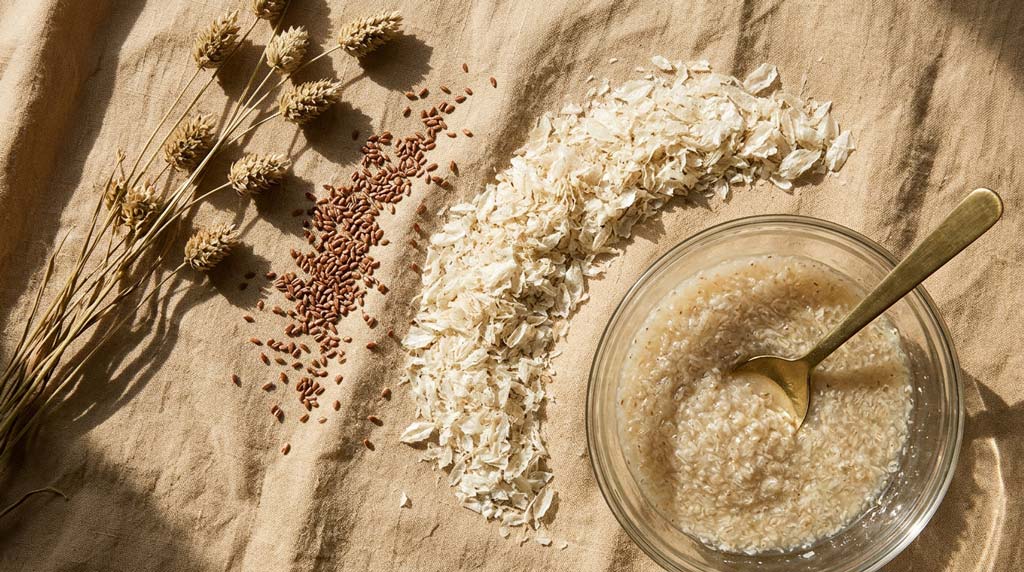
A wetted Plantago ovata seed releases mucilage, a slippery, gel-like coating made of long sugar chains. It comes from the husk, an outer layer of almost pure fibre that stone milling strips from the seed. The milled husk is what is sold as psyllium husk, or simply psyllium. Plantago ovata is the most researched and most commercially important of more than 200 Plantago species. Its husk is more than 90% fibre. Native to Iran, India and the Middle East, the plant is also farmed in North Africa, China and Spain. Although it is used in bread, psyllium is not a cereal.
The name causes confusion, because “psyllium” is a common name for several Plantago species. Blond psyllium, Plantago ovata, is the source of the husk. Dark psyllium is a separate, much less common species with no husk to mill. Labels that mention “Plantago psyllium husk” are almost always describing husk from Plantago ovata. In European medicine, the same product is called ispaghula husk. Studies do not always state which species they used, although related species appear to work the same way.
Husk and seed are also different products. Flour from the whole seed contains more protein, fat, and minerals than the husk. It also holds about 16 times more phenolic compounds, a family of plant chemicals. By contrast, the husk absorbs and retains more water. Husk products come as powders, granules, and, in parts of Europe, 390- or 430-mg capsules. Wafers and flavoured drink mixes are available too, and all are cheap. The husk itself has no smell or taste.
Fibre is usually labelled soluble or insoluble, yet that label says little about how it behaves in the body. Published descriptions of the same husk disagree widely. One review puts its soluble-to-insoluble fibre ratio at 7 to 3. The European Medicines Agency calls it 85% soluble. A commercial product used in one trial was 88.9% fibre, with only 23.5% soluble. Estimates of its water uptake vary too, from 40 to as much as 80 times its own weight.
Its defining feature is viscosity: how thick it becomes once wet. Soluble fibres can be thick or thin, and only the thick, viscous ones lower cholesterol and increase fullness. Mixed into water at the same strength, psyllium husk became more than 30 times thicker than oat bran. Wheat and rice bran were thinner still. After four hours of simulated stomach digestion, psyllium remained over 20 times thicker than oat bran.
The brans are insoluble, while psyllium forms a gel that keeps its thickness through digestion. Chemically, that gel is built mainly from a heavily branched chain of two sugars, xylose and arabinose. Its branches are longer and denser than in the similar fibre found in cereal bran, so scientists classify it separately.
Fibre supplements can be sorted by four properties: whether they dissolve, thicken, form a gel and are fermented (broken down by gut bacteria). Together, those properties produce four distinct groups:
- Insoluble fibres such as wheat bran hold no water and form no gel.
- Dissolving but thin fibres, such as inulin and wheat dextrin, form no gel, ferment quickly, and can cause gas. Wheat dextrin can even be constipating at typical doses of 10 to 15 g a day.
- Gel-forming fibres that ferment readily, such as beta-glucan from oats and barley, can lower cholesterol and help control blood sugar. Bacteria then break down the gel, so its effect on stools is lost.
- Psyllium sits in a group of its own: soluble, thick and gel-forming, yet classed as non-fermented.
Only a minority of the fibre supplements on the market have the physical properties needed for clinically meaningful benefits.
How It Works in The Gut
When healthy volunteers took psyllium daily, researchers extracted a gelatinous mass from their stools. No such gel appeared in people who didn’t take it. Made mostly of the husk’s two main sugars, it was fibre that had passed through the entire gut intact.
The gel made up only 1.5% of wet stool, yet it almost doubled the thickness of liquid extracted from it. It also gave stools a glossy, slippery coating. That helped them slide through the colon and hold together even when very soft. No one had ever recovered intact viscous fibre from human stool before. Other gel-forming fibres, such as concentrated citrus pectin and the beta-glucan in oats and barley, are completely fermented in the colon.
That gel explains most of what psyllium husk does, and it gets to work well before it reaches the colon. Human enzymes cannot break the links between its sugars. Less than 10% of the mucilage breaks down in the stomach. Taken with or before a meal, the swollen gel takes up space in the stomach and slows its emptying. Stomach stretching is a well-established appetite signal, so prolonging it may explain why fullness lasts for hours after a psyllium meal.
In the small intestine, the gel thickens chyme, the soupy mix of partially digested food and digestive juices. Thicker chyme slows contact between enzymes and food, so nutrients travel further down the intestine before they are absorbed. Their arrival lower down is thought to release hunger-reducing gut hormones. One of them, glucagon-like peptide 1 (GLP-1), also helps regulate blood sugar. They also trigger the “ileal brake”, a signal from the end of the small intestine that slows the meal’s passage.
Glucose from the meal is also absorbed more slowly, which lowers the blood sugar peak after eating. The gel also thickens the thin layer of water lining the intestinal wall, making it harder for nutrients to cross. This slowing of carbohydrate digestion resembles the action of a class of diabetes drugs called alpha-glucosidase inhibitors. Whether psyllium raises GLP-1 in the same way those drugs do has not actually been explored. Insoluble and thin, non-gelling fibres do not change how fast nutrients are absorbed because neither forms a gel.
The same thickening is thought to lower LDL cholesterol (low-density lipoprotein, the “bad” cholesterol) by two routes. First, the gel reduces contact between fat-digesting enzymes and dietary fat, so less fat is absorbed. Second, it traps bile acids, digestive substances the liver makes from cholesterol and normally recycles.
Around 95% of bile acids are usually reclaimed at the end of the small intestine and reused. When the gel carries them out in stool instead, the liver pulls LDL cholesterol from the blood to make replacements. It does so by making more LDL receptors, the docking points that capture cholesterol particles from the bloodstream. The gel-forming portion responsible for this is the part that bacteria ferment poorly.
In the large intestine, the gel holds water and resists drying out, increasing stool weight and softening stool. Each gram of husk adds roughly 4 to 6 g to stool weight, depending on the study, more than wheat or oat bran. Magnetic resonance imaging (MRI) scans show where that water sits. In one study, taking 7 g three times a day increased water in the small bowel and the volume of the colon.
Yet the time food took to pass through healthy people’s guts did not change. In men with irritable bowel syndrome (IBS), stool weight rose with every increase in dose, while transit time held at about 28 hours. One proposed explanation, still a hypothesis, is that the gel shields the colon’s sensors from irritants such as bile acids. Coarse wheat bran raises stool water differently: it irritates the bowel lining, which releases water as a defence.
Whether gut bacteria ferment psyllium is something researchers have disagreed on. One side points to five well-controlled human studies that found no sign of fermentation in breath gas, wind or fatty acid production. Laboratory tests that suggest otherwise usually blend the husk with stool at high speed. That shreds the gel and makes it easy to ferment. Its gel may keep bacteria out, while its dense branching blocks their enzymes. In people with IBS, a single 20 g dose caused no rise in breath hydrogen, a sign of fermentation. MRI also showed no extra gas in the colon.
Other measurements point the opposite way. In healthy people, intact husk appeared in stools alongside higher fatty acid levels. That suggests part of it had been fermented. One study found that roughly half its sugars were digested, with large differences between individuals.
The European Medicines Agency describes it as only partly fermentable, with laboratory tests leaving 72% unfermented. About 55% of the mucilage is the gel-forming portion that bacteria ferment poorly, while a much smaller portion, under 15%, ferments rapidly. A 2025 review calls psyllium partially fermentable, with the amount depending on dose, other fibres eaten alongside and processing. Either way, the slowly fermented gel is the part that holds water and removes bile acids.
Its effect on gut bacteria depends on whose gut it enters. In healthy adults, six days of psyllium husk at 21 g a day raised stool water, yet only two groups of bacteria changed. A healthy gut community tends to resist change. In constipated adults, the same dose increased several bacteria that produce butyrate, a fatty acid that colon cells use for fuel.
Those increases tracked higher stool water, while a group linked to hard stools declined. Butyrate and related fatty acids are thought to strengthen the gut lining, which is weakened in IBS. Similar shifts appeared in women with chronic constipation, and across studies they were stronger in constipation than in health.
Some of those changes may not be growth at all. Certain bacteria that rose in stool normally live higher up, so faster-moving contents may simply have washed them out. Laboratory work shows that some gut bacteria can feed on psyllium’s sugars, giving it prebiotic potential (the capacity to feed beneficial microbes). However, in a laboratory model of a healthy gut, it did not strongly change which bacteria were present.
Psyllium Husk for Bowel Symptoms
In 16 trials of adults with chronic constipation, 66% responded to fibre supplements and 41% to a placebo (dummy treatment). Psyllium produced the strongest and most consistent response of any fibre tested. People taking it were about 1.8 times as likely to respond as those on a placebo. Across the fibres, response improved only at doses above 10 g a day.
Psyllium added about three bowel movements a week. Laxative drugs that draw water into the bowel or stimulate it add about 2.5. Since a normal week ranges from 3 to 21 bowel movements, three more can move someone with constipation back into that range. It was the only fibre that significantly reduced straining, and it softened stools more than the others.
Fibre did not improve overall symptom scores, bloating, abdominal pain or the feeling of incomplete emptying. No trial measured quality of life with psyllium. Fibre therefore suits some constipation complaints better than others:
- More likely to help: infrequent bowel movements, hard stools and straining.
- Less likely to help: bloating, abdominal pain and a feeling of incomplete emptying.
Those results come with caveats. None of the 16 trials had a low risk of bias, and many did not analyse every randomised patient. The placebo response was high, and trials defined “response” differently. Stool consistency results showed signs of publication bias, where positive findings are more likely to be published.
A 2023 joint guideline from two American gastroenterology societies reached a more cautious verdict. It suggests fibre supplements as a first-line treatment for chronic constipation, especially in people who eat little fibre. Of the fibres it assessed, only psyllium appeared effective. Yet the evidence for psyllium came from three small placebo-controlled trials run between 1986 and 1995, mostly in women.
Together, they showed about 2.3 more bowel movements per week and better overall relief, with no serious side effects. For every 100 people treated, about 39 more reported relief than on a placebo. Unlike the larger review, the guideline found little or no difference in stool consistency. Its panel rated the certainty of this evidence as low, because the trials were old, small and imprecise.
Wheat bran was long called the “gold standard” for constipation. However, a review of 52 trials found psyllium husk 3.4 times more effective than wheat bran at increasing stool output. Bran’s effect roughly halved in constipated people, while psyllium’s held steady. Stool consistency closely follows its water content.
Hard stool holds less than 72% water and normal, formed stool about 74%. Soft stool holds around 76%, loose stool 80% and liquid stool more than 90%. In 170 people with chronic constipation and hard stools, psyllium lifted stool water from 71% to 74% within three days. It held that level for the full two weeks. Docusate, a stool-softening drug, left stool water below 72% throughout. Bowel movements were more frequent on psyllium than on docusate.
Psyllium has not won every comparison. In one trial, the laxative polyethylene glycol beat psyllium at 3.5 g twice a day, producing 8.5 bowel movements a week versus 5.7. The European Medicines Agency questioned whether that difference offered patients any real advantage.
In another trial, dried plums, taken at 50 g twice a day, softened stools and produced more complete bowel movements than psyllium. That trial had no placebo group. Response can take time and depends on the dose. After a week on 7.2 g a day, only 48% of constipated adults passed more than three stools. The researchers suggested that more than 7 g a day, or longer than a week, may be needed.
Gastroenterology societies in the United States, Japan and Canada all recommend psyllium for irritable bowel syndrome (IBS). IBS causes recurring abdominal pain along with constipation, diarrhoea or both. The American College of Gastroenterology names psyllium as the only fibre it recommends for the condition. Bran, which many family doctors still suggest, can make IBS worse. One reason is that wheat bran is rich in FODMAPs, poorly absorbed carbohydrates that gut bacteria ferment readily.
In Dutch general practice, 275 adults with IBS took psyllium husk, bran or a rice-flour placebo, each at 10 g a day, for 12 weeks. In the first month, 57% of the psyllium group reported adequate relief, against 35% on placebo. Put simply, one extra person benefited for every four treated. The advantage held in the second month but faded by the third, when the gap was no longer statistically significant.
Overall symptom severity fell further on psyllium, but abdominal pain and quality of life did not improve beyond placebo. Bran helped only in the third month, and that result disappeared when dropouts were counted as failures. About twice as many people stopped bran because they could not tolerate it, compared with psyllium or placebo. Dropouts were high: 40% left early, most often because they felt worse. Around three in four guessed which treatment they had received.
An earlier double-blind trial in 80 patients found the same split. Overall, 82% improved on psyllium and 53% on placebo, and constipation eased. Pain and bloating, however, improved just as much on placebo. The European Medicines Agency supports psyllium as an add-on treatment when constipation dominates IBS. It judged the evidence for IBS in general unproven. A dose study in men with IBS found 20 g a day worked better than 10 g, while 30 g added nothing more. Constipation and pain improved more than diarrhoea, though that study had no placebo group.
Psyllium may also reduce gas produced by other foods. Inulin is a rapidly fermented fibre found in foods such as wheat, onions, garlic and leeks. Adding 20 g of psyllium to 20 g of inulin cut the gas produced in the colon of 19 adults with IBS by about 80%. Gas fell to levels seen with a placebo drink. Pain and bloating did not change overall, and the trial was too small to judge symptoms. Its authors suggest that pairing psyllium with FODMAP-rich foods might reduce gas without strict dieting, pending larger trials.
With loose stools, the same gel firms the stool. When a laxative was used to induce diarrhoea in nine people, 18 g of psyllium a day more than doubled stool thickness. Stool water stayed at about 91%. Two other bulking agents, calcium polycarbophil and wheat bran, had no significant effect.
Stools firmed step by step as the dose rose, from semi-liquid on placebo to soft and formed at 36 g a day. For chronic diarrhoea, psyllium with calcium halved stool frequency as effectively as the drug loperamide, and firmed stools more. Among adults with faecal incontinence (accidental bowel leakage), psyllium was the only fibre supplement that left a visible gel in stool. Leakage episodes fell at 16 g of fibre a day, a benefit not seen at 7.1 g.
The European Medicines Agency nonetheless judged the evidence for diarrhoea insufficient and its mechanism unclear. In women with diarrhoea during pelvic radiotherapy, everyone given psyllium had to switch to the drug codeine. The regulator added that doctors need to diagnose and monitor chronic diarrhoea.
For haemorrhoids, softer stools mean less straining, and the regulator gave this use its strongest evidence grade. Among people with milder haemorrhoids who were bleeding, six weeks of psyllium stopped it in about 9 out of 10. On placebo, about half did. Pain on passing stool also fell, and the effect remained visible three months later.
Another trial found daily comfort improved in mild and moderate haemorrhoids, though not in more severe, third-degree haemorrhoids. Adding banding or a flavonoid treatment to psyllium stopped bleeding faster, after about 6 and 4 days, compared with 11 days for psyllium alone. Recurrence after six months did not differ significantly. After haemorrhoid surgery, psyllium reduced pain and shortened hospital stays. One trial followed women after repair of an anal sphincter (the muscle ring that keeps the bowel closed) torn in childbirth. Adding psyllium to the laxative lactulose led to more early incontinence than lactulose alone.
What Happens to Cholesterol
Adding psyllium to a low dose of a statin drug cut “bad” LDL cholesterol as much as doubling the statin dose. Over 12 weeks, 10 mg of simvastatin plus 15 g of psyllium a day matched 20 mg of simvastatin alone. A later analysis pooling statin trials reached the same conclusion.
Researchers also paired psyllium with older drugs called bile acid sequestrants, which lower cholesterol by trapping bile. Half doses of psyllium and the drug colestipol together lowered cholesterol by 18.2%, more than either full dose alone. Its authors suggested that lower drug doses could mean fewer side effects such as constipation. In patients on another drug of this type, adding psyllium barely changed cholesterol but eased constipation, abdominal discomfort and heartburn.
Used alone, it has a smaller effect. Clinical trials of psyllium husk show falls in total and LDL cholesterol, while HDL, the “good” cholesterol, stays unchanged. The European Medicines Agency reports an average fall of nearly 7% in LDL and 4% to 5% in total cholesterol. A 2018 review of 28 trials, using a median of about 10 g a day, confirmed a significant fall.
Judging this effect small next to statins, the regulator backed psyllium only as an add-on to diet for high cholesterol. It also advised that people with high cholesterol raise their fibre intake before starting medicines.
LDL is the usual treatment target, but two other measures predict heart risk better in most groups. Non-HDL cholesterol counts all the cholesterol carried in particles that can clog arteries. Apolipoprotein B, or apoB, counts how many of those particles there are. In the long-running Framingham Heart Study, people with fairly high LDL but normal apoB were at low risk of heart attacks and strokes. Both measures now appear in US and Canadian cholesterol guidelines. The 2018 review found that psyllium lowered both, and it rated the evidence for apoB as high quality. An earlier analysis of eight trials, however, found no significant change in apoB.
Powder stirred into a drink, and psyllium baked into cereal, biscuits or bread lowered LDL by similar amounts. Adults with high cholesterol who ate psyllium-enriched cereals, pasta, snack bars and bread for 24 weeks ended with LDL 5.3% lower than controls. The effect of psyllium husk also depends on the surrounding diet. It has worked alongside low-fat diets and cholesterol medication.
Among gel-forming fibres, the more viscous the fibre, the larger the fall in cholesterol. In healthy people, viscosity predicted cholesterol lowering better than the amount of fibre eaten. Psyllium and oat or barley beta-glucan, both highly viscous, are the only two fibres with a US heart health claim based on lowering cholesterol. Psyllium needs 7 g of soluble fibre a day to qualify, against 3 g for beta-glucan. Plant variety, growing conditions, handling and storage can mean one sample contains several times as much fibre as another. That may explain some of the variation between trials.
Researchers still disagree on two points:
- How much is needed: One analysis estimated LDL falls of 5.6%, 9.0% and 12.5% at 5, 10 and 15 g a day. The 2018 review found no dose effect between 2.4 and 20.4 g, and doses of 10 g or more worked no better than lower ones. Its authors suggested re-examining the 10.2 g of husk behind the US claim. Yet a 16-week study of 6 g a day, taken in one go, found no change in cholesterol at all.
- Who benefits: One review argues that gel-forming fibres have no appreciable effect on normal cholesterol and help progressively more as levels rise. The 2018 review found similar effects whether or not people had high cholesterol, while calling for more trials in people with normal levels.
A single dose does not move cholesterol. After a burger containing 12 g of psyllium, healthy young adults’ cholesterol matched that seen after a standard burger. Their triglycerides (blood fats that rise after a meal), however, rose significantly less. An earlier study in overweight men found the same pattern. Cholesterol falls appear with steady daily use, over 3 or 12 months, in people with raised blood fats or excess weight.
The trials vary widely in quality. In the 2018 review, results differed considerably between trials, for reasons that remained largely unexplained. No trial measured non-HDL cholesterol directly, and only nine measured apoB. Trials at high risk of bias from missing data reported larger falls in non-HDL cholesterol.
A 2025 review of 41 trials still found significant falls in LDL and total cholesterol. Its authors still judged the overall effect on blood fats inconclusive. They cited large differences between trials and signs that small studies were skewing the LDL result.
Lower LDL cholesterol does reduce the risk of coronary artery disease, the narrowing of the heart’s arteries. Each 1% fall in LDL has been estimated to cut that risk by 1.2% to 2.0%. For psyllium itself, though, no studies have measured heart attacks, strokes or deaths. For that reason, the European Medicines Agency would not recommend it for reducing cardiovascular risk in general.
Psyllium Husk and Blood Sugar
Across 14 multi-week trials in people without diabetes, fasting blood sugar barely moved. The average fall was too small to rule out chance, and most participants already had normal levels. Many of those trials were designed to test cholesterol, not blood sugar.
After a single meal, however, psyllium lowered the peaks in both blood sugar and insulin. One dose may not lower the insulin response in healthy people. Long-term use, though, appears to improve insulin sensitivity. In overweight and obese adults, daily psyllium lowered fasting insulin and insulin resistance at 3, 6 and 12 months. Those effects tended to scale with each person’s starting blood sugar.
Data from 1,075 people in 11 trials of 10.2 g a day show the effect growing as control worsens. The effect was not significant at normal fasting glucose. In prediabetes (blood sugar above normal but below the diabetes range), the fall grew with each step up in starting glucose. Even at its largest, the fall was small, around 5 mg/dL (milligrams per decilitre). Yet long-term metformin, a diabetes drug, produced a similar change in people at high risk of diabetes, alongside 31% fewer new cases. That prevention result belongs to the metformin trial; for psyllium, the shared ground is the size of the glucose change.
People with metabolic syndrome sit higher on the same ladder. In a six-month trial, researchers followed 141 patients on a restricted diet, with some adding 3.5 g of psyllium twice a day. Psyllium cut fasting glucose by 28%, fasting insulin by 20% and HbA1c (a measure of average blood sugar over recent months) by 10%.
A less viscous, fermentable fibre, partially hydrolysed guar gum, achieved smaller falls in glucose and insulin at the same dose. By the end, 12.5% of the psyllium group no longer met the diagnosis of metabolic syndrome. That compared with 2.1% on guar gum and none on diet alone.
The largest effects appear in type 2 diabetes. Taken before meals for several weeks, psyllium husk lowered fasting glucose by an average of 37 mg/dL across trials in this group. HbA1c fell by almost one percentage point, which the analysis authors likened to many diabetes drugs. Participants were already treated with diet alone or with medication.
Starting levels shaped the size of the change. Patients who began with very high readings saw fasting glucose fall about 90 mg/dL more than on placebo. They took 5.1 g twice a day for eight weeks. In newly diagnosed adults in Gaza already on medication, 10.5 g a day for eight weeks lowered fasting glucose from 163 to 119 mg/dL. HbA1c fell from 8.5% to 7.5%, and a measure of the pancreas’s insulin-making capacity rose.
That trial compared psyllium with usual diet and gave the control group no dummy supplement. In another trial, even 3.4 g and 6.8 g a day lowered HbA1c and fasting glucose. A two-week trial, by contrast, cut fasting insulin without changing fasting glucose, possibly because it was so short.
A 2024 review of 19 trials in 962 adults confirmed significant falls in fasting glucose, HbA1c and insulin resistance. Insulin levels themselves did not fall significantly. The certainty of the evidence was rated moderate for the first three and low for insulin. Results varied widely between trials, which were mostly small and used different doses, durations and types of psyllium. HbA1c did not fall significantly at doses below 10 g a day. Fasting glucose did not fall in trials shorter than 50 days. One earlier review linked 10 to 14 g a day for six to eight weeks with lower glucose. Lowering insulin took 21 to 23 g a day for at least 12 weeks.
How psyllium is eaten changes the result. When psyllium husk is baked into food, the amount needed can make the food less appealing. Gluten-free bread made with 17% psyllium had a 25% lower glycaemic index, yet scored lower for acceptability than bread with about 3%.
Taken as a supplement just before a meal, psyllium had no significant effect on blood sugar in overweight and obese men. The researchers suggested mixing it into food instead. A psyllium-enriched snack lowered blood sugar peaks, whereas an oat-enriched snack only delayed them. In type 2 diabetes, 6.8 g taken before breakfast and dinner reduced the blood sugar rise after both meals. The rise was 14% smaller after breakfast and 20% smaller after dinner. The rise after lunch, a meal eaten without psyllium, was also 31% smaller.
The European Medicines Agency found the data too limited to support psyllium as an add-on treatment for diabetes. Studies were often small, described the treatment poorly, and showed inconsistent HbA1c results. Even so, the regulator removed an earlier warning against use in diabetes because the data suggested a possible benefit. In one trial, people with type 2 diabetes taking psyllium tolerated the drug metformin better in the stomach.
Does It Help with Weight Loss
Reviews of psyllium and body weight published since 2020 report loss, no change, and even gain. Each review based its findings on a different set of trials.
In a small trial of overweight volunteers, 10.8 g of psyllium taken just before a meal slowed stomach emptying from the third hour. Six hours after eating, they felt less hungry and fuller than on placebo. When healthy young adults ate a burger containing 12 g of psyllium, they stayed fuller for up to five hours. Their food records showed they then ate significantly less energy and fat.
Earlier single-meal studies found only weak trends, while a dose trial found significant effects on fullness from 6.8 g upwards. Fullness, though, only hints at weight loss. In a review of 17 placebo-controlled trials of mostly insoluble fibre supplements taken with calorie-restricted diets, only one produced more weight loss than placebo. Gel-forming fibres such as psyllium, guar gum and pectin do increase fullness and reduce later food intake.
A six-month trial in 141 people with metabolic syndrome tracked weight. Everyone followed a restricted diet, and some added psyllium or partially hydrolysed guar gum. The diet-alone group lost weight for four months, then regained it. The guar group lost 2.4 kg in two months, then also regained it. Only the psyllium husk group kept losing for the full six months, finishing 3.3 kg below its starting weight.
One proposed explanation is that psyllium stays viscous and unfermented, so the body harvests no calories from it. Overweight adults with type 2 diabetes took 10.5 g a day for eight weeks in another trial. They lost 2.7 kg and 2.6 cm from the waist. The control group, on its usual diet, gained weight over the same period. Other trials found nothing. Taking 10 g a day for 12 weeks left body measurements unchanged in people with fatty liver disease. In teenage boys, 6 g a day for six weeks left weight and body fat unchanged.
The reviews differ mainly in which trials they let in:
- 2023, six trials, a loss: Only randomised trials in overweight or obese adults qualified, lasting at least two months and using at least 7 g a day before or with meals. Trials designed to hold weight steady for cholesterol testing were excluded. Weight fell by an average of 2.1 kg over about five months, and results were consistent across trials.
- 2020, 22 trials, no significant change: This review accepted trials from two weeks long, at doses from 1.7 g, in food or as supplements. Overall weight changed by just 0.28 kg. Yet weight fell significantly in trials using 10 g a day or more, lasting 10 weeks or more, or giving psyllium as a supplement rather than in food.
- 2025, 27 trials, a gain: This review pooled any form and dose, in adults of any health status, over 14 to 180 days. Weight rose by an average of 3.57 kg, while waist size and BMI (body mass index) did not change significantly. Its authors called the result inconclusive and suggested psyllium’s water-binding could add temporary fluid weight in the gut.
The 2023 authors argued that the earlier reviews counted the wrong trials. Those included trials lasting only two to three weeks, cholesterol trials built to keep weight stable, and a flaxseed comparison with no untreated group. They also found that another review recorded a weight gain for a trial in which psyllium produced significant weight loss. Removing those trials turned both earlier analyses towards a significant loss.
In the 2020 review, however, removing just two trials, both counted in the 2023 review, erased even the small downward trend. In the 2025 review, weight fell in healthy people and in those over 50, yet rose in people with health conditions and those under 50. Across its trials, higher doses still went with greater weight loss. No body composition data were available, so no one can tell whether the gain was fat, muscle, or fluid. A separate network analysis, comparing many supplements at once, estimated a 3.70 kg loss with psyllium.
Even the review that found a loss treats its explanation as a hypothesis. Its authors proposed that psyllium husk works mainly by easing insulin resistance through better blood sugar control, with fullness playing a smaller part.
Two studies found no significant effect on nutrient absorption. The review’s authors projected that the average loss, about 0.44 kg a month, would reach 5.3 kg over a year. That would be 6.1% of average body weight, within the 5% to 10% range linked to better overall health. Four of the six trials, however, lasted only two to three months. None came from the United States, and publication bias could not be tested with so few trials.
How to Take Psyllium Husk
In one clinical trial, researchers split each 20 g dose across four 125 ml drinks, stirring the husk in just before drinking. The researchers did this because psyllium thickens quickly in liquid, which can make a drink feel unpleasant. All 500 ml went down within five minutes. The gel that gives psyllium husk its effects also makes it awkward to drink.
Doses in trials, on labels and in official guidance often describe different things. A 15 g daily dose of one commercial psyllium husk supplement supplied 8.8 g of actual fibre. Roughly a third of each gram was coating. The dose most often shown to work in trials is 10 to 15 g a day.
It is usually split into three doses of about 3.4 to 5 g, taken before main meals. The European Medicines Agency sets lower official doses for constipation. Adolescents and adults take 7 to 11 g a day, in one to three doses. For use alongside other treatment in constipation-predominant IBS or high cholesterol, the dose can rise to 7 to 20 g a day. Children aged 6 to 12 get about half to two-thirds of the adult dose.
The regulator does not recommend it for children under 6. Food labels in Europe use a different scale. A daily serving needs 3.5 to 14 g for claims about blood sugar or gut function, and 1 to 3 g for fullness claims.
For chronic constipation, trials point to more than 10 g a day for at least four weeks. Stool frequency did not improve with smaller doses or shorter courses. One earlier review found the benefit kept growing above 15 g a day. A dose just above 10 g may be easier to tolerate, which may help people keep taking it. In one IBS study, most dropouts at the 30 g daily dose struggled to consume that much fibre. That dose would require about 90 capsules a day.
Official instructions and trial methods share a basic sequence, though the details differ:
- Each dose goes into plenty of liquid. Europe’s regulator specifies at least 30 ml per gram, in water, milk, fruit juice or similar.
- A further drink follows. One drug reference advises 150 to 200 ml per dose, followed by another glass of water.
- Medicines are taken separately. European guidance recommends taking them half an hour to an hour apart. In contrast, US dietary reference material recommends at least two hours.
- Doses are taken during the day, and European guidance advises against taking one immediately before bed.
Starting slowly is common advice. For people who are not constipated, one approach starts at no more than 3 to 4 g a day. The dose then rises very gradually over several weeks, towards about 10 to 15 g a day. For people who are constipated, starting a new fibre risks cramping pain unless hard stool is cleared first.
The same source suggests clearing it with an osmotic laxative, which draws water into the bowel, before introducing the fibre. A drug reference sets a similar ladder, adding one 3.4 g dose each week until about 10.2 g a day. One trial questioned whether the build-up is needed at all. Its participants reached 16 g of fibre a day within six days, and their side effects were no different from placebo.
Psyllium can sit inside ordinary meals. In a family-doctor trial for IBS, participants mixed 10 g a day into food, preferably yoghurt, in two doses with meals. In practice, people averaged 7.1 g a day. That brought their total fibre to about 35 g, with 2.5 litres of fluid. Another trial delivered it in fruit juice and small muffins, with extra fluid alongside each muffin. People with chronic constipation drink about as much as everyone else. However, those with the lowest fluid intake are more likely to be constipated.
How soon it works depends on what is being measured. For constipation, Europe’s regulator says it usually acts within 12 to 24 hours. The full effect can take two to three days. It advises seeing a doctor or pharmacist if constipation lasts more than three days. In healthy adults, it took 7 to 10 days of daily use for psyllium to reach high levels in the stool. It took another 7 to 10 days after the last dose to clear it completely. A dose below the maximum on the label is still likely to soften stools effectively.
Not every fibre product behaves like psyllium, and not every psyllium product behaves like the raw husk. Supplements sold as completely dissolving or having no thickness, such as partially hydrolysed guar gum, wheat dextrin, and inulin, form no gel.
Processing can also weaken a product’s ability to gel. One proposed check is to stir a single dose into 120 ml of water and wait 15 minutes. If it hasn’t formed a thick gel by then, it’s unlikely to deliver the gel’s benefits for cholesterol, blood sugar, or appetite.

When Extra Care Is Needed
Europe’s medicines regulator judged that the benefits of psyllium outweigh its risks for its well-established uses. Psyllium husk has a good safety record as a bulk laxative, and the side effects reported in clinical trials are mostly mild and digestive.
Across 27 weight-loss trials, for example, no serious adverse events were reported. Serious problems are rare, and the reported cases tend to share the same conditions: too little fluid, a narrowed or slow-moving gullet or gut, or a person who is already frail. One case shows how those conditions can combine.
A 76-year-old man with Parkinson’s disease took about 5 g of psyllium powder with water each day for constipation. Within a few hours of one dose, he had trouble swallowing and discomfort in his upper abdomen. About 10 hours later, he could not swallow food, drink or even his own saliva. A scan found a 2.0 by 2.5 cm mass just above the stomach.
A camera passed down his throat confirmed a psyllium bezoar, a hardened lump of husk. Doctors broke it up and removed it. He swallowed normally two hours later. He had bought the powder without a prescription and had sometimes struggled to swallow after taking it before.
Psyllium is indigestible and draws in water, so it can swell beyond its original size if taken without enough fluid. Taking too much psyllium husk without enough water can cause constipation and, in some cases, block the gut. Reported cases mainly involve supplements, usually husk or powder.
They occur particularly in older people, people who have been fasting and people with existing bowel abnormalities. Blockage of the oesophagus (food pipe) is linked to conditions that slow swallowing, such as earlier gut surgery or a narrowed oesophagus. Up to 77% of people with Parkinson’s disease have difficulty swallowing.
Food is not always safer. A 26-year-old man developed pain and nausea 30 minutes after eating a psyllium diet food, and a scan showed a blocked small intestine. He had eaten it for six months to lose weight. The authors suspected the food contained more psyllium than products in earlier reports. They also warned that people on extreme slimming diets may become dehydrated. Some blockages can be cleared with a tube passed into the intestine, while others require surgery. In the oesophagus, a blockage can become life-threatening through perforation (a tear) or choking on regurgitated material.
The US Food and Drug Administration treats oesophageal or intestinal blockage as an important safety issue with psyllium. It banned over-the-counter sales of psyllium granules in 2007 because of the choking risk when they are taken with too little liquid. The European Medicines Agency lists the warning signs of a blockage as chest pain, vomiting and difficulty swallowing or breathing. It advises against psyllium for people with:
- an allergy to psyllium
- difficulty swallowing, any throat problem or a disease of the oesophagus
- a narrowed gut, a possible or existing bowel blockage, a paralysed bowel or megacolon (a severely enlarged colon)
- a sudden change in bowel habit lasting more than two weeks, or rectal bleeding that has not been diagnosed
- no bowel movement after taking a laxative
Faecal impaction (hard stool stuck in the bowel) with pain, nausea or vomiting can signal a blockage. In that case, the regulator advises seeking a doctor’s guidance first. It also advises stopping and seeking advice if abdominal pain appears or stools change. Older and frail people are advised to use psyllium only under medical supervision. So are people taking medicines that slow the gut, such as opioid painkillers.
Other sources add bedridden patients, people with severe malnutrition and people taking certain muscle relaxants, because weak gut muscles slow bowel movement. Psyllium preparations are not recommended for children under 3, because of the choking risk.
Everyday side effects are far more common and usually mild. Raising fibre intake can cause anything from slight discomfort to cramping, especially in constipated people or those starting on a high dose. The pain comes when a contraction pushes softer, fibre-rich stool into harder stool further along, stretching the bowel wall. It passes with the contraction and eases after a bowel movement.
Flatulence may also occur, though it generally fades as treatment continues. In a 12-week IBS trial, 74% of people on psyllium reported at least one moderate side effect. So did 66% of those on placebo. Among adults with faecal incontinence, the only symptom more common than on placebo was fullness, about twice as likely with psyllium. Wind, belching, and bloating rose over time in every group, including placebo. Expectations shaped who carried on.
One in five on psyllium asked to lower their dose, and fullness and emotional upset about symptoms predicted stopping. The researchers suggested that telling people which symptoms to expect may help them stay with treatment. In a 26-week trial of 10.6 g a day, fewer people dropped out on psyllium than on placebo, 13% versus 23%.
Fears that the gel traps vitamins and minerals have not been borne out in clinical studies. Eight weeks of 10.5 g a day left magnesium, calcium, iron and vitamins A and E unchanged in men with heart disease. Over a year at the same dose, healthy people showed small changes in some measures. None were clinically significant, except possibly vitamin B12. No upper limit for fibre has been set, and eating too much tends to be self-limiting because fibre is bulky.
Psyllium can trigger allergic reactions, from rashes and a runny nose to asthma and anaphylaxis (a severe, whole-body allergic reaction). Most cases involve people who handle the powder repeatedly at work, such as nurses, carers, pharmaceutical workers and bakers. In Spain, 25 of 31 reported cases involved accidentally inhaling the powder while preparing it.
One nurse with no history of asthma inhaled the dust while mixing a large bag of psyllium laxative powder into water at a care home. She developed asthma that remained moderate to severe over 33 years of follow-up, despite no further exposure. She needed long-term steroids, broke ribs during coughing fits and could not return to work. For people taking psyllium themselves, the agency found only a limited number of reactions, mostly not serious. It saw no relevant risk for the general population.
Granules release less airborne dust than powders, and avoiding inhalation while preparing a dose reduces the risk of becoming sensitised. Products can also be contaminated during manufacture with other allergens, such as sesame or mustard proteins. In the United States, psyllium husk is considered safe at 10.2 g a day if it is at least 95% pure. US rules also require a protein content of no more than 3%.
Psyllium can delay the absorption of medicines taken at the same time. The European Medicines Agency names minerals, vitamin B12, heart drugs called cardiac glycosides, coumarin-type blood thinners, carbamazepine and lithium. In one case, a patient’s blood lithium fell by 48% on two teaspoons of husk a day. It returned to normal once the patient stopped the husk.
Evidence for other drugs points both ways. Psyllium did not disturb steady levels of the heart drug digoxin in older hospital patients. One patient needed over 40% more of the thyroid hormone levothyroxine until the two were taken eight hours apart. A small study, by contrast, found absorption fell by only 9% when both were taken together.
The regulator advises medical supervision for anyone combining psyllium with thyroid hormones. In people with Parkinson’s disease, 3.5 g taken just before each levodopa dose left the drug’s absorption unchanged. It made blood levels steadier, with fewer erratic peaks, though the researchers called for a long-term study.
Diabetes medicines raise a different issue. Gel-forming fibres do not directly cause low blood sugar, and trials have seen no clinically significant episodes attributable to psyllium. No formal studies have tested psyllium alongside glucose-lowering drugs, however, so monitoring is advised for people combining them. An effective fibre may also reduce the dose of diabetes or cholesterol medicine a person needs.
Data in pregnancy are limited, with fewer than 300 recorded outcomes. The European Medicines Agency says psyllium may be considered in pregnancy and breastfeeding if needed and if dietary changes have not worked. In older studies of pregnant women, it worked about as well as irritant laxatives, with fewer side effects than those drugs.
One 2000 trial suggested psyllium might increase the return of bowel polyps called adenomas, particularly with high calcium intake. The regulator judged that study too flawed to link psyllium with bowel cancer, citing too few participants and incomplete information.
Across all of this evidence, one physical property keeps returning. The gel that holds water in a hard stool is the same gel that can lodge in a gullet when fluid runs short. Its thickness slows sugar and traps bile only when the product actually gels and enough of it is taken. How much it helps then depends on the person, from their blood sugar control to the cause of their bowel symptoms. Psyllium husk adds a tested fibre to a diet, while a fibre-rich diet changes what people eat.
More than 60 years after researchers first showed psyllium lowers cholesterol, the research has answered some questions and left others open. Decades of trials support its role in easing constipation and lowering “bad” cholesterol. Its benefit for blood sugar depends on how poorly that sugar is controlled to begin with.
Its effect on weight is still disputed, and whether it prevents heart attacks or strokes has never been tested. The most recent reviews call for longer trials, standard doses, and tighter dietary control. Those studies will decide how much more can be claimed for psyllium husk.
Sources
- Abutair AS, Naser IA, Hamed AT. Soluble fibers from psyllium improve glycemic response and body weight among diabetes type 2 patients (randomized control trial). Nutr J. 2016 Oct 12;15(1):86.
- Belorio, M., and Gómez M. 2022. “Psyllium: A Useful Functional Ingredient in Food Systems.” Critical Reviews in Food Science and Nutrition 62, no. 2: 527–538.
- Bergmann JF, Chassany O, Petit A, Triki R, Caulin C, Segrestaa JM. Correlation between echographic gastric emptying and appetite: influence of psyllium. Gut. 1992 Aug;33(8):1042-3.
- Bijkerk CJ, de Wit NJ, Muris JW, Whorwell PJ, Knottnerus JA, Hoes AW. Soluble or insoluble fibre in irritable bowel syndrome in primary care? Randomised placebo controlled trial. BMJ. 2009 Aug 27;339:b3154.
- Bliss DZ, Savik K, Jung HJ, Whitebird R, Lowry A. Symptoms associated with dietary fiber supplementation over time in individuals with fecal incontinence. Nurs Res. 2011 May-Jun;60(3 Suppl):S58-67.
- Bliss, D. Z., Savik K., Jung H.-J., Whitebird R., Lowry A., and Sheng X. 2014. “Dietary Fiber Supplementation for Fecal Incontinence: A Randomized Clinical Trial.” Research in Nursing & Health 37, no. 5: 367–378.
- Brum J. Ramsey D. McRorie J. Bauer B., & Kopecky S. (2018). Meta-analysis of usefulness of psyllium fiber as adjuvant anti-lipid therapy to enhance cholesterol lowering efficacy of statins. The American Journal of Cardiology, 122(7), 1169–1174.
- Cai, J.-S., and Chen J.-H. 2014. “The Mechanism of Enterohepatic Circulation in the Formation of Gallstone Disease.” The Journal of Membrane Biology 247, no. 11: 1067–1082.
- Chang L, Chey WD, Imdad A, Almario CV, Bharucha AE, Diem S, Greer KB, Hanson B, Harris LA, Ko C, Murad MH, Patel A, Shah ED, Lembo AJ, Sultan S. American Gastroenterological Association-American College of Gastroenterology Clinical Practice Guideline: Pharmacological Management of Chronic Idiopathic Constipation. Am J Gastroenterol. 2023 Jun 1;118(6):936-954.
- Chen YA, Cervini P, Kirpalani A, Vlachou PA, Grover SC, Colak E. Small bowel obstruction following computed tomography and magnetic resonance enterography using psyllium seed husk as an oral contrast agent. Can J Gastroenterol Hepatol. 2014;28:391–395.
- Cicero AFG, Derosa G, Bove M, Imola F, Borghi C, Gaddi AV. Psyllium improves dyslipidemaemia, hyperglycaemia and hypertension, while guar gum reduces body weight more rapidly in patients affected by metabolic syndrome following an AHA step 2 diet. Mediterr J Nutr Metab. 2010; 3: 47–54.
- Darooghegi Mofrad M, Mozaffari H, Mousavi SM, Sheikhi A, Milajerdi A. The effects of psyllium supplementation on body weight, body mass index and waist circumference in adults: A systematic review and dose-response meta-analysis of randomized controlled trials. Crit Rev Food Sci Nutr. 2020;60(5):859-872.
- Dikeman, C. L., Murphy M. R., and Fahey G. C. 2006. “Dietary Fibers Affect Viscosity of Solutions and Simulated Human Gastric and Small Intestinal Digesta.” The Journal of Nutrition 136, no. 4: 913–919.
- Drug Monograph. Psyllium.
- European Food Safety Authority (EFSA). 2010. “Scientific Opinion on the Substantiation of Health Claims Related to Dietary Fibre (ID 744, 745, 746, 748, 749, 753, 803, 810, 855, 1415, 1416, 4308, 4330) pursuant to Article 13(1) of Regulation (EC) No 1924/2006.” EFSA Journal 8, no. 10: 1735.
- European Medicines Agency, Committee on Herbal Medicinal Products. Assessment report on Plantago ovata Forssk., seminis tegumentum. London: EMA; 2013. EMA/HMPC/199775/2012.
- European Medicines Agency, Committee on Herbal Medicinal Products. Community herbal monograph on Plantago ovata Forssk., seminis tegumentum. London: EMA; 2013. EMA/HMPC/199774/2012.
- Fernandez-Martinez MN, Hernandez-Echevarria L, Sierra-Vega M, Diez-Liebana MJ, Calle-Pardo A, Carriedo-Ule D, Sahagún-Prieto AM, Anguera-Vila A, Garcia-Vieitez JJ. A randomised clinical trial to evaluate the effects of Plantago ovata husk in Parkinson patients: changes in levodopa pharmacokinetics and biochemical parameters. BMC Complement Altern Med. 2014 Aug 12;14:296.
- Fratelli, C., Muniz D. G., Santos F. G., and Capriles V. D. 2018. “Modelling the Effects of Psyllium and Water in Gluten-Free Bread: An Approach to Improve the Bread Quality and Glycemic Response.” Journal of Functional Foods 42: 339–345.
- Fukudo, S., Okumura T., Inamori M., et al. 2021. “Evidence-Based Clinical Practice Guidelines for Irritable Bowel Syndrome 2020.” Journal of Gastroenterology 56, no. 3: 193–217.
- Gholami Z, Clark CCT, Paknahad Z. The effect of psyllium on fasting blood sugar, HbA1c, HOMA IR, and insulin control: a GRADE-assessed systematic review and meta-analysis of randomized controlled trials. BMC Endocr Disord. 2024 Jun 6;24(1):82.
- Gholami Z, Paknahad Z. The effect of psyllium consumption on anthropometric indices: a systematic review and dose-response meta-analysis of randomized controlled trials. J Health Popul Nutr. 2025 Oct 22;44(1):372.
- Gholami Z, Paknahad Z. Psyllium supplementation and lipid profiles: systematic review and dose-response meta-analysis of randomized controlled trials. Genes Nutr. 2025 Dec 9;20(1):27.
- Gibb RD, McRorie JW Jr, Russell DA, Hasselblad V, D’Alessio DA. Psyllium fiber improves glycemic control proportional to loss of glycemic control: a meta-analysis of data in euglycemic subjects, patients at risk of type 2 diabetes mellitus, and patients being treated for type 2 diabetes mellitus. Am J Clin Nutr. 2015 Dec;102(6):1604-14.
- Gibb RD, Sloan KJ, McRorie JW Jr. Psyllium is a natural nonfermented gel-forming fiber that is effective for weight loss: A comprehensive review and meta-analysis. J Am Assoc Nurse Pract. 2023 Aug 1;35(8):468-476.
- Gidley, M. J., and Yakubov G. E. 2019. “Functional Categorisation of Dietary Fibre in Foods: Beyond “Soluble” vs “Insoluble”.” Trends in Food Science & Technology 86: 563–568.
- Günal AM, Öngün Yılmaz H, Baş M. Enrichment of Hamburger Meatballs With Psyllium: Effects on Postprandial Lipidemia, Glycemia, Appetite, and Food Intake in a Triple-Blind Randomized Controlled Crossover Trial. Food Sci Nutr. 2025 Oct 9;13(10):e71066.
- Gunn D, Abbas Z, Harris HC, Major G, Hoad C, Gowland P, Marciani L, Gill SK, Warren FJ, Rossi M, Remes-Troche JM, Whelan K, Spiller RC. Psyllium reduces inulin-induced colonic gas production in IBS: MRI and in vitro fermentation studies. Gut. 2022 May;71(5):919-927.
- Jalanka J, Major G, Murray K, Singh G, Nowak A, Kurtz C, Silos-Santiago I, Johnston JM, de Vos WM, Spiller R. The Effect of Psyllium Husk on Intestinal Microbiota in Constipated Patients and Healthy Controls. Int J Mol Sci. 2019 Jan 20;20(2):433.
- Jovanovski E, Yashpal S, Komishon A, Zurbau A, Blanco Mejia S, Ho HVT, Li D, Sievenpiper J, Duvnjak L, Vuksan V. Effect of psyllium (Plantago ovata) fiber on LDL cholesterol and alternative lipid targets, non-HDL cholesterol and apolipoprotein B: a systematic review and meta-analysis of randomized controlled trials. Am J Clin Nutr. 2018 Nov 1;108(5):922-932.
- Major G, Murray K, Singh G, et al. Demonstration of differences in colonic volumes, transit, chyme consistency, and response to psyllium between healthy and constipated subjects using magnetic resonance imaging. Neurogastroenterol Motil 2018;30:e13400–11.
- Markland AD, Palsson O, Goode PS, et al. Association of low dietary intake of fiber and liquids with constipation: Evidence from the National Health and Nutrition Examination Survey. Am J Gastroenterol 2013;108(5):796–803.
- Marlett, J. A., Kajs T. M., and Fischer M. H. 2000. “An Unfermented Gel Component of Psyllium Seed Husk Promotes Laxation as a Lubricant in Humans.” The American Journal of Clinical Nutrition 72, no. 3: 784–789.
- Marwaha AS, Cockcroft D, Philipenko B. Psyllium husk (Metamucil®) induced perennial asthma: A case report. Respir Med Case Rep. 2024 Sep 20;52:102110.
- McKeown, N. M., Fahey G. C., Slavin J., and Van Der Kamp J.-W. 2022. “Fibre Intake for Optimal Health: How Can Healthcare Professionals Support People to Reach Dietary Recommendations?” BMJ 378: e054370.
- McRorie J. Clinical data support that psyllium is not fermented in the gut [letter to the editor]. Am J Gastroenterol. 2013; 108(9): 1541.
- McRorie JW Jr. Evidence-Based Approach to Fiber Supplements and Clinically Meaningful Health Benefits, Part 1: What to Look for and How to Recommend an Effective Fiber Therapy. Nutr Today. 2015 Mar;50(2):82-89.
- McRorie JW Jr. Evidence-Based Approach to Fiber Supplements and Clinically Meaningful Health Benefits, Part 2: What to Look for and How to Recommend an Effective Fiber Therapy. Nutr Today. 2015 Mar;50(2):90-97.
- McRorie JW Jr, Fahey GC Jr, Gibb RD, et al. Laxative effects of wheat bran and psyllium: Resolving enduring misconceptions about fiber in treatment guidelines for chronic idiopathic constipation. J Am Assoc Nurse Pract 2020; 32: 15-23.
- McRorie JW, Gibb RD, Kyle J, et al. Psyllium: the gel-forming nonfermented isolated fiber that delivers multiple fiber-related health benefits. Nutrition Today 2021; 56: 169-82.
- Noguerol, A. T., Larrea V., and Jesús Pagán M. 2022. “The Effect of Psyllium (Plantago ovata Forsk) Fibres on the Mechanical and Physicochemical Characteristics of Plant-Based Sausages.” European Food Research and Technology 248, no. 10: 2483–2496.
- Pal, S., Ho S., Gahler R. J., and Wood S. 2017. “Effect on Insulin, Glucose and Lipids in Overweight/Obese Australian Adults of 12 Months Consumption of Two Different Fibre Supplements in a Randomised Trial.” Nutrients 9, no. 2: 91.
- Phan, J. L., Cowley J. M., Neumann K. A., Herliana L., O’Donovan L. A., and Burton R. A. 2020. “The Novel Features of Plantago ovata Seed Mucilage Accumulation, Storage and Release.” Scientific Reports 10: 11766.
- Shahinfar H, Jayedi A, Torabynasab K, Payandeh N, Martami F, Moosavi H, et al. Comparative effects of nutraceuticals on body weight in adults with overweight or obesity: a systematic review and network meta-analysis of 111 randomized clinical trials. Pharmacol Res. 2023;196:106944.
- Shin S, Kim JH, Mun YH, Chung HS. Acute esophageal obstruction after ingestion of psyllium seed husk powder: A case report. World J Clin Cases. 2022 Mar 6;10(7):2336-2340.
- Strkalj L, Yakubov GE, Burton RA, Cowley JM. Structural and Functional Properties of Fiber From Psyllium (Plantago ovata) Husk: Current Knowledge and Strategies to Expand Its Application in Food and Beyond. Compr Rev Food Sci Food Saf. 2025 Sep;24(5):e70297.
- Tominaga Y, Hirayama I, Nonaka M, Yano T, Ishii M. Intestinal obstruction caused by consuming diet food containing psyllium. Acute Med Surg. 2023 May 10;10(1):e846.
- US Food and Drug Administration. Petitions for health claims. Code of Federal Regulations. Title 21, Volume 2. CFR §101.70. Revised November 26, 2019.
- van der Schoot A, Drysdale C, Whelan K, Dimidi E. The Effect of Fiber Supplementation on Chronic Constipation in Adults: An Updated Systematic Review and Meta-Analysis of Randomized Controlled Trials. Am J Clin Nutr. 2022 Oct 6;116(4):953-969.
- Vuksan V, Jenkins AL, Rogovik AL, Fairgrieve CD, Jovanovski E, Leiter LA. Viscosity rather than quantity of dietary fibre predicts cholesterol-lowering effect in healthy individuals. Br J Nutr. 2011; 106: 1349–1352.