


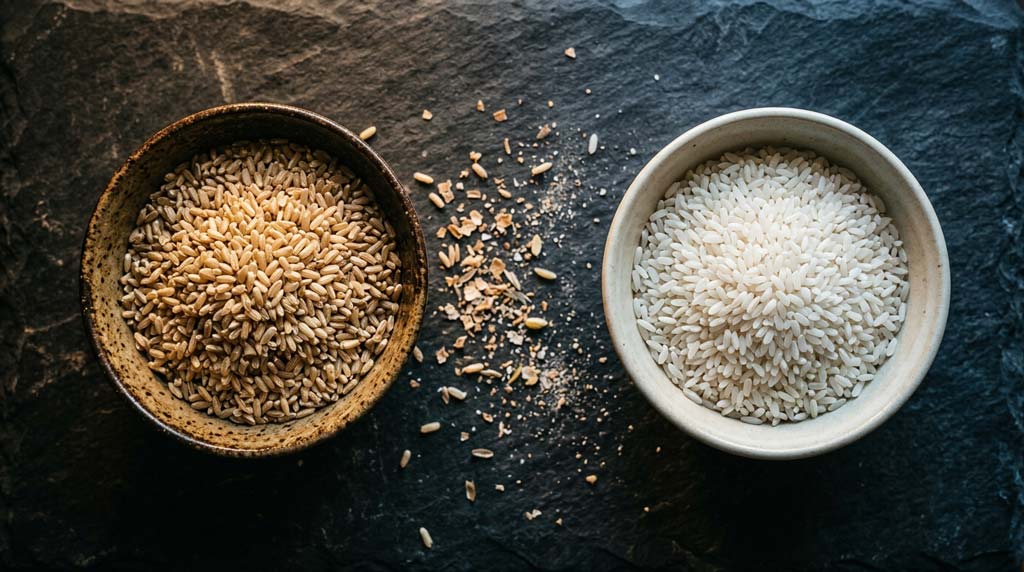
The difference between brown rice vs white rice starts with a fact that catches most people off guard. Every grain of white rice began its life as brown rice. The white version is not a different plant or a separate variety. It is the same grain, stripped back.
This thought lodged in my mind after reading a short post by Seth Godin, in which he used rice as a lens to discuss status and cultural habits. His point was about human behaviour, not nutrition. But the throwaway line about nutrients being removed during milling stuck with me. I wanted to know what actually gets lost when a grain of rice is refined. Not the marketing version. The real answer.
That question turned into three days on PubMed, pulling apart research papers, food composition data, and public health reports. What came back was striking. Rice is not just another food item sitting on a supermarket shelf.
It is the primary source of daily calories for roughly half the people on earth. More than 3.5 billion people depend on it as a staple. In some low-income countries, rice alone accounts for over 70% of total calorie intake.
Those numbers give the question weight. If billions of people eat rice every single day, then what happens to that grain before it reaches the plate is not a small detail. It is a public health question hiding in plain sight.
The global picture tells its own story. Asia produces and consumes roughly 90% of the world’s rice. Countries like Bangladesh, Cambodia, and Vietnam report daily intakes above 300 grams per person, equivalent to over 110 kilograms a year.
In sub-Saharan Africa, urban rice consumption has doubled since 1970. In the Caribbean, daily per capita intake has climbed to 195 grams. Even in the United Kingdom, rice consumption has risen by 450% since the 1970s, with up to 90% of households now purchasing it regularly.
Rice also plays a quieter but significant role for specific groups. It is a preferred food in infant and toddler feeding because of its low allergenic potential. It is a go-to grain for people with coeliac disease (a condition where gluten damages the gut lining), which affects around one in every 100 people in the UK. For these groups, the nutritional quality of the rice they rely on is even more important.
Here is the uncomfortable part. Research mapping micronutrient deficiency (a shortage of essential vitamins and minerals), rice consumption, and poverty levels found what scientists described as “an unequivocal overlap” between all three factors across every region studied.
That overlap is not random. The refining process that turns brown rice into white rice removes the outer layers, which contain most of the grain’s vitamins and minerals. The populations eating the most refined rice are the same ones with the highest rates of hidden hunger, a condition in which calorie intake appears adequate but essential nutrients are missing.
None of this means white rice is the enemy. There are genuine practical reasons why it dominates tables worldwide, from shelf life to taste to cooking time. And brown rice vs white rice is not a straightforward good-versus-bad argument either. Brown rice raises its own questions, including higher levels of arsenic (a naturally occurring toxic element that accumulates more in the outer layers of the grain). The picture is more layered than any headline suggests.
I hope to walk through the whole story in this post. How a rice grain is built, what milling actually does to it, how fibre and nutrients change when those outer layers come off, whether fortification can close the gap, and where the honest limitations of brown rice sit. All grounded in published research.
How Rice Starts Before It Is Refined
Before anything is milled, polished, or packaged, a rice grain is a small, self-contained structure built in layers. Each layer has a different job. Some protect. Some nourish. Some store energy. Understanding how these layers sit together is the key to understanding why refining changes what ends up on your plate.
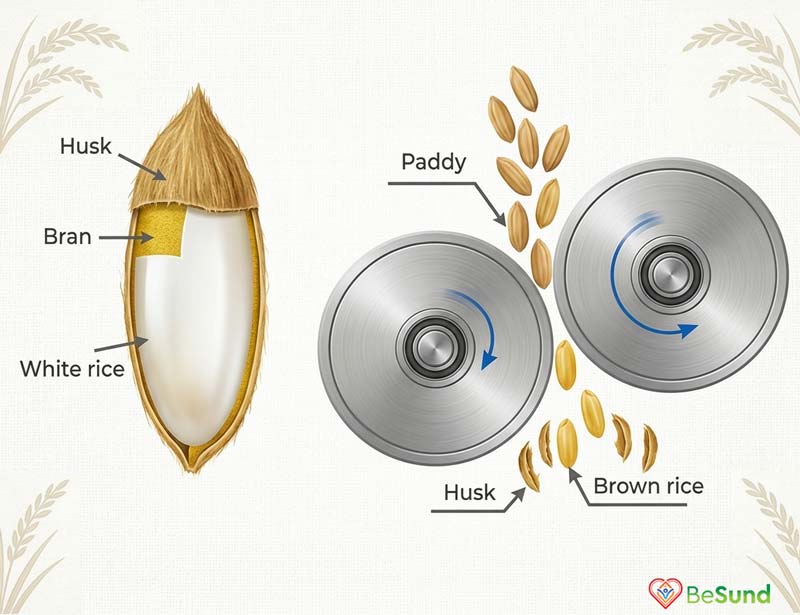
The grain starts life as paddy rice, also called rough rice. This is the raw form harvested directly from the field. It is enclosed in a tough, inedible outer shell known as the husk (or hull), made up of two interlocking leaf-like structures called the lemma and palea. The husk is hard, brittle, and rich in a substance called lignin (a woody compound that gives it rigidity). It exists solely to protect the grain from insect and fungal infestation during storage. It is never eaten.
Remove the husk, and you have brown rice vs white rice in its simplest form. Brown rice is the whole grain minus its armour. It still holds every edible layer intact. The husk alone accounts for roughly 20% of the total paddy weight. What remains, the brown rice kernel, is where all the nutrition lives.
From here, the grain reveals four distinct parts, each with a different role and a different nutritional profile.
- The Bran
The bran is the outermost edible layer, sitting just beneath where the husk used to be. It is actually made up of several thin sub-layers: the pericarp (the ripened ovary wall), the seed coat, the nucellus, and the aleurone layer. Together, these make up roughly 8-10% of the grain by weight.
Despite being thin, this is where the nutritional action is concentrated. The bran carries the majority of the grain’s fibre, B vitamins, minerals, and antioxidants. It also contains 15%-20% oil, including oryzanol, tocopherols (vitamin E), and phytosterols (plant-based compounds linked to heart health).
The aleurone layer, the innermost part of the bran, deserves a special mention. It can be one to seven cells thick and is densely packed with protein bodies and lipid bodies (tiny fat stores). This single layer is one of the richest sites for vitamins and minerals in the entire grain. It is also one of the first things removed during milling.
- The Germ
The germ (also called the embryo) is the small structure at the base of the grain that would sprout into a new rice plant if given the chance. It accounts for only 2-3% of the grain’s weight, but it is nutrient-dense relative to its size. It contains healthy fats, vitamin E, B vitamins, and minerals. Like the bran, the germ is stripped away during the production of white rice.
- The Endosperm
The starchy endosperm is the bulk of the grain, accounting for roughly 89-94% of the kernel. It is composed of starch granules and some protein and provides most of the grain’s energy. However, it holds very little of the original vitamin, mineral, or fibre content. This is the part that survives refining. When you eat white rice, you are eating almost exclusively the endosperm.
- Why the Structure Matters
Here is the number that puts it all in perspective. The bran, germ, and outer layers collectively account for only 7 to 11% of the grain by weight. Yet they account for the majority of the non-starch nutrients the grain contains. The remaining 89-93% is starchy endosperm, rich in energy but nutritionally thin. That ratio, a small outer fraction carrying a disproportionate share of the goodness, is what makes the refining process so nutritionally significant.
The interactive illustration above walks through this structure step by step, showing how each stage of milling peels back another layer and takes another share of the grain’s original nutrients with it.
What Gets Removed When Brown Rice Becomes White Rice
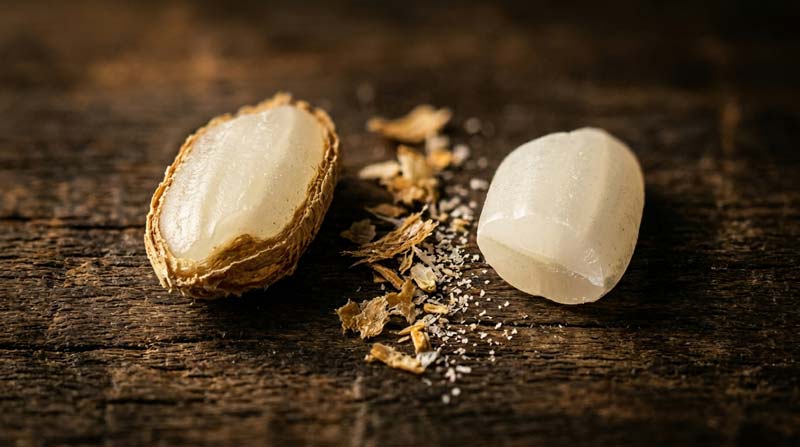
Milling is the word for what happens next (see the first image above). It sounds industrial because it is. The brown rice kernels are fed through machines that rub the grains against an abrasive surface or against each other, gradually scraping away the outer layers. This stage is called whitening. The bran and germ are stripped off. What comes out the other side is the pale, smooth, starchy endosperm that the world knows as white rice.
The amount of grain lost during this process sits between 8 and 10% of the total paddy weight. That may sound modest. But those outer layers are not just padding. They are the nutritional engine room of the grain. On average, paddy rice yields 25% husk, 10% bran and germ, and 65% white rice. So a full third of the original grain is gone before a single kernel reaches the shop.
Milling is not a uniform process either. The abrasion hits the raised ridges and middle section of each grain hardest. At lower milling levels, traces of bran, seed coat, and aleurone still cling to the grooves of the kernel. The US Federal Grain Inspection Service classifies white rice into four grades based on how thoroughly the bran has been removed, from well-milled to undermilled. Brown rice vs white rice is therefore not a clean binary. The degree of milling lies on a spectrum, as does the nutritional outcome.
What does the grain actually lose? The published figures are stark.
B vitamins take the heaviest hit. Thiamin (B1) drops by 68 to 82%. Niacin (B3) falls by 64-79%. Pyridoxine (B6) is reduced by 43 to 86%. Folic acid (B9) loses 60 to 67%. Biotin (B7) drops by 86%.
Fats are drastically reduced. Brown rice contains 1.72 to 3.84% total lipids on a dry basis, compared with just 0.09 to 1.52% in milled white rice. The bran fraction alone holds 15 to 25% lipids, including heart-protective compounds like oryzanol and tocopherols (vitamin E).
Phenolic acids (natural antioxidant compounds found in plants) are concentrated 70 to 90% in the bran. Their levels increase from the inner endosperm outward to the aleurone and bran, meaning milling removes the vast majority of these protective compounds.
Protein content falls by 10-16%, and vitamin E drops by 82%. Fat loss ranges from 77 to 82% overall.
These are not marginal reductions. When 75 to 90% of the B-group vitamins are stripped from a grain that feeds half the planet, the consequences go well past individual plates. The World Health Organization has explicitly recognised this gap.
Their fortification guidelines recommend restoring thiamin, niacin, riboflavin, and vitamin B6 to milled rice as a standard public health practice, precisely because these nutrients are lost in predictable, significant quantities.
Milling also changes things you can see and feel. White rice has a softer texture, a milder taste, a lighter colour, and a shorter cooking time. Its shelf life is significantly longer than brown rice because the oils in the bran that cause spoilage have been removed.
After milling, those exposed bran oils break down rapidly. Free fatty acids can accumulate to over 70% within a single month of storage, making unstabilised bran unfit for consumption. Proper storage can keep white rice viable for up to a decade. Brown rice lasts roughly a year.
That shelf-life advantage is not trivial. In warm climates where storage infrastructure is limited, white rice’s durability is a genuine practical benefit. Taste, cultural preference, cooking speed, and price all reinforce its dominance further. For billions of people, the choice is not really a choice at all. It is shaped by what is available, affordable, and familiar.
Yet the nutritional trade-off remains. Laboratory analysis of unfortified polished white rice shows iron at just 0.22 mg per 100 grams, vitamin A below detectable limits, and vitamin B12 at a negligible 0.08 micrograms per 100 grams. Across all micronutrients tested, polished white rice meets fewer than 10% of meaningful nutritional targets. The grain that feeds half the world arrives on the plate already depleted.
Brown Rice vs White Rice: How Fibre Changes
Fibre lives in the bran. That single fact shapes everything that follows when brown rice vs white rice is compared from a digestive standpoint. Rice bran contains between 19 and 29 grams of total dietary fibre per 100 grams. Brown rice as a whole delivers 2.9 to 4.4 grams. Milled white rice drops to just 0.7-2.7 grams. Milling removes between 63% and 78% of the grain’s fibre in one pass.
The distribution is even more lopsided than those headline figures suggest. Research measuring fibre across milling fractions found that 71% of the fibre resides in the outermost 6% of the grain, the first portion to be stripped during milling.
A further 19% sits in the next layer removed. That leaves just 10% of the grain’s original fibre scattered across the starchy endosperm that becomes white rice.
Those are the numbers. But what does losing that fibre actually mean for the body? This is where it gets practical.
- Fibre slows digestion and helps regulate the rate at which sugars enter the bloodstream. One of its key components in rice, β-glucan (a type of soluble fibre), creates gut viscosity, which has been linked to better blood sugar control and lower serum cholesterol. These effects depend on the presence of fibre in the grain. Once the bran is removed, the mechanism goes with it.
- Fibre feeds the gut. Research has shown a direct relationship between rice fibre intake and changes in the populations of bacteria living in the human gut. The bound phenolic compounds (natural plant antioxidants) carried within the bran’s fibre resist digestion in the stomach and small intestine. They reach the colon intact, where gut bacteria release them. This pathway has been linked to anti-inflammatory effects and may help reduce the risk of colon cancer. White rice, stripped of its bran, cannot deliver compounds through this route.
- Fibre from rice bran has shown specific metabolic effects in research. In one study, rice bran dietary fibre significantly reduced fasting blood glucose levels. The bound phenolics within the fibre activated an insulin signalling pathway in skeletal muscle and enriched gut bacteria that produce butyric acid (a short-chain fatty acid associated with gut health). These are not general claims about fibre. They are measured effects tied directly to the bran fraction that milling removes.
There is, however, a less comfortable side to the brown rice vs white rice fibre story. The bran not only concentrates fibre. It also concentrates inorganic arsenic (the more harmful form of arsenic found in rice). Fibre and inorganic arsenic are effectively co-located in the same layer. Some research suggests that fibre-rich diets may even increase the body’s uptake of inorganic arsenic after consumption.
There is also a question about mineral absorption. When brown rice was consumed at low protein intake, absorption rates for sodium, potassium, and phosphorus all dropped compared to milled white rice diets. Even at normal protein levels, potassium and phosphorus absorption remained lower. The fibre in the bran has a binding effect on certain minerals, meaning that not everything present in brown rice is fully available to the body.
Germinating (sprouting) brown rice can partly address this. Soaking brown rice for around 20 hours at 30 to 40°C before cooking helps neutralise phytic acid (a compound in the bran that limits nutrient absorption). It increases the bioavailability of fibre, protein, and several vitamins and minerals. It is a practical step, though not one most consumers take routinely.
Brown Rice vs White Rice: What Happens to Nutrients
Fibre is the most visible loss, but it is far from the only one. When the bran and germ are stripped away, an entire constellation of vitamins, minerals, fats, and bioactive compounds goes with them. The remaining grain is not just lower in fibre; it is also lower in other nutrients. It is a fundamentally different nutritional product.
Proximate analysis (a method for measuring the basic nutrient groups in food) makes the gap plain. Brown rice contains 7.1 to 8.3 grams of protein per 100 grams, 1.6 to 3.1 grams of total fats, and 1.0 to 1.5 grams of ash (mineral content). Milled white rice drops to 6.3 to 7.1 grams of protein, 0.3 to 0.7 grams of fat, and just 0.3 to 0.8 grams of ash.
The bran itself, removed and discarded, carries 15 to 19.7 grams of fat and 6.6 to 9.9 grams of ash per 100 grams. The richest fraction of the grain ends up as a by-product.
To understand where each nutrient actually sits inside the grain, and why milling hits some harder than others, it helps to look at the main categories separately.
Minerals
The minerals in a rice grain are not spread evenly. They are compartmentalised into specific tissues, most of which are removed during milling. Phosphorus, magnesium, and potassium sit in the globoids (small protein-mineral storage structures) found across all outer tissues.
Calcium is concentrated mainly in the aleurone layer. Iron is held primarily in the radicle tissue of the germ. Zinc is concentrated in the embryo. Every one of these sites is stripped away during the milling process for brown rice vs white rice.
The losses are steep. Iron falls by 78%. Magnesium drops by 85%. Polished white rice contains roughly 2 milligrams of iron per kilogram, compared with a recommended dietary level of 10 to 15 milligrams per kilogram. That is one-fifth to one-seventh of what would be nutritionally adequate. For populations eating rice at every meal with few other food sources, this single shortfall drives iron deficiency at a structural level.
Vitamins
The B vitamins are the hardest hit group, and their loss carries specific health consequences. Thiamin (B1) is concentrated in the aleurone and germ layers. Its deficiency causes beriberi, a disease that damages both the nervous and cardiovascular systems. Beriberi is most prevalent in populations where polished white rice is the dietary staple. The connection between the milling process and the disease is direct.
Folate (B9) carries its own story. Milling reduces folate by 60-67%, but the losses do not stop there. Storage strips a further 23%. Boiling removes another 48%. By the time white rice reaches the mouth, only a fraction of the original folate remains. Inadequate folate intake is linked to neural tube defects in newborns, megaloblastic anaemia (a condition where the body produces abnormally large red blood cells), and an increased risk of neuropsychiatric disorders.
Vitamin E tells a similar tale. The rice embryo alone holds approximately 95% of the grain’s total tocopherol (the active form of vitamin E). Milling removes that embryo entirely. Adequate vitamin E is associated with protection against oxidative stress (cell damage caused by unstable molecules called free radicals) and a reduced risk of cardiovascular disease.
Riboflavin (B2) serves as a building block for two coenzymes, FAD and FMN, that power energy production in cells, fat metabolism, and the processing of other B vitamins, including B6, B12, and folate. Its deficiency has been linked to cardiovascular disease, anaemia, and developmental disorders. Niacin (B3) acts as a cofactor for NAD+ and NADP+, molecules involved in converting food into energy and maintaining normal nervous system function. Both are concentrated in the bran.
Bioactive Compounds
The bran carries more than standard vitamins and minerals. It holds a range of bioactive compounds (naturally occurring substances that influence biological processes in the body) that are entirely absent or barely detectable in polished white rice.
Gamma-oryzanol, found exclusively in rice bran oil, has demonstrated anti-inflammatory, antitumour, and cholesterol-lowering effects. A clinical trial showed that gamma-oryzanol-enriched rice bran oil reduced LDL cholesterol (the type linked to artery blockage) in patients with high cholesterol.
Lignans (plant compounds converted by gut bacteria into health-protective forms) are present in the outer layers of grains. They are associated with a reduced risk of hormone-dependent cancers and heart disease. Phytosterols (plant-based compounds structurally similar to cholesterol) prevent the intestinal absorption of LDL cholesterol and have shown anticancer and anti-inflammatory potential.
In pigmented rice varieties, the picture is even more striking. Black rice holds over 95% of its anthocyanins (plant pigments with antioxidant properties) in the bran alone, with none detectable in the endosperm. Red rice bran contains condensed tannins (proanthocyanidins, linked to heart and gut health) with antioxidant activity. Milling eliminates virtually all of these.
What Happens After the Mill
The nutrient losses from milling are only the beginning. Washing rice before cooking, a near-universal practice in Asia, strips the grain of even more nutrients, leaving it already depleted. Losses from washing alone include 22 to 59% of remaining thiamin, 11 to 26% of riboflavin, and 20 to 60% of niacin.
Cooking compounds the damage further. Studies in India showed that washed and cooked rice lost roughly 10% of its protein, 75% of its iron, and 50% of its calcium and phosphorus. Cooking in excess water, which is then discarded, removes 30-50% of thiamin. Frying at high temperatures destroys up to 70% of it. The nutritional content of white rice as actually eaten is often dramatically lower than even post-milling figures suggest.
One thing milling does not heavily affect is protein. Rice storage proteins sit mainly in the endosperm, the portion that survives refining. Glutelins (the dominant protein type in rice) account for 60 to 80% of total seed protein and give rice a relative advantage in lysine content (an essential amino acid often lacking in other cereals). This is one area where the brown rice vs white rice gap is narrower, though brown rice still holds more overall.
There is one more wrinkle worth noting. Despite its higher raw nutrient levels, brown rice has lower digestible energy, fat digestibility, and protein digestibility than milled white rice. Elevated levels of phytate (phytic acid) and antinutritional factors in the bran reduce the amount of those nutrients the body can absorb. The difference between what a food contains on paper and what the body can extract from it is a distinction that raw numbers alone cannot capture.
Can Fortified White Rice Replace What Refining Removes?
The nutritional gap left by milling has not gone unnoticed. Governments, international organisations, and food scientists have spent decades trying to replace what the refining process removes.
The result is rice fortification, a public health strategy built on a straightforward idea: add selected vitamins and minerals to polished white rice to compensate for the nutrients lost during milling.
The World Health Organization formally recommends the fortification of rice with vitamins and minerals as a strategy for improving health in populations where rice is a staple food. The logic is sound. Rice feeds more than 3 billion people. In some countries, it accounts for over 70% of daily calories. No other single food reaches as many plates, as often, in as many countries. As a delivery vehicle for nutrients, rice is hard to beat.
As of 2016, six countries had made rice fortification mandatory: Costa Rica, Nicaragua, Panama, Papua New Guinea, the Philippines, and the United States. A further six, including Brazil, Colombia, Indonesia, and Myanmar, ran voluntary market-based programmes.
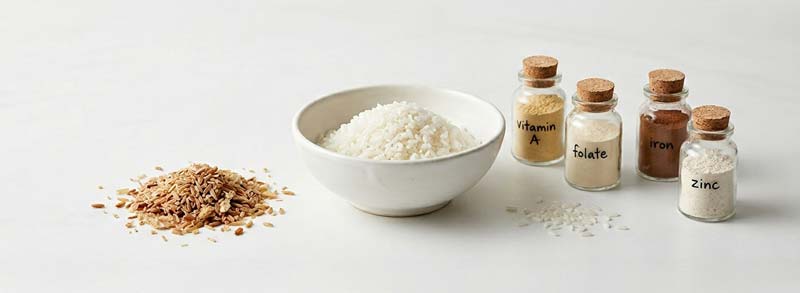
The nutrients typically added include iron (as ferric pyrophosphate), folic acid, vitamin B12, vitamin A (as retinyl palmitate), and zinc (as zinc oxide), each targeting roughly 30% of the recommended daily intake for a non-pregnant adult woman per 100 grams of cooked rice.
Getting those nutrients into the grain, however, is not as simple as sprinkling powder on top. Four main methods have been developed, each with trade-offs.
Dusting is the simplest and cheapest method. A vitamin and mineral powder is blended with polished rice grains and clings to the surface through electrostatic forces. The problem is equally simple: wash the rice, and the nutrients rinse off. In countries where rice is traditionally washed before cooking, which covers most of Asia, up to 20% of the added vitamins can be lost in the washing step alone. Packets of dusted rice must carry a recommendation not to wash before cooking, a request that runs against centuries of culinary habit.
Coating applies a concentrated vitamin and mineral mixture to the grain surface, then seals it with a water-resistant, food-grade layer. Unlike dusting, the coating does not rinse off easily. It is used primarily in the United States, the Philippines, and Costa Rica. The drawback is that coated kernels can look and taste noticeably different from uncoated rice, and consumers may pick them out and discard them during cleaning before cooking.
Cold extrusion blends rice flour with vitamins, minerals, and a binding agent, then presses the mixture through a mould at low temperatures (below 70°C) to produce grain-shaped kernels. These are blended into regular polished rice at a ratio of roughly 1:200. The kernels are opaque and easier to spot than hot-extruded versions, but the method has lower start-up costs.
Hot extrusion works similarly but at higher temperatures (70 to 110°C), producing partially precooked kernels with a sheen and transparency that closely resemble natural rice. The vitamins and minerals are embedded within the grain structure rather than sitting on the surface, which, in theory, protects them from being washed away.
However, the high temperatures and increased porosity of the extruded product put heat-sensitive vitamins at risk of destruction during both processing and cooking. Hot extrusion also requires the highest capital investment of all four methods.
Research comparing all three durable methods, coating, cold extrusion, and hot extrusion, found no systematic difference in how well they retained nutrients during cooking. This is practically significant. Coating is the cheapest option. If it performs as well as extrusion in nutrient delivery, it opens the door for lower-income countries to run effective fortification programmes without prohibitive equipment costs.
The retention picture varies sharply by nutrient, though. Iron is the most resilient, holding at 100% regardless of cooking method. Zinc stays at 89%. Vitamin B12 retains around 89%. Folic acid sits at roughly 74%, with some variation between producers ranging from 45% to 93%.
Vitamin A is the outlier. Overall retention across cooking methods averages just 43%. Soaking rice before boiling preserves around 80%. But boiling directly in excess water without soaking can destroy virtually all of the added vitamin A, with retention approaching zero for most producers.
Storage makes it worse. Under warm, humid conditions typical of sub-Saharan Africa and South Asia, vitamin A losses in coated kernels reached 93% after just six months. Vitamin A is also among the most expensive ingredients in the fortification premix. Its fragility across the supply chain, from factory to kitchen, makes it the hardest nutrient to deliver reliably through fortification.
A Cochrane systematic review of 16 studies involving over 14,000 participants found that iron-fortified rice probably reduces the risk of iron deficiency by 35% and raises haemoglobin (the oxygen-carrying protein in red blood cells) by approximately 1.77 grams per litre.
Vitamin A fortification may reduce vitamin A deficiency. Folic acid fortification may raise serum folate levels. But the evidence base thins as you move past iron. The recommendation for iron fortification is supported by moderate-certainty evidence. Vitamin A sits at low certainty. Folic acid levels are very low.
And here is the question that sits beneath all of this. Can fortification make white rice nutritionally equivalent to brown rice? The honest answer is no. Fortification targets five specific micronutrients.
The bran and germ that milling removes contain fibre, naturally occurring oils, phenolic compounds, phytosterols, lignans, gamma-oryzanol, and a full spectrum of B vitamins and minerals in their original biological form. None of these is physically reintroduced through any current fortification method. The bran is gone. The germ is gone. No amount of added ferric pyrophosphate or retinyl palmitate recreates that structure.
There is also a notable measurement gap. Fortification studies measure how much of an added nutrient survives cooking. They do not measure how much the body actually absorbs. Retention and bioavailability (the proportion of a nutrient that enters the bloodstream and is used by the body) are different things. Human absorption studies are needed to close that gap, and for most fortified rice products, those studies have not yet been done.
The WHO guideline is clear on the boundaries. Fortification programmes should not be considered replacements for adequate, varied diets. They should sit alongside efforts to improve overall dietary quality, especially in populations with monotonous, grain-heavy diets. When brown rice vs white rice is weighed through this lens, fortification is a useful tool for narrowing specific micronutrient gaps, particularly for iron. It is not a substitute for eating a less refined grain.
For populations with limited food diversity and no realistic access to brown rice, fortified white rice is a meaningful improvement over unfortified white rice. That is its value. But it is an intervention designed for nutritional emergencies, not an argument that brown rice vs white rice is a settled question. The whole grain remains a fundamentally different nutritional product from any version of the refined one, fortified or not.
Are There Any Downsides to Brown Rice?
It would be easy to end the story here. Brown rice keeps more of the grain’s natural nutrients. White rice loses most of it. Case closed. But nutrition is rarely that tidy.
When brown rice vs white rice is examined honestly, the whole grain comes with its own set of complications. None of them cancels out its nutritional advantages. But pretending they do not exist would be doing exactly what this piece set out to avoid: turning a nuanced topic into a simple good-versus-bad argument.
There are four areas worth knowing about:
1: Arsenic sits higher in brown rice than in white rice
Rice absorbs roughly ten times more arsenic from the soil than other cereal grains, largely because it grows in flooded paddy fields where soil chemistry makes arsenic more available to roots. Within the grain itself, inorganic arsenic (the more harmful form) concentrates in the bran layer.
Brown rice retains that layer. White rice does not. Studies across the UK, Brazil, Australia, China, and the Iberian Peninsula consistently confirm the pattern: brown rice carries significantly more inorganic arsenic than white rice. The International Agency for Research on Cancer classifies inorganic arsenic as a Group 1 carcinogen (a confirmed cause of cancer in humans). The World Health Organization lists it among the top ten chemicals of major public health concern. That said, context matters enormously.
For the general adult population eating rice at typical rates, the lifetime cancer risk from arsenic in rice remains low. The concern sharpens around young children. Children under five consume more food per unit of body weight than adults do. The European Food Safety Authority notes that children are two to three times more susceptible to arsenic-related health risks than adults.
In one UK study, 28 out of 55 retail rice samples exceeded the European Commission’s maximum inorganic arsenic limit for rice intended for infant consumption. It is also worth noting that organically grown brown rice has been found to contain higher levels of inorganic arsenic than non-organic brown rice, likely because organic matter added to soils increases arsenic availability to plants. That is the opposite of what many consumers would assume.
2: Phytic acid limits mineral absorption
Around 80% of the phytic acid in a rice grain is found in the aleurone layer of the bran, the part that brown rice keeps and white rice discards. Phytic acid (a storage form of phosphorus in plants) binds to iron, zinc, calcium, and magnesium in the gut, forming complexes that the body cannot absorb. Humans lack the enzymes needed to efficiently break down phytate.
The result is a genuine paradox. Brown rice holds more minerals than white rice on paper. But the phytic acid in the bran reduces how much of those minerals the body actually takes in. When brown rice diets were tested at low protein intake, the absorption rates of sodium, potassium, and phosphorus all decreased. Even at normal protein intake, potassium and phosphorus absorption remained lower than with milled white rice.
Germinating (sprouting) brown rice helps neutralise phytic acid and improve nutrient uptake. Still, the need for a specific processing step to unlock the grain’s contents confirms that raw nutrient numbers do not tell the whole story.
3: Digestibility is lower in brown rice
Research consistently shows that digestible energy, fat digestibility, and protein digestibility are all lower when eating brown rice compared with milled white rice. Studies in preschool children found higher energy absorption from milled rice than from brown rice.
Adult studies showed similar results for energy, protein, and fat. The bran layer contains trypsin inhibitor (an enzyme that can limit protein digestion) and elevated neutral detergent fibre, both of which reduce the net nutritional value the body can extract from the grain. Brown rice is richer on the label. But what the body absorbs is a different figure.
4: Storage and shelf life present practical challenges
The oils concentrated in the bran make brown rice more prone to rancidity than white rice. After milling, lipase enzymes in the exposed bran break down oil into free fatty acids at a rate of 5–7% of the oil’s weight per day.
Within a single month, more than 70% of the oil can convert to free fatty acids, and oil with more than 10% free fatty acids is considered unfit for consumption. Stabilisation: treatments such as microwave heating or infrared radiation can slow this process. But these treatments also reduce the very phenolic compounds and vitamin E that make the bran nutritionally valuable, creating yet another trade-off.
In hot, humid climates where much of the world’s rice is grown and consumed, the practical difficulty of storing brown rice safely is one reason white rice dominates.
There are also acknowledged gaps in the evidence. Many studies on rice bran and whole-grain rice use small sample sizes, short durations, and varying dosages. Long-term dose-response relationships have not been fully evaluated in clinical trials. The research is promising. It is not yet definitive.
None of this means brown rice should be avoided. It means that the decision between brown rice and white rice is more layered than it first appears. The bran that gives brown rice its nutritional edge is the same layer that concentrates arsenic, binds minerals, and shortens shelf life.
One food does not make or break a healthy diet on its own. What matters is the pattern, the frequency, the preparation, and whether the rest of the plate fills in the gaps left by any single ingredient.

What This Means for Everyday Food Choices
Everything in this piece leads to the same place. A rice grain starts as a layered, living structure with nutrients packed into its outer coat. Milling strips that coat away. What reaches the plate as white rice is mostly starch, lighter and quicker to cook, but fundamentally changed from the grain it began as.
That is not a reason to panic or a reason to preach. It is simply worth knowing. The difference between brown rice vs white rice is the difference between a grain that retains its fibre, minerals, B vitamins, and natural oils and one that has been reduced to its starchy core. Neither choice is dangerous. But they are not nutritionally equal, and pretending otherwise ignores decades of published research.
For people who eat rice occasionally, the distinction may not shift much day to day. For the billions who eat it at every meal, the form of that rice quietly determines whether essential nutrients reach the body.
The concept of hidden hunger, where a food provides enough calories to prevent starvation yet fails to deliver the minerals needed for health, is not abstract. It plays out in communities worldwide, wherever polished grain sits at the centre of the plate, and little else surrounds it.
The broader lesson here extends well beyond rice. Refining changes food. It removes layers that evolved to carry nutrients. The same principle applies to wheat, oats, and maise. Whole grains are not a marketing trend.
They are grains that still have their working parts intact. Dietary guidelines across multiple countries have consistently recommended whole grain consumption for precisely this reason. Long-term intake of whole grains is linked to reduced risk of cardiovascular disease, type 2 diabetes, and certain cancers.
For those who prefer white rice or find brown rice difficult to digest, the picture is not all-or-nothing. There are practical middle grounds.
- Parboiled white rice retains meaningfully more B vitamins than conventionally milled white rice. The parboiling process drives water-soluble vitamins from the bran into the endosperm before milling. On the same degree of milling, parboiled white rice has been reported to be nutritionally approximately 80% similar to brown rice. For anyone unwilling or unable to switch fully to brown rice, parboiled is a sound, evidence-supported step.
- Germinated (sprouted) brown rice addresses two of the grain’s practical limitations. Soaking brown rice for roughly 20 hours at 30–40°C before cooking neutralises phytic acid, improves texture and digestibility, and increases the bioavailability of vitamins B6, B12, and E, as well as magnesium, fibre, potassium, and zinc. It is particularly common in Asian diets and offers a way to unlock brown rice’s nutrients without the chewiness that puts some people off.
- Cooking methods matter more than most people realise. Washing rice before cooking removes water-soluble vitamins. Boiling in excess water and discarding it strips 30–50% of thiamine and up to 50% of niacin. Frying at high heat destroys up to 70% of thiamine. Using the absorption method (measured water, no draining) and limiting unnecessary washing are small, practical steps that preserve more of the grain’s inherent qualities.
- Where rice comes from matters for arsenic. Arsenic content varies by up to 40 times between countries. The lowest inorganic arsenic concentrations have been found in rice from East Africa and the Southern Indonesian islands. South American rice tends to be higher across the board. For consumers with access to country-of-origin labelling, this is genuinely useful information.
For households with young children, the arsenic question deserves particular attention. Children consume more food relative to their weight than adults, and the European Food Safety Authority considers them two to three times more susceptible to arsenic-related risk. This does not mean avoiding rice altogether. It means being thoughtful about the type, the origin, and the frequency.
No single food carries the weight of an entire diet. Brown rice vs white rice is a meaningful choice, but it sits inside a much larger picture: what else is on the plate, how varied the diet is, how the rice is prepared, and how often it appears at meals.
For populations eating rice three times a day with limited access to other foods, the form of that grain matters profoundly. For someone eating rice a few times a week alongside fruit, vegetables, and protein, the stakes are lower, and either form can sit comfortably in a balanced diet.
What processing removes from food is worth thinking about before it reaches the plate. Not with fear. Not with guilt. Just with the kind of quiet awareness that helps people make choices they actually understand.
Sources
- Alavi S., Bugusu B., Cramer G., Dary O., Lee T., Martin L. et al., editors. Rice Fortification in Developing Countries: A Critical Review of the Technical and Economic Feasibility. Washington (DC): A2Z Project, Academy for Educational Development; 2008.
- Alava, P., Du Laing, G., Tack, F., & Van De Wiele, T. (2012). Effect of diet on bio accessibility and biotransformation of arsenic. In Understanding the geological and medical interface of arsenic. As 2012 (pp. 306–308). CRC Press.
- Allen L., de Benoist B., Dary O., Hurrell R., editors. Guidelines on food fortification with micronutrients. Geneva: World Health Organization and Food and Agriculture Organization of the United Nations; 2006.
- Araujo, J.R., Martel, F., Borges, N., Araujo, J.M., Keating, E. (2015). Folates and aging: role in mild cognitive impairment, dementia and depression. Ageing Research Reviews 22, 9–19.
- Ashong J., Muthayya S., De-Regil L.M., Laillou A., Guyondet C., Moench-Pfanner R. et al. Fortification of rice with vitamins and minerals for addressing micronutrient malnutrition (Protocol). Cochrane Database Syst Rev. 2012;(6):CD009902.
- Bailey, R.L., West Jr., K.P., Black, R.E. (2015). The epidemiology of global micronutrient deficiencies. Annals of Nutrition & Metabolism 66, 22–33.
- Bandumula N. Rice production in Asia: Key to global food security. Proc. Natl. Acad. Sci. India Sect. B Biol. Sci. 2018;88:1323–1328.
- Bao, J. (Ed.). (2018). Rice: Chemistry and technology (4th ed.). Woodhead Publishing; AACC International Press.
- Benno, Y., Endo, K., Miyoshi, H., et al. (1989). Effect of rice fiber on human fecal microflora. Microbiol. Immunol., 33: 435–440.
- Bramley, P.M., Elmadfa, I., Kafatos, A., Kelly, F.J., Manios, Y., Roxborough, H.E., Schuch, W., Sheehy, P.J.A., Wagner, K.H. (2000). Vitamin E. Journal of the Science of Food and Agriculture 80, 913–938.
- Carey, M., Meharg, C., Williams, P., Marwa, E., Jiujin, X., Farias, J.G., De Silva, P.M.C.S., Signes-Pastor, A., Lu, Y., Nicoloso, F.T., Savage, L., Campbell, K., Elliott, C., Adomako, E., Green, A.J., Moreno-Jiménez, E., Carbonell-Barrachina, Á.A., Triwardhani, E.A., Pandiangan, F.I., Haris, P.I., Lawgali, Y.F., Sommella, A., Pigna, M., Brabet, C., Montet, D., Njira, K., Watts, M.J., Meharg, A.A. (2019). Global sourcing of low-inorganic arsenic rice grain. Exposure and Health, pp. 1–9.
- Chen H., Siebenmorgen T. & Griffin K. Quality characteristics of long-grain rice milled in two commercial systems. Cereal Chem. 1998;75:560–565.
- Consumer Reports. (2012). Consumer Reports Investigation: Varying Levels of Arsenic Found In Rice and Rice Products Show Need for Federal Action.
- Dhankhar, P. (2014). Rice Milling. IOSR Journal of Engineering (IOS of Engineering (IOSRJEN), 4(5), 34–42.
- Dong W, Cheng Z, Wang X, Wang B, Zhang H, Su N, Yamamaro C, Lei C, Wang J, Wang J, Zhang X, Guo X, Wu F, Zhai H, Wan J. Determination of folate content in rice germplasm (Oryza sativa L.) using tri-enzyme extraction and microbiological assays. Int J Food Sci Nutr. 2011 Aug;62(5):537-43.
- European Food Safety Authority. Dietary exposure to inorganic arsenic in the European population. EFSA, 12(3) (2014), p. 3597.
- Fageria, N.K. (2007). Yield of rice. Journal of Plant Nutrition 30, 843–879.
- (2013). Analytical results from inorganic arsenic in rice and rice products sampling, September 2013. US Food and Drug Administration.
- Food and Agriculture Organization of the United Nations. FAOSTAT. Crops.
- Fukagawa, N. K., & Ziska, L. H. (2019). Rice: Importance for global nutrition. Journal Nutrition Science Vitaminol, 65, S2–S3.
- Gondal TA, Keast RSJ, Shellie RA, Jadhav SR, Gamlath S, Mohebbi M, Liem DG. Consumer Acceptance of Brown and White Rice Varieties. Foods. 2021 Aug 22;10(8):1950
- Gopinger, E., Ziegler, V., da Silva Catalan, A.A., Krabbe, E.L., Elias, M.C., Xavier, E.G. (2015). Whole rice bran stabilisationstabilisation using a short chain organic acid mixture. Journal of Stored Products Research 61: 108–113.
- GRiSP (Global Rice Science Partnership) (2013). Rice Almanac, fourth ed. International Rice Research Institute, Los Baños.
- Grist, D.H. (1986). Rice. 6th ed, pp. 599. Singapore: Longman Singapore Publishers.
- International Rice Research Institute (IRRI). Milling.
- International Rice Research Institute. World Rice Statistics 2013. IRRI; Los Baños, Philippines: 2013.
- Irakli, M., Lazaridou, A., Biliaderis, C.G. (2021). Comparative evaluation of the nutritional, antinutritional, functional, and bioactivity attributes of rice bran stabilisedstabilised by different heat treatments. Foods 10: 57.
- Islam, S., Rahman, M.M., Islam, M.R., Naidu, R. (2016). Arsenic accumulation in rice: consequences of rice genotypes and management practices to reduce human health risk. Environment International, 96, 139–155.
- Jariwalla, R.J. (2001). Rice-bran products: phytonutrients with potential applications in preventive and clinical medicine. Drugs Under Experimental and Clinical Research 27(1), 17–26.
- Jiang, S.L., Wu, J.G., Thang, N.B., Feng, Y., Yang, X.E., Shi, C.H. (2008). Genotypic variation of mineral elements contents in rice (Oryza sativa L.). European Food Research and Technology 228, 115–122.
- Juliano, B.O. (1993). Rice in Human Nutrition, pp. 162. Rome: FAO.
- Kitta, K., Ebihara, M., Iizuka, T., Yoshikawa, R., Isshiki, K., Kawamoto, S. (2005). Variations in lipid content and fatty acid composition of major non-glutinous rice cultivars in Japan. Journal of Food Composition and Analysis 18(4), 269–278.
- Kumar, A., Singh, B., Raigond, P., Sahu, C., Mishra, U.N., Sharma, S., Lal, M.K. (2021). Phytic acid: Blessing in disguise, a prime compound required for both plant and human nutrition. Food Research International 142, 110193.
- Lagarda, M.J., Garcíallatas, G., Farré, R. (2006). Analysis of phytosterols in foods. Journal of Pharmaceutical and Biomedical Analysis 41(5), 1486–1496.
- Lavanya M.N., Venkatachalapathy N., Manickavasagan A. Chapter 5—Physicochemical characteristics of rice bran. In: Manickavasagan A., Santhakumar C., Venkatachalapathy N., editors. Brown Rice. Springer; Cham, Switzerland: 2017. pp. 79–90.
- Lonsdale, D. (2006). A review of the biochemistry, metabolism and clinical benefits of thiamin(e) and its derivatives. Evidence-Based Complementary and Alternative Medicine 3, 49–59.Harper, C. (2006). Thiamine (vitamin B1) deficiency and associated brain damage is still common throughout the world and prevention is simple and safe. European Journal of Neurology 13, 1–6.
- Lopez, H.W., Leenhardt, F., Coudray, C., Remesy, C. (2002). Minerals and phytic acid interactions: is it a real problem for human nutrition? International Journal of Food Science and Technology 37, 727–739.
- Mahender, A., Anandan, A., Pradhan, S.K., Pandit, E. (2016). Rice grain nutritional traits and their enhancement using relevant genes and QTLs through advanced approaches. Springerplus 5, 2086.
- Majumder, S. & Banik, P. (2019). Geographical variation of arsenic distribution in paddy soil, rice and rice-based products: A meta-analytic approach and implications to human health. Journal of Environmental Management, 233, 184–199. / Meharg, A.A., Williams, P.N., Adomako, E., Lawgali, Y.Y., Deacon, C., Villada, A., Cambell, R.C.J., Sun, G., Zhu, Y.-G., Feldmann, J., Raab, A., Zhao, F.-J., Islam, R., Hossain, S., Yanai, J. (2009). Geographical variation in total and inorganic arsenic content of polished (white) rice. Environmental Science & Technology, 43, 1612–1617.
- Meharg, A.A., Lombi, E., Williams, P.N., Scheckel, K.G., Feldmann, J., Raab, A., Zhu, Y., Islam, R. (2008). Speciation and localisationlocalisation of arsenic in white and brown rice grains. Environmental Science & Technology, 42, 1051–1057.
- Miyoshi, H., Okuda, T., Kobayashi, N., et al. (1987a). Effects of rice fiber on mineral balance in young Japanese men. Nippon Eiyo Shokuryo Gakkaishi 40: 165–170.
- Miyoshi, H., Okuda, T., Okuda, K. and Koishi, H. (1987) ‘Effects of brown rice on apparent digestibility and balance of nutrients in young men on low protein diets’, Journal of Nutritional Science and Vitaminology, 33, pp. 207–218.
- Muthayya S., Hall J., Bagriansky J., Sugimoto J., Gundry D., Matthias D. et al. Rice fortification — an emerging opportunity to contribute to the elimination of vitamin and mineral deficiency worldwide. Food Nutr. Bull. 2012;33:296–307.
- Critical Aspects of EPA’s IRIS Assessment of Inorganic Arsenic: Interim Report. National Academies Press, Washington DC (2013).
- Padua, A.B. & Juliano, B.O. (1974). Effect of parboiling on thiamine, protein and fat of rice. Journal of the Science of Food and Agriculture 25: 697–701.
- Phunikhom K., Sattayasai J., Tiamkao S., Gaysonsiri D. (2021). A randomised, double blind clinical study to assess the effects of a gamma-oryzanol-enriched rice bran oil on lipid profile in the hypercholesterolemic patients. J. Med. Assoc. Thai. 104:64–69.
- Piccoli, N.B., Grede, N., de Pee, S., et al. Rice fortification: its potential for improving micronutrient intake and steps required for implementation at scale. Food Nutr. Bull. 33: S360–S372. 2012.
- Pinkaew S., Wegmuller R., Hurrell R. Vitamin A stability in triple fortified extruded, artificial rice grains containing iron, zinc and vitamin A. Int J Food Sci Technol. 2012;47:2212–20.
- Powers, H.J. (2003). Riboflavin (vitamin B-2) and health. American Journal of Clinical Nutrition 77, 1352–1360.
- Raboy, V. (2009). Approaches and challenges to engineering seed phytate and total phosphorus. Plant Science 177, 281–296.
- Resurreccion, A.P., Juliano, B.O., Tanaka, Y. (1979). Nutrient content and distribution in milling fractions of rice grain. Journal of the Science of Food and Agriculture 30, 475–481.
- Santiago, M.I.C., Roxas, B.V., Intengan, C.L.I. & Juliano, B.O. (1984). Protein and energy utilisation of brown, undermilled and milled rices by preschool children. Quality of Plant Foods for Human Nutrition 34: 15–25. / Miyoshi, H., Okuda, T., Okuda, K. & Koishi, H. (1987b). Effect of brown rice on apparent digestibility and balance of nutrients in young men on low protein diets. Journal of Nutritional Science and Vitaminology 33: 207–218.
- Saunders R.M. The properties of rice bran as a food stuff. Cereal Foods World. 1990;35:632–639.
- Schenker, S. An overview of the role of rice in the UK diet. Nutr. Bull., 37 (2012), pp. 309–323.
- Shao, Y., Bao, J. (2015). Polyphenols in whole rice grain: genetic diversity and health benefits. Food Chemistry 180, 86–97.
- Shao, Y.F., Jin, L., Zhang, G., Lu, Y., Shen, Y., Bao, J.S. (2011). Association mapping of grain color, phenolic content, flavonoid content and antioxidant capacity in dehulled rice. Theoretical and Applied Genetics 122, 1005–1016.
- Shao, Y., Xu, F., Sun, X., Bao, J., Beta, T. (2014). Identification and quantification of phenolic acids and anthocyanins as antioxidants in bran, embryo and endosperm of white, red and black rice kernels (Oryza sativa, L.). Journal of Cereal Science 59(2), 211–218.
- Signes-Pastor, A.J., Carey, M., Meharg, A.A. Inorganic arsenic in rice-based products for infants and young children. Food Chem., 191 (2016), pp. 128–134. / National Health Service, UK. Coeliac disease — NHS. (2020).
- Srinivas, T., Desikachar, H.S.R. (1974). Removal of bran and aleurone layers at different points on the surface of rice grain during progressive polishing. Journal of Food Science & Technology 11, 83–84.
- Steiger G., Müller-Fischer N., Cori H., Conde-Petit B. Fortification of rice: technologies and nutrients. Ann N Y Acad Sci. 2014;1324:29–39.
- Su, L. J., Chiang, T.‑, & O’Connor, S. N. (2023). Arsenic in brown rice: Do the benefits outweigh the risks? Frontiers in Nutrition, 10, 1–4.
- Tan, B.L., Norhaizan, M.E., Chan, L.C. (2023). Rice Bran: From Waste to Nutritious Food Ingredients. Nutrients, 15(11), 2503.
- Tan B.L., Norhaizan M.E. Rice by-Products: Phytochemicals and Food Products Application. Springer; Cham, Switzerland: 2020. Chapter 5—Potential health benefits of rice by-products; pp. 69–102.
- Thompson, L.U. (1994). Antioxidants and hormone-mediated health benefits of whole grains. Critical Reviews in Food Science and Nutrition 34(5–6), 473–497.
- Tian, S., Nakamura, K. & Kayahara, H. (2004). Analysis of phenolic compounds in white rice, brown rice, and germinated brown rice. Journal of Agricultural and Food Chemistry 52: 4808–4813. / Wieringa, F.T., Laillou, A., Guyondet, C., Jallier, V., Moench-Pfanner, R., Berger, J. (2014). Stability and retention of micronutrients in fortified rice prepared using different cooking methods. Ann N Y Acad Sci. 1324: 40–47.
- Tian, S., Nakamura, K. & Kayahara, H. (2004). Analysis of phenolic compounds in white rice, brown rice, and germinated brown rice. Journal of Agricultural and Food Chemistry 52: 4808–4813.
- Trijatmiko, K.R., Dueñas, C., Tsakirpaloglou, N., Torrizo, L., Arines, F.M., Adeva, C., Balindong, J., Oliva, N., Sapasap, M.V., Borrero, J., Rey, J., Francisco, P., Nelson, A., Nakanishi, H., Lombi, E., Tako, E., Glahn, R.P., Stangoulis, J., Chadha-Mohanty, P., Johnson, A.A., Tohme, J., Barry, G., Slamet-Loedin, I.H. (2016). Biofortified indica rice attains iron and zinc nutrition dietary targets in the field. Scientific Reports 6, 19792.
- Tsang B.L., Pachón H. Rice fortification: evidence, status, and lessons learned in grain fortification. In: Irizarry L., Marc-André Prost M-A., Murillo D., editors. Scaling up rice fortification in Latin America and the Caribbean. Basel: Sight and Life; 2017:150–8.
- USDA (2009). United States Standards for Brown Rice For Processing, Revised. Federal Grain Inspection Service, Washington, D.C.
- Wang, H.L., Wan, X.Y., Bi, J.C., Wang, J.K., Jiang, L., Chen, L.M., Zhai, H.Q., Wan, J.M. (2006). Quantitative analysis of fat content in rice by near-infrared spectroscopy technique. Cereal Chemistry 83(4), 402–406.
- Wada, T., Lott, J.N.A. (1997). Light and electron microscopic and energy dispersive X-ray microanalysis studies of globoids in protein bodies of embryo tissues and the aleurone layer of rice (Oryza sativa L.) grains. Canadian Journal of Botany 75, 1137–1147.
- Wieringa, F.T., Laillou, A., Guyondet, C., Jallier, V., Moench-Pfanner, R., Berger, J. Stability and retention of micronutrients in fortified rice prepared using different cooking methods. Ann N Y Acad Sci. 2014;1324:40–47.
- Williams, P.N., Villada, A., Deacon, C., Raab, A., Figuerola, J., Green, A.J., Feldmann, J., Meharg, A.A. (2007). Greatly enhanced arsenic shoot assimilation in rice leads to elevated grain levels compared to wheat and barley. Environmental Science and Technology 41, 6854–6859.
- Wood, P.J. (1994). Evaluation of oat bran as a soluble fiber source characterisation of oat beta-glucan and its effects on glycemic response. Carbohydrate Polymers 25, 331–336.
- Wood, P.J., Anderson, J.W., Braaten, J.T., Cave, N.A., Scott, F.W., Vachon, C. (1989). Physiological effects of beta-D-glucan rich fractions from oats. Cereal Foods World 34, 878–882.
- Ten chemicals of major public health concern. 2020.
- World Health Organization. Guideline: fortification of rice with vitamins and minerals as a public health strategy. Geneva: World Health Organization; 2018.
- Yadav U., Arora S., Kaushik I. Rice (Oryza sativa) Bran. In: Tanwar B., Goyal A., editors. Oilseeds: Health Attributes and Food Applications. Springer; Singapore: 2021. pp. 397–426.
- Zhang X., Dong L., Jia X., Liu L., Chi J., Huang F., Ma Q., Zhang M., Zhang R. (2020). Bound phenolics ensure the antihyperglycemic effect of rice bran dietary fiber in db/db mice via activating the insulin signaling pathway in skeletal muscle and altering gut microbiota. J. Agric. Food Chem. 68, 4387–4398.