


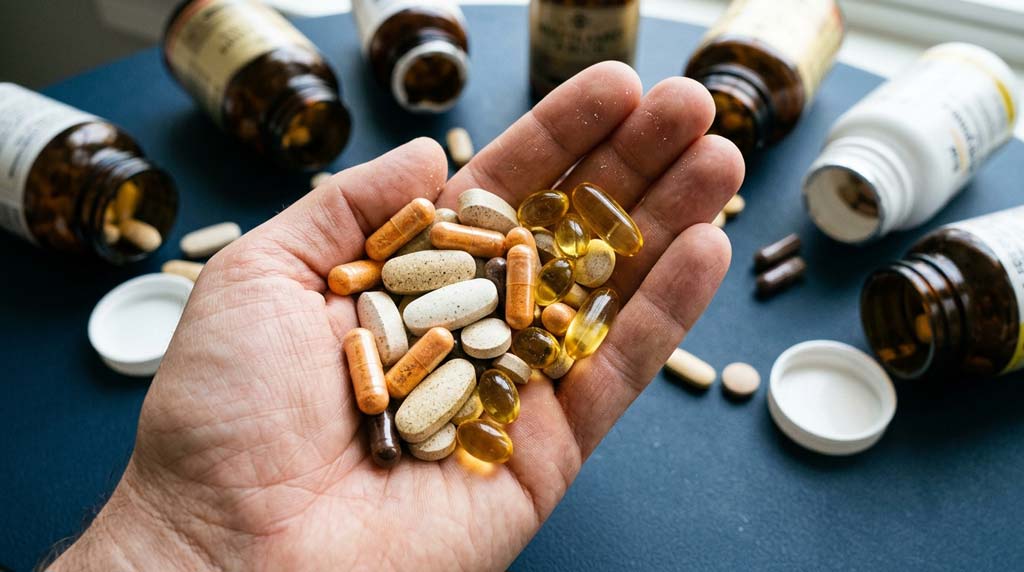
Not one of 61 German influencers who promoted 105 supplements on Instagram stated a dose, so followers could not tell whether they were taking too many supplements. None warned against overdosing either. For the same products, manufacturers gave dosage details in 97% of cases.
In 90%, they included the legally required warning against exceeding the daily amount. Influencers mentioned possible side effects for 2% of the products and drug interactions for none. Manufacturers, by contrast, covered them for 21% and 29%. The posts averaged 148 words, too short to promote a product and explain it properly.
Instead, 63% of the products came with a discount code, most often 10% and as high as 40%. The names of 56% promised a false or exaggerated effect, from “Zell Boost” to “Ah-Mazing Hair Vitamin”. Influencers promised results for 48% of the products. One presented spirulina (an algae supplement) as protection against viral infections and cancer. Discount codes obscure what a product really costs. A hopeful name, meanwhile, can steer someone towards a product they do not need, or the wrong one.
Supplements are regulated as foods in the United States (US) and Germany. No proof that they work is needed before sale. US rules still allow makers to claim that a product supports energy, wellness, joint health or weight control. Such claims need no controlled trials, yet they lead buyers to believe the product has been shown to work.
Among the most viewed YouTube videos about multivitamins, 80.4% emphasised benefits and 72.2% recommended taking them. Meanwhile, 84.5% mentioned no risks. Research on TikTok has examined nutrition content more broadly, with supplements as one topic among several. In a random sample of 250 nutrition posts, health and wellness influencers made up 32%, while dietitians made up 5%.
Only 14% of those posts were completely accurate. Of the same posts, 90% failed to set out the risks and benefits of what they promoted. Posts about foods, nutrients and supplements were split, with 46% mostly accurate and 33% mostly inaccurate. Accuracy also made no statistically significant difference to likes, comments, shares or saves, so any gaps in engagement could be down to chance.
Social media was the top source of diet and supplement information for 478 young people in Poland (56.9%). Those who relied on it had more than twice the odds of taking supplements. The link held regardless of their sex, age, education or diet quality. Their diets, however, were no better or worse than anyone else’s. The researchers concluded that online content shapes what people buy more than how they eat. A snapshot survey, however, cannot prove cause. Most users (69.8%) chose their own supplements, while 18.0% followed a doctor’s advice alone.
In a 2021 German survey on vitamin supplements, 82% of respondents had never been diagnosed with a vitamin deficiency. Most (78%) rated the health risk from vitamin supplements as medium or low. Yet 70% felt only moderately informed about that risk, or worse. Athletes describe a similar logic, taking supplements as insurance “just in case” or because they believe rivals take them. Many also regard supplements as natural or regulated, and therefore safe.
Among older Swiss patients taking five or more regular medicines, 71% agreed that supplements are beneficial. Only 6% believed everyone needs them, and only 40% thought supplements can interact with other drugs. For most statements about supplements, most patients were unsure. Of that group, 70% took at least one supplement, and users took an average of three.
Magnesium, vitamin D and vitamin B12 were the most common. Three in four users had at least one recommended by their general practitioner (GP). In addition, 31% chose one themselves, and 20% followed another doctor’s advice. They bought them from pharmacies, supermarkets, GP practices, drugstores, websites, and health food shops.
Each recommendation and each receipt covers one product. None covers the whole collection.
Supplement use ranges from 51% in Denmark and 43% in Australia to 6% in Spain and 2% in Greece. In the United Kingdom (UK), the figure is 36%. Vitamins and minerals are the most common supplements worldwide. Most people take them with no clinical signs of deficiency. In Germany, pharmacies alone sold three billion euros’ worth of supplements in 2022.
Any collection can meet a need, add a worthwhile benefit or create unnecessary exposure. One collection can do all three at once. What happens depends on what each product contains and who is taking it. It also depends on how much of every ingredient builds up across a day.
The evidence for each point is inconsistent. It is firm for some deficiencies and some harms, and thin for most products taken in combination. Following it shows where a sensible routine ends and too many supplements begin, and why that point moves from one person to the next.
What Counts as Too Many Supplements?
The 105 supplements promoted by those influencers contained 857 active ingredients between them, 238 of them different. Only 23% held a single active ingredient. The rest were combination products, and across all 105, the average was 8.16 active ingredients per product.
At that average, four products would deliver more than 30 active ingredients. Most products (80%) contained at least one vitamin. Zinc was the most common single ingredient, appearing in 37%.
Counting bottles therefore understates what a routine contains. Counting tablets can mislead in either direction, since one serving may be a single tablet or several. Bottle counts also tend to be modest. In one large national survey, fewer than 10% of adults used four or more supplement products. Clinicians, meanwhile, count supplements towards polypharmacy, the term for five or more regular medicines.
Even the word “multivitamin” has no consistent scientific or regulatory definition. Products sold under it range from three vitamins to more than two dozen vitamins and minerals. Some supply about 100% of the daily value for as many as 30. Similar names can hide different contents too: two weight-loss products sold under one brand listed 10 and 3 active ingredients, with none in common. Labels may also leave out ingredients, amounts, purity or source. A “proprietary blend” (a named mixture whose individual amounts are not disclosed) is a common example. Some products even change composition without regulators being properly told.
Every Source Adds Up
A person’s total intake of a vitamin or mineral comes from three places: food, nutrient-added foods, and supplements. Enrichment puts back nutrients lost in processing, while fortification adds more than the food naturally held. In the US, bread is enriched with thiamin (vitamin B1), niacin (vitamin B3), riboflavin (vitamin B2) and iron. Most breakfast cereals there are fortified with iron and B vitamins, and most milk with vitamin D. European fortification is lighter, and fortified foods there do not contribute significantly to high intakes of any nutrient.
Supplements can then dominate the total for some nutrients and barely register for others. In one national survey of adults, supplements supplied 93% of total vitamin B12 intake, 71% of vitamin D, and 61% of vitamin B6. For the minerals magnesium and potassium, the figures were 8.2% and 0.5%.
Herbal products then add a less visible layer. Some plants concentrate metals from the soil, so botanical supplements can carry meaningful amounts of iron, copper and zinc. Amounts can vary between brands of the same plant and between batches of one product. Manufacturing ingredients such as magnesium stearate and calcium carbonate add further metals.
Taking too many supplements that share an ingredient can push intake past safe limits without the person realising. Sports scientists call it a common poor practice among athletes: mixing many products without regard to total doses or interactions.
Reading the Safe Limits
Two reference values frame most judgements about amounts. The estimated average requirement is the daily intake that meets the needs of half the healthy people in a population. The tolerable upper intake level is usually called the upper limit. It is the highest daily intake likely to pose no risk to almost all healthy people. Above it, the risk of harm may rise. The intake an individual aims for is a third value. Called the recommended dietary allowance, it is set to cover the needs of 97.5% of people.
An upper limit therefore works as a safety ceiling. The experts who set the limits warn against treating them as rigid cut-offs. Some limits also apply only to particular sources or forms. The limits for niacin and magnesium cover supplements only. The vitamin A limit covers retinol (its ready-made form). The folate limit covers added folic acid (its synthetic form). Ignoring these details distorts the picture. Counting niacin from every food puts about 50% of people above the limit, compared with 10% when only added and supplemental niacin is counted.
Europe’s food safety authority defines its limit as the most a person can take daily over the long term. That total includes every source combined. A supplement that delivers the full limit on its own therefore leaves no room for anything else.
Across whole populations, few people pass these limits. In a large national survey, under 3% exceeded the limit for calcium, iron and vitamins C, D and E. Supplements raised the share above the limit for vitamin A from 2% to 5%, and for folate from 1% to 6%. Children, however, cross the limits more often. When fortified foods and supplements were included, 24% of children aged 2 to 18 exceeded the zinc limit. For vitamin A, the figure was 15%. Among toddlers given supplements, 97% exceeded the vitamin A limit in one study, and 68% exceeded the zinc limit. In Canada, more than 80% of supplement-taking children aged 1 to 3 exceeded the limits for vitamin A and niacin.
A single broad-spectrum multivitamin rarely does this on its own. In one national analysis, it raised the share above the limit for seven nutrients. The rise was 4% of the population or less. Exceeding limits becomes a concern mainly in children, older adults, and people already taking several supplements. In nutritional terms, too many supplements can push a nutrient past its limit, regardless of how many bottles you take.
In Germany, supplements have no legally binding maximum amounts, only recommendations. That leaves the dose to the manufacturer and creates a considerable risk of overdose. Among the influencer-promoted products, 54% of those with vitamins exceeded Germany’s recommended maximum for a supplement in at least one nutrient. For mineral products, the figure was 72%.
Seven exceeded the upper limit in a single daily dose, and four reached it exactly. Two of those four were vitamin B6 products, each providing 25 milligrams (mg) a day, the limit at the time. Europe’s food safety authority has since lowered the adult limit for vitamin B6 to 12 mg a day. Those products now supply about double.
Units, Forms and Serving Sizes
The same amount can be written in different units. Vitamin D appears in micrograms (µg) or international units (IU), with 100 µg equal to 4,000 IU. Food folate and synthetic folic acid are absorbed differently. Total folate is therefore expressed in dietary folate equivalents, a unit that adjusts for the gap.
Form changes what a dose does. Most experts prefer vitamin D3, the form the body makes. It may raise blood levels more than vitamin D2, which the body clears faster. Preparations of 25-hydroxyvitamin D, the form measured in blood tests, are about 3.2 to 5 times as effective at raising levels. Drops can be adjusted easily but are also easy to miscount. Gummies appeal to children, who may mistake them for sweets.
Herbs come as capsules, tinctures, drinks, powders and energy bars, and equal doses look very different across them. Commonly recommended daily amounts of garlic include 4 grams of raw garlic or 7.2 grams of aged extract. In dried powder form, the dose is one 300 mg tablet two or three times a day.
Doses also fail to translate into blood levels in a straight line. Blood vitamin D is measured in nanomoles per litre (nmol/L). With 10 µg (400 IU) a day from diet and supplements, about 97.5% of people reach at least 25 nmol/L, yet only about half reach 50 nmol/L. Each extra 2.5 µg (100 IU) a day raises levels by roughly 2.5 to 5 nmol/L. The rise is smaller at higher intakes and in people with a higher body mass index, and larger in people who start with lower intakes.
The gap between need and dose can be wide. The recommended daily intake of vitamin B6 is about 1.6 to 2 mg. Yet some supplements provide 200 mg, double the US upper limit of 100 mg. Taking more than a product’s recommended daily serving widens such gaps further.
Even careful totals carry uncertainty. Most estimates of supplement intake rely on the amounts declared on labels, and laboratory analysis suggests this underestimates what supplements actually provide. How well the body absorbs nutrients from supplements compared with food also remains largely unknown.
When Can Taking Several Supplements Be Useful?
Crohn’s disease and ulcerative colitis, the two forms of inflammatory bowel disease, can leave one person short of several nutrients at once. Chronic inflammation damages the gut and impairs absorption. People may need vitamin B12 injections, especially after small-bowel surgery. Low vitamin D, meanwhile, is linked to disease progression. Crohn’s disease is also linked with reduced bone density. A calcium intake of at least 1,500 mg a day, from diet or supplements, is recommended. Bleeding from the gut drains iron. In that case, four products answer four separate needs.
The strongest cases for several supplements share that feature: a need that can be named, and usually measured. They involve either a shortfall that food alone struggles to cover or a body that absorbs nutrients poorly.
- After Weight-Loss Surgery: Bariatric surgery reduces absorption, so every patient should take at least a multivitamin. Further supplements depend on the type of operation. About a quarter of people develop iron deficiency anaemia (a shortage of red blood cells) two years after gastric bypass. Without supplements, the rate tends to rise over the following decade.
- Restricted Diets: Vitamin B12 is a recognised need on a vegan or near-vegan diet. Iodine may be needed where food is low in iodine, and iodised salt is not used. Ketogenic (very low-carbohydrate), Palaeolithic, vegan and vegetarian diets are growing more common. The value of supplements for each still awaits proper evaluation.
- Life Stages: For women who are pregnant or may soon be, folic acid helps prevent neural tube defects. These are serious birth defects of the brain and spine. Breastfed infants are recommended vitamin D before whole milk and solid foods are introduced. Older adults face a higher risk of malnutrition because they eat less and absorb some micronutrients (vitamins and minerals) less well. Even so, the benefits of taking many supplements without a clear reason remain inconclusive in this age group.
- Long-Term Conditions: Between 14% and 48% of people with type 2 diabetes have low blood magnesium. Among people without diabetes, the figure is 3% to 15%. Magnesium taken for 4 to 16 weeks may lower fasting blood sugar. However, its long-term benefits and safety remain unclear. In alcohol dependence, where most calories come from alcohol, vitamin supplements are recommended to prevent thiamin and other deficiencies.
- Athletes with a Diagnosed Shortfall: Heavy training can raise nutrient turnover and losses. Iron, calcium and vitamin D are the nutrients athletes most often need after a deficiency is diagnosed. A clear deficiency, such as iron deficiency anaemia, can impair performance directly or by limiting training.
- Where Deficiency Is Widespread: More than 2 billion people worldwide have deficient intakes of essential vitamins and minerals. Deficiencies of iodine, iron, zinc and vitamin A are common in low- and middle-income countries. There, supplements are recommended when diet, fortification or food provision cannot close the gap. Among children under five, malnutrition contributes to more than half of all deaths.
In people without a clinical deficiency, randomised trials have largely found no benefit from vitamin, mineral or fish oil supplements. That held for heart disease, cancer and type 2 diabetes. These trials assign supplements or a placebo (a dummy treatment) by chance.
Observational studies, which track people without assigning anything, often link supplement use with lower risk. Supplement users, however, also tend to be wealthier, eat better and smoke less. Those differences alone could produce the same pattern.
A 2022 review of 84 studies, covering nearly 740,000 healthy adults, found little to no benefit for cancer, cardiovascular disease or death. Multivitamins were the exception, with a small reduction in cancer. In the largest trial, 4.8% of people taking a multivitamin developed invasive cancer over 3.6 years, against 5.0% on placebo.
Across the trials, the absolute risk difference ranged from 0.2% to 1.2%. Vitamin D, with or without calcium, showed no reduction in death, cardiovascular events or cancer across 32 trials. Doses ranged up to 5,000 IU a day. In another trial, 4,000 IU a day raised blood vitamin D but did not lower the risk of type 2 diabetes.
Folic acid, alone or with vitamins B12 or B6, lowered homocysteine (a blood marker linked to heart disease). Cardiovascular events did not fall. Better blood test results did not translate into better heart outcomes.
Trials carry their own blind spots. Most test a single dose, and many recruit people who are already unwell. Follow-up is often too short for diseases that take a decade or more to develop. Many vitamin D trials also enrolled people whose levels were already adequate, which can hide benefits in those who were deficient.
Where benefits appear, they cluster in people with a low starting point. Vitamin D may bring moderate benefits for bone density, fractures and falls. These appear mainly in people with blood levels below 30 nmol/L and in older or at-risk groups. Its effects on infections, asthma attacks or pregnancy outcomes, if real, are small. Iron given to people with low iron stores but no anaemia did not improve objective measures of fitness.
It may, however, ease fatigue in premenopausal women. In a meta-analysis (a study pooling many trials), magnesium lowered blood pressure by a small but clinically meaningful amount. The effect was strongest above 370 mg a day. That dose sits above Europe’s 250 mg upper limit for supplemental magnesium.
Sport also adds a different kind of benefit. For athletic performance, only caffeine, creatine monohydrate, nitrate, sodium bicarbonate (baking soda) and possibly beta-alanine have enough support to suggest marginal gains. Protein combined with resistance exercise helps build lean muscle. At the same time, most “fat burning” products have no evidence behind them at all. Responses also vary between people: the same supplement can give one person a marked benefit and another none, or even a negative effect.
Sports nutrition researchers describe the combined use of several supplements as under-researched and a high research priority. Where combinations have been tested, results split. One meta-analysis found that vitamin D alone did not reduce fractures in older adults. Calcium and vitamin D together, however, lowered the relative risk of hip fracture by 16%. That figure is a 16% cut in the starting risk.
Another meta-analysis found no fracture reduction from either supplement in older adults living in the community. For death, heart disease and cancer, adding calcium to vitamin D made no difference, and adding selenium to vitamin E made none either. Whether an extra product adds benefit, or simply moves a collection towards too many supplements, has rarely been tested directly.
Combinations can also hide which ingredient did the work. Every trial of vitamin B6 for nerve problems has given it alongside other vitamins, so its own effect cannot be confirmed. One trial gave 325 people with alcohol-related nerve damage a mix of vitamins B1, B2, B6 and B12. It eased pain and improved vibration sense. Researchers could not trace the benefit to any single nutrient.
Food and fortification can close some gaps without any supplement. Adding iodine to salt, vitamin D to milk and vitamins B1 and B3 to flour helped four deficiency diseases nearly vanish. Goitre, rickets, beriberi and pellagra became rare in several countries. In Finland, vitamin D fortification cut the share of people with very low levels (below 30 nmol/L) to under 1%.
Moderate sun exposure, a diet that includes fish, and avoiding or treating obesity also raise vitamin D levels. In one national survey, adequate nutrient intake from food was linked to a lower risk of death from any cause. Supplement intake showed no such link. One explanation is that nutrients in food act together with fibre, flavonoids and other compounds. Many of those compounds have no reference intakes.
Supplements still fill gaps without adding calories, which gives them a clear role where diets fall short. Yet use runs highest among people whose diets already cover most needs. People most likely to take too many supplements are often already well fed. Older women in particular may take several products at once. Meanwhile, food-insecure adults, who get less from their diets, use fewer supplements. Adults with obesity, who are more prone to poor vitamin D status, use them less often too. Even with supplements counted, 59% to 66% of adults in one national survey remained at risk of inadequate vitamin D intake.
How Can Too Many Supplements Affect Your Body?
Swallowing problems made up 37.6% of supplement-related emergency visits among adults aged 65 and over. That is four times the share among people aged 6 to 64. Vitamins and minerals were behind 83.1% of these swallowing problems in older adults.
Calcium products caused more visits for swallowing problems (54.1%) than any other effect. Guidance for medicines recommends tablets of 22 millimetres or smaller. No similar recommendation exists for supplements, and many multivitamins on sale approach or exceed that size.
A national sample of 63 emergency departments tracked these visits from 2004 to 2013. Supplements accounted for an estimated 23,005 visits and 2,154 hospital admissions a year. That is less than 5% of the comparable figures for medicines. The average patient was 32, and one visit in five involved a child who had swallowed supplements unsupervised.
Weight-loss and energy products were involved in more than half the visits among people aged 20 to 34. Palpitations, chest pain or a racing heart were the most common symptoms. Of patients with these heart symptoms, 89.9% were discharged from the emergency department. The true number of visits is probably higher, because patients often keep supplement use to themselves. Emergency doctors, though, may also blame supplements wrongly at times.
The harms range from passing symptoms to abnormal test results to lasting injury. They reach the body by three different routes.
Too Much of a Familiar Nutrient
Some harms follow the dose closely. High-dose zinc can cause nausea, vomiting, stomach cramps, diarrhoea and headaches, described with long-term intakes of 40 mg a day or more. In children, 20 mg or less can cause vomiting. Too much magnesium brings nausea, vomiting, cramps and flushing. At high blood levels, it can also cause low blood pressure, urinary retention and lethargy (extreme tiredness). Oral iron commonly upsets the gut, and up to 40% of people in real-world studies stop taking it. Iron taken by people with adequate stores can cause vomiting and abdominal pain. It can progress to iron overload and liver failure.
Caffeine follows the same curve. Performance benefits usually peak at 3 to 6 mg per kilogram of body weight. Unwanted effects become more common from 9 mg per kilogram. Nausea, anxiety, a racing heart and insomnia can then outweigh any gain. Dosing errors in laboratories have given volunteers up to 30 grams, with potentially fatal results.
Vitamin B6 can damage nerves. Long-term intakes of 200 mg a day or more have been linked to peripheral neuropathy (damage to nerves outside the brain and spinal cord). The damage mainly affects sensation, and high B6 levels usually follow supplement use. Risk rises with dose. Among 144 people given high-dose B6 alongside tuberculosis treatment, 200 mg a day carried 2.8 times the risk of 150 mg.
Vitamin D causes harm through calcium. Doses above 10,000 IU a day can push blood calcium high enough to cause vomiting, constipation and frequent urination. Over many years, more than 4,000 IU a day has been linked with kidney stones, lower bone density, and more falls and fractures. In a three-year trial, 4,000 and 10,000 IU a day reduced bone density compared with 400 IU. An annual dose of 500,000 IU raised falls by 26% and fractures by 15% in women aged 70 and over.
Most of the extra risk fell in the three months after each dose. In one large trial, calcium with vitamin D raised kidney stones from 2.1% to 2.5% over seven years. In men, calcium supplements of 1,000 mg a day or more were linked with a higher risk of death. High calcium intake from food showed no such link.
Vitamin A at 3,000 µg a day or more over time has been linked with liver damage. In pregnancy, it has been linked with a 4.8-fold rise in neural tube defects. Other harms appear only in particular groups. Beta-carotene (a plant pigment the body can turn into vitamin A) raised lung cancer risk in high-risk groups. The rise was 18% in smokers in one trial and 28% in smokers and asbestos-exposed workers in another.
Vitamin E at 400 IU a day was linked with a 17% rise in prostate cancer. In another trial, 0.5% of men taking vitamin E had a bleeding stroke, against 0.3% on placebo. Folic acid at 1 mg a day or more may encourage undiagnosed bowel polyps to grow. Even so, a meta-analysis of 11 trials found no change in cancer risk within the first five years of use. Broad multivitamins, by contrast, show few clear harms. Reviews found only mild digestive effects. A small rise in skin rashes in one large trial did not appear in another.
With familiar nutrients like these, harm from too many supplements usually traces back to dose. The dose can come from one strong product or from the same ingredient arriving from several.
A Reaction to a Particular Extract
Liver injury, however, often follows a different logic. In a large US network that tracks drug-induced liver injury, supplements accounted for 7% of cases in 2004 and 2005. By 2013 and 2014, their share had reached 20%. Elsewhere, the share ranges from 2.5% in India and 13% in Spain to 70% in Singapore and 73% in Korea. Across the general population, these injuries are rare. A population study in Iceland put supplement-related acute liver injury at about 3 cases per 100,000 people.
Green tea extract, common in weight-loss products, is the single herbal ingredient most often blamed. It has been linked to more than 50 published reports of acute liver injury with jaundice (yellowing of the skin and eyes). Illness usually begins one to three months after starting the product and generally settles on its own. Yet deaths have occurred in up to 10% of cases with jaundice. In most cases, the dose was below the range thought to be directly toxic. That points to an individual reaction, like the unpredictable reactions some people have to medicines. Taking too much does not appear to explain it.
In 2013, seven previously healthy young adults in Hawaii developed severe hepatitis (liver inflammation) after taking OxyELITE Pro. The product was sold for weight loss and muscle building. Investigators eventually linked 36 cases of liver injury with jaundice to the product. One person died and two needed emergency liver transplants. The suspected cause was aegeline, an ingredient added that March, possibly in synthetic form. Why it would injure the liver remains uncertain. The manufacturer withdrew the product later that year.
Outside bodybuilding products, 68% of the supplements implicated in liver injury in the US network were multi-ingredient products, typically containing 3 to 20 ingredients. Their labels rarely gave concentrations or sources, so the responsible ingredient was usually hard, and often impossible, to identify. No specific diagnostic test exists, and the injury can mimic almost any liver disease.
What the Label Leaves Out
Sometimes the culprit never appears on the label. When researchers tested 97 supplements implicated in liver injury, 49 contained green tea extract, and 29 of those did not list it. An international study found undeclared prohormones (substances the body converts into steroid hormones) in about 15% of more than 600 supplements. Contaminants reported since include stimulants, muscle-building agents and diuretics (drugs that increase urine output). Even vitamin C, multivitamin, and mineral products have occasionally been affected. One bodybuilding product supplied 10 to 43 mg of the steroid metandienone at the recommended intake. A typical medical dose is 2.5 to 5 mg.
Bodybuilding supplements containing anabolic steroids cause a distinctive liver injury, usually in young or middle-aged men. Jaundice and itching appear one to six months after starting, and the jaundice can last two to four months. Severe cases can bring kidney dysfunction that needs temporary dialysis (machine filtering of the blood). Even then, both the liver and kidney injury ultimately resolve. Lasting liver damage is exceedingly rare, if it occurs at all.
Herbal products can also carry toxic metals. Some Ayurvedic (traditional Indian) and traditional Chinese medicines sold as supplements contain undeclared lead, mercury or arsenic. Women using certain herbal supplements had blood lead levels more than 20% higher than non-users. Those data, however, predate stricter manufacturing rules introduced in 2007.
Regulators usually act after harm has occurred. Ephedrine alkaloids (stimulant compounds from the ephedra plant) were banned in the US after multiple sudden deaths. More than 200 recalls there between 2004 and 2012 involved supplements containing unapproved substances or impurities. These hazards concentrate in weight-loss, energy and bodybuilding products. The risk of too many supplements therefore depends heavily on which supplements they are.
Who Is Most Exposed, and Whether It Lasts
Adults aged 65 and over were admitted to hospital after a supplement-related emergency visit about twice as often as younger people, 16.0% against 8.4%. Their bodies also process medicines less efficiently, which raises the risk of adverse events and interactions. Children most often accidentally swallow multivitamins (33.6%) and iron (11.8%). Yet under US rules, iron is the only supplement that must come in child-resistant packaging. The upper limits for children also rest on limited data. Whether the high rates of excess intake in young children cause harm therefore remains unclear.
Sleeve gastrectomy is weight-loss surgery that removes most of the stomach. After it, half of 32 people taking a multivitamin with 200 mg of B6 developed neuropathy. Their low thiamin, itself a cause of neuropathy, clouds the link.
Duration shapes both onset and recovery. Supplement-related liver injury usually appears one to four months after starting a product and typically resolves within one to two months. Nerve damage from B6 recovers less reliably. In 16 people whose sensory neuropathy was linked to long-term pyridoxine (vitamin B6) abuse, symptoms improved after stopping, but none resolved completely.
In a larger study of people with unexplained nerve damage, 31% used B6-containing supplements, compared with 22% of those without. After stopping supplements, symptoms progressed slowly in 64% of patients, stabilised in 26% and improved in only 10%. That design shows a link, but it doesn’t prove that B6 caused the damage. For people who already have such nerve damage, B6 at permitted doses, including in multivitamins, has not been linked to more severe symptoms.
How Can Supplements Interact with Each Other and Your Medicines?
In 1999 and 2000, transplant clinics around the world reported patients rejecting new organs after taking St John’s wort. The herbal remedy, used for depression, had sharply lowered their blood levels of cyclosporine. Cyclosporine is a drug that stops the immune system from attacking a transplant.
The size of the effect depended on the product. In kidney transplant patients, a preparation high in hyperforin, the herb’s active compound, cut cyclosporine levels by 40% to 60%. A low-hyperforin preparation had no significant effect. Unintended pregnancies have also been reported in women combining St John’s wort with the contraceptive pill. There were seven reports in the UK, four in Germany and two in Sweden. More than 70% of prescription medicines are estimated to be open to St John’s wort interactions that weaken them.
Such overlaps are also common. Almost 20% of people taking prescription drugs also take herbal or dietary supplements. Among patients combining the two, up to 48% have been found at risk of an interaction between a drug and a micronutrient. In one study, about 29% of the supplement-drug interactions identified were potentially clinically significant, needing either monitoring or a change of treatment.
Herbal products contain many active plant compounds, which makes interactions more likely than between two prescription drugs. Most herb-drug interactions are documented only in case reports. A plant origin offers no protection, despite the common belief that natural means safe.
Interactions work in three broad ways. In the gut, one substance can bind another or change how much is absorbed. In the liver and gut wall, enzymes called cytochrome P450 break down drugs. Anything that speeds or slows them changes how much drug stays in the blood. Elsewhere in the body, a substance can add to a drug’s effect or work against it.
The enzyme route drew wide attention in 1989, when grapefruit juice was found to raise blood levels of the blood pressure drug felodipine. Grapefruit inhibits CYP3A4, an enzyme that breaks down more than 50% of prescription drugs. St John’s wort does the opposite, speeding up drug-clearing enzymes. The danger peaks with drugs that have a narrow margin between an effective dose and a harmful one. Warfarin, cyclosporine and digoxin are examples.
Supplements can affect one another through the same channels, since plant compounds, medicines, and nutrients share the body’s absorption and processing pathways. These herb-nutrient interactions develop slowly, over weeks if at all, so they rarely draw attention. Iron is particularly affected. Taking it with meals can cut absorption by up to 75%, and tea blocks it for about an hour. Plant polyphenols (a large family of plant compounds) in herbal supplements bind iron in the gut.
Over eight weeks, a green tea supplement lowered blood iron in adults with metabolic syndrome (a cluster of heart and diabetes risk factors). Copper and zinc stayed unchanged. Milk thistle binds iron too. A single 140 mg dose with a meal reduced iron absorption in people with hereditary haemochromatosis (inherited iron overload). Phytic acid, sold as a supplement called IP-6, binds calcium, iron and zinc. Long-term phytate intake has led to iron and zinc deficiencies in trials.
Green tea catechins (its main active compounds) reduced folic acid absorption when taken on an empty stomach. Taken with meals, they had no significant effect. Among pregnant women in Japan, high tea-catechin intake was linked to low blood folate despite regular folic acid supplements. Low folate has been linked to neural tube defects. In a large randomised trial, taking vitamin C with iron neither improved the response to iron nor reduced side effects. Other pairings do help: carbohydrate improves how much creatine the body retains. Sodium bicarbonate, by contrast, can cause enough gut distress at performance doses to cancel out other supplements taken at the same time.
Several warnings rest on weaker ground. Quercetin and phloretin, sold in far larger amounts than food provides, block vitamin C transporters in laboratory studies. No clinical trial has tested the effect. St John’s wort might lower vitamin D over time, because a drug acting on the same receptor does. No clinical study has checked. New delivery formats, such as liposomes and nanoparticles, boost absorption of plant compounds. They may raise interaction risks that few products have been tested for. Interactions also grow more likely as more medicines and herbal supplements are taken together. That makes too many supplements a question of combinations, not just doses.
Some interactions happen where a drug acts. Interactions between vitamin K and warfarin, a blood thinner, can lead to life-threatening bleeding. People taking warfarin are advised to keep their vitamin K intake steady, including from supplements. A diet low in vitamin K can make clotting results unstable.
Vitamin K2 is three to four times as potent as K1 against these drugs. The suggested upper limit for people taking them is therefore 50 µg a day of K2, compared with 100 µg of K1. Multivitamins contain 25 to 100 µg of one form or the other. Newer blood thinners that block clotting factors directly have little or no interaction with food or supplements.
Reported risks and measured ones do not always match. Ginkgo has been flagged as a high bleeding risk alongside aspirin or warfarin in older adults. Yet controlled studies found it did not change warfarin’s blood levels or blood-thinning effect, even as case reports describe possible interactions. Where an effect occurs, it appears to come from ginkgo’s action on platelets (the cells that start clotting).
Warfarin is broken down the same way. Garlic shows a similar split. Two patients stable on warfarin had changes in their clotting results. At the same time, two clinical studies found no change in monitored patients. Some of garlic’s anti-platelet effect may be irreversible, which is why stopping it at least seven days before surgery has been suggested. Even echinacea, seen as one of the safest herbs, slowed the body’s clearance of caffeine by 27% at high doses. That could matter for theophylline, an asthma drug where a 20% change in clearance is clinically significant. Nutritional status also alters drugs: low magnesium raises the risk of toxicity from digoxin, a heart medicine.
Some medicines require supplements. Over time, metformin (a diabetes medicine) lowers vitamin B12 and folate absorption. That can lead to nerve damage in the hands and feet. Long-term heartburn medicines that suppress stomach acid are linked to poor B12 absorption, although the clinical significance is unclear. Long-term corticosteroids (anti-inflammatory steroid medicines) such as prednisone reduce calcium absorption and increase calcium loss. Therefore, calcium and vitamin D are started alongside them. Cholestyramine, a cholesterol drug, limits absorption of vitamins A, D, E and K. Some osteoporosis drugs, meanwhile, need adequate calcium and vitamin D to work. During cancer treatment, some supplements can reduce the effectiveness of therapy, so their use is managed individually.
Many drug-nutrient interactions matter only in certain circumstances. Short courses of most interacting medicines have a negligible effect in healthy people. Long-term use for chronic conditions is different, and may call for more or less of a nutrient, or for monitoring. Risk rises with poor nutrition before treatment, several illnesses, many medicines, frailty, obesity and gut problems. Older people often combine several of these, and ginseng mildly inhibited a drug-processing enzyme in older people but not in younger ones.
Timing affects interactions in the gut. Keep iron or folic acid supplements 2 hours apart from antacids (indigestion remedies), and calcium citrate 3 hours apart. Take calcium, magnesium, iron, and zinc 3 hours before or 1 hour after the antibiotic tetracycline. Otherwise, they can bind it and reduce its absorption.
Heartburn medicines called histamine-2 blockers can cut iron absorption by up to 65%. Taking the two at least 2 hours apart avoids the effect. Iron even interferes with its own next dose. A 60 mg dose raises hepcidin, the body’s main brake on iron absorption, for about 24 hours. Absorption of the next dose falls by 35% to 45%. Total absorption from 200 mg taken on alternate days was almost twice that from 100 mg taken on consecutive days. In older people with iron deficiency anaemia, 15 mg a day worked as well as 50 mg or 150 mg, with fewer side effects.
Enzyme-driven interactions ignore the clock. St John’s wort needs about 14 days of use to speed up drug-clearing enzymes. A single 900 mg dose had no significant effect, while 300 mg three times a day for two weeks did. After stopping, enzyme activity takes about a week to return to normal. Spacing doses by a few hours cannot prevent an effect that lasts for weeks. Spreading too many supplements across the day therefore solves only part of the problem. The same applies to warfarin and vitamin K, where steady intake is the safeguard. It also applies to medicines that lower a nutrient over months, where the response is monitoring or replacement.

How to Review the Supplements You Take Every Day
In a Swiss survey, GPs were unaware of 53% of the supplements their older patients took. Yet 67% of the patients using supplements said they consult a GP or pharmacist first. The only supplements both sides reported were commonly prescribed ones: vitamin B12, vitamin D and magnesium. The gap went the other way too, with GPs listing two more prescription medicines on average than their patients did.
In a national survey of 5,456 herbal and dietary supplement users, only one in three had told a conventional health provider about their use. Among those taking prescription medicines, the figure was 39%. Disclosure rates of 33% have been recorded among British adults, under 25% in Trinidad and under 10% in Malaysia. Doctors rarely ask either: in one study, only 40% of perimenopausal women (those approaching menopause) had ever been asked about supplements. Telling a doctor about one product also differs from telling them about all of them. Nearly 60% of herbal users take more than one herb.
When a GP does not know about a supplement, its side effects can look like a new condition. Treating that condition with another drug can start a prescribing cascade. In this chain, each new prescription answers the side effects of an earlier product. Pharmacy software adds a further blind spot, since it flags only interactions with drugs recorded in the system.
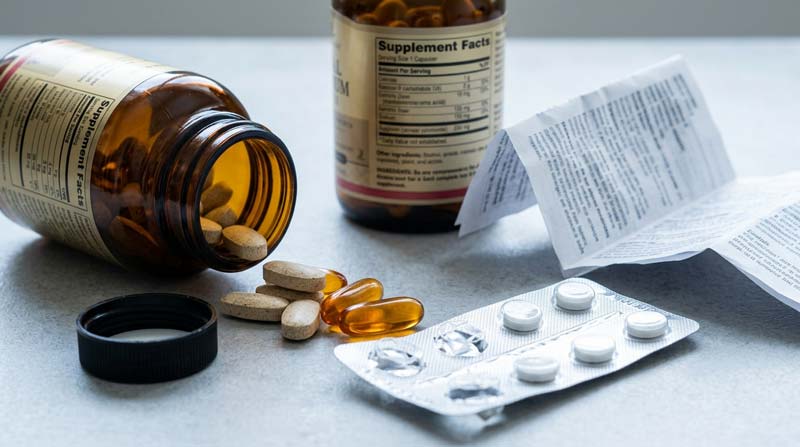
National nutrition surveys show what a complete record contains. For each product, interviewers asked how many of the past 30 days it had been taken and for how long. They also asked how much was usually taken per day. Interviewers then checked each container and recorded the serving size, the ingredients and the amount of each per serving. These details turn a shelf of products into a record you can check.
- Every Product: Prescribed supplements, self-chosen ones and occasional extras all belong on the list, alongside prescription and over-the-counter medicines. Marking what was prescribed and what was self-selected helps, since GPs often know only the prescribed ones.
- Ingredients per Serving: The label gives each ingredient and its amount per serving. Manufacturers’ websites almost always carry the legally required dosage information. It appears as a percentage of the daily reference intake, the official reference amount used on labels.
- Daily Amount and Days Used: Servings per day and days used turn a label into an average daily intake. You can then add the same nutrient across several products and compare it to its upper limit.
- Reason for Use: Reasons range from a diagnosed deficiency or medical condition to a life stage or a recommendation. Others rest on a general hope for better health. A product without one only adds to the daily pill count and the cost.
- Duration: Each product’s duration, in weeks, months or years, belongs on the record. Several harms build with long-term use, while some benefits take weeks to measure.
Judging whether a product works depends on choosing a relevant measure and allowing enough time. For iron deficiency anaemia, haemoglobin (the oxygen-carrying protein in blood) usually rises within two weeks of starting oral iron. In pooled trials, 72.8% of people had a satisfactory rise in that time. No rise after two weeks strongly predicted treatment failure.
With alternate-day dosing, a check at 28 days may suit better. A poor response can reflect missed doses, poor absorption, another illness, continued bleeding, or a vitamin B12 or folic acid shortage. UK guidelines also give iron an end point, with treatment continuing for about three months after haemoglobin returns to normal. The deficiency returns in 12% to 25% of people in the medium term, which is why periodic blood counts follow.
Testing also has limits. Blood tests should confirm iron deficiency. Ferritin (the protein that stores iron) below 15 micrograms per litre indicates empty stores. Inflammation pushes ferritin up, so it can look normal in someone deficient. Routine vitamin D testing is not recommended for low-risk people without symptoms, and results vary between laboratories and with the seasons. Wait at least 8 weeks after starting a supplement before retesting. Some studies suggest 12 weeks or longer.
Starting several products at once blurs the picture. A single before-and-after comparison cannot separate a real effect from random variation. Sports scientists therefore recommend repeated measurements before starting a supplement, or alternating periods with and without it. When several products begin in the same week, any change, for better or worse, could belong to any of them.
Decisions about keeping a product weigh rewards against costs. Rewards include correcting a deficiency or meeting a specific goal. In contrast, costs include an ineffective product, health risks, and money. A supplement earns its place when it offers an advantage nothing else can. It also needs to be available, affordable, tolerated and compatible with other goals.
Without a clear reason, it only adds to the pill burden and the bill. Deprescribing (stopping or reducing medicines that are no longer needed) is the clinical term for trimming too many supplements. Health professionals often name supplements when asked which medicines they would stop, and the results appear promising.
Among the influencer-promoted products, the average daily cost was €0.78, but it reached €6.09 a day, about €180 a month. Because supplements are sold as foods, their prices are unregulated, and it is unclear whether a higher price brings more benefit. Discount codes also hide the real cost of a daily supplement habit.
In the Swiss survey, only 11% of supplement users named one they would stop if their GP suggested it. Among GPs, 60% named one they would deprescribe. No supplement a patient chose matched one a GP chose. Positive attitudes, missing information, long habit and a sense of ownership over products bought without a prescription all add to the reluctance.
Pharmacists are well placed to review supplements alongside medicines, since most can see full medication histories and already counsel patients. Most health professionals see pharmacists as best placed to discuss drug-nutrient interactions. Collaboration between pharmacists, doctors, dietitians and nurses can help reduce interactions and prevent adverse events.
People with chronic diseases on long-term medicines, and older people with several illnesses and medicines, are singled out as priorities for review. Bringing the containers or the full record lets a reviewer see doses and ingredients, beyond product names. Independent information on most supplements is published by the US Office of Dietary Supplements. The LiverTox database documents liver injury from specific products.
Some findings call for prompt medical assessment. About a third of men and postmenopausal women with iron deficiency anaemia have an underlying abnormality, most often in the gut. Gut cancers can present this way. In the UK, unexplained iron deficiency anaemia in at-risk people is an accepted reason for fast-track hospital referral. Iron is then given alongside investigation of the cause.
No one in this evidence sees the collection as a whole. The influencer sees the product, the label sees its own contents, the GP sees the prescriptions, and the pharmacy system sees what it dispensed. The person taking the supplements is the only one positioned to see it all. A complete record shapes that view. Whether it shows a useful routine or too many supplements depends on what each product holds and how much builds up. Why each one began, and what it meets in the body, decide the rest.
Sources
- Andrews K.W., Gusev P.A., McNeal M., Savarala S., Dang P.T.V., Oh L., Atkinson R., Pehrsson P.R., Dwyer J.T., Saldanha L.G., et al. Dietary Supplement Ingredient Database (DSID) and the application of analytically based estimates of ingredient amount to intake calculations. J. Nutr. 2018;148:1413S–1421S.
- Basch CH, Mongiovi J, Berdnik A, Basch CE (2016) The most widely viewed YouTube videos with content related to multivitamins. Health Prom Perspect 6(4):213-216.
- Björnsson E, Bergman OM, Björnsson HK, Kyaran RB, Olafsson S. Incidence, presentation, and outcomes in patients with drug-induced liver injury in the general population of Iceland. Gastroenterology. 2013;144:1419–1425.
- Blumberg JB, Bailey RL, Sesso HD, Ulrich CM. The Evolving Role of Multivitamin/Multimineral Supplement Use among Adults in the Age of Personalized Nutrition. Nutrients. 2018 Feb 22;10(2):248.
- Burt LA, Billington EO, Rose MS, Raymond DA, Hanley DA, Boyd SK. Effect of high-dose vitamin D supplementation on volumetric bone density and bone strength: a randomized clinical trial. JAMA 2019;322:736-45.
- Cashman KD. Vitamin D requirements for the future-lessons learned and charting a path forward. Nutrients 2018. 10 533
- CDC, National Center for Health Statistics Questionnaires, datasets and related documentation, NHANES 2003–2004 and 2005–2006 [internet]. Hyattsville (MD): National Center for Health Statistics; [last updated 2009 Nov 3; cited 2010 Oct 27].
- Chen F, Du M, Blumberg JB, et al. Association among dietary supplement use, nutrient intake, and mortality among US adults: a cohort study. Ann Intern Med 2019;170:604-13.
- EFSA Panel on Nutrition, Novel Foods and Food Allergens (NDA); Turck D, et al. Scientific opinion on the tolerable upper intake level for vitamin B6. EFSA J. 2023 May 17;21(5):e08006.
- Federal Institute for Risk Assessment (2021) BfR Consumer Monitor 2021 | Special vitamins as dietary supplements. Federal Institute for Risk Assessment, Berlin. Accessed 16 Jan 2024
- Fulgoni VL 3rd, Keast DR, Bailey RL, Dwyer J. Foods, fortificants, and supplements: Where do Americans get their nutrients? J Nutr. 2011 Oct;141(10):1847-54.
- Geerling BJ, Badart-Smook A, Stockbrugger RW, Brummer RJ. Comprehensive nutritional status in recently diagnosed patients with inflammatory bowel disease compared with population controls. Eur J Clin Nutr. 2000;54:514-521.
- Geller AI, Shehab N, Weidle NJ, Lovegrove MC, Wolpert BJ, Timbo BB, Mozersky RP, Budnitz DS. Emergency Department Visits for Adverse Events Related to Dietary Supplements. N Engl J Med. 2015 Oct 15;373(16):1531-40.
- Gurley BJ, Gardner SF, Hubbard MA, Williams DK, Gentry WB, Cui Y, et al. Clinical assessment of effects of botanical supplementation on cytochrome P450 phenotypes in the elderly: St. John’s wort, garlic oil, Panax ginseng and Ginkgo biloba. Drugs Aging. 2005;22:525–539.
- Gurley BJ, Tonsing-Carter A, Thomas SL, Fifer EK. Clinically Relevant Herb-Micronutrient Interactions: When Botanicals, Minerals, and Vitamins Collide. Adv Nutr. 2018 Jul 1;9(4):524S-532S.
- Imai H, Kotegawa T, Tsutsumi K, Morimoto T, Eshima N, Nakano S, et al. The recovery time-course of CYP3A after induction by St. John’s wort administration. Br J Clin Pharmacol. 2008;65:701–707.
- Karadima V, Kraniotou C, Bellos G, Tsangaris GT. Drug-micronutrient interactions: food for thought and thought for action. EPMA J. 2016;7:10.
- Li N, Zhao G, Wu W, et al. The efficacy and safety of vitamin C for iron supplementation in adult patients with iron deficiency anemia: a randomized clinical trial. JAMA Netw Open 2020;3:e2023644.
- Lüthold RV, Rozsnyai Z, Weir KR, Streit S, Jungo KT. Exploring GP and patient attitudes towards the use and deprescribing of dietary supplements: a survey study in Switzerland. BMC Prim Care. 2024 Oct 3;25(1):359.
- Martínez-Sanz JM, Sospedra I, Ortiz CM, et al. Intended or unintended doping? A review of the presence of doping substances in dietary supplements used in sports. Nutrients 2017;9:1093
- Maughan RJ, Burke LM, Dvorak J, Larson-Meyer DE, Peeling P, Phillips SM, Rawson ES, Walsh NP, Garthe I, Geyer H, Meeusen R, van Loon LJC, Shirreffs SM, Spriet LL, Stuart M, Vernec A, Currell K, Ali VM, Budgett RG, Ljungqvist A, Mountjoy M, Pitsiladis YP, Soligard T, Erdener U, Engebretsen L. IOC consensus statement: dietary supplements and the high-performance athlete. Br J Sports Med. 2018 Apr;52(7):439-455.
- Maughan RJ, Shirreffs SM, Vernec A. Making decisions about supplement use. Int J Sport Nutr Exerc Metab. In Press 2018.
- Mehta DH, Gardiner PM, Phillips RS, McCarthy EP. Herbal and dietary supplement disclosure to health care providers by individuals with chronic conditions. J Altern Complement Med. 2008 Dec;14(10):1263-9.
- Moses G (2021) The safety of commonly used vitamins and minerals. Australian Prescriber 44(4):119–123.
- Muhamad R, Akrivaki A, Papagiannopoulou G, Zavridis P, Zis P. The Role of Vitamin B6 in Peripheral Neuropathy: A Systematic Review. Nutrients. 2023 Jun 21;15(13):2823.
- Navarro VJ, Khan I, Björnsson E, Seeff LB, Serrano J, Hoofnagle JH. Liver injury from herbal and dietary supplements. Hepatology. 2017 Jan;65(1):363-373.
- O’Brien SK, Malacova E, Sherriff JL, Black LJ. The prevalence and predictors of dietary supplement use in the Australian population. Nutrients 2017;9:E1154.
- O’Connor EA, Evans CV, Ivlev I, Rushkin MC, Thomas RG, Martin A, Lin JS. Vitamin and Mineral Supplements for the Primary Prevention of Cardiovascular Disease and Cancer: Updated Evidence Report and Systematic Review for the US Preventive Services Task Force. JAMA. 2022 Jun 21;327(23):2334-2347.
- Okam MM, Koch TA, Tran M-H. Iron supplementation, response in iron-deficiency anemia: analysis of five trials. Am J Med 2017;130:991.e1–991.e8.
- Pilz S, Zittermann A, Trummer C, Theiler-Schwetz V, Lerchbaum E, Keppel MH, Grübler MR, März W, Pandis M. Vitamin D testing and treatment: a narrative review of current evidence. Endocr Connect. 2019 Feb 1;8(2):R27-R43.
- Prescott JD, Drake VJ, Stevens JF. Medications and Micronutrients: Identifying Clinically Relevant Interactions and Addressing Nutritional Needs. J Pharm Technol. 2018 Oct;34(5):216-230.
- Rathmann AM, Seifert R (2024) Vitamin A-containing dietary supplements from German and US online pharmacies: market and risk assessment. Naunyn-Schmiedeberg’s Arch Pharmacol 397(9):6803–6820.
- Ricke JN, Seifert R. Disinformation on dietary supplements by German influencers on Instagram. Naunyn Schmiedebergs Arch Pharmacol. 2025 May;398(5):5629-5647.
- Schurgers LJ, Teunissen KJ, Hamulyak K, Knapen MH, Vik H, Vermeer C. Vitamin K-containing dietary supplements: comparison of synthetic vitamin K1 and natto-derived menaquinone-7. Blood. 2007;109:3279-3283.
- Snook J, Bhala N, Beales ILP, Cannings D, Kightley C, Logan RP, Pritchard DM, Sidhu R, Surgenor S, Thomas W, Verma AM, Goddard AF. British Society of Gastroenterology guidelines for the management of iron deficiency anaemia in adults. Gut. 2021 Nov;70(11):2030-2051.
- Sochacka K, Kotowska A, Lachowicz-Wiśniewska S. Diet Quality, Nutrition Knowledge, and Social Media-Driven Supplement Use Among Polish Adolescents and Young Adults: A Cross-Sectional Study. Nutrients. 2026 Apr 25;18(9):1363.
- Sood A, Sood R, Brinker FJ, Mann R, Loehrer LL, Wahner-Roedler DL. Potential for interactions between dietary supplements and prescription medications. Am J Med. 2008;121:207-211.
- Stoffel NU, Zeder C, Brittenham GM, et al. Iron absorption from supplements is greater with alternate day than with consecutive day dosing in iron-deficient anemic women. Haematologica 2020;105:1232–9.
- Visser N.A., Notermans N.C., Degen L.A.R., de Kruijk J.R., Berg L.H.V.D., Vrancken A.F.J.E. Chronic idiopathic axonal polyneuropathy and vitamin B6: A controlled population-based study. J. Peripher. Nerv. Syst. 2014;19:136–144.
- Yao P, Bennett D, Mafham M, et al. Vitamin D and calcium for the prevention of fracture: a systematic review and meta-analysis. JAMA Netw Open 2019;2:e1917789.
- Zeng M, Grgurevic J, Diyab R, Roy R. #WhatIEatinaDay: The Quality, Accuracy, and Engagement of Nutrition Content on TikTok. Nutrients. 2025 Feb 24;17(5):781.
- Zhang FF, Barr SI, McNulty H, Li D, Blumberg JB. Health effects of vitamin and mineral supplements. BMJ. 2020 Jun 29;369:m2511.