


A nitric oxide booster targets one thing: the amount of nitric oxide your body can call upon. That target is unusual, because nitric oxide lasts only milliseconds to seconds before it breaks down. The brevity is deliberate, not a flaw. A molecule that relaxes blood vessels must switch off as sharply as it switches on. Continuous production is therefore essential rather than optional.
Because the body must keep making it, the source of the raw material matters enormously. Two sources dominate. The body can build nitric oxide from the amino acid L-arginine, yet its own output is limited. A single serving of a nitrate-rich vegetable can supply more nitrate than that internal route makes in a day. Diet, in other words, is not a supporting player in this system.
This is where the public phrase “nitric oxide booster” becomes misleading. It groups amino acids, dietary nitrate and multi-ingredient powders together, as if they were interchangeable. They are not. Each reaches nitric oxide by a different route, with different efficiency.
The stakes explain the attention. Nitric oxide controls how freely blood, oxygen and nutrients reach every tissue. When its availability declines, vessels stiffen and cardiovascular risk increases. These are not marginal effects. Raised blood pressure alone affects close to a third of the world’s adults.
Understanding the subject means separating these strands rather than blending them. The biology is shared, but the evidence is not. Some outcomes rest on large, repeated trials, others on a handful of small studies, and a few on almost nothing. Holding those distinctions is what turns a marketing phrase into a subject worth understanding.
What Is a Nitric Oxide Booster?
The phrase promises something simpler than the biology delivers. It implies a single substance that adds nitric oxide to the body. In reality, the body already runs its own nitric oxide system, and these products only feed an existing process. A nitric oxide booster is therefore better understood as a supply strategy than a single ingredient.
What unites the category is one biological action. Nitric oxide relaxes the smooth muscle lining blood vessels, so they widen and blood flows more freely. This is why the same phrase can apply to both beetroot juice and gym powder. They pursue one outcome, greater nitric oxide availability, through entirely different chemistry.
Three broad families fill the category:
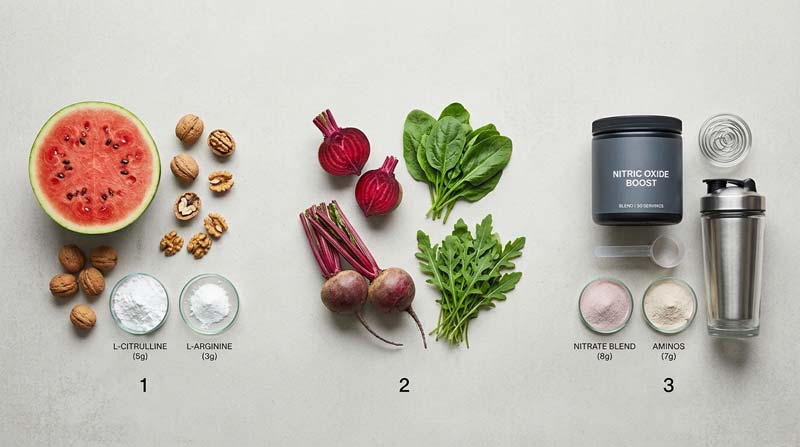
- The first is the amino acid L-arginine, which the body converts into nitric oxide through an enzyme. These come from everyday protein foods and from watermelon.
- The second is dietary nitrate, concentrated in leafy greens and beetroot, which reaches nitric oxide by a separate route. Vegetables, not pills, are its natural home.
- The third is the commercial blend, which stacks several precursors into a single powder.
Numbers sharpen the picture. Watermelon carries the most L-citrulline, up to 3.6 grams per kilogram. That figure still falls well short of a typical supplement dose. Researchers classify a vegetable as high-nitrate once it passes 1,000 milligrams per kilogram. The commercial blends, by contrast, are true cocktails. They fold in creatine, minerals and acids such as malate alongside the precursors.
Grouping them under one word hides the most important fact about them. The routes differ not only in chemistry but in how much actually reaches the blood. That difference in delivery, more than the label dose, decides whether a nitric oxide booster works.
Why Nitric Oxide Booster Matters for Exercise and Health
The reason this molecule commands attention is leverage. Small shifts in how well blood vessels function translate into large shifts in long-term health. Nitric oxide is the primary control over that function, which is why a nitric oxide booster reaches beyond sport.
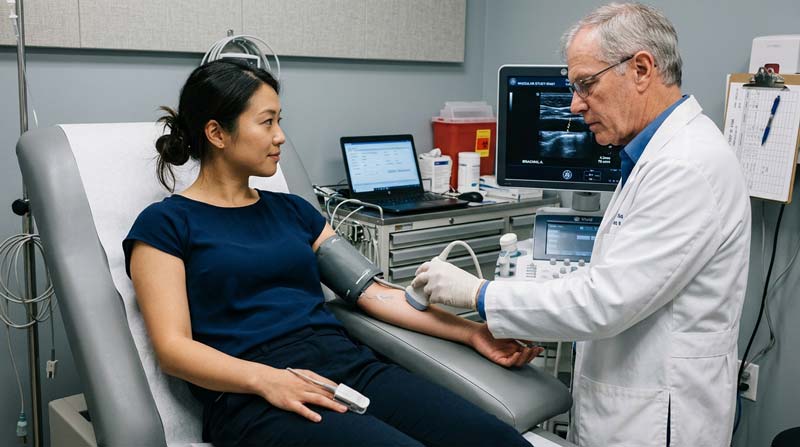
The clearest measure of that leverage is a test called flow-mediated dilation, which records how far an artery widens. Each one per cent improvement in that score corresponds to an eight to thirteen per cent fall in cardiovascular events. The numbers are not small. A change most people would never notice tracks a meaningful change in the risk of heart attack and stroke.
That leverage may apply directly to diet. Dietary nitrate has increased flow-mediated dilation by roughly 1.85 per cent in trials. Placed in the same risk model, that shift could translate into about a quarter fewer cardiovascular events.
Vascular function does not hold steady through life. Ageing, high blood pressure, diabetes, obesity and smoking all reduce nitric oxide availability. The effect compounds over decades. As it falls, arteries stiffen and lose their ability to widen on demand. The same decline that raises blood pressure also sits beneath heart disease, and nitric oxide is common to both.
Its influence does not stop at the vessel wall. Nitric oxide helps insulin drive glucose into tissues, so low nitric oxide production and insulin resistance often go together. The reach extends further still. It also keeps platelets from clumping, limiting the clots that trigger many heart attacks.
For those who train, the appeal runs deeper than blood flow. Nitric oxide helps switch on satellite cells, which drive muscle repair and growth. It also feeds the signalling behind the familiar training ‘pump’. When its production is blocked, the muscle-building response to overload measurably weakens.
This breadth is why the same subject attracts such different audiences. Endurance athletes, people managing blood pressure and those simply growing older are chasing the same underlying chemistry. A nitric oxide booster ties to lifestyle-related disease, a leading cause of death in wealthy nations.

How Nitric Oxide Works in the Body
To see why some sources work and others fail, start with the chemistry inside the vessel wall. Nitric oxide is produced in the thin endothelial lining and then diffuses into the underlying muscle. It does not relax the muscle directly. Instead, it triggers an enzyme that produces cyclic GMP, a messenger that lowers calcium in the muscle cell. Falling calcium means falling tension, so the muscle relaxes and the artery opens.
The body reaches this molecule by two routes that behave in opposite ways. The first uses the enzyme nitric oxide synthase to produce nitric oxide from L-arginine and oxygen. It runs constantly, but it depends on oxygen, so it weakens exactly when oxygen is scarce. That limitation is the reason a second route exists at all.
That enzyme has a darker side. Starved of key cofactors, it stops making nitric oxide and starts producing superoxide, a damaging free radical. Ageing, high blood pressure and smoking all push it that way. Lost nitric oxide then accelerates its own decline, in a self-feeding loop.
The second route abandons the enzyme completely. It starts with nitrate from food and works best under the low-oxygen, acidic conditions of hard exercise. Where the enzyme route fades, this one takes over. Most food-based nitric oxide booster choices depend on it.
That second route is worth following step by step, because each stage depends on the one before it. Break any link, and the chain fails.
- Nitrate from vegetables is absorbed, and about a quarter of it is drawn back into the saliva.
- Bacteria on the tongue then reduce that nitrate to nitrite, a step human cells cannot perform.
- In the acid of the stomach, part of that nitrite converts directly into nitric oxide.
- The rest enters the bloodstream and is stored, forming a reserve the body can draw on later.
- When oxygen later runs low, that stored nitrite is converted back into nitric oxide.
These microbes are worth knowing. A few species near the back of the tongue, notably Veillonella and Rothia, carry out the conversion. Human cells cannot do the job at all. The mouth may host up to 700 species, yet only a handful can reduce nitrate.
The design has a striking consequence. The two routes are strongest under opposite conditions, so together they cover situations neither could handle alone. This is also why the food route carries a hidden dependency. Remove the tongue bacteria, and a nitric oxide booster built on nitrate loses its very first step.
A second dependency hides one step later. That stomach reaction needs acid, so strong acid-suppressing medicines can blunt it. Regular users of such drugs may convert less of the nitrate they eat.
The Main Ingredients, Foods, and Pathways to Understand
The single most useful idea in this whole subject is that dose is not the same as delivery. What a label promises and what the bloodstream receives can be very different. In that gap between intake and absorption, the popular ingredients split sharply. It is the difference between a working nitric oxide booster and an expensive placebo.
L-arginine: The Popular Choice That Underperforms
L-arginine seems to be the obvious candidate, since the body converts it directly into nitric oxide. Taken by mouth, though, it largely fails to arrive. An enzyme in the gut breaks down much of it, and the liver clears most of the rest. The result is poor bioavailability, whatever the dose. As for food, it is a different story, supplying 4 to 5 grams a day through meat, fish and nuts.
L-citrulline: The More Effective Precursor
L-citrulline reaches the bloodstream far more successfully via a route that seems backwards. Rather than acting directly, it is first converted into L-arginine inside the kidneys.
That detour is the secret to its success. Because it sidesteps the gut enzyme and the liver, it raises blood arginine more than L-arginine itself does. The benefit scales with dose, up to roughly ten to fifteen grams, and stays well tolerated there. Curiously, one gram of citrulline with one gram of arginine beats two grams of either alone.
Dietary Nitrate and Beetroot: The Food-First Route
Nitrate follows neither the amino acid path, and here the source matters as much as the dose. Beetroot juice reliably outperforms an identical dose of plain nitrate salt. The nitrate content of foods also varies enormously. Rocket holds around 4,677 milligrams per kilogram, spinach 2,500 and beetroot 1,300. That variability reaches the shelf itself. Supposedly identical beetroot shots have been measured to range from 4.1 to 6.5 millimoles.
Where that nitrate comes from surprises most people. Vegetables account for the vast majority of daily intake, while cured meats contribute very little. Most swallowed nitrite is in fact recycled from your own saliva. Diet-wide differences are striking too. The traditional Japanese diet provides over 1,100 milligrams a day, far above typical Western intake.
Timing shapes the result as much as amount. For exercise, the evidence points to at least 400 milligrams of nitrate, taken two to three hours before effort. Earlier than that, too little nitrite has reached the blood. This lag mirrors the slow route through saliva and stomach.
The Food Matrix: Why the Whole Plant Outperforms the Extract
The reason beetroot beats the salt lies in everything else it contains. Alongside nitrate, it carries polyphenols, betalains and vitamin C. These compounds help convert nitrate into nitric oxide and reduce less useful by-products. Purified nitrate salts lack this chemistry, and in trials they have failed to match whole beetroot. This is the strongest practical case for treating food, not powder, as the default nitric oxide booster.

Exercise, Blood Pressure, Recovery, and Other Outcomes
The evidence is not evenly strong across outcomes, and blood pressure stands on the firmest ground. Pooled trials show beetroot nitrate lowering systolic pressure, the higher figure, by around four to five millimetres of mercury. That places a vegetable in territory usually reserved for medication.
Against a person’s own baseline, reductions of nearly 9 millimetres are observed, close to that of a single first-line drug. The benefit also builds with time, strengthening after about two weeks of daily use. For blood pressure, then, a nitric oxide booster rests on the strongest evidence in this field.
Small numbers carry real weight here. A fall of just 2 millimetres of mercury can cut heart-disease deaths by around 7 per cent. Stroke deaths drop further still. Set against that, a four- to five-point reduction in food is far from trivial.
One result cuts against intuition. Stronger, higher-nitrate juice does not reliably beat weaker juice, and part of beetroot’s effect appears independent of nitrate altogether. The number on the bottle, in other words, is a poor guide to what it will do.
One visible quirk reassures rather than alarms. Beetroot can turn urine or stool a deep pink, an effect called beeturia. It is harmless and clears on its own.
Exercise evidence is layered, and endurance sits near the top. Dietary nitrate lowers the oxygen cost of steady effort, so a given pace demands less fuel. It can also extend time to exhaustion during hard exercise by roughly 15%.
The gains show most in efforts lasting minutes rather than seconds. The International Olympic Committee lists nitrate among the few supplements with genuine support for endurance.
The same effect reaches struggling hearts. In patients with heart failure, a single dose of beetroot increased exercise capacity by around 14 per cent. For people this limited, a gain of that size matters.
For short, powerful efforts, the effect shrinks but survives. Nitrate increases peak muscle power by about 5% on average. That gain concentrates in fast-twitch fibres, the muscle behind sudden, forceful movement.
Resistance training is where confidence drops sharply. Some trials find L-citrulline adds a few repetitions before failure, a gain of about six per cent. Others find nothing for strength, power or fatigue. L-arginine performs worst, and reviews now advise against it for this purpose.
How training feels afterwards looks more encouraging. L-citrulline reliably reduces perceived effort and eases post-workout muscle soreness. It does so without lowering blood lactate, so simple fatigue clearance cannot explain it.
A likelier explanation sits in energy supply. Citrulline malate has been shown to speed oxidative energy production during exercise. It also quickens the recovery of phosphocreatine, the muscle’s fast energy store. Better fuelling, then, may matter more than faster waste clearance.
Two popular claims rest on very little. Autonomic recovery, the nervous system’s return to rest, has been tested for nitric oxide only rarely. Sexual health attracts interest because the molecule drives blood flow, yet the human trials remain few and early. On these questions, calling anything a proven nitric oxide booster goes beyond the evidence.
Evidence Boundaries for Nitric Oxide Booster Research
Every honest account of a subject should mark where its knowledge runs out. Here, the first limit is language itself. The everyday phrase is far broader than anything a laboratory measures. Researchers still lack an agreed definition of a high-nitrate diet. A nitric oxide booster, as sold, is a category the science has never tested as a whole.
Beyond language, the specifics resist generalisation. Nitrate, L-citrulline and L-arginine are not interchangeable, so evidence for one says little about another. The response also varies by person. Trained athletes benefit least, probably because their bodies already produce nitric oxide efficiently. Personal biology keeps shifting the result. Age matters too, as older adults handle these precursors differently from the young.
The research also has a blind spot. It has been built overwhelmingly on men, with one large review pooling roughly 1,460 male participants against just 236 women. Whether the findings transfer cleanly to women remains genuinely unknown.
One limit is almost comically fragile. Because the food route depends on oral bacteria, a strong antibacterial mouthwash can negate the blood pressure benefit. In studies, it reduced oral nitrite by roughly 90%. Many trials, remarkably, never recorded whether participants used mouthwash at all.
Two further problems weaken confidence. Several trials raised blood nitrate levels yet changed nothing a patient would feel. Biology does not always follow its own markers. Measurement itself distorts the picture too, since clinic readings run far higher than relaxed daytime ones.
Some questions are simply open. Researchers still cannot fully separate beetroot’s nitrate from the other compounds it carries. That distinction could reshape future advice. Long-term safety is also unsettled, because few trials run beyond two months. The older fear that dietary nitrate causes cancer, by contrast, has largely faded from the evidence.
Size matters as much as direction. Even where nitrate clearly helps, the effect remains small and appears mainly under specific conditions. The benefit is real, yet a single striking study can easily oversell it.
None of this reduces the subject to noise. The core biology is well established, the food sources are real, and the strongest outcomes hold up under scrutiny. What the evidence resists is a single, simple answer. A nitric oxide booster is best understood as a genuine scientific field still defining its own limits.
Sources
- Aguayo E., Martínez-Sánchez A., Fernández-Lobato B., Alacid F. l-Citrulline: A non-essential amino acid with important roles in human health. Appl. Sci. 2021;11:3293.
- Allerton T.D., Proctor D.N., Stephens J.M., Dugas T.R., Spielmann G., Irving B.A. l-Citrulline supplementation: Impact on cardiometabolic health. Nutrients. 2018;10:921.
- Anderson J.E. A role for nitric oxide in muscle repair: Nitric oxide-mediated activation of muscle satellite cells. Mol. Biol. Cell. 2000;11:1859–1874.
- Ashor A.W., Lara J., Siervo M. Medium-term effects of dietary nitrate supplementation on systolic and diastolic blood pressure in adults: a systematic review and meta-analysis. J. Hypertens. 2017;35:1353–9.
- Bahadoran Z., Mirmiran P., Kashfi K., Ghasemi A. Endogenous flux of nitric oxide: Citrulline is preferred to Arginine. Acta Physiol. 2021;231:e13572.
- Bahadoran Z, Mirmiran P, Kabir A, Azizi F, Ghasemi A. The nitrate-independent blood pressure-lowering effect of beetroot juice: a systematic review and meta-analysis. Adv Nutr. 2017;8:830–8.
- Baião D.S., da Silva D.V.T., Paschoalin V.M.F. Beetroot, a Remarkable Vegetable: Its Nitrate and Phytochemical Contents Can Be Adjusted in Novel Formulations to Benefit Health and Support Cardiovascular Disease Therapies. Antioxidants. 2020;9:960.
- Bailey S.J., Winyard P., Vanhatalo A., Blackwell J.R., DiMenna F.J., Wilkerson D.P., Tarr J., Benjamin N., Jones A.M. Dietary nitrate supplementation reduces the O2 cost of low-intensity exercise and enhances tolerance to high-intensity exercise in humans. J. Appl. Physiol. 2009;107:1144–1155.
- Banegas J.R., Ruilope L.M., de la Sierra A, Vinyoles E, Gorostidi M, de la Cruz J.J., et al. Clinic versus daytime ambulatory blood pressure difference in hypertensive patients: the impact of age and clinic blood pressure. Hypertension. 2017;69:211–9.
- Bendahan D, Mattei JP, Ghattas B, Confort-Gouny S, Le Guern ME, Cozzone PJ. Citrulline/malate promotes aerobic energy production in human exercising muscle. Br J Sports Med. 2002;36:282–289.
- Bescos R, Sureda A, Tur JA, Pons A. The effect of nitric-oxide-related supplements on human performance. Sports Med 2012;42:99–117.
- Bryan N.S., Alexander D.D., Coughlin J.R., Milkowski A.L., Boffetta P. Ingested nitrate and nitrite and stomach cancer risk: An updated review. Food Chem. Toxicol. 2012;50:3646–3665.
- Campos HO, Drummond LR, Rodrigues QT, Machado FSM, Pires W, Wanner SP et al. Nitrate supplementation improves physical performance specifically in non-athletes during prolonged open-ended tests: a systematic review and meta-analysis. Br J Nutr. 2018;119:636–57.
- Casey DP, Beck DT, Braith RW. Systemic plasma levels of nitrite/nitrate (NOx) reflect brachial flow-mediated dilation responses in young men and women. Clin Exp Pharmacol Physiol. 2007;34:1291–3.
- Chobanian AV, Bakris GL, Black HR, Cushman WC, Green LA, Izzo JL Jr, et al. The Seventh Report of the Joint National Committee on Prevention, Detection, Evaluation, and Treatment of High Blood Pressure: the JNC 7 report. JAMA 2003;289:2560–72.
- Clifford T., Constantinou C.M., Keane K.M., West D.J., Howatson G., Stevenson E.J. The plasma bioavailability of nitrate and betanin from Beta vulgaris rubra in humans. Eur. J. Nutr. 2017;56:1245–54.
- Coggan A.R., Baranauskas M.N., Hinrichs R.J., Liu Z., Carter S.J. Effect of dietary nitrate on human muscle power: A systematic review and individual participant data meta-analysis. J. Int. Soc. Sport. Nutr. 2021;18:1–12.
- Davies K.P. Development and therapeutic applications of nitric oxide releasing materials to treat erectile dysfunction. Future Sci. OA. 2015;1.
- Dewhirst FE, Chen T, Izard J, Paster BJ, Tanner ACR, Yu W-H, et al. The human oral microbiome. J. Bacteriol. 2010;192:5002–5017.
- Doel JJ, Benjamin N, Hector MP, Rogers M, Allaker RP. Evaluation of bacterial nitrate reduction in the human oral cavity. Eur J Oral Sci. 2005;113:14–19.
- Duncan C, Dougall H, Johnston P, Green S, Brogan R, Leifert C, et al. Chemical generation of nitric oxide in the mouth from the enterosalivary circulation of dietary nitrate. Nat. Med. 1995;1:546–551.
- Figueroa A., Jaime S.J., Morita M., Gonzales J.U., Moinard C. L-citrulline supports vascular and muscular benefits of exercise training in older adults. Exerc. Sport Sci. Rev. 2020;48:133–139.
- Ford E.S., Bergmann M.M., Boeing H., Capewell S. Healthy lifestyle behaviors and all-cause mortality among adults in the United States. Prev. Med. 2012;55:23–27.
- Gallardo E.J., Coggan A.R. What’s in Your Beet Juice? Nitrate and Nitrite Content of Beet Juice Products Marketed to Athletes. Int. J. Sport Nutr. Exerc. Metab. 2019;29:345–349.
- Gilchrist M, Winyard P.G., Aizawa K, Anning C, Shore A, Benjamin N. Effect of dietary nitrate on blood pressure, endothelial function, and insulin sensitivity in type 2 diabetes. Free Radic. Biol. Med. 2013;60:89–97.
- Govoni M., Jansson E.Å., Weitzberg E., Lundberg J.O. The increase in plasma nitrite after a dietary nitrate load is markedly attenuated by an antibacterial mouthwash. Nitric Oxide. 2008;19:333–337.
- Gresele P, Momi S, Guglielmini G. Nitric oxide-enhancing or -releasing agents as antithrombotic drugs. Biochem Pharmacol 2019;166:300–12.
- Harty P.S., Zabriskie H.A., Erickson J.L., Molling P.E., Kerksick C.M., Jagim A.R. Multi-ingredient pre-workout supplements, safety implications, and performance outcomes: A brief review. J. Int. Soc. Sport. Nutr. 2018;15:1–28.
- Hobbs D.A., Goulding M.G., Nguyen A, Malaver T, Walker C.F., George T.W., et al. Acute ingestion of beetroot bread increases endothelium-independent vasodilation and lowers diastolic blood pressure in healthy men: a randomized controlled trial. J. Nutr. 2013;143(9):1399–405.
- Hord N.G., Tang Y., Bryan N.S. Food sources of nitrates and nitrites: The physiologic context for potential health benefits. Am. J. Clin. Nutr. 2009;90:1–10.
- Inaba Y, Chen JA, Bergmann SR. Prediction of future cardiovascular outcomes by flow-mediated vasodilatation of brachial artery: a meta-analysis. Int J Cardiovasc Imaging. 2010;26(6):631–40.
- Incalza MA, D’Oria R, Natalicchio A, et al. Oxidative stress and reactive oxygen species in endothelial dysfunction associated with cardiovascular and metabolic diseases. Vascul Pharmacol 2018;100:1–19.
- Jones A.M., Vanhatalo A., Seals D.R., Rossman M.J., Piknova B., Jonvik K.L. Dietary Nitrate and Nitric Oxide Metabolism: Mouth, Circulation, Skeletal Muscle, and Exercise Performance. Med. Sci. Sports Exerc. 2021;53:280–294.
- Kapil V, Haydar S.M.A., Pearl V, Lundberg J.O., Weitzberg E, Ahluwalia A. Physiological role for nitrate-reducing oral bacteria in blood pressure control. Free Radic. Biol. Med. 2013;55:93–100.
- Kapil V, Khambata RS, Jones DA, Rathod K, Primus C, Massimo G et al. The noncanonical pathway for in vivo nitric oxide generation: the nitrate-nitrite-nitric oxide pathway. Pharmacol Rev. 2020;72:692–766.
- Kim J., Montagnani M., Koh K.K., Quon M.J. Reciprocal relationships between insulin resistance and endothelial dysfunction: Molecular and pathophysiological mechanisms. Circulation. 2006;113:1888–1904.
- Kim I.Y., Schutzler S.E., Schrader A., Spencer H.J., Azhar G., Deutz N.E., Wolfe R.R. Acute Ingestion of Citrulline Stimulates Nitric Oxide Synthesis but Does Not Increase Blood Flow in Healthy Young and Older Adults with Heart Failure. Am. J. Physiol. Endocrinol. Metab. 2015;309.
- King D.E., Mainous A.G. 3rd, Geesey M.E. Variation in L-Arginine Intake Follow Demographics and Lifestyle Factors That May Impact Cardiovascular Disease Risk. Nutr. Res. 2008;28:21–24.
- Kobayashi J. Nitric oxide and insulin resistance. Immunoendocrinology. 2015;2:1.
- Landmesser U, Dikalov S, Price SR, et al. Oxidation of tetrahydrobiopterin leads to uncoupling of endothelial cell nitric oxide synthase in hypertension. J Clin Invest. 2003;111(8):1201–9.
- Lewington S, Clarke R, Qizilbash N, Peto R, Collins R, Prospective Studies Collaboration. Age-specific relevance of usual blood pressure to vascular mortality: a meta-analysis of individual data for one million adults in 61 prospective studies. Lancet. 2002;360:1903–13.
- Lundberg J.O., Gladwin M.T., Ahluwalia A., Benjamin N., Bryan N.S., Butler A., Cabrales P., Fago A., Feelisch M., Ford P.C., et al. Nitrate and nitrite in biology, nutrition and therapeutics. Nat. Chem. Biol. 2009;5:865–869.
- Lundberg J.O., Govoni M. Inorganic nitrate is a possible source for systemic generation of nitric oxide. Free Radic. Biol. Med. 2004;37:395–400.
- Maiorana A, O’Driscoll G, Taylor R, Green D. Exercise and the nitric oxide vasodilator system. Sports Med 2003;33:1013–35.
- Maughan RJ, Burke LM, Dvorak J, Larson-Meyer DE, Peeling P, Phillips SM, Rawson ES, Walsh NP, Garthe I, Geyer H, et al. IOC Consensus Statement: Dietary Supplements and the High-Performance Athlete. Int. J. Sport Nutr. Exerc. Metab. 2018.
- McKnight G.M., Smith L.M., Drummond R.S., Duncan C.W., Golden M., Benjamin N. Chemical synthesis of nitric oxide in the stomach from dietary nitrate in humans. Gut. 1997;40:211–214.
- Mills KT, Bundy JD, Kelly TN, Reed JE, Kearney PM, Reynolds K, Chen J, He J. Global disparities of hypertension prevalence and control: a systematic analysis of population-based studies from 90 countries. Circulation 2016;134:441–50.
- Moncada S., Higgs A. The L-arginine-nitric oxide pathway. N. Engl. J. Med. 1993;329:2002–2012.
- Montenegro MF, Sundqvist ML, Larsen FJ, Zhuge Z, Carlström M, Weitzberg E, et al. Blood pressure-lowering effect of orally ingested nitrite is abolished by a proton pump inhibitor. Hypertension. 2016.
- Morris Jr S.M. Arginine metabolism: Boundaries of our knowledge. J. Nutr. 2007;137:1602S–1609S.
- Norouzzadeh M, Rashedi MH, Payandeh N, Harijani AM, Shahinfar H. The effects of dietary nitrate on blood pressure and vascular health: an umbrella review and updated meta-analysis and meta-regression. J Funct Foods. 2024;114:106082.
- Pasa C, de Oliveira R.G., da Rosa Lima T., Kommers M.J., Figueiredo K.R.F.V., Fett W.C.R., Fett C.A. Effectiveness of acute L-arginine supplementation on physical performance in strength training: A systematic review and meta-analysis. F1000Research. 2022;10:1072.
- Rhim H.C., Kim S.J., Park J., Jang K.-M. Effect of citrulline on post-exercise rating of perceived exertion, muscle soreness, and blood lactate levels: A systematic review and meta-analysis. J. Sport Health Sci. 2020;9:553–561.
- Santamaria P. Nitrate in vegetables: toxicity, content, intake and EC regulation. J Sci Food Agric. 2006;86:10–17.
- Schwedhelm E., Maas R., Freese R., Jung D., Lukacs Z., Jambrecina A., Spickler W., Schulze F., Böger R.H. Pharmacokinetic and pharmacodynamic properties of oral L-citrulline and L-arginine: Impact on nitric oxide metabolism. Br. J. Clin. Pharmacol. 2008;65:51–59.
- Silva K.V.C., Costa B.D., Gomes A.C., Saunders B., Mota J.F. Factors that Moderate the Effect of Nitrate Ingestion On Exercise Performance in Adults: A Systematic Review With Meta-Analyses and Meta-Regressions. Adv. Nutr. 2022.
- Smith L.W., Smith J.D., Criswell D.S. Involvement of nitric oxide synthase in skeletal muscle adaptation to chronic overload. J. Appl. Physiol. 2002;92:2005–2011.
- Sobko T, Marcus C, Govoni M, Kamiya S. Dietary nitrate in Japanese traditional foods lowers diastolic blood pressure in healthy volunteers. Nitric Oxide. 2010;22:136–140.
- Suzuki T., Morita M., Hayashi T., Kamimura A. The effects on plasma L-arginine levels of combined oral L-citrulline and L-arginine supplementation in healthy males. Biosci. Biotechnol. Biochem. 2017;81:372–375.
- Thompson C., Jones A.M., Bailey S.J. In: Dietary Supplementation in Sport and Exercise: Evidence, Safety and Ergogenic Benefits. Hoffman J.R., editor. Routledge Press; London, UK: 2019.
- Vårvik F.T., Bjørnsen T., Gonzalez A.M. Acute Effect of Citrulline Malate on Repetition Performance During Strength Training: A Systematic Review and Meta-Analysis. Int. J. Sport Nutr. Exerc. Metab. 2021;31:350–358.
- Zamani H, de Joode M.E.J.R., Hossein I.J., Henckens N.F.T., Guggeis M.A., Berends J.E., et al. The benefits and risks of beetroot juice consumption: a systematic review. Crit. Rev. Food Sci. Nutr. 2021;61:788–804.
- Zamani P, Rawat D, Shiva-Kumar P, Geraci S, Bhuva R, Konda P, et al. Effect of inorganic nitrate on exercise capacity in heart failure with preserved ejection fraction. Circulation. 2015;131:371–380.