



Trials testing how long should a HIIT workout be have run sessions from under ten minutes to over sixty.
Both extremes sit inside randomised controlled trials. Both were prescribed by researchers. Both were classified as high-intensity interval training.
High-intensity interval training, shortened to HIIT, means short bursts of hard effort separated by easier recovery. The definition fixes neither the length of those bursts, nor their intensity, nor the rest between them. Some interval sessions therefore run nearly as long as the steady workouts they were built to replace.
Lack of time ranks among the most commonly cited reasons adults don’t exercise. The shortfall shows up in population data. Around 35% of adults in developed countries fall below recommended activity levels.
Cardiorespiratory fitness is recorded as VO2 max. The figure measures the most oxygen a body can take in and use while working hard. Higher values are linked to lower all-cause mortality.
A published study mapped the relationship between session length and fitness gain. Researchers pooled 69 randomised controlled trials covering 2,387 people. Every trial ran for at least four weeks and compared interval training directly against steady exercise.
The answer to how long should a HIIT workout be sits well below what most programmes prescribe. Around 11 minutes of session time delivered 80% of the available fitness gain. Steady exercise needed roughly 52 minutes to reach the same proportion of its own maximum.
Both figures exclude the warm-up and the cool-down. Both count recovery periods as session time. Half of a typical interval session was recovery rather than work.
The time saving applies to one measurement. On blood pressure, body fat, blood sugar and every cholesterol reading, the two methods finished level.
What Counts as High Intensity and What Counts as Steady
Interval training carries a formal definition in the research literature. It describes repeated bouts of relatively hard work, separated by recovery periods of easier work or complete rest.
Two quite different things shelter under that description. The first uses near-maximal efforts, usually prescribed above 80% of maximum oxygen uptake or above 85% of maximum heart rate. The second uses all-out sprints lasting 30 seconds or less. Both were pooled together here, which widened the range of session lengths available to analyse.
Steady exercise, known in research as moderate-intensity continuous training, works on a different principle. One pace is held throughout. Across these trials, it was most often prescribed between 65% and 80% of maximum heart rate.
Any answer to how long should a HIIT workout be depends on which definition of hard is being applied. Exercise intensity falls into domains, and those domains don’t map cleanly onto those labels. Those domains are defined by what happens inside the body, rather than by a percentage:
- Moderate sits below the first metabolic threshold, the point at which lactate starts building up in the blood.
- Heavy sits between the first and second thresholds.
- Severe sits above the second threshold, and all-out sprinting sits above that again.
Almost every trial anchored its intensity to a percentage of a maximum rather than to one of those thresholds. The two are not interchangeable. At a fixed 70% of maximum oxygen uptake, muscle lactate varies several-fold between individuals. At 80% of maximum heart rate, roughly half of people work above their first metabolic threshold.
A meaningful share of the training labelled moderate was therefore performed in the heavy domain. Heavy sits one full domain above the word on the label.
Trials sharing one label were therefore prescribing different physiological work. That is one source of the conflicting answers to how long should a HIIT workout be. Researchers addressed this by classifying each trial by what its protocol actually prescribed. The original authors’ label was set aside.
How Long Should a HIIT Workout Be According to 69 Trials
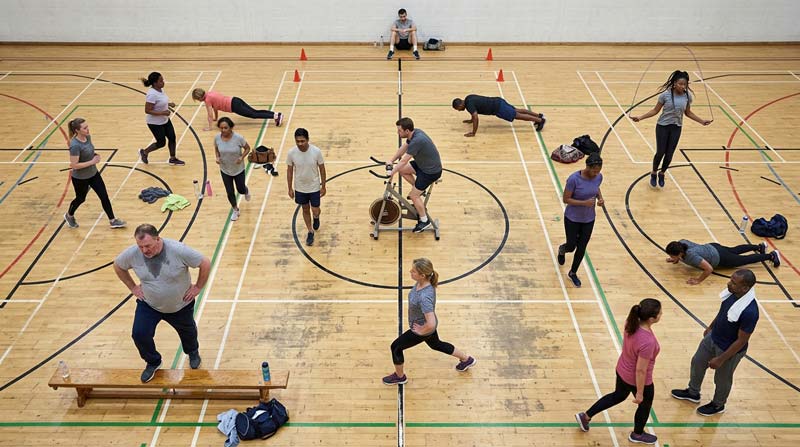
Four thousand and eighty-five records went into the screening process. Sixty-nine randomised controlled trials emerged, covering 2,387 people.
Average age across the trials was 35. Starting fitness was closely matched between groups, at around 32 mL/kg/min. Those units express how much oxygen a body uses per kilogram of weight each minute.
We excluded anyone with diagnosed cardiovascular disease. So was anyone in cardiac rehabilitation, anyone with insulin-dependent diabetes, and anyone needing ongoing treatment. People carrying cardiometabolic risk factors were included, meaning obesity, metabolic syndrome, pre-diabetes or pre-hypertension.
Programmes ran for an average of ten weeks. Attendance was almost identical in both arms (89%). We assessed trial quality using a standard tool for randomised studies. Fifty-nine of the 69 trials carried a low risk of bias in how participants were randomised. Every trial carried a low risk of bias in how outcomes were measured and recorded.
The dataset on how long a HIIT workout should be is therefore large, varied, and low in bias. Both approaches worked. Interval training raised fitness by 4.36 mL/kg/min. Steady training raised it by 2.59 mL/kg/min.
Compared directly, intervals came out ahead by 1.20 mL/kg/min. Researchers score these gaps on a standard scale, where 0.2 is small, and 0.8 is large. This gap scored 0.38, and it held across every population tested.
Earlier reviews had already established that brief interval sessions improve fitness. None of them produced a curve linking session length to the size of that improvement. Without that curve, prescriptions followed convention.
The dose-response modelling changed that. Reaching 80% of the maximum fitness gain took 11.4 minutes of interval session time. Steady training took 52.4 minutes to reach 80% of its own maximum. So how long should a HIIT workout be sits at under a quarter of the steady requirement.
What Those Eleven Minutes Actually Contain
This analysis excluded warm-up and cool-down time from every duration figure. Both stayed similar within each group and trial, so neither could explain differences between them.
They counted only the working part of a session. That includes the hard bursts. It also includes the recovery periods sitting between them. How long should a HIIT workout be therefore depends entirely on what gets counted as the workout.
Recovery took up a median of half of every interval session. Across the trials, it ranged from 17% to 90% of total session time. Work-to-rest ratios ran from 1:9 at one extreme to 5:1 at the other, with a median of 1:1.
Two sessions of identical length can therefore contain very different amounts of hard work. An eleven-minute session at a 1:1 ratio holds around five and a half minutes of effort. The same eleven minutes at a 1:9 ratio holds barely one.
Researchers tested what happens when they count only the hard efforts. Measured that way, 80% of the fitness gain arrived at 5.2 minutes of work per session. The response flattened at roughly 10.2 minutes. Across a full week, the equivalent figure was 14.7 minutes of genuinely hard work.
Counting effort alone changes the answer to how long should a HIIT workout be substantially. It also removes the largest source of variation between protocols, which makes it the more stable of the two measures.
Short, hard efforts trigger measurable changes inside muscle after only a handful of sessions. Those changes concern how muscle produces and uses energy rather than how much it has. Sprint training and endurance training produce comparable increases in the small blood vessels supplying muscle. The difference in time spent between those approaches is enormous.
You can total any structured session the same way, counting the hard bouts and the recoveries between them. The Norwegian 4×4 interval protocol is one worked example of that arithmetic.
How Long Should a HIIT Workout Be to Match an Hour of Steady Exercise
The two training forms trace different shapes. Interval training climbs steeply, then levels off. Steady training climbs in a straight line across every dose the trials covered. Three points were calculated on each curve:
- Half the maximum gain: 5.8 minutes of intervals, or 36.0 minutes of steady work.
- 80% of it: 11.4 minutes of intervals, or 52.4 minutes of steady work.
- The full modelled gain: 23.2 minutes of intervals, or 63.0 minutes of steady work.
The ratio between them shifts as sessions lengthen. At the halfway mark, steady training takes 6.2 times longer. At 80%, it takes 4.6 times longer. At the ceiling, it takes 2.7 times longer. So the time advantage is greatest for the shortest sessions, and it narrows steadily from there.
At their respective ceilings, the two arrive close together. Intervals delivered 4.31 mL/kg/min at 23.2 minutes. Steady work delivered 4.13 mL/kg/min at 63.0 minutes. For practical purposes, 23 minutes of hard intervals and an hour of steady exercise produce the same result. That answers how long a HIIT workout should be compared with an hour of moderate work.
Past 23 minutes, the interval curve stops climbing. Extending a session beyond that point added nothing measurable to the fitness result. The ceiling on how long should a HIIT workout be therefore arrives at 23 minutes.
Individual trials have already shown intervals outperform moderate training for fitness. What they could not show was where the returns stop arriving, because a single trial tests a single dose.
The 63-minute figure carries its own caveat. It equals the longest session any included trial used. Steady training’s curve had not flattened when the data ran out, which means higher doses might still add more. The number is a lower bound, not a true ceiling.

Why Longer Steady Sessions Still Earn Their Place
Steady training accumulates. Its fitness response rose in proportion to the time invested, with no flattening anywhere across the range the trials covered. Nobody yet knows where steady training tops out, because no trial went far enough to find the point.
Weekly figures follow the same straight line. Reaching 80% of the maximum observed effect took 133 minutes of steady exercise per week. The maximum itself took 200 minutes.
Where how long should a HIIT workout be meets a ceiling, steady training meets none. That difference in shape carries a practical consequence. Every extra steady session still contributes, whereas extra interval minutes stop contributing once the plateau arrives.
Pushing a steady session harder did not help. Prescribed intensity showed no relationship with the fitness gained, whether measured against maximum oxygen uptake or maximum heart rate. Volume drove the result, and intensity within that band did not.
Part of the steady training was probably performed in the heavy domain. If so, the measured gap between the two methods is narrower than the true one. Genuinely easy steady work might therefore need more than 52 minutes.
Steady exercise reaches comparable cardiometabolic outcomes through a lower-strain route. It asks less of a person’s tolerance for discomfort. Interval training asks more of that tolerance and returns time in exchange.
Researchers described the two as complementary rather than competing. The comparison behind how long should a HIIT workout be was never designed to produce a winner. Both arms improved on nearly every measure taken.
Fitness Is Only One of the Things Exercise Improves
Nothing separated the two methods on any measure of cardiometabolic health. Researchers tracked thirteen measurements across the trials. Twelve concerned blood pressure, body composition, blood sugar handling and the fats carried in the blood. On all twelve, both approaches performed well.
Both methods improved several of them on their own terms. Interval training lowered systolic blood pressure (the higher number, when the heart contracts) by 2.31 mmHg and diastolic pressure (the lower number, when the heart relaxes between beats) by 2.93 mmHg. It cut body fat by 1.52% and fasting insulin by 8.34 pmol/L. Insulin is the hormone that clears sugar out of the bloodstream.
Steady training lowered systolic pressure by 3.44 mmHg and diastolic pressure by 2.85 mmHg. It cut body fat by 1.04% and fasting insulin by 6.43 pmol/L. Its blood pressure reduction was the larger of the two. Even so, the difference between the methods was too small to be meaningful.
Exercise lowers blood pressure across both intensity ranges, as established repeatedly. Time efficiency, the premise behind how long should a HIIT workout be, applies to one outcome only. The split has a physiological explanation, and it runs through two separate systems.
Maximum oxygen uptake is limited centrally. The constraint sits in how much blood the heart can pump each minute. High-intensity efforts load the heart in a specific way. They raise filling pressure, peak output and the frictional force of blood against vessel walls. Repeated exposure to that frictional force drives adaptation in the blood vessels themselves.
Metabolic changes run through a different route entirely. They depend on depleting muscle glycogen and on total calories burned. Either working hard or working long can achieve both. One destination is reached by intensity. The other is reached by intensity or duration, interchangeably.
No difference emerged between the methods on any of these twelve measures. So they did not calculate a dose-response curve for them. How long should a HIIT workout be has no bearing on any of these results, because both routes arrive together.
How Long Should a HIIT Workout Be If You Are Not Already Fit
The trials recruited two distinct populations. One group was healthy, free of diagnosed disease and taking no medication. The other carried cardiometabolic risk factors, meaning obesity, metabolic syndrome, pre-diabetes or pre-hypertension.
Researchers tested formally whether the dose-response curves differed between them. They did not. Neither interval training nor steady training showed a statistically significant difference between the two populations. So how long should a HIIT workout be did not shift with health status.
Point estimates did move a little. Among healthy people, 80% of the interval gain arrived at 10.1 minutes per session. Among those with risk factors, it reached 12.9 minutes. The ranges overlapped heavily, so the gap between them is unreliable.
Starting fitness made no difference either. People sitting in the bottom 30% for fitness gained as much relative to steady training as everyone above them. Age showed no significant effect, although the estimate leaned slightly towards a larger interval advantage in older participants.
The researchers drew a direct interpretation from this. The stimulus, rather than the person’s condition, shapes the adaptation curve.
Trials in people with metabolic syndrome have reported interval training improving fitness alongside other markers. Insulin resistance describes a state where cells respond poorly to insulin. Similar results appear in older women and in men carrying that risk.
The answer to how long should a HIIT workout be may still shift at the trained end. Participants across these trials were predominantly sedentary or low-fitness. Well-trained people were under-represented, and they would be expected to have less capacity to improve. Whether a fit person follows the same curve remains untested here.
What These Numbers Cannot Tell You
The 11.4-minute figure has a wide range. Statisticians express uncertainty as a confidence interval, the band within which the true value most probably sits. For this estimate, that band runs from 9.5 minutes to 40.2 minutes. Forty minutes is close to four times the headline figure.
Every figure given for how long should a HIIT workout be carries a band of this kind. The steady-training estimate behaves better, running from 30.4 to 55.8 minutes around its central value of 52.4.
The reason lies in what session time contains. Recovery made up anywhere between 17% and 90% of an interval session. Pooling protocols that varied that much produces a wide band, because the same nominal duration describes very different training.
Measured as hard work alone, the estimate tightens considerably. The 5.2-minute figure carries a range of just 4.5 to 7.5 minutes.
The precision behind how long should a HIIT workout be improves when effort is measured instead. Interval protocols in these trials clustered around 20 and 30 minutes per session. Very few ran anywhere near 11 minutes. That figure comes from a fitted curve rather than direct observation.
The curves themselves were produced using a modelling approach designed for pooled trial data. Such models describe the shape of a relationship well. They cannot invent evidence in regions where trials were never run.
Four variables govern any training programme: frequency, intensity, time and type. This analysis modelled two of them. Intensity varied substantially across the trials and was never systematically accounted for. The flattening seen in longer interval sessions might therefore reflect lower intensities in those protocols rather than duration itself.
Dose-response questions are best answered by testing several doses in the same people. Almost no trial in this field does that. It requires repeated measurement throughout an intervention, rather than a single before-and-after comparison.
Most trials did not verify that participants reached a genuine maximum during fitness testing. A verification bout is a short extra test used to confirm the reading. Its usefulness is itself disputed, with published work finding it adds little. Both groups were tested identically within each trial, so that imprecision is shared.
The authors state their own limit plainly. These figures are population-level averages. They are not optimal prescriptions for any individual person.
How Long Should a HIIT Workout Be Across a Normal Week
Weekly arithmetic changes the picture less than the per-session figures suggest. Reaching 80% of the maximum interval effect took 33.1 minutes of session time per week. Steady training took 133 minutes to reach the same proportion of its own maximum.
Counted as hard effort alone, the weekly interval figure falls to 14.7 minutes. Across a week, how long should a HIIT workout be comes down to roughly half an hour. You can spread that across however many sessions suit you.
What the trials actually prescribed ran considerably higher. Interval groups averaged 74.4 minutes per week. Steady groups averaged 130 minutes. The interval prescriptions were therefore running at roughly double the figure the modelling identifies as sufficient.
Both groups turned up for 89% of their scheduled sessions across ten weeks. Neither approach proved harder to sustain over that period, which undercuts the assumption that hard training is abandoned faster.
How the two feel differs during the session, not after it. Emotional responses during hard efforts tend to be less positive than during moderate exercise. Interval protocols, however, show a pronounced positive rebound once the session ends. Mood returns to where it started, or rises above it. Continuous exercise at an equivalent intensity does not reliably show that rebound.
In previously inactive adults, both measured fitness and perceived fitness improved under either method, with substantial variation between individuals. Enjoyment is an important determinant of whether people keep training long term. The results are similar between the two in adults carrying extra weight. Preliminary evidence suggests that the order in which the two are combined affects the outcome.
The researchers’ position is flexible. The balance between interval and steady work can be adjusted to time and preference. It can then be varied across a training cycle. A fixed prescription suits the average person, not any individual.
Eleven minutes of interval session time buys most of the available fitness. Twenty-three minutes buys all of it. Sixty-three minutes of steady exercise buys the same fitness. It also buys identical results on blood pressure, body fat and blood sugar.
So how long should a HIIT workout be has a defensible answer. That answer buys less than the number alone suggests. It is also more useful to anyone who never has a spare hour.
Sources
- Bassett DR. Limiting factors for maximum oxygen uptake and determinants of endurance performance. Med Sci Sports Exerc. 2000;32:70.
- Bishop DJ, Beck B, Biddle SJH, Denay KL, Ferri A, Gibala MJ, et al. Physical activity and exercise intensity terminology: a joint American College of Sports Medicine (ACSM) expert statement and Exercise and Sport Science Australia (ESSA) consensus statement. J Sci Med Sport. 2025;28:980–91.
- Bruggisser F, Wagner J, Niemeyer M, Schoch R, Schwendinger F, Schmidt-Trucksäss A, et al. A verification phase adds little value to the determination of maximum oxygen uptake in well-trained adults. Eur J Appl Physiol. 2024;124:1669–81.
- Coates AM, Joyner MJ, Little JP, Jones AM, Gibala MJ. A perspective on high-intensity interval training for performance and health. Sports Med. 2023;53:85–96.
- Cocks M, Shaw CS, Shepherd SO, Fisher JP, Ranasinghe AM, Barker TA, et al. Sprint interval and endurance training are equally effective in increasing muscle microvascular density and eNOS content in sedentary males: microvascular adaptations to training in sedentary males. J Physiol. 2013;591:641–56.
- Cornelissen VA, Smart NA. Exercise training for blood pressure: a systematic review and meta-analysis. J Am Heart Assoc. 2013;2(1):e004473.
- Crippa A, Discacciati A, Bottai M, Spiegelman D, Orsini N. One-stage dose–response meta-analysis for aggregated data. Stat Methods Med Res. 2019;28(5):1579–96.
- Dierkes K, Mattioni Maturana F, Rösel I, Martus P, Nieß AM, Thiel A, et al. Different endurance exercise modalities, different affective response: a within-subject study. Front Psychol. 2021;12:3411.
- Earnest C, Lupo M, Thibodaux J, Hollier C, Butitta B, Lejeune E, et al. Interval training in men at risk for insulin resistance. Int J Sports Med. 2012;34:355–63.
- Fiuza-Luces C, Garatachea N, Berger NA, Lucia A. Exercise is the real polypill. Physiology (Bethesda). 2013;28:330–58.
- Gibala MJ, Little JP, MacDonald MJ, Hawley JA. Physiological adaptations to low-volume, high-intensity interval training in health and disease: adaptations to low-volume, high-intensity interval training. J Physiol. 2012;590:1077–84.
- Gibala MJ, McGee SL, Garnham AP, Howlett KF, Snow RJ, Hargreaves M. Brief intense interval exercise activates AMPK and p38 MAPK signaling and increases the expression of PGC-1α in human skeletal muscle. J Appl Physiol. 2009;106:929–34.
- Green DJ, Spence A, Rowley N, Thijssen DHJ, Naylor LH. Vascular adaptation in athletes: is there an ‘athlete’s artery’?: Is there an ‘athlete’s artery’? Exp Physiol. 2012;97:295–304.
- Gropper H, Mattioni Maturana F, Nieß AM, Thiel A. Does becoming fit mean feeling (f)it? A comparison of physiological and experiential fitness data from the iReAct Study. Front Sports Active Living. 2021;3:244.
- Guthold R, Stevens GA, Riley LM, Bull FC. Worldwide trends in insufficient physical activity from 2001 to 2016: a pooled analysis of 358 population-based surveys with 1.9 million participants. Lancet Glob Health. 2018;6:e1077-86.
- Helgerud J, Hoydal K, Wang E, Karlsen T, Berg P, Bjerkaas M, et al. Aerobic high-intensity intervals improve VO2max more than moderate training. Med Sci Sports Exerc. 2007;39:665–71.
- Iannetta D, Inglis EC, Mattu AT, Fontana FY, Pogliaghi S, Keir DA, et al. A critical evaluation of current methods for exercise prescription in women and men. Med Sci Sports Exerc. 2020;52:466–73.
- Keir DA, Iannetta D, Mattioni Maturana F, Kowalchuk JM, Murias JM. Identification of non-invasive exercise thresholds: methods, strategies, and an online app. Sports Med. 2022;52:237–55.
- Laukkanen JA, Isiozor NM, Kunutsor SK. Objectively assessed cardiorespiratory fitness and all-cause mortality risk. Mayo Clin Proc. 2022;97:1054–73.
- Mattioni Maturana F, Martus P, Zipfel S, Nieß AM. Effectiveness of HIIE versus MICT in improving cardiometabolic risk factors in health and disease: a meta-analysis. Med Sci Sports Exerc. 2021;53:559–73.
- Poole DC, Jones AM. Measurement of the maximum oxygen uptake VO2max : VO2peak is no longer acceptable. J Appl Physiol. 2017;122:997–1002.
- Sterne JAC, Savović J, Page MJ, Elbers RG, Blencowe NS, Boutron I, et al. RoB 2: a revised tool for assessing risk of bias in randomised trials. BMJ. 2019;366:l4898.
- Tjonna AE, Lee SJ, Rognmo O, Stolen TO, Bye A, Haram PM, et al. Aerobic interval training versus continuous moderate exercise as a treatment for the metabolic syndrome: a pilot study. Circulation. 2008;118:346–54.
- Trost SG, Owen N, Bauman AE, Sallis JF, Brown W. Correlates of adults’ participation in physical activity: review and update. Med Sci Sports Exerc. 2002;34:1996–2001.
- Vella CA, Taylor K, Drummer D. High‐intensity interval and moderate‐intensity continuous training elicit similar enjoyment and adherence levels in overweight and obese adults. Eur J Sport Sci. 2017;17:1203–11.
- Weston M, Taylor KL, Batterham AM, Hopkins WG. Effects of low-volume high-intensity interval training (HIT) on fitness in adults: a meta-analysis of controlled and non-controlled trials. Sports Med. 2014;44:1005–17.
- Yin M, Li H, Bai M, Liu H, Chen Z, Deng J, et al. Is low-volume high-intensity interval training a time-efficient strategy to improve cardiometabolic health and body composition? A meta-analysis. Appl Physiol Nutr Metab. 2024;49:273–92.