


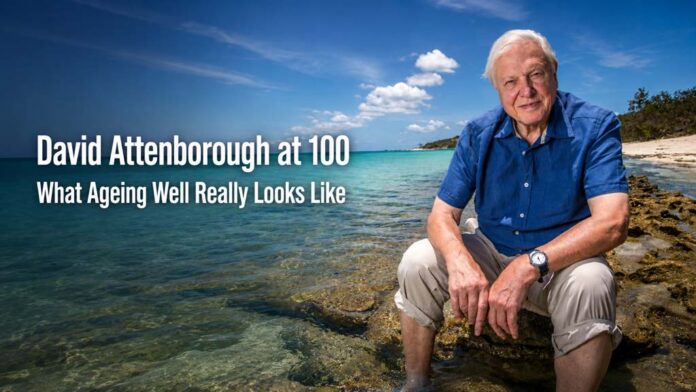
Sir David Attenborough turning 100 today (8 May 2026) forces a quiet question about what ageing well really means. Watch him narrate, recall, and walk a wild coastline, and you see something the longevity industry rarely sells. He is not selling supplements. He is still being himself.
I have watched my own father do a smaller, quieter version of the same thing. He is 84. He sits in front of Countdown and solves the numbers round faster than the contestants and the show’s specialist. He maintains the church building. He keeps the diary, sorts the rota, and lifts heavy shelving with me. Only at the very end does his breathing catch up with him. None of it is glamorous. All of it is a function.
Most of what we are sold about old age is the wrong question. The pills, the protocols, the cold plunges, the biohacker theatre. They chase years on a tombstone. They miss the part that actually matters. Whether the person inside those years can still think, move, contribute, and stay tethered to a life that means something. The shape of getting older is universal and inevitable, but how it actually plays out is shaped by patterns of living.
In this post, I will use Sir David Attenborough as inspiration to show a different way of looking at old age. It is anchored in a man turning 100, and drawn from people you already recognise. It rests on ageing science that is far less glamorous than the wellness market would have you believe. And it ends in the kitchens, gardens and church halls of ordinary people doing the work quietly.
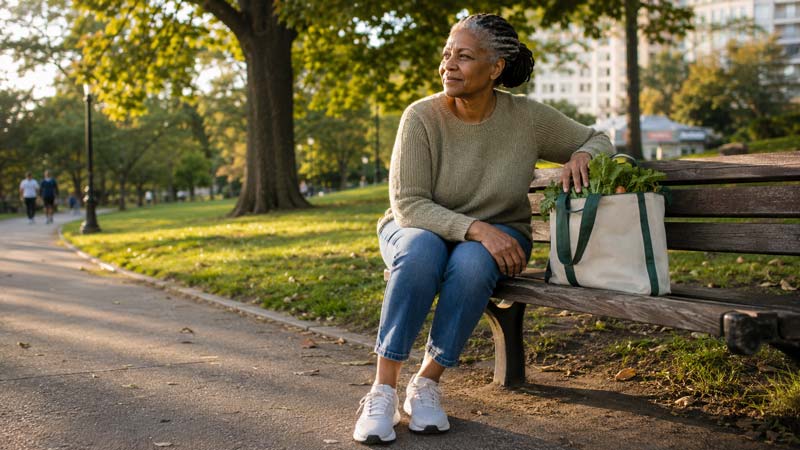
Why Ageing Well Is Not the Same as Living Longer
Two things people mean when they talk about old age, and they keep getting confused about them. One is lifespan. The other is healthspan.
Lifespan is the easy bit to count. It is the number on the headstone. It is what the longevity industry sells. Blood panels. Cold plunges. Hundred-pill regimes. The promise of buying you another decade. Healthspan is harder. It is whether the person inside those years can still feel like themselves.
The data is uncomfortable, because the gap between the two is widening. Strength declines between 24 and 36 per cent between the ages of 50 and 70. Two-thirds of women over 74 cannot lift an object heavier than 4.5 kilograms. These are not abstract numbers. They are the difference between carrying your own shopping and having someone else do it for you.
The longevity market has a comforting answer for all of this: sell you something. Three things are worth holding up against that:
- Supplements cannot do the work of food. The best way to obtain the nutrients you need is through whole, unprocessed foods. Multivitamins above the daily recommended intake have not been shown to improve outcomes in people who are already eating reasonably well.
- Ten thousand steps a day is a marketing slogan, not a finding. The number came from a 1964 advertising campaign for a Japanese pedometer. The benefit of walking on its own appears modest compared with that of loaded movement.
- Walking will not keep you strong as you age. Muscle mass drops by 3 to 8 per cent every decade after 30, and by 5 to 10 per cent each decade after 50. Walking does not load the muscles enough to slow that loss.
None of this is anti-science. It is just honest. The boring fundamentals are doing more of the work than the supplement aisle wants to admit. Ageing well is not a product you can buy. It is a capacity you protect, in small, quiet doses, over decades.
That capacity has a name when it goes missing. It is called frailty (a state where the body’s response to ordinary stress weakens because internal systems lose their reserve). Frailty is what happens when nobody warns you that the bucket needs to be topped up. The whole point of ageing well is to stay several steps in front of it, rather than chase a number on a chart.
What Ageing Well Looks Like in People You Already Know
Statistics about muscle loss and frailty risk are easy to skim. Faces are not. The reason this conversation needs anchors in real people is simple. Science means nothing until you can picture what it actually looks like.
Sir David Attenborough is the obvious place to start, because he carries every dimension of ageing well in one body. The narration is precise. The memory holds. The communication is clear. The work matters to him. The role he plays at 100 is still the role of David Attenborough. That is the part most worth keeping.
There are others, each useful in a slightly different way:
- Angela Rippon, dancing on Strictly at 79. She made the case for retained mobility, balance, coordination and rhythm so visible that you could not look away. Dance complexity challenges the body and the brain together.
- Dick Van Dyke, performing into his hundreds. He shows that ageing at the extreme end is not about avoiding change. It is about staying socially present, expressive, and physically engaged when many would have withdrawn.
- Jane Fonda at 88. Her later-life exercise work is slower and more deliberate than her aerobics days. It focuses on strength, balance, fall prevention, and the unglamorous task of standing up from a chair without help.
- Mick Jagger leading a stadium tour at 80. Stamina, breath control, rhythm and coordination, in front of tens of thousands. The work is loud, and the function is undeniable.
- Warren Buffett at 95, still chairing the Berkshire Hathaway Q&A. A clean illustration of cognitive endurance, even though his diet would horrify a nutritionist. The point is what he has preserved, not whether everything is.
These names are not the proof. The science is the proof. The names are anchors, because the brain remembers a face long after it forgets a percentage. What links all of them is not luck, not money, and not celebrity protocol. It is that they have kept doing things that demand something of them, mentally and physically. They have done it for so long that the demand itself has kept them in shape.
You almost certainly know someone in your own life who fits the same picture without the cameras. Ageing well belongs to them in exactly the same way it belongs to Attenborough.
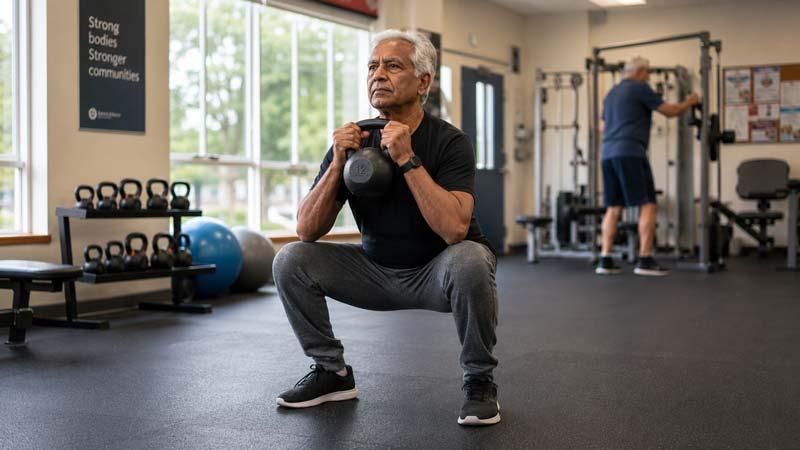
Strength, Movement and Balance: The Physical Infrastructure of Later Life
At the heart of why so many people lose their independence in later life sits a single, quiet word. It is sarcopenia (the gradual loss of muscle mass, strength and function with age). Almost nobody talks about it until it has already arrived.
The mechanics of ageing well physically are nearly impossible to discuss without it. Sarcopenia accelerates between the ages of 20 and 60, with overall capacity dropping by roughly 1 per cent per year. The tragedy is that muscle loss is among the most preventable forms of decline. It is also the one most people leave to chance.
Three things matter most. None of them is exotic. All of them work.
Strength
Resistance training is the most effective method known for maintaining and increasing muscle mass and strength. It is independently linked to reduced mortality risk in older adults. The recommendations are not extreme. Two to three sessions a week, working each major muscle group. Eight to twelve repetitions per set is enough to start. For beginners and older adults, the entry point is gentler. A single set of ten to fifteen repetitions at light intensity, with a full range of motion.
What strength training does goes far further than the muscles themselves. It reduces systemic inflammation by lowering markers like TNF-alpha (tumour necrosis factor alpha) and CRP (C-reactive protein).
These are part of the same cascade that drives muscle loss in the first place. Strength training also improves chair-stand performance, walking speed, and the ability to do everyday tasks without needing help. On the available evidence, it is the closest thing the older body has to a brake pedal.
Movement
Movement is what stops the strength you have built from rusting in place. Aerobic activity for older adults can be ordinary. Walking with changes in pace and direction, treadmill walking, stair climbing, and stationary cycling. The choice matters far less than the consistency.
What movement adds is system-level. Regular physical activity is inversely linked to a long list of conditions. Heart disease, hypertension, stroke, several cancers, type 2 diabetes, depression, and falls all show the relationship. Long-term exercise programmes in older adults reduce falls and injuries.
They improve muscle strength, balance, physical function, and cognition simultaneously. Movement is the daily currency that keeps the rest of the system honest.
Balance
Balance is the unglamorous one. It does not show up in a mirror. It is the difference between an ordinary trip and a hospital admission in later life.
Challenging balance training, performed for three hours a week, reduces fall risk in older adults by about 39 per cent. Step training reduces that risk by roughly 50 per cent. The bigger lesson is that balance is trainable, even into old age. Tai chi, single-leg work, and yoga all build it through ordinary practice.
The reason ageing well physically is taught as three things is that each protects against a different kind of failure. Strength stops you from crumbling. Movement stops you from stiffening. Balance stops you falling. Lose any of them, and the other two start to do less work too.
A Mind That Stays Switched On
Strength has a brake pedal. So does the brain, and almost no one talks about it.
The concept is called cognitive reserve. It was first proposed in the late 1980s by Yaakov Stern, after researchers noticed something strange. Some people were dying with brains visibly riddled with Alzheimer’s pathology, but had shown almost no symptoms in life. Others, with much milder pathology, had been deeply impaired. The difference was not the disease. The difference was what their brains had been doing for decades.
Cognitive reserve is what ageing well mentally actually rests on. It is the brain’s ability to keep functioning well despite damage. It is not the same as IQ. It is built across a lifetime through education, complex work, leisure activities, social engagement, and physical exercise.
The most frequently cited single finding concerns language. Bilingual people develop dementia, on average, four to five years later than monolingual people. The effect holds even after controlling for education and occupation. The reserve is real and measurable.
The data on dementia risk reduction goes deeper than language. A meta-analysis of 22 studies examined the effects of cognitively stimulating activities, such as reading, playing games, and learning new skills. Participants who engaged in them had a 42 per cent lower risk of dementia.
People with a college degree have about a 61 per cent lower risk than those with only an elementary education. Volunteering, regular contact with family and friends, and having a sense of purpose are all linked to reduced decline.
The most rigorous test of putting all this together has a name that hides what it does. It is the FINGER trial, a 2-year study in Finland on older adults at risk of cognitive decline. The trial gave participants a structured two-year programme. It combined strength training, aerobic training, computerised cognitive training, dietary guidance, and social activity. Compared to controls, the intervention group showed significant improvements in overall cognition, executive function, and processing speed. The model is now being copied around the world.
Translating this into a normal life is less complicated than it sounds. The brain follows a use-it-or-lose-it rule. The things that build reserve are the things humans have always done when they are well.
Learn, talk, gather, make, play, contribute. The earlier those habits form, the deeper the reserve. The later they form, the more they still help. There is no age at which the brain stops responding to use. The mind that stays switched on is the mind that keeps getting used.
Sleep, Real Food and the Stress We Underestimate
Strength is the body’s brake pedal. Curiosity is the brain’s. The three things in this section are the fuel that keeps both running.
Sleep, food and stress are the three quiet drivers of how well a body and brain age. They are deeply unglamorous. They don’t appear anywhere in a wellness ad. They are also where most of the actual work gets done.
Sleep is the first of these. The current evidence is unambiguous. After 45, sleeping under six hours a night raises lifetime heart attack and stroke risk by 200 per cent. The risk is not just about heart disease. Major diseases, including obesity, dementia, diabetes, and cancer, all show causal links to chronic sleep deprivation.
What sleep actually does is repair work the body cannot do while awake. Tissue repair, protein synthesis and growth hormone release happen primarily during deep sleep. The brain has a cleaning system called the glymphatic system. It becomes 10 to 20 times more active during sleep.
It flushes out metabolic waste, including the amyloid beta proteins associated with Alzheimer’s. Cells shrink by up to 60 per cent overnight to make room for cleaning. None of this is metaphor. Without sleep, the cleaning does not happen, and the waste accumulates.
Real food is the second. This is the area where the wellness industry has done the most damage, by replacing food with bottles of pills. The picture from population research is clear and old.
Mediterranean diets, built on vegetables, fruits, fish and olive oil, lower inflammation and cardiovascular disease risk. They also slow cognitive decline and reduce overall mortality. The PREDIMED trial assigned participants to a Mediterranean diet with extra-virgin olive oil.
Their risk of stroke, heart attack or cardiovascular death dropped by 30 per cent. Japanese dietary patterns, characterised by variety rather than restriction, are associated with reduced cognitive decline and reduced hippocampal shrinkage.
The point is not that there is one perfect diet. The basic shape of all the diets that work is the same. Mostly plants. Some fish. Some whole grains. Olive oil rather than butter. Real food, not bottled approximations. Multivitamins above the daily recommended intake do not improve outcomes in people already eating reasonably well. The best way to get nutrients is, plain and simple, food.
Stress is the third. Most people treat it as a feeling. The body treats it as a physiological event. Chronic activation of the HPA axis (the system that controls cortisol release) drives sustained inflammation. It is implicated in obesity, depression, chronic pain, and the breakdown of decision-making.
Treating supplements as a substitute for food, rather than a possible top-up to it. The evidence for whole foods doing the work is stronger than the evidence for any pill replacing them.
Eating late at night and disrupting the deep-sleep window when most repair happens. Late-night eating delays melatonin and shortens slow-wave sleep.
Reaching for distraction (screens, alcohol, scrolling) as stress relief. These work against the parasympathetic nervous system rather than for it.
What helps is unspectacular. Practices such as mindfulness, meditation, and tai chi reduce cortisol levels, lower levels of inflammatory cytokines, and improve heart rate variability. Heart rate variability is a marker of how well the autonomic nervous system regulates itself.
The mechanisms differ from exercise, but the results converge. Anything that puts the parasympathetic nervous system back in charge for a while is doing the work.
Three quiet drivers, three different mechanisms, one consistent message. Ageing well in the long run rests on three things. Whether the body has time to repair itself, fuel it can use, and protection from chronic inflammation.
Skip those three, and the body’s brake pedals do half the job. Honour them, and the rest of the work compounds. Ageing well is, more than anything else, the absence of avoidable damage repeated daily over decades.
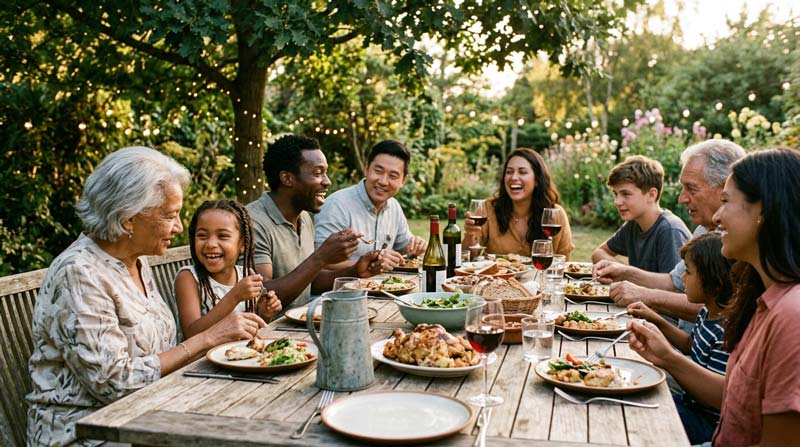
Connection, Purpose and the Everyday Version of Ageing Well
There is one final thing the science of ageing has converged on. It is the one most people would skip if it were presented as a health intervention.
Loneliness is a mortality risk. Meta-analyses have found a clear association between weak social connections and both early death and cardiovascular disease. The same pattern shows up in coronary heart disease and stroke risk. Strong social ties cut all of those numbers in the other direction.
The variety of social contact matters too. More diverse social interactions are linked to a wider range of daily activities, including movement.
The reason this matters for ageing well is mechanical, not sentimental. Social connection is what gives the body and brain reasons to keep doing things. Reasons to leave the house. Reasons to learn the names of the new neighbours. Reasons to stand back up from the chair, walk down the road, and see somebody. Without those reasons, the brake pedals stop being pressed. The unglamorous foundations stop being honoured. The whole quiet system loses its grip.
Purpose works in the same way. A clear sense of purpose in life is linked to a lower risk of Alzheimer’s and cognitive impairment. Volunteering is associated with better mental and physical outcomes in older adults. The thing the longevity industry cannot sell in a bottle is the feeling that you are needed in the morning.
This is where the post comes back to ordinary people, which is where it always belonged. Sir David Attenborough is a useful door-opener, but he is not the model. The model is much closer to home.
It is the 91-year-old volunteering in a thrift shop for the twentieth year running. Her name is Ethel Davey. A long-term volunteer at a thrift store, with more than two decades of consistent service, shows routine, social contact, regular movement, responsibility and usefulness in older age.
Her example is different from the celebrity cases because it reflects ordinary-life healthspan: showing up, helping, forming friendships, having somewhere to be, and remaining embedded in a community.
Davey is the bridge from public figures to ordinary people, including my dad. She shows that healthspan is not fame, wealth or celebrity access. It can also look like volunteering, church, community, puzzles, movement, responsibility and being needed.
It is the retired teacher running the Sunday school. It is the woman who hosts the family lunch every other Saturday and never sits down for the whole afternoon. It is my own father at 84, beating the contestants on Countdown and maintaining the church building. It is him lifting the shelving with me, only running out of breath at the very end. These are not famous people. They are the actual evidence.
What all of them have in common is not money, not access, not a special supplement stack. It is that they kept being useful and being seen. They kept moving, kept learning, kept showing up, kept being in contact with people who knew them. Long after their official roles ended, they kept finding new ones. The body and brain, given that environment, keep responding.
The longevity industry will keep selling pills, protocols, and the promise of more years. The years are not really the point. The point is what is happening inside them. Ageing well is what happens when a person continues to protect their function. It is fuelling the body with real food, sleeping enough to repair, and staying socially tethered. It is holding on to a reason to get up.
It will never be glamorous. It will never trend. It does, however, happen to be true. And it is available to almost everybody willing to do the work in small, quiet doses, daily, for as long as they have.
Sources
- Adam K, Oswald I. Sleep Is for Tissue Restoration. Journal of the Royal College of Physicians of London 1977;11:376.
- American College of Sports Medicine. ACSM’s Guidelines for Exercise Testing and Prescription. 10th ed. Philadelphia (PA): Wolters Kluwer; 2018.
- Anderson ND, Damianakis T, Kroger E, Wagner LM, Dawson DR, Binns MA, Bernstein S, Caspi E, Cook SL, The BRAVO Team. The benefits associated with volunteering among seniors: a critical review and recommendations for future research. Psychological Bulletin 2014;140(6):1505-1533.
- Bialystok E, Craik FI, Freedman M. Bilingualism as a protection against the onset of symptoms of dementia. Neuropsychologia 2007;45(2):459-464.
- Boeve BF, Silber MH, Saper CB, et al. Pathophysiology of REM sleep behavior disorder and relevance to neurodegenerative disease. Brain 2007;130:2770-2780.
- Boyle PA, Buchman AS, Barnes LL, Bennett DA. Effect of a purpose in life on risk of incident Alzheimer disease and mild cognitive impairment in community-dwelling older persons. Archives of General Psychiatry 2010;67(3):304-310.
- Cappuccio FP, D’Elia L, Strazzullo P, Miller MA. Sleep duration and all-cause mortality: a systematic review and meta-analysis of prospective studies. Sleep 2010;33(5):585-592.
- Chen LK, Liu LK, Woo J, et al. Sarcopenia in Asia: consensus report of the Asian Working Group for Sarcopenia. Journal of the American Medical Directors Association 2014;15:95-101.
- Clegg A, Young J, Iliffe S, Rikkert MO, Rockwood K. Frailty in elderly people. The Lancet 2013;381(9868):752-762.
- Estruch R, Ros E, Salas-Salvado J, et al. Primary Prevention of Cardiovascular Disease with a Mediterranean Diet. New England Journal of Medicine 2013;368(14):1279-1290.
- Evans WJ. Exercise, nutrition and aging. J Nutr. 1992 Mar;122(3 Suppl):796-801.
- Fingerman KL, Huo M, Charles ST, et al. Variety is the spice of late life: social integration and daily activity. Journals of Gerontology Series B 2020;75:377-388.
- Flack KD, Davy KP, Hulver MW, Winett RA, Frisard MI, Davy BM. Aging, resistance training, and diabetes prevention. Journal of Aging Research 2011;127315.
- Garber CE, Blissmer B, Deschenes MR, et al. American College of Sports Medicine position stand. The quantity and quality of exercise for developing and maintaining cardiorespiratory, musculoskeletal, and neuromotor fitness in apparently healthy adults: guidance for prescribing exercise. Medicine and Science in Sports and Exercise 2011;43(7):1334-1559.
- Gardi C, Fazia T, Stringa B, Giommi F. A short mindfulness retreat can improve biological markers of stress and inflammation. Psychoneuroendocrinology 2022;135:105579.
- Harridge SD, Lazarus NR. Physical Activity, Aging, and Physiological Function. Physiology (Bethesda) 2017;32(2):152-161.
- Holt-Lunstad J, Smith TB, Baker M, Harris T, Stephenson D. Loneliness and social isolation as risk factors for mortality: A meta-analytic review. Perspectives on Psychological Science 2015;10:227-237.
- Larson EB. Exercise, functional decline and frailty. Journal of the American Geriatrics Society 1991;39:635-636.
- McArdle WD, Katch FI, Katch VL. Sports and Exercise Nutrition. Baltimore (MD): Lippincott Williams & Wilkins; 2005.
- McEwen BS. Central effects of stress hormones in health and disease: understanding the protective and damaging effects of stress and stress mediators. European Journal of Pharmacology 2008;583:174-185.
- Ngandu T, Lehtisalo J, Solomon A, et al. A 2 year multidomain intervention of diet, exercise, cognitive training, and vascular risk monitoring versus control to prevent cognitive decline in at-risk elderly people (FINGER): a randomised controlled trial. The Lancet 2015;385(9984):2255-2263.
- Otsuka R, Nishita Y, Nakamura A, et al. Dietary diversity is associated with longitudinal changes in hippocampal volume among Japanese community dwellers. European Journal of Clinical Nutrition 2021;75:946-953.
- Piercy KL, Troiano RP, Ballard RM, Carlson SA, Fulton JE, Galuska DA, George SM, Olson RD. The Physical Activity Guidelines for Americans. JAMA. 2018 Nov 20;320(19):2020-2028.
- Rikli RE, Jones CJ. Development and validation of criterion-referenced clinically relevant fitness standards for maintaining physical independence in later years. The Gerontologist 2013;53(2):255-267.
- Santiago L, Neto L, Pereira G, Leite R, Mostarda C, De Oliveira Brito Monzani J, Sousa W, Pinheiro A, Navarro F. Effects of resistance training on immunoinflammatory response, TNF-alpha gene expression, and body composition in elderly women. Journal of Aging Research 2018;1467025.
- Shailendra P, Baldock KL, Li LS, Bennie JA, Boyle T. Resistance training and mortality risk: A systematic review and meta-analysis. American Journal of Preventive Medicine 2022;63:277-285.
- Sherrington C, Michaleff ZA, Fairhall N. Exercise to prevent falls in older adults: an updated systematic review and meta-analysis. British Journal of Sports Medicine 2017;51(24):1750-1758.
- Sofi F, Cesari F, Abbate R, Gensini GF, Casini A. Adherence to Mediterranean diet and health status: meta-analysis. BMJ 2008;337:a1344.
- Stern Y. Cognitive reserve in ageing and Alzheimer’s disease. The Lancet Neurology 2012;11(11):1006-1012.
- Stern Y. What is cognitive reserve? Theory and research application of the reserve concept. Journal of the International Neuropsychological Society 2002;8(3):448-460.
- Valenzuela MJ, Sachdev P. Brain reserve and cognitive decline: a non-parametric systematic review. Psychological Medicine 2006;36(8):1065-1073.
- Valtorta NK, Kanaan M, Gilbody S, Ronzi S, Hanratty B. Loneliness and social isolation as risk factors for coronary heart disease and stroke: Systematic review and meta-analysis of longitudinal observational studies. Heart 2016;102:1009-1016.