


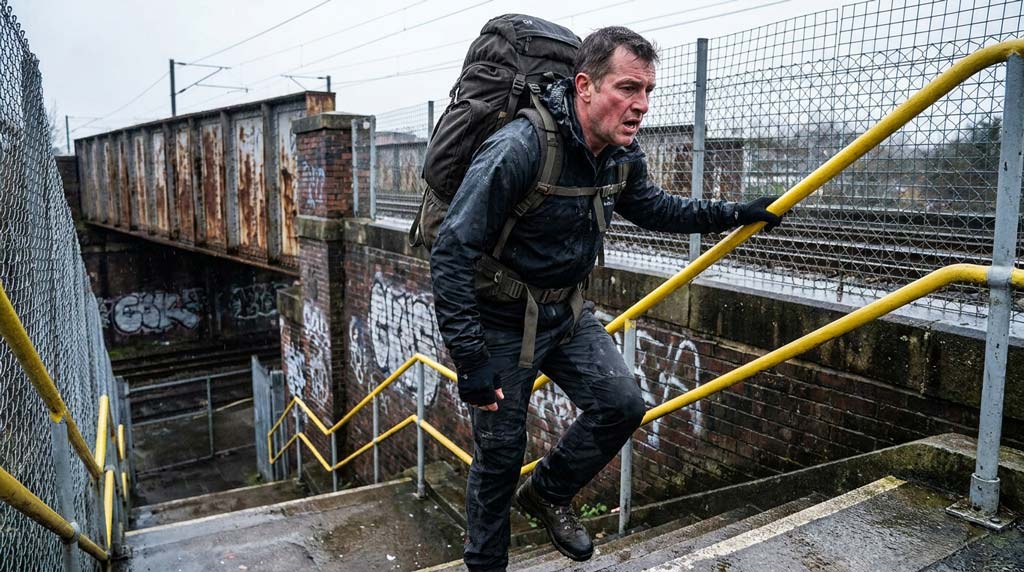
Rucking means walking under a loaded pack, a task studied for decades because of the damage it can do. Soldiers, police officers and firefighters carry weight because their work demands it. Researchers followed them to reduce injury, improve equipment design, and protect performance. That body of evidence now sits underneath a fast-growing recreational habit.
The loads involved are not comparable. Infantry soldiers have carried weights approaching their own body mass. Most of that weight rides on the torso, held there by a backpack, body armour or webbing pouches. Carrying it has a well-established cost to performance. How large that cost becomes depends on more than weight. Bulk, rigidity, coverage, and fit all decide it.
Adding weight to a walk appeals precisely because it asks for nothing else. A weighted garment goes over ordinary clothes. It works during a walk, on a staircase, or while standing up from a chair. There is no facility to join, no class to attend and nothing to buy beyond the load itself.
That simplicity answers a real problem. Activity guidance is far easier to write than to follow. Pain during exercise, fear of falling, and barriers of time and transport all undermine whether people keep going.
Ageing supplies the other half of the interest. Bone loss accelerates with age. Bone mineral density measures how much mineral is packed into a given area of bone. As it falls, the risk of disability, poorer quality of life and early death rises.
The immediate effect of rucking is not in dispute. Adding weight makes the same walk harder, and every measure of effort agrees. Whether a harder walk becomes lasting change in strength, bone or body composition is a separate question.
The distance between those two questions is where most of the confusion sits. Much of the evidence comes from people carrying far heavier loads than any recreational walker would consider. They also had no say in the ground underfoot. Separating what the research directly supports from what has been quietly borrowed turns a fashionable habit into an informed decision.
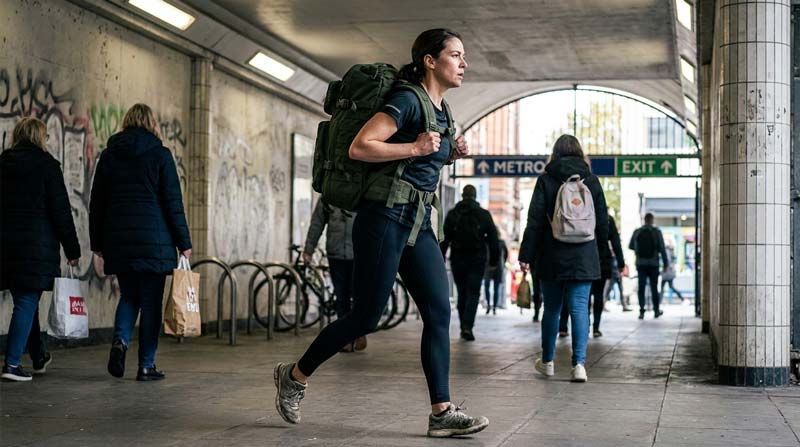
What Is Rucking
Walking long distances under a loaded pack is among the oldest recorded forms of deliberate physical training. Flavius Renatus described Roman soldiers being trained to carry loads and march long distances. The practice never went away. Armies still call it a ruck march, a tab, or a pack march, depending on the country.
Rucking is the name that reached the public. Research uses a different one entirely.
In academic work, the activity is called load carriage. The term covers movement on foot while carrying task-specific equipment. Searches built around that phrase return a large body of literature. Searches built around the public word return almost nothing. That mismatch explains why writing about rucking so often borrows findings from studies which never mention it.
Three different practices now travel under the same heading.
- A Loaded Backpack: The weight sits behind the body’s centre of mass. Your shoulders take most of it, and a fitted belt shifts some onto your hips. Where weight sits inside the pack changes what it costs. An identical load can feel quite different depending on how it was packed.
- A Weighted Vest: Small blocks of weight spread around the torso inside a fitted garment. The design aims to preserve normal movement, and the load adjusts in very fine increments. Research uses it two ways: worn through ordinary daily activity, or worn during structured exercise sessions.
- Occupational Load Carriage: Police officers, firefighters, and soldiers carry equipment because their roles require it. Loads run from roughly 10 kg for general duties to 40 kg. That heavier figure is the British Army patrol order. Nobody involved selected the weight.
The distances between those worlds are wider than most comparisons admit. Soldiers on mountain operations may carry up to 45 kg on slopes of 15 to 45 degrees. People walking to work carry a fraction of that. Their ground rarely tilts beyond 6 degrees.
Speed separates them again. Backpackers typically move at 3.2 to 4.8 km/h, while thru-hikers push to 6.4 km/h. Military speed marching requires 5.5 km/h unloaded and up to 7.5 km/h under load.
At the extreme, the load approaches the limit of what a body can move. One report on soldiers in Afghanistan recorded an average approach march load of around 60 kg. Some roles carried closer to 68 kg, roughly 97% of the carrier’s own body weight.
The vest sits at the other end of that range. In one twelve-month programme, it began completely empty at one pound. Weight then rose weekly in eighth-of-a-pound blocks. Eighths of a pound and most of a body weight describe two different activities. The evidence behind each answers a different question.
How Rucking Changes Walking
Every extra kilogram in a pack raises the energy cost of walking by roughly 1%. That relationship held steady across loads of 25 to 70 kg. It also held across speeds from 2.5 to 5.5 km/h. The arithmetic behind rucking is simple. What follows from it is not.
Two things drive the extra cost. Holding the trunk upright against the weight demands constant work from the torso muscles. The legs must then do more work to hold the same speed.
The penalty does not spread evenly across the range. Going from 20 kg to 40 kg sharply raised heart rate and oxygen use. That rise exceeded the one from nothing to 20 kg. The second half of a load therefore costs more than the first.
Effort climbs faster than the numbers suggest. Walking with a 25 kg pack felt harder and produced more leg fatigue. That held even where oxygen demand was matched across both conditions.
Weight, though, is the weakest of the three factors shaping difficulty. Gradient has a larger influence on the cardiovascular response than the weight carried. A 1% rise in slope raised energy cost around ten times more than a 1% rise in load.
Pace does similar work. Elite soldiers carrying 20 kg walked one kilometre per hour faster. Their mean heart rate rose by 20 beats per minute. With everything else held constant, speed predicts work output more reliably than weight.
The three levers are broadly interchangeable. Add 10 kg, walk half a kilometre per hour faster, or find ground tilting upward by 1%. Each produces a similar rise in energy cost.
The surface underfoot then changes the price of rucking again. Energy cost climbs steadily across surfaces. Sealed roads cost least, then dirt tracks, light scrub and thick scrub. Boggy ground, loose sand and deep snow cost most.
Load also changes how you walk, not just how hard it feels.
Stride length shortens, and cadence rises once a backpack goes on. The trunk tilts progressively further forward as load climbs toward 40% of body mass. Loads as light as 5% of body mass flatten the spine’s natural curves.
Weight placement inside the pack affects the lungs and legs differently. Packing the load low over the lower back raised oxygen uptake more. Packing it high over the upper back costs less. Splitting a load across chest and back cut metabolic cost by 9%. That saving came at the cost of more restricted breathing.
Breathing is compromised before a single step. Forced vital capacity measures the total air a person can force out after filling their lungs. As torso-borne load rose from 12 kg to 47 kg, it fell by 8% to 15%. A drop of only 7% to 12% can measurably reduce exercise performance.
Balance is taxed alongside it. Carrying weight increases postural sway. The body leans more on the diaphragm, which helps hold the spine steady and drives breathing.
Experience changes the response as well. Inexperienced walkers adapt mainly by altering cadence. Experienced load carriers adapt to the load itself.
None of this applies equally to everyone. Body composition, height, training history and sex all change what a given pack demands. Anyone with a poorer strength-to-mass ratio carries a proportionally heavier burden. Absolute loads, rather than scaled ones, create that gap.
One British soldier described the arithmetic from the inside. He weighed 57 kg and was 1.68 m tall. Assessments had him carrying around 20 kg, roughly 35% of his body weight. Field exercises took that to 40 or 50 kg. He attributed his difficulty to his low body mass. Carrying such a large percentage slowed his legs whenever the pace rose. Four years of resistance training then added about 11 kg. He reported a dramatic improvement in what he could complete.
What Benefits Does the Evidence Support
Twenty-seven weeks of wearing a weighted vest changed nothing.
Older adults wore vests loaded to 3% or 5% of body mass. They wore them two hours a day, four days a week. Knee strength did not improve. Muscular endurance did not improve. Walking, chair rises, stair climbing and balance all stayed where they were. Markers of bone turnover did not shift either.
The authors put the result down to the dose and the design. The load was light, and the vest was worn rather than worked under.
Set that against a five-year programme built the opposite way. Older women wore vests averaging 11.3 pounds during functional exercise. That exercise covered stepping, squats, chair stands, lunges, toe raises and jumps. They trained three times a week, thirty-two weeks a year. Femoral neck bone density rose by 1.54%, while the comparison group fell by 4.43%.
That contrast runs through this literature. Wearing a load achieves very little. Working under a progressively increased load produces measurable change.
Adaptation also follows the specific demand imposed. Six weeks of fast step-ups in a weighted vest improved lower-limb power and stair climbing. Chair rises and habitual walking speed showed no significant change.
Rucking fits more closely with the second model. Walking under a pack is a task performed for a set period. Loads and populations still differ sharply from the trials below. Each claimed benefit of rucking has to be read against the people it was measured in:
- Bone Density: Task-based vest exercise at around 10% of body mass has maintained and sometimes increased hip bone density in older women. Osteopenia means bone thinner than normal, though short of osteoporosis. Eight weeks of vest exercise in these women lifted T-score by 0.08. Identical exercise without a vest fell by 0.18. During deliberate weight loss, the picture reverses. A vest worn seven hours a day failed to prevent hip bone loss across twelve months. Every group lost between 1.2% and 1.9%.
- Muscle Strength: Twelve months of daily vest wear produced a knee extensor strength change of minus 0.47 newton metres. Supervised progressive resistance training over the same period increased knee extensor strength by 5.52 newton metres. Task-based vest work reads differently again. Twelve weeks at 10% of body mass improved all twelve neuromuscular outcomes assessed. Those included five-times sit-to-stand and single-leg heel raises.
- Aerobic Fitness: Twenty-four treadmill walking sessions across eight weeks raised maximum oxygen consumption by 19%. Adults wearing a vest gained 25% instead. Adding the vest made no significant difference in cardiac measures, except for waist-to-hip ratio. At light loads, the walking, rather than the weight, appears to be doing the work.
- Body Composition: Adding a vest to a weight loss programme produced no greater fat loss than dieting alone. The figures were minus 7.31 kg against minus 7.69 kg. Supervised resistance training over the same twelve months reached minus 9.99 kg. Resistance work also preserves lean mass during energy restriction. Worn during exercise rather than throughout the day, the vest performed differently. Eight weeks produced a 1.28 kg gain in leg lean mass. Leg fat fell by 1.85 kg.
- Everyday Function: Exercise performed in a weighted vest cut five sit-to-stand repetitions by 6.32 seconds. The same exercise without one cut 3.02 seconds. Six-minute walking distance rose by 100.75 metres, against 20.38 metres for exercise alone.
- The Trunk: One region favoured the vest more than any other. The paraspinous muscles run alongside the spine. Over twelve months, vest wearers lost 4.1% of these muscles. Supervised resistance training reduced fat by 6.5%, and diet alone by 7.8%. Trunk muscle density improved by 2.7% relative to dieting alone, close to the 3.0% achieved by resistance training.
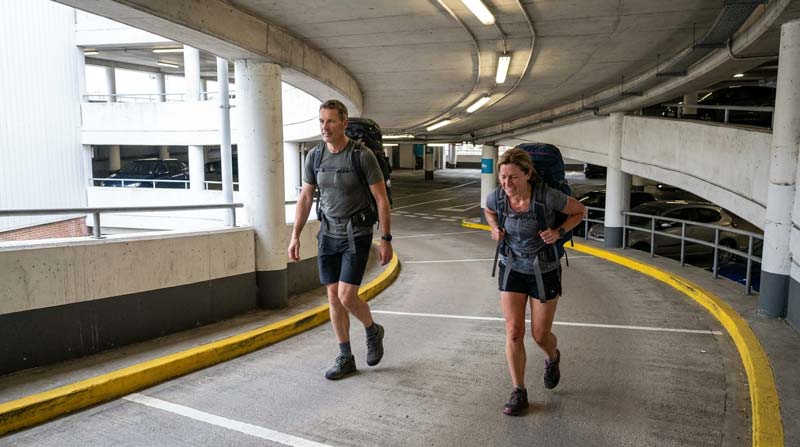
What Are the Limits of the Evidence
Researchers who tested inexperienced load carriers issued a warning alongside their own results. They stated plainly that readers should not apply the findings to trained personnel. That caution applies far more widely than the single paper carrying it.
Start with who was measured. Much of the load carriage literature rests on healthy, physically fit young adults. Results from that group describe that group. Experienced workers, school-aged children, older people and anyone with a health problem sit outside it.
Sex narrows the picture further. A large body of work on breathing responses and muscle fatigue under load excluded women altogether. Where differences between men and women appeared, many shrank or disappeared once researchers accounted for body dimensions and strength.
Vest trials in older adults carry their own filter. They excluded anyone already exercising on more than five days a week. The findings therefore describe load added to a relatively inactive starting point. Samples were also largely female, White and college-educated, which limits how far conclusions travel.
Next, consider what was measured and with which instrument. Dual-energy X-ray absorptiometry is a scan that estimates tissue alongside bone. By that method, trunk lean mass rose across twelve months. Computed tomography showed muscle cross-sectional area falling over the same period. The first method counts water, connective tissue, skin and organs as well as muscle.
Dose forms the third problem. Wearing 3% to 5% of body mass during ordinary activity may simply be too little to register. No definitive literature establishes the optimal loading dose for preserving muscle or bone. Null results may therefore reflect under-dosing rather than a useless method.
Diet can also conceal the answer. Where a trial supplies complete nutrition with adequate protein, calcium and vitamin D, lean mass is spared across every group. Any effect of added loading becomes very hard to detect against that background.
The measurements also disagree. Across similar load ranges, studies report cadence as unchanged, decreased, or increased. Stride length shows no difference in some work and significant reductions in others. Head and neck position, ground reaction forces and lumbar curvature carry the same pattern of contradiction.
Much of the ground is artificial too. Carrying 25% of body weight on a field trail produced smaller changes than a treadmill. Oxygen uptake, heart rate and perceived exertion all shifted less. The widely used equations for predicting the cost of a loaded walk have separately been shown to under-predict it.
Time supplies the final constraint. A complete bone remodelling cycle runs to roughly 200 days. An eight-week result therefore sits inside a single turnover cycle. It is measured before the process being measured has finished.
The boundary around rucking can be stated exactly. A large evidence base exists on carrying heavy loads for work. A smaller one covers weighted garments in older adults. Direct, long-term research on recreational rucking remains limited. Everything written about it, including this, is assembled from the two bodies of work sitting either side of that gap.
Who Should Be Careful With Rucking
Carrying 12 kilograms for ten minutes can reduce finger sensation. Pack straps deform shoulder tissue. That cuts blood supply to the arm and impairs light touch and fine motor skills. A pack holding 20% of body mass reduced blood flow through the main artery of the upper arm by 43%. Pins and needles followed within ten minutes.
Those particular effects reverse within minutes of the load coming off. Several others do not.
Rucking removes the repeated impact of running. In exchange, it adds sustained compression through the spine, hips, knees, feet and balance system. The trade is genuine, and it is not free.
Blood Pressure, the Heart and the Breath
Ten minutes of treadmill walking under 10% of body mass raised arterial stiffness in healthy young people. The marker used independently predicts cardiovascular events and death. Systolic blood pressure, the higher of the two numbers, rises significantly under load. The lower number moves very little. Adolescents walking for thirty minutes under load saw it climb from 129.8 to 147.7 millimetres of mercury.
Chest restriction compounds the effect. Weight across the torso shrinks the pressure swings that draw blood back toward the heart. Stroke volume has fallen by 16% to 20% during submaximal exercise under chest wall restriction. Cardiac output has fallen by 12%. The forward lean adopted under a pack worsens the problem.
Breathing muscles tire at thresholds set by configuration as much as by weight. Sixty minutes at 6.5 km/h carrying 25 kg reduced maximum inspiratory pressure by 11% to 13%. Backpack loads of 10, 15 and 20 kg produced no respiratory muscle fatigue. Eleven kilograms of body armour did.
The Back and the Nerves
After the lower limbs, the back is the most common site of injury from carrying loads. By body site, the lower back is the leading site in both men and women. Women sustain lower back injuries in similar proportions to men, though they sustain more severe ones.
The mechanism is repetition. Forward lean under a pack creates cyclic stress on the vertebrae, discs, and surrounding muscles. Every step adds another cycle. Heavy loads do not move in time with the trunk, so stiffness rises through muscular co-contraction.
Nerve problems from carrying loads carry their own names. Rucksack palsy produces weakness, numbness and pain in the arm. Straps pressing on the nerve bundle at the top of the shoulder cause it. Digitalgia paresthetica produces numbness and burning across the foot and toes, often from poorly fitting boots. Meralgia paresthetica produces numbness down the front and outer thigh, usually from an overly tight waist belt.
Risk rises with frameless packs, heavy packs worn without a waist belt, and waist belts left unfastened. Recovery can run to several months. Surgery is considered for rucksack palsy where strength has not returned after twenty-four months.
The Shins
The shin bone is the single most common site of stress fracture. It accounts for 41% to 55% of them in running athletes. Among male military recruits, the figure reaches 50%. Adding 15 kg to walking raised strain in the tibia by 22% to 23% in recreational runners. Strain continued to rise as the load increased to 25 kg and then 35 kg.
One finding points to a ceiling. Compressive strain rate stopped rising between 25 kg and 35 kg. This was read as the body-limiting forces reaching the bone. Strain had neared damaging levels.
Body size decides who is exposed. Modelling women running under a 22.7 kg vest split the risk by height. Stress fracture likelihood rose 9.7% in short women and 7.4% in those of medium stature. Tall women showed no significant rise. Larger joint forces did not translate into greater bone strain. Taller women showed higher hip and knee forces without the matching risk.
What a Session Leaves Behind
Rucking keeps costing after the walk has finished.
Royal Marine recruits completed a 19.3 km walk carrying 31 kg. Jump height fell 8%, and power fell 5%. Two hours of walking with a 25 kg pack reduced knee extensor force. The reduction persisted 72 hours later. Grip strength was also reduced for 72 hours after a heavy carrying task.
Repeated bouts compound it. Across three 65-minute walks carrying 25 kg, peak quadriceps force fell roughly 25%. The rate at which force could be developed fell further still. Oxygen cost rose 9.1% from the first bout to the second, then 10.9% from the first to the third.
Who Should Take Extra Care
Trials of weighted vest use screen people out, and the exclusion lists are informative. Osteoporosis, severe arthritis and back pain appear on them. So do recent heart attack, unstable angina, uncontrolled high blood pressure and uncontrolled diabetes. Serious respiratory conditions, heart failure, stroke, chronic kidney disease and thyroid disorders appear on others.
Previous injury from carrying a load is itself a risk factor for the next one. Of soldiers injured during basic training, 32% sustained a further injury within their first operational year. Over a career, 52% reported sustaining another.
Adverse events track the loading. Across twelve months, older adults wearing a weighted vest recorded 17 musculoskeletal adverse events. Those following the diet alone recorded 6. Falls numbered 14 in the vest group, 10 in the diet group and 7 in those doing resistance training. That trial was not designed to measure falls, so the figures indicate a signal rather than a proven cause.
Clear stopping points apply during any loaded session. New or worsening pain, dizziness, marked instability, or a near-fall ends the session. The load is then reassessed.
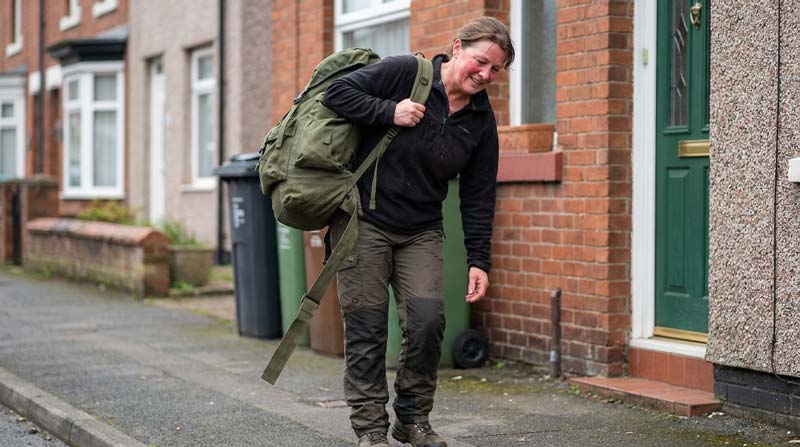
How to Start Safely
Three loads have been compared in older adults, and only one of them worked. A vest carrying 20% of body weight has been judged excessive. Loads of 3% to 5% proved insufficient to improve performance. At 10% of body weight, strength, sit-to-stand performance and aerobic capacity all improved. No injuries occurred.
That window belongs to a specific group under supervision. It is not a universal starting figure. Tolerance varies with body mass, strength, terrain, pace, pain history and experience.
The same weight is a different task for different people. Anyone with a poorer strength-to-mass ratio carries a proportionally heavier burden. Absolute loads, rather than scaled ones, create that gap.
Rucking therefore asks for a slower entry than ordinary walking. Progressive loading begins at 1% to 5% of body mass. Anyone frail or entirely new starts at the lower end. Increase weekly in small steps, as long as technique and gait stay stable. For structured sessions, 5% to 10% of body mass typically supplies enough stimulus.
You can also scale load within a single session rather than keeping it fixed throughout. The week’s highest tolerated weight suits level ground. Step-ups and stairs want less. Balance work goes lighter still, or with body weight alone.
Order matters whenever more than one variable could be increased:
- Build time and sets first. Duration and distance carry the volume. Both can rise while the weight on your back stays the same.
- Adjust tempo next. Pace alters intensity without altering what the body carries. That helps where a joint or the lower back is sensitive.
- Add load last, in increments of roughly 1% to 2% of body mass. Weight is the variable most likely to cause a problem, so it moves only once the others have settled.
- Increase only when four conditions hold together. Technique is stable, gait is steady, and perceived effort sits inside the intended range. No musculoskeletal complaint persists.
Sessions also need spacing that ordinary walking does not. Neuromuscular function can take 48 to 72 hours to recover from one loaded bout. Conditioning research points to one loaded session every 10 to 14 days. More than four a month raised injury risk. Performance gained nothing further.
Those figures come from soldiers carrying far heavier loads than any recreational walker. The spacing principle travels better than the numbers attached to it.
You can trade two variables so only one thing genuinely changes. Load can rise from 15 kg to 20 kg as march speed drops to 4.5 km/h. Energy cost stays roughly level while actual weight increases. Alternatively, the load stays at 15 kg while the gradient rises from 0% to 3%. The surface can also switch from roadway to soft sand.
Fit does more for comfort than most people expect. A hip belt produced lower perceived exertion under a heavy pack. It also stabilised the relationship between pelvis and upper body. Shorter, stiffer shoulder straps caused less shoulder discomfort and less forward trunk tilt. A higher, tighter load placement combined with a hip belt gives the best overall result. Balance, muscle activation and energy use all benefit.
The pack belongs on both straps. Asymmetric carriage produced measurable shoulder and trunk asymmetry. Muscle activity rose on the opposite side of the spine.
Footwear sits inside the same decision. Boots change stride length, ground contact time and how much energy returns at the ankle. One principle proposed for running shoes extends usefully here. The best equipment alters a person’s own movement pattern least.
Vests need a different introduction again. Around half of the older adults in one home-based programme struggled with the vest itself. Putting it on and taking it off proved difficult. The authors linked that to the absence of a gradual acclimation phase. Supervised familiarisation, flat ground first, and stairs only later all follow from that.
Recording each session makes sensible adjustment possible. Load, task, volume, perceived exertion, heart rate, pain and any adverse event inform the following week.
Everything else in a week counts toward the same total. Other physical demands pre-fatigue a person and can raise injury risk during a later loaded session. Incidental walking accumulates faster than people estimate, reaching 7 to 11 km a day in some settings.
Training that itself involves carrying a load remains the most effective preparation for carrying a load. A deliberately progressive loaded walking programme has raised performance while reducing injuries. Aerobic and resistance training still stay essential alongside it. The combination, not walking alone, improves what a person can carry. Rucking fits inside a week. It does not constitute one.
Adding weight to a walk works straight away. Breathing gets harder, the legs do more, and the shins, back, and sense of balance all take extra strain. That tiredness then lingers for days after the walk ends. Whether any of it becomes something lasting depends on how you use the weight.
Weight built up slowly, inside a session with a purpose, produced real change. Weight simply worn about the house produced almost none. None of it suits everybody. Back problems, a heart condition, thinning bones or unsteady footing all change the sums. So does going too heavy too soon, which is where most of the damage starts.
Growing pain, dizziness or a stumble are the signs to stop for the day. People who carry the heaviest loads for a living never pick the weight, the pace, or the ground. Anyone rucking by choice picks all three.
Sources
- Armstrong, N. C., Ward, A., Lomax, M., Tipton, M. J., & House, J. R. (2019). Wearing body Armour and backpack loads increase the likelihood of expiratory flow limitation and respiratory muscle fatigue during marching. Ergonomics, 62, 1181-1192.
- Beavers KM, Lynch SD, Fanning J, Howard M, Lawrence E, Lenchik L, et al. Weighted vest use or resistance exercise to offset weight loss-associated bone loss in older adults: a randomized clinical trial. JAMA Netw Open. (2025) 8:e2516772.
- Blacker, S. D., Fallowfield, J. L., Bilzon, J. L., & Willems, M. E. (2013). Neuromuscular impairment following backpack load carriage. Journal of Human Kinetics, 37, 91-98.
- Blacker S., Fallowfield J., Bilzon J., Willems M. Neuromuscular Function Following Prolonged Load Carriage on Level and Downhill Gradients. Aviat. Space Environ. Med. 2010;81:745-753.
- Bhambhani Y., Maikala R. Gender differences during treadmill walking with graded loads: Biomechanical and physiological comparisons. Eur J Appl Physiol. 2000;81:75-83.
- Crowder T., Beekley M., Sturdivant R., Johnson C., Lumpkin A. Metabolic effects of soldier performance on a simulated graded road march while wearing two functionally equivalent military ensembles. Mil. Med. 2007;172:596-602.
- Dahl K.D., Wang H., Popp J.K., Dickin D.C. Load Distribution and Postural Changes in Young Adults When Wearing a Traditional Backpack versus the BackTpack. Gait Posture. 2016;45:90-96.
- Eriksen E.F. Cellular Mechanisms of Bone Remodeling. Rev. Endocr. Metab. Disord. 2010;11:219-227.
- Evans WJ, Hellerstein M, Orwoll E, Cummings S, Cawthon PM. D3-creatine dilution and the importance of accuracy in the assessment of skeletal muscle mass. J Cachexia Sarcopenia Muscle. 2019;10:14-21.
- Franco MR, Tong A, Howard K, Sherrington C, Ferreira PH, Pinto RZ, et al. Older people’s perspectives on participation in physical activity: a systematic review and thematic synthesis of qualitative literature. Br J Sports Med. (2015) 49:1268-1276.
- Greendale GA, Salem GJ, Young JT, Damesyn M, Marion M, Wang MY, et al. A randomized trial of weighted vest use in ambulatory older adults: strength, performance, and quality of life outcomes. J Am Geriatr Soc. (2000) 48:305-311.
- Hadid, A., Katz, I., Haker, T., Zeilig, G., Defrin, R., Epstein, Y., & Gefen, A. (2017). Effect of load carriage on upper limb performance. Medicine and Science in Sports and Exercise, 49, 1006-1014.
- Kelly K., Niederberger B., Givens A., Bernards J., Orr R. Profiling injuries sustained following implementation of a progressive load carriage program in United States marine corps recruit training. Work. 2024;77:1391-1399.
- Knapik, J. J., Reynolds, K. L., & Harman, E. (2004). Soldier load carriage: Historical, physiological, biomechanical, and medical aspects. Military Medicine, 169, 45-56.
- Knapik J.J., Reynolds K., Orr R., Pope R. Load carriage-related paresthesias: Part 1: Rucksack palsy and digitalgia paresthetica. J. Spec. Oper. Med. 2016;16:74-79.
- Lee K., Lee J.Y., Kim Y.H. Low Grip Strength and Muscle Mass Increase the Prevalence of Osteopenia and Osteoporosis in Elderly Women. Healthcare. 2021;9:476.
- Lidstone, D. E., Stewart, J. A., Gurchiek, R., Needle, A. R., Van Werkhoven, H., & McBride, J. M. (2017). Physiological and biomechanical responses to prolonged heavy load carriage during level treadmill walking in females. Journal of Applied Biomechanics, 33, 248-255.
- Liew B., Morris S., Netto K. The Effect of Backpack Carriage on the Biomechanics of Walking: A Systematic Review and Preliminary Meta-Analysis. J. Appl. Biomech. 2016;32:614-629.
- Lyons, J., Allsopp, A., & Bilzon, J. (2005). Influences of body composition upon the relative metabolic and cardiovascular demands of load-carriage. Occupational Medicine, 55, 380-384.
- Mair JL, De Vito G, Boreham CA. Low volume, home-based weighted step exercise training can improve lower limb muscle power and functional ability in community-dwelling older women. J Clin Med. (2019) 8:41.
- Mierzwicki JT. Weighted vest training in community-dwelling older adults: a randomized, controlled pilot study. Phys Act Health. (2019) 3:108-116.
- Nigg B., Baltich J., Hoerzer S., Enders H. Running Shoes and Running Injuries: Mythbusting and a Proposal for Two New Paradigms: ‘Preferred Movement Path’ and ‘Comfort Filter’. Br. J. Sports Med. 2015;49:1290-1294.
- Orr R., Knapik J., Pope R. Avoiding Program-Induced Cumulative Overload (PICO). J. Spec. Oper. Med. 2016;16:61-64.
- Orr R., Pope R. Gender differences in load carriage injuries of Australian army soldiers. BMC Musculoskelet. Disord. 2016;17:488.Orr R., Pope R., Lopes T.J.A., Leyk D., Blacker S., Bustillo-Aguirre B.S., Knapik J.J. Soldier Load Carriage, Injuries, Rehabilitation and Physical Conditioning: An International Approach. Int. J. Environ. Res. Public Health. 2021;18:4010.
- Orr R., Pope R., Johnston V., Coyle J. Load carriage: Minimising soldier injuries through physical conditioning-A narrative review. J. Mil. Veterans Health. 2010;18:31-38.
- Renatus F. Vegetius: Epitome of Military Science. 2nd ed. Liverpool University Press; Liverpool, UK: 1996.
- Ribeiro, F., Oliveira, N. L., Pires, J., Alves, A. J., & Oliveira, J. (2014). Treadmill walking with load carriage increases aortic pressure wave reflection. Revista Portuguesa de Cardiologia (English edition), 33, 425-430.
- Rue, C., Needham-Beck, S., Maroni, T., Siddall, A., Ashdown, K., Lee, B., Walker, F., Osofa, J., Doherty, J., Vine, C., Wardle, S., Greeves, J., Saunders, P., Fieldhouse, A., Blacker, S., & Myers, S. (2025). A comparison of role-related physical fitness between British Army trainees and trained soldiers. European Journal of Sport Science, 25(1), e12227.
- Sardeli AV, Komatsu TR, Mori MA, Gaspari AF, Chacon-Mikahil MPT. Resistance training prevents muscle loss induced by caloric restriction in obese elderly individuals: a systematic review and meta-analysis. Nutrients. 2018;10:423.
- Sharpe S.R., Holt K.G., Saltzman E., Wagenaar R.C. Effects of a Hip Belt on Transverse Plane Trunk Coordination and Stability during Load Carriage. J. Biomech. 2008;41:968-976.
- Snow CM, Shaw JM, Winters KM, Witzke KA. Long-term exercise using weighted vests prevents hip bone loss in postmenopausal women. J Gerontol A Biol Sci Med Sci. 2000;55(9):M489-M491.
- Srisaphonphusitti L, Manimmanakorn N, Manimmanakorn A, Hamlin MJ. Effects of whole body vibration exercise combined with weighted vest in older adults: a randomized controlled trial. BMC Geriatr. (2022) 22:911.
- Steele E., Bialocerkowski A., Grimmer K. The Postural Effects of Load Carriage on Young People-A Systematic Review. BMC Musculoskelet. Disord. 2003;4:12.
- Stuempfle, K. J., Drury, D. G., & Wilson, A. L. (2004). Effect of load position on physiological and perceptual responses during load carriage with an internal frame backpack. Ergonomics, 47, 784-789.
- Vine, C. A. J., Coakley, S. L., Blacker, S. D., Doherty, J., Hale, B. J., Walker, E. F., Rue, C. A., Lee, B. J., Flood, T. R., & Knapik, J. J. (2022). Accuracy of metabolic cost predictive equations during military load carriage. Journal of Strength and Conditioning Research, 36(5), 1297-1303.
- Vine, C. A. J., Coakley, S. L., Blacker, S. D., Runswick, O. R., & Myers, S. D. (2022). Physiological and Subjective Responses to a Novel Military Specific Load Carriage Treadmill Protocol. Journal of Sport and Exercise Science, 6(2), 121-131.
- Walsh, G. S., & Low, D. C. (2021). Military load carriage effects on the gait of military personnel: A systematic review. Applied Ergonomics, 93, 103376.
- Zimmermann W., Lever E. Speed Marching in Military Boots: The Walk-To-Run Transition Speed and Vertical Ground Reaction Forces. Int. J. Sports Exerc. Med. 2022;8:214.