



Bilingualism Affects Ageing. Bilingualism is not limited to speaking two languages; it is also linked to cognitive resilience. This post focuses not just on linguistic dexterity, but on the deeper connection between bilingualism, ageing, and cognitive well-being.
Research shows that being bilingual doesn’t just make you proficient in two languages; it gives your brain a workout that may have lasting effects on cognitive health.
Taking this a step further, bilingualism is both a linguistic skill and a lifelong cognitive exercise. Bilingualism affects ageing; constantly managing two language systems fine-tunes your brain’s executive functions, including multitasking and inhibitory control. This mental agility appears to protect against age-related cognitive decline.
Studies suggest that lifelong bilingualism may contribute to cognitive reserve (the brain’s ability to cope with damage before symptoms appear). This reserve may buffer against the neuropathology (disease-related brain changes) of conditions like Alzheimer’s disease, allowing bilingual individuals to experience a delayed onset of dementia symptoms.
The science behind bilingualism as a protective factor against cognitive decline comes first. Practical strategies for ageing bilinguals follow, along with the broader societal implications of bilingualism as a form of cognitive reserve.
Ageing and Cognitive Decline: How Bilingualism Affects Ageing
Ageing naturally brings about a decline in cognitive faculties. This isn’t uniform across all cognitive abilities; some, like processing speed and reasoning, decline more rapidly than others. The brain areas responsible for executive function and memory also undergo anatomical changes as we age.
The evidence suggests bilingualism affects ageing positively. Several studies report that bilingual individuals develop dementia symptoms 3 to 5 years later than monolinguals. Older bilingual adults also tend to score higher on executive function tests (the mental skills behind planning, focus, and switching between tasks).
Why does this happen? Bilingualism is believed to build a “cognitive reserve“. It may help reinforce the executive functions and prefrontal cortical regions, which are essential for skills like multitasking and focus.
This is critical given the looming public health issue: the global prevalence of dementia is expected to triple by 2050. Bilingualism may affect ageing in two ways: it may delay the onset of dementia and is linked to stronger executive function.
However, the evidence is not unanimous. One study of Spanish-speaking immigrants found no difference in cognitive decline or dementia risk between bilinguals and monolinguals. With dementia cases rising, bilingualism remains a promising avenue for both research and personal practice.
Bilingualism as a Protective Factor
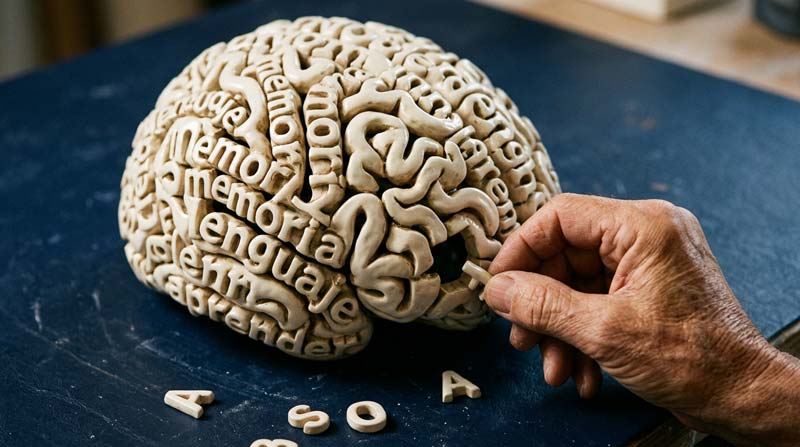
Bilingualism is more than a social advantage; it appears to protect against ageing. Studies indicate that bilingual individuals have increased cognitive reserve, the brain’s resilience against age- or disease-induced changes.
Beyond social benefits, bilingualism may be a secret weapon in delaying age-related cognitive issues. This segment will examine the science explaining how bilingualism affects ageing by enhancing cognitive reserve, improving problem-solving skills, and potentially delaying the onset of dementia and other neurodegenerative diseases.
- Increased Cognitive Reserve: Bilingual individuals tend to have higher cognitive reserve, which is linked to a lower risk of dementia. In plain terms, they may be better equipped to maintain cognitive functions as they age.
- Enhanced Executive Functions: Juggling two active language systems improves executive control processes like task shifting and information updating. These skills are invaluable for multitasking and decision-making.
- Structural Brain Changes: Lifelong bilingualism is linked to increased white matter integrity and greater grey matter volume in specific brain regions. These structural changes suggest a more robust neural network.
- Delay in Dementia Onset: Compared to monolinguals, bilingual Alzheimer’s patients show a delay in the onset of initial symptoms in several studies. Not every study has found this delay.
- Cognitive Flexibility from Early Childhood: Even in early childhood, bilinguals develop cognitive flexibility, which involves monitoring and switching between languages. This skill set improves adaptability and problem-solving.
- Dose-Dependent Benefits: The cognitive benefits of bilingualism appear to rise with earlier language acquisition and more extensive dual-language use. Greater engagement with both languages seems to yield greater cognitive benefits.
Strategies for Ageing Bilinguals
For ageing bilinguals, maintaining both languages is linked to better cognitive health, one way bilingualism positively affects ageing.
One effective way to do this is to engage daily in activities that use both languages. These activities can range from reading and writing to conversational practices. A structured routine with set times for each language may also help keep both in regular use.
Moreover, utilising technology can offer dynamic ways to maintain language skills. Apps and online platforms not only make practice convenient but also provide metrics to track progress.
This approach can be woven into a comprehensive strategy for healthy ageing that goes beyond language maintenance and directly impacts how bilingualism affects ageing. Below is a list of language strategies:
- Daily Language Practice: One suggested target is at least 5 hours a week of reading, writing, speaking or listening in a second language. A mix of all four keeps every aspect of language active and may support cognitive agility and proficiency.
- Language-Specific Social Circles: Participate in language-specific social events. These not only offer real-world conversation but also improve social engagement, which is crucial for cognitive health.
- Technology Aids: Utilise language-learning apps or online platforms for daily practice. These resources often feature analytics that can help you track and improve your performance over time.
- Travel for Immersion: Plan visits to countries where the target languages are spoken. Speaking with native speakers sharpens fluency and builds confidence.
- Community Programs: Enrol in community-based language programs tailored for older adults. These often include social components that can stave off isolation.
- Feedback Loops: Regularly obtain feedback on language proficiency from reliable sources. This can help you adjust your learning plan as needed.
Other non-language strategies to consider are:
- Physical Exercise: Incorporate regular physical activity, such as aerobic exercise. Exercise is part of a healthy lifestyle that helps maintain cognition and language abilities.
- Nutrition and Sleep: Follow a balanced diet and maintain a consistent sleep schedule. These factors are fundamental to maintaining cognitive health.
- Vascular Health: Monitor hypertension and other vascular risk factors. Controlling these supports neurocognitive health.
- Multi-Domain Lifestyle: Complement language learning with other cognitively stimulating activities, such as playing chess or learning a musical instrument.
Implications for Ageing Populations: Bilingualism Affects Ageing
As the global population ages, cognitive decline places a growing burden on public health. Bilingualism may help slow cognitive ageing and lower dementia risk, although the evidence remains mixed.
Bilingualism affects ageing: a societal shift toward promoting bilingualism could substantially impact public health, particularly by delaying the onset of neurodegenerative diseases.
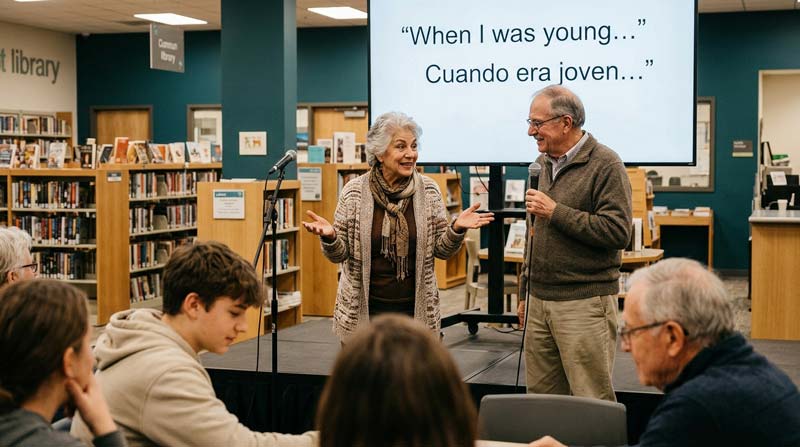
Strategically, policy interventions could focus on two fronts: youth and the elderly. For younger generations, schools could incorporate bilingual education models to establish dual language use early on. For ageing populations, language training programmes tailored for older adults could offer meaningful cognitive stimulation and social benefits.
Given bilingualism’s potential impact on ageing, and its possible role in slowing cognitive ageing, the next step is to identify actionable policy measures. Here are some thoughts:
- Language Training for Seniors: Language courses tailored for seniors are one practical option. Government subsidies can make these programmes accessible, particularly for those on fixed incomes. Beyond cognitive benefits, these classes can serve as social hubs, reducing isolation among older adults.
- Public Health Campaigns: Public awareness is often the first step toward behavioural change. Campaigns could share research on bilingualism and cognitive health, including areas where evidence remains uncertain. Using multiple media channels can reach a broad audience, including middle-aged and older individuals who may be sceptical about learning a new language later in life.
- Medical Guidelines: Current clinical evaluations for older patients usually focus on physical health markers. Adding a language background assessment could help doctors identify bilingualism as a factor that may delay dementia onset. Medical practitioners would then have a fuller picture of each patient’s cognitive risk.
- Community-Based Interventions: Offering language courses through community centres can break down barriers to entry. Because they are low-cost or free, these classes can attract a more socioeconomically diverse population. These interventions offer dual benefits: cognitive stimulation and fostering a sense of community.
- School Curriculum: Introducing language courses at a young age is a forward-thinking strategy. The earlier children are exposed to a second language, the higher their later proficiency tends to be. This early start can foster lifelong bilingualism, which may bring long-term cognitive advantages.
Bilingualism appears to protect against cognitive decline, with broad societal implications. Not every study agrees, however. Some found no difference in when dementia was diagnosed, and others found no slower decline among bilinguals.
Differences in the type of bilingualism studied may explain part of this. Taken together, the evidence places bilingualism as one part of a wider public health approach to an ageing population.
Sources
- Alladi, S., Bak, T.H., Duggirala, V., Surampudi, B., Shailaja, M., Shukla, A.K., Chaudhuri, J.R., & Kaul, S. (2013). Bilingualism delays age at onset of dementia, independent of education and immigration status. Neurology, 81, 1938-1944.
- Bak, T.H., Long, M.R., Vega-Mendoza, M., & Sorace, A. (2016). Novelty, challenge, and practice: The impact of intensive language learning on attentional functions. PloS one, 11(4), e0153485.
- Bak, T.H., Nissan, J.J., Allerhand, M.M., & Deary, I.J. (2014). Does bilingualism influence cognitive aging? Annals of Neurology, 75(6), 959-963.
- Bak, T.H., & Alladi, S. (2014). Can being bilingual affect the onset of dementia? Future Neurology, 9(2), 101-103.
- Bialystok, E., Craik, F.I.M., Green, D.W., & Gollan, T.H. (2009). Bilingual minds. Psychological Science in the Public Interest, 10(3), 89-129.
- Bialystok, E., Craik, F.I.M., Klein, R., & Viswanathan, M. (2004). Bilingualism, aging, and cognitive control: Evidence from the Simon task. Psychology and Aging, 19, 290-303.
- Fuller-Thomson, E. (2015). Emerging evidence contradicts the hypothesis that bilingualism delays dementia onset. Cortex, 66, 170–172.
- Gold, B.T. (2015). Lifelong bilingualism and neural reserve against Alzheimer’s disease: A review of findings and potential mechanisms. Behavioural Brain Research, 281, 9-15.
- Gold, B.T., Kim, C., Johnson, N.F., Kryscio, R.J., & Smith, C.D. (2013). Lifelong bilingualism maintains neural efficiency for cognitive control in aging. Journal of Neuroscience, 33, 387-396.
- Hertzog, C., Kramer, A.F., Wilson, R.S., & Lindenberger, U. (2009). Enrichment effects on adult cognitive development: can the functional capacity of older adults be preserved and enhanced? Psychological Science in the Public Interest, 9(1), 1-65.
- Kovács, Á.M. and Mehler, J. (2009). Cognitive gains in 7-month-old bilingual infants. Proceedings of the National Academy of Sciences, 106(16), 6556-6560.
- Lawton DM, Gasquoine PG, Weimer AA. Age of dementia diagnosis in community dwelling bilingual and monolingual Hispanic Americans. Cortex. 2015 May;66:141-5.
- Luk, G., Bialystok, E., Craik, F.I.M., & Grady, C.L. (2011). Lifelong bilingualism maintains white matter integrity in older adults. The Journal of Neuroscience, 31(46), 16808-16813.
- Maafs-Rodríguez A, Folta SC. Effectiveness of Theory-Based Physical Activity and Nutrition Interventions in Aging Latino Adults: A Scoping Review. Nutrients. 2023 Jun 18;15(12):2792.
- Ngandu, T., Lehtisalo, J., Solomon, A., Levälahti, E., Ahtiluoto, S., Antikainen, R., et al. (2015). A 2 year multidomain intervention of diet, exercise, cognitive training, and vascular risk monitoring versus control to prevent cognitive decline in at-risk elderly people (FINGER): A randomised controlled trial. The Lancet, 385(9984), 2255-2263.
- Perani, D., & Abutalebi, J. (2015). Bilingualism, dementia, cognitive and neural reserve. Current Opinion in Neurology, 28(6), 618-625.
- Prince, M., Bryce, R., Albanese, E., Wimo, A., Ribeiro, W., & Ferri, C.P. (2013). The global prevalence of dementia: a systematic review and metaanalysis. Alzheimer’s & Dementia, 9, 63-75.
- Raz, N., Ghisletta, P., Rodrigue, K.M., Kennedy, K.M., & Lindenberger, U. (2010). Trajectories of brain aging in middle-aged and older adults: regional and individual differences. Neuroimage, 51, 501-511.
- Rönnlund, M., Nyberg, L., Bäckman, L., & Nilsson, L.G. (2005). Stability, growth, and decline in adult life span development of declarative memory: cross-sectional and longitudinal data from a population-based study. Psychology and Aging, 20, 3-18.
- Salthouse, T.A. (2009). When does age-related cognitive decline begin? Neurobiology of Aging, 30, 507-514.
- Schweizer, T.A., Ware, J., Fischer, C.E., Craik, F.I.M., & Bialystok, E. (2012). Bilingualism as a contributor to cognitive reserve: Evidence from brain atrophy in Alzheimer’s disease. Cortex, 48(8), 991-996.
- Stern, Y. (2009). Cognitive reserve. Neuropsychologia, 47, 2015-2028.
- Valenzuela, M.J., & Sachdev, P. (2006). Brain reserve and dementia: a systematic review. Psychological Medicine, 36, 441-454.
- Ware, C., Damnée, S., Djabelkhir, L., Cristancho, V., Wu, Y-H., Benovoy, M., et al. (2017). Maintaining cognitive functioning in healthy seniors with a technology-based foreign language program: A pilot feasibility study. Frontiers in Aging Neuroscience, 9, 42.
- Wodniecka, Z., et al. (2010). Does bilingualism help memory? Competing effects of verbal ability and executive control. International Journal of Bilingual Education and Bilingualism, 13(5), 575-595.