



Exercise benefits for COPD offer powerful pathways for managing Chronic Obstructive Pulmonary Disease (COPD), transforming how patients navigate daily life.
This progressive respiratory disorder affects over 65 million people worldwide, ranking as the third leading cause of death globally with 3.23 million deaths in 2019. Exercise benefits COPD patients by helping manage symptoms and creating fundamental changes in physiological function and quality of life.
COPD is characterised by persistent airflow limitation and chronic airway inflammation, which significantly alter respiratory function. When the lungs become damaged or clogged with phlegm, patients face many symptoms including breathlessness, chronic cough, and markedly reduced exercise capacity. The exercise benefits for COPD management become particularly crucial as the condition progresses, offering hope for maintaining functional independence.
How does COPD affect everyday movement and exercise capacity?
The relationship between COPD and physical function presents unique challenges that require careful consideration. The condition creates complex physiological demands where ventilatory limitations during peak exercise often coincide with significant untapped metabolic reserves.
This characteristic reveals an important opportunity: despite their respiratory limitations, patients can achieve higher work rates than previously thought possible with proper support through exercise interventions.
Research has identified several key ways COPD impacts physical function. The impacts help explain why exercise intervention proves so crucial:
- Respiratory muscle dysfunction due to chronic hyperinflation
- Compromised oxygen delivery to working muscles
- Reduced ventilatory efficiency during physical activity
- Altered cardiac function during exercise
- Skeletal muscle deconditioning from reduced activity
The impacts create a cycle of deterioration, yet they also provide multiple targets for exercise intervention. Studies demonstrate that regular physical activity can positively influence each of these aspects, with particularly strong effects on muscle function and oxygen utilisation.
The exercise benefits for COPD patients become most apparent when targeted training addresses these specific physiological challenges.
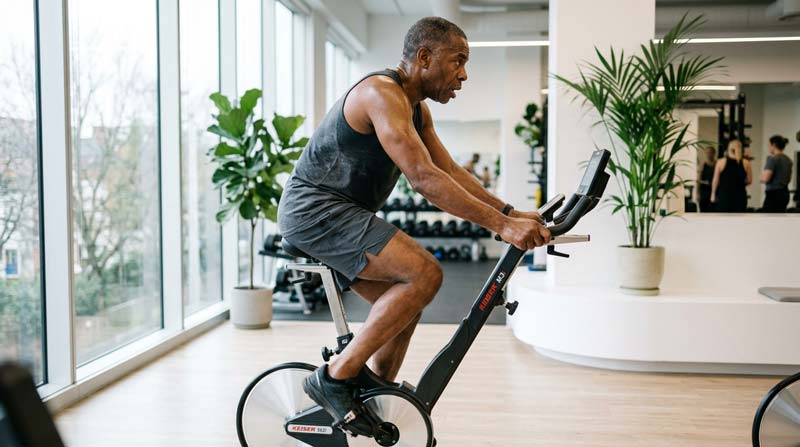
How physical activity transforms respiratory function in COPD patients
Physical training triggers fundamental transformations in how COPD patients breathe and utilise oxygen. Research reveals that exercise induces significant adaptations in respiratory muscle function, particularly in how the diaphragm responds to physical demands.
Exercise benefits for COPD apply to both respiratory and peripheral muscles, enhancing their efficiency and endurance.
These adaptations develop through several fundamental physiological changes. High-intensity exercise training particularly demonstrates remarkable effects on respiratory function:
- Reduced ventilatory requirements during submaximal exercise
- Improved oxygen extraction at the muscle level
- Enhanced respiratory muscle strength and endurance
- Decreased sensation of breathlessness during daily activities
- Better coordination between breathing and movement patterns
Beyond these immediate respiratory benefits, exercise creates lasting changes in how the body manages oxygen delivery and utilisation. The adaptations prove particularly crucial for COPD patients, as they help compensate for reduced lung function while maintaining physical capacity.
What are the metabolic benefits of regular exercise engagement?
The metabolic impact of exercise in COPD supports respiratory function and fundamentally alters how the body processes energy. This leads to more efficient oxygen utilisation and reduced metabolic stress during daily activities. The benefits of exercise for COPD management become especially evident in how patients’ bodies adapt to handle physical challenges with less respiratory demand.
Research demonstrates that consistent exercise participation leads to remarkable metabolic adaptations. After six weeks of structured training, COPD patients show:
- Lower blood lactate concentrations during equivalent workloads
- Reduced respiratory exchange ratios at similar exercise intensities
- Improved muscle fibre efficiency
- Enhanced fat utilisation during physical activity
- Better overall energy management during daily tasks
This means the metabolic improvements translate directly into enhanced quality of life, as patients can accomplish more while experiencing less fatigue and breathlessness. Improved energy management allows greater participation in daily activities and social engagements.
Developing effective exercise strategies for optimal COPD management
Creating an effective exercise programme for COPD requires careful consideration of individual capabilities and limitations. The exercise benefits for COPD patients become most apparent when training approaches are tailored to specific symptoms and severity levels.
Research supports a comprehensive approach that combines different training modalities to achieve optimal results. Scientific evidence points to several training components that yield the greatest benefits;
Endurance Training
- Walking or stationary cycling at moderate intensity
- Sessions lasting 20-60 minutes
- Frequency of 3-5 times per week
- Intensity guided by symptom tolerance and oxygen saturation
Resistance Training
Resistance exercises prove equally crucial, particularly for addressing the muscle weakness commonly associated with COPD. A structured strength training program encompasses:
- Focus on major muscle groups
- Progressive resistance increases
- Emphasis on lower body strength
- Integration with breathing techniques
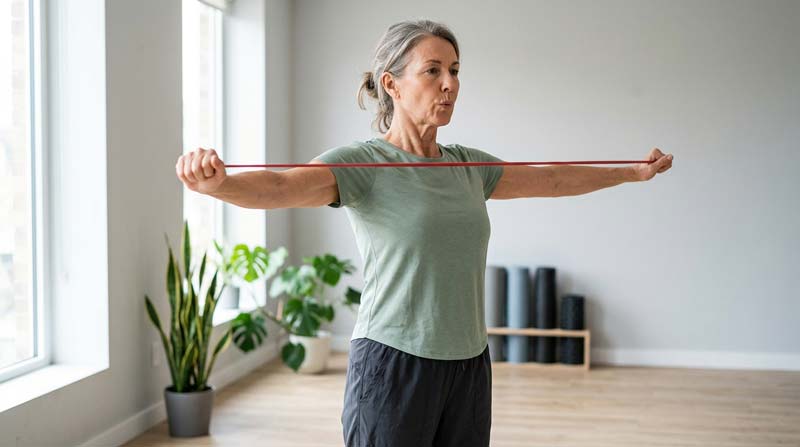
Maximising exercise potential through proper breathing techniques
Understanding breathing mechanics during exercise transforms how COPD patients approach physical activity. The exercise benefits for COPD increase significantly when proper breathing techniques accompany movement patterns.
Studies show that coordinated breathing strategies can improve exercise tolerance and reduce dyspnea during physical activity. Patients learn to coordinate their breathing with movement, often adopting pursed-lip breathing during exertion.
This technique helps maintain airway pressure and reduces the work of breathing during exercise. Additionally, diaphragmatic breathing training improves respiratory muscle efficiency, leading to better exercise tolerance and reduced breathlessness.
What you need to know about oxygen requirements during exercise participation
Proper oxygen management during exercise helps optimise training benefits. For patients experiencing exercise-induced oxygen desaturation, supplemental oxygen enables higher training intensities and longer duration sessions.
This support helps patients achieve greater physiological adaptations while maintaining safety and comfort during exercise. Research demonstrates several key findings regarding oxygen use during exercise:
- Maintains arterial oxygen saturation above 88%
- Enables higher intensity training
- Reduces dyspnea during exercise
- Improves exercise endurance
- Enhances recovery between exercise bouts
Long-term benefits and sustainability of exercise programmes
The sustainability of exercise benefits depends largely on consistent participation and proper progression. Studies show that COPD patients who maintain regular physical activity experience:
- Reduced frequency of exacerbations
- Improved quality of life scores
- Better maintenance of functional capacity
- Enhanced social participation
- Reduced healthcare utilisation
Regular monitoring and adjustment of exercise programmes ensure continued progress and maintained benefits. Training adaptations occur gradually, and programmes should evolve to match improvements in functional capacity.
The exercise benefits for COPD management become most apparent when patients commit to long-term participation in structured physical activity.
Are there any practical considerations for successful exercise implementation?
Success in exercise programmes requires attention to several practical aspects. Patients should:
- Begin gradually with supervised sessions
- Monitor symptoms during activity
- Use prescribed medications appropriately
- Maintain proper hydration
- Follow proper warm-up and cool-down procedures
Healthcare professionals play a crucial role in supporting exercise participation by:
- Conducting regular assessments
- Adjusting programmes as needed
- Providing encouragement and support
- Monitoring progress
- Addressing concerns promptly
Sources
- Casaburi R, ZuWallack R. Pulmonary rehabilitation for management of chronic obstructive pulmonary disease. N Engl J Med. 2009;360(13):1329‐
- Freitag N, Doma K, Neunhaeuserer D, et al. Is structured exercise performed with supplemental oxygen a promising method of personalized medicine in the therapy of chronic diseases? J Pers Med. 2020;10:135.
- Garcia-Aymerich J, Varraso R, Antó JM, Camargo CA Jr. Prospective study of physical activity and risk of asthma exacerbations in older women. Am J Respir Crit Care Med. 2009;179(11):999–1003.
- Gimeno-Santos E, Rodriguez DA, Barberan-Garcia A, et al. Endurance exercise training improves heart rate recovery in patients with COPD. COPD. 2014;11(2):190–196.
- Global Initiative for Chronic Obstructive Lung Disease. Global Strategy For Prevention, Diagnosis and Management of COPD: 2024 Report.
- Gosselink R, De Vos J, van den Heuvel SP, Segers J, Decramer M, Kwakkel G. Impact of inspiratory muscle training in patients with COPD: what is the evidence? Eur Respir J. 2011;37(2):416–425.
- Hindle KB, Whitcomb TJ, Briggs WO, Hong J. Proprioceptive neuromuscular facilitation (PNF): Its mechanisms and effects on range of motion and muscular function. J Hum Kinet. 2012;31:105–113.
- Holland AE, Spruit MA, Troosters T, et al. An official European Respiratory Society/American Thoracic Society technical standard: field walking tests in chronic respiratory disease. Eur Respir J. 2014;44(6):1428–1446.
- Langer D, Hendriks E, Burtin C, et al. A clinical practice guideline for physiotherapists treating patients with chronic obstructive pulmonary disease based on a systematic review of available evidence. Clin Rehabil. 2009;23(5):445–62.
- Iepsen UW, Munch GD, Rugbjerg M, et al. Effect of endurance versus resistance training on quadriceps muscle dysfunction in COPD: a pilot study. Int J Chron Obstruct Pulmon Dis. 2016;11:2659–2669.
- Mador MJ, Bozkanat E, Aggarwal A, Shaffer M, Kufel TJ. Endurance and strength training in patients with COPD. Chest. 2004;125(6):2036–2045.
- Maltais F, Decramer M, Casaburi R, et al. An official American Thoracic Society/European Respiratory Society statement: update on limb muscle dysfunction in chronic obstructive pulmonary disease. Am J Respir Crit Care Med. 2014;189(9):e15–e62.
- McCarthy B, Casey D, Devane D, Murphy K, Murphy E, Lacasse Y. Pulmonary rehabilitation for chronic obstructive pulmonary disease. Cochrane Database Syst Rev. 2015(2):CD003793.
- Montaldo BC, Gleeson K, Zwillich CW. The control of breathing in clinical practice. Chest. 2000;117(1):205–225.
- Neunhäuserer D, Steidle‐Kloc E, Weiss G, et al. Supplemental oxygen during high‐intensity exercise training in nonhypoxemic chronic obstructive pulmonary disease. Am J Med. 2016;129(11):1185‐
- Nonoyama ML, Brooks D, Lacasse Y, Guyatt GH, Goldstein RS. Oxygen therapy during exercise training in chronic obstructive pulmonary disease. Cochrane Database Syst Rev. 2007;18(2):CD005372.
- O’Donnell DE, Revill SM, Webb KA. Dynamic hyperinflation and exercise intolerance in chronic obstructive pulmonary disease. Am J Respir Crit Care Med. 2001;164(5):770–777.
- O’Shea SD, Taylor NF, Paratz JD. Progressive resistance exercise improves muscle strength and may improve elements of performance of daily activities for people with COPD: a systematic review. Chest. 2009;136(5):1269–83.
- Porszasz J, Emtner M, Goto S, et al. Exercise training decreases ventilatory requirements and exercise-induced hyperinflation at submaximal intensities in patients with COPD. Chest. 2005;128:2025–2034.
- Puente-Maestu L, Palange P, Casaburi R, et al. Use of exercise testing in the evaluation of interventional efficacy: an official ERS statement. Eur Respir J. 2016;47(2):429–460.
- Richardson RS, Sheldon J, Poole DC, Hopkins SR, Ries AL, Wagner PD. Evidence of skeletal muscle metabolic reserve during whole body exercise in patients with chronic obstructive pulmonary disease. Am J Respir Crit Care Med. 1999;159:881–5.
- Ries AL, Bauldoff GS, Carlin BW, et al. Pulmonary rehabilitation: joint ACCP/AACVPR evidence-based clinical practice guidelines. Chest. 2007;131:4S–42S.
- Rochester CL, Fairburn C, Crouch RH. Pulmonary rehabilitation for respiratory disorders other than chronic obstructive pulmonary disease. Clin Chest Med. 2014;35(2):369–89.
- Silva L, Maricoto T, Costa P, et al. A meta-analysis on the structure of pulmonary rehabilitation maintenance programmes on COPD patients’ functional capacity. NPJ Prim Care Respir Med. 2022;32:38.
- Spruit MA, Singh SJ, Garvey C, et al. An official American Thoracic Society/European Respiratory Society statement: key concepts and advances in pulmonary rehabilitation. Am J Respir Crit Care Med. 2013;188(8):e13–e64.
- Vonbank K, Strasser B, Mondrzyk J, et al. Strength training increases maximum working capacity in patients with COPD – randomized clinical trial comparing three training modalities. Respir Med. 2012;106(4):557–563.
- Waschki B, Kirsten A, Holz O, et al. Physical activity is the strongest predictor of all-cause mortality in patients with COPD: a prospective cohort study. Chest. 2011;140:331–342.
- Whittom F, Jobin J, Simard PM, et al. Histochemical and morphological characteristics of the vastus lateralis muscle in patients with chronic obstructive pulmonary disease. Med Sci Sports Exerc. 1998;30(10):1467–1474.
- World Health Organization. Chronic Obstructive Pulmonary Disease (COPD) – Key Facts.
- Xiong T, Bai X, Wei X, Wang L, Li F, Shi H, Shi Y. Exercise Rehabilitation and Chronic Respiratory Diseases: Effects, Mechanisms, and Therapeutic Benefits. Int J Chron Obstruct Pulmon Dis. 2023 Jun 19;18:1251-1266.