


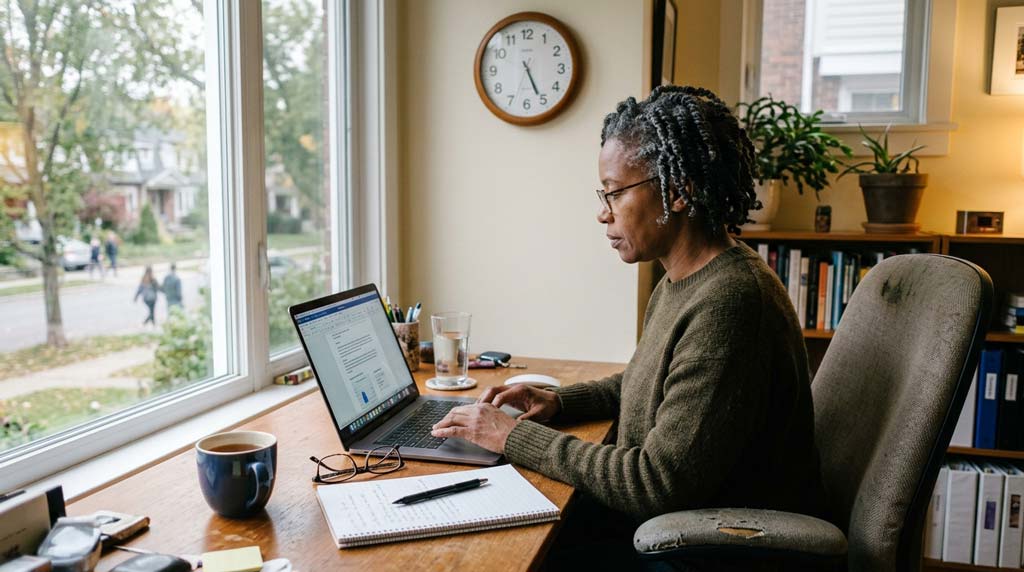
New evidence suggests that sitting too long raises cancer risk, and the pattern may matter as much as the amount. In practice, most guidance still counts only the total hours seated. Yet two people can sit for identical lengths and face very different odds.
Sedentary behaviour, meaning any waking time spent sitting or reclining, fills over half of most people’s waking hours. Long sitting already tracks with heart disease, type 2 diabetes and several cancers. Still, one question stayed open. Does the way sitting is accumulated, rather than its total alone, change the risk?
A large study of UK adults, published in PLOS Medicine, set out to test exactly that. The findings revealed a sharp divide. Unbroken sitting behaved very differently from sitting broken up by movement.
In this post, we will explain what the team measured and why prolonged sitting increases cancer risk. It also shows how brief breaks appear to shift the odds.
Sitting Too Long Raises Cancer Risk in a Major New Study
The scale here gives the result its weight. Researchers followed 91,292 adults for a median of 12.4 years. Each wore a wrist accelerometer, a motion sensor that logs movement second by second. So the sitting figures came from devices, not memory. That matters because people recall sitting poorly.
Overall, the pattern in the data was consistent. More sitting tracked with more cancer deaths and more cancer cases. Crucially, the signal came from long, unbroken sitting. In short, the evidence indicates that sitting too long raises cancer risk, alongside obesity-related and diabetes-related cancers. Moreover, earlier accelerometer studies had already hinted at this connection.
Device studies like this one carry a particular strength. Objective measurement removes the guesswork of questionnaires, and several cohorts link measured sitting to earlier death. Moreover, this work extends that record to the pattern of sitting, not only its total. The claim that sitting too long raises cancer risk therefore rests on hard movement data.

The Difference Between Prolonged and Interrupted Sitting
The study split sitting into two kinds, and this split is the whole point. Sedentary behaviour has an agreed-upon research definition: any waking time spent sitting or reclining with very little effort. Prolonged sitting means one unbroken bout of about 30 minutes or more. Interrupted sitting is that same time, broken up by movement.
- Prolonged Sitting: One unbroken stretch of roughly 30 minutes or more, such as a long desk session or a film. In this study, it tracked with higher cancer death and more cancer cases.
- Interrupted Sitting: The same seated time, repeatedly broken by standing or moving. Here it tracked with lower risk across every cancer outcome measured.
At this point, the two patterns parted ways sharply. Prolonged sitting climbed with cancer risk. Interrupted sitting moved the other way, with lower risk of tracking. So sitting too long raises cancer risk, while breaking up sitting appears protective. The total hours could be identical in both cases.
risk of cancer death for each extra hour
risk of cancer death for each extra hour
Why would the pattern matter at all? Short breaks change the body’s chemistry within minutes. Standing or strolling after sitting blunts the surge in blood glucose and insulin. Reviews of controlled trials report the same metabolic benefit from interrupting sitting. Therefore, the clustering of unbroken time, not its length alone, seems to carry the harm. In that sense, sitting too long raises cancer risk partly through pattern, not duration.
One detail adds useful nuance. Swapping prolonged sitting for interrupted sitting alone did not yield a clear benefit in the model. The firmer gains appeared when sitting gave way to genuine activity. That difference sets up the practical question of what to replace sitting with.
How Much Continuous Sitting Starts to Add Up
The risk did not arrive all at once. It climbed step by step with every added hour. Measured sitting already shows a dose-response link with death across pooled studies. Here, each extra hour of prolonged sitting meant about 10% higher risk of cancer death.
Importantly, these figures are hazard ratios, which compare risk between groups over time. Overall, cancer cases rose more gently, at close to 3% per additional hour. Cancers tied to obesity and type 2 diabetes fell between those two figures.
Unbroken hours gather quietly across an ordinary day. A commute, a full desk shift, then an evening of television. UK research links television time to higher cancer risk. Sitting rarely feels dangerous while it happens. Yet sitting too long raises cancer risk because these stretches stack up unnoticed.
Notably, the shape of the curve is telling. Prolonged sitting rose in a near-straight line, with no obviously safe ledge. Absolute numbers keep this in proportion, though. Cancer deaths ranged from about 1.3% in the least sedentary group to 2.8% in the most.
One assumption also deserves correcting. The climb held regardless of body size. Earlier work suggested obesity might drive the link between sitting and cancer. Here, leaner and heavier participants showed much the same pattern. So sitting too long raises cancer risk even at a healthy weight.
Why Sitting Too Long Raises Cancer Risk Inside the Body
Association is not the same as explanation. This study measured behaviour, not biology. It could not watch a cancer form. Still, broader research offers plausible reasons why prolonged sitting can be harmful. Four pathways stand out.
Chronic low-grade inflammation
For example, long sitting is linked to persistent, low-level inflammation. This quiet immune activation can damage healthy cells over time. In turn, movement appears to calm it.
Insulin and IGF-1
Prolonged sitting can also raise insulin and IGF-1. That is insulin-like growth factor 1, a hormone that tells cells to grow. These growth signals are tied to breast, prostate and bowel cancer. Chronic elevation keeps that machinery switched on.
Ectopic fat
Similarly, inactivity encourages ectopic fat, meaning fat stored inside organs rather than under the skin. It settles in the liver, muscle and pancreas. There it disturbs metabolism in harmful ways.
A weakened immune response
Likewise, physical inactivity can blunt immune function. A slower immune response may allow faulty cells to escape detection. This is part of why sitting too long raises cancer risk over many years.
Low-grade inflammation
A constant, quiet inflammation that can damage healthy cells over time.
More insulin and IGF-1
Growth signals linked to breast, prostate and bowel cancer stay switched on.
Fat in the wrong places
Fat forced into the liver, muscles and pancreas, where it turns harmful.
A quieter immune system
Defences that help spot and clear faulty cells start to work less well.
These mechanisms remain partly theoretical. The researchers could not test the molecular pathways directly. So the idea that sitting too long raises cancer risk through these routes still needs laboratory confirmation.
Short Movement Breaks That Help Lower Your Risk
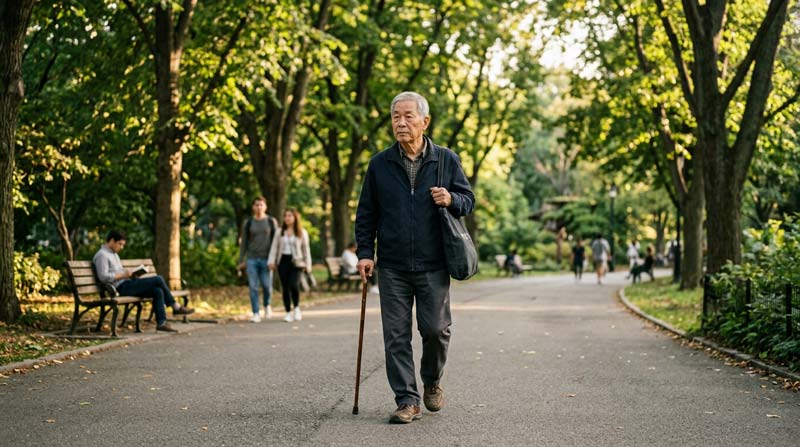
The findings carry a genuinely hopeful side. Sitting is not fixed, and small swaps seem to count. Researchers modelled what happens when sitting gives way to movement. The method is called isotemporal substitution, which trades one activity’s time for another. In the end, the results favoured getting up.
Notably, not every swap asked for the gym. The study compared three intensities, from gentle to hard. Each one replaced part of the daily prolonged sitting.
- Light Activity. Replacing one hour of prolonged sitting with light movement was associated with about a 12% lower risk of cancer death. This covers slow walking, ironing or washing up. Such light activity is not included in any current exercise guideline, yet it mattered here.
- Moderate Activity. Swapping 30 minutes of sitting for a steady walk was tied to roughly 8% lower risk of cancer death. The pace is ordinary, not punishing.
- Vigorous Activity. Just five minutes of vigorous activity in place of sitting led to the largest drop in cancer cases. Short bursts count, but they suit fewer people.
Importantly, feasibility is the quiet strength of this message. People who sit most are often older, frail or managing several conditions. Hard exercise may be unrealistic for them. Light movement, by contrast, is within almost everyone’s reach. That matters, because the evidence that sitting too long raises cancer risk points to a low-cost answer.
The stakes reach beyond cancer, too. The same long sitting also strains the heart. A related BeSund piece examines how 10 hours of daily sitting threatens the heart, even if you exercise. Cancer risk is one more reason to break the habit.
Caution belongs here as well. This was an observational study, so it cannot prove cause and effect. Some of the risk reductions were modest. The volunteers were UK-based and healthier than most. Even so, evidence that sitting too long raises cancer risk is now hard to ignore.
The authors are clear about the next step. Only controlled trials can confirm whether breaking up sitting truly lowers cancer risk. Such trials are already being designed.
Sources
- Biswas A, Oh PI, Faulkner GE, Bajaj RR, Silver MA, Mitchell MS, et al. Sedentary time and its association with risk for disease incidence, mortality, and hospitalization in adults: a systematic review and meta-analysis. Ann Intern Med. 2015;162(2):123–32.
- Christofoletti M, Sandreschi PF, Quadros EN, d’Orsi E, Rech CR, Manta SW, et al. Physical activity and sedentary behavior as multimorbidity discriminators among elderly Brazilians: a cross-sectional study. Sao Paulo Med J. 2021;139(4):372–9.
- Damiot A, Pinto AJ, Turner JE, Gualano B. Immunological implications of physical inactivity among older adults during the COVID-19 pandemic. Gerontology. 2020;66(5):431–8.
- Dempsey PC, Strain T, Winkler EAH, Westgate K, Rennie KL, Wareham NJ, et al. Association of accelerometer-measured sedentary accumulation patterns with incident cardiovascular disease, cancer, and all-cause mortality. J Am Heart Assoc. 2022;11(9):e023845.
- Diaz KM, Howard VJ, Hutto B, Colabianchi N, Vena JE, Safford MM, et al. Patterns of sedentary behavior and mortality in U.S. middle-aged and older adults: a national cohort study. Ann Intern Med. 2017;167(7):465–75.
- Diaz KM, Murdock ME, Clark AW, Kumar S, Jerez V, Serafini MA, et al. Breaking up prolonged sedentary behavior to improve cardiometabolic health (BREAK2): protocol for a dose-finding adaptive randomization trial. BMC Public Health. 2025;25(1):1929.
- Doherty A, Jackson D, Hammerla N, Plötz T, Olivier P, Granat MH, et al. Large scale population assessment of physical activity using wrist worn accelerometers: the UK biobank study. PLoS One. 2017;12(2):e0169649.
- Dunstan DW, Kingwell BA, Larsen R, Healy GN, Cerin E, Hamilton MT, et al. Breaking up prolonged sitting reduces postprandial glucose and insulin responses. Diabetes Care. 2012;35(5):976–83.
- Ekelund U, Tarp J, Steene-Johannessen J, Hansen BH, Jefferis B, Fagerland MW, et al. Dose-response associations between accelerometry measured physical activity and sedentary time and all cause mortality: systematic review and harmonised meta-analysis. BMJ. 2019;366:l4570.
- Henson J, Yates T, Edwardson CL, Khunti K, Talbot D, Gray LJ, et al. Sedentary time and markers of chronic low-grade inflammation in a high risk population. PLoS One. 2013;8(10):e78350.
- Hunter RF, Murray JM, Coleman HG. The association between recreational screen time and cancer risk: findings from the UK Biobank, a large prospective cohort study. Int J Behav Nutr Phys Act. 2020;17(1):97.
- Hu Y, Zhang X, Ma Y, Yuan C, Wang M, Wu K, et al. Incident type 2 diabetes duration and cancer risk: a prospective study in two US cohorts. J Natl Cancer Inst. 2021;113(4):381–9.
- Jochem C, Wallmann-Sperlich B, Leitzmann MF. The influence of sedentary behavior on cancer risk: epidemiologic evidence and potential molecular mechanisms. Curr Nutr Rep. 2019;8(3):167–74.
- Katzmarzyk PT, Powell KE, Jakicic JM, Troiano RP, Piercy K, Tennant B, et al. Sedentary behavior and health: update from the 2018 physical activity guidelines advisory committee. Med Sci Sports Exerc. 2019;51(6):1227–41.
- Malaikah S, Willis SA, Henson J, Sargeant JA, Yates T, Thackray AE, et al. Associations of objectively measured physical activity, sedentary time and cardiorespiratory fitness with adipose tissue insulin resistance and ectopic fat. Int J Obes (Lond). 2023;47(10):1000–7.
- Mekary RA, Willett WC, Hu FB, Ding EL. Isotemporal substitution paradigm for physical activity epidemiology and weight change. Am J Epidemiol. 2009;170(4):519–27.
- Sagelv EH, Hopstock LA, Morseth B, Hansen BH, Steene-Johannessen J, Johansson J, et al. Device-measured physical activity, sedentary time, and risk of all-cause mortality: an individual participant data analysis of four prospective cohort studies. Br J Sports Med. 2023;57(22):1457–63.
- Saunders TJ, Atkinson HF, Burr J, MacEwen B, Skeaff CM, Peddie MC. The acute metabolic and vascular impact of interrupting prolonged sitting: a systematic review and meta-analysis. Sports Med. 2018;48(10):2347–66.
- Stamatakis E, Ahmadi MN, Friedenreich CM, Blodgett JM, Koster A, Holtermann A, et al. Vigorous intermittent lifestyle physical activity and cancer incidence among nonexercising adults: the UK biobank accelerometry study. JAMA Oncol. 2023;9(9):1255–9.
- Tremblay MS, Aubert S, Barnes JD, Saunders TJ, Carson V, Latimer-Cheung AE, et al. Sedentary Behavior Research Network (SBRN) – Terminology Consensus Project process and outcome. Int J Behav Nutr Phys Act. 2017;14(1):75.
- Zhang Y, Liu X. Effects of physical activity and sedentary behaviors on cardiovascular disease and the risk of all-cause mortality in overweight or obese middle-aged and older adults. Front Public Health. 2024;12:1302783.